Politics

Read about the latest political news, views and analysis

Green victory in Gorton and Denton

-19 min listen

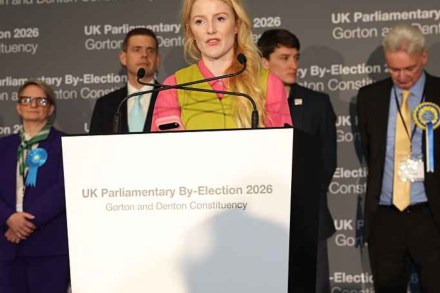
The Greens have taken Gorton and Denton, defeating both Labour and Reform in the early hours of this morning. Hannah Spencer’s victory marks the first ever Green by-election gain – but the real shock is Labour’s collapse into third place in one of its safest seats. For Sir Keir Starmer, it’s hard to imagine a worse result. Labour MPs are up bright and early briefing against the Prime Minister, whose odds of a leadership challenge just soared. Tim Shipman and James Heale join Megan McElroy to discuss.
Green victory in Gorton and Denton

The Gail’s attacks are brainless – and terrifying

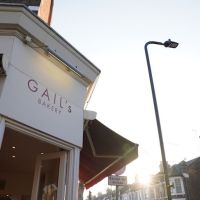
If anti-Israel agitators wish to avoid being described as terrorists, they might begin by ceasing to terrorise ordinary people. The smashing of the Gail’s branch in Archway, north London, red paint flung across its walls, slogans sprayed beside its door, is the latest instalment in a now familiar pattern: vandalism presented as virtue, intimidation dressed up as solidarity. The activists call it protest, but let’s call it by its real name: menace. To vandalise Gail’s in the name of Gaza is a deliberate effort to intimidate and must be treated as such The branch’s windows were broken twice within a single week. Slogans reading “Reject corporate Zionism” and “Boycott” were

Green by-election triumph is a sign of things to come

In the end, it was not even that close. The Green party has stormed to victory in Gorton and Denton, winning their first ever parliamentary by-election by more than 4,000 votes. Hannah Spencer, the new MP, pulled off an impressive result, winning 41 per cent of the vote compared to Reform’s Matt Goodwin on 29 per cent and Labour’s Angeliki Stogia in third on 26 per cent. In her victory speech, Spencer – a plumber – attributed her victory to ordinary people being ‘bled dry’ and jokingly apologised to customers who had booked in her services. If Hannah Spencer is the clear winner, then Keir Starmer is the obvious loser

‘MPs are just not good enough’ – Munira Mirza on Boris, Starmer and the need for leadership | part two

‘MPs are just not good enough’ – Munira Mirza on Boris, Starmer and Britain’s leadership crisis | part two

42 min listen

This is the second part of Michael Gove’s conversation with Munira Mirza. After reflecting in part one on multiculturalism and the fractures in modern Britain, this second instalment turns to the question of leadership, and the lessons both Boris and Starmer should learn. Munira reflects on Boris Johnson’s premiership, describing him as ‘a better man than many of his detractors would admit’ but acknowledging his foibles and lack of decisiveness at critical moments. Was he a good Prime Minister? They go on to debate whether the wiring of the British state – from the Human Rights Act to the Equality Act – has made effective government harder, and whether Reform

Is Labour too close to the City – with Lionel Shriver & Robert Hardman

Is Labour too close to the City – with Lionel Shriver & Robert Hardman

35 min listen

Britain’s banks have a hold over Rachel Reeves, declares Michael Simmons in the Spectator’s cover piece this week. Almost two decades on from the 2008 financial crash, the UK has failed to reform the system and – as ordinary people face a cost-of-living crisis – Labour is in hock to big business. Is the Chancellor too close to the City? For this week’s Edition, host Lara Prendergast is joined by economics editor Michael Simmons, columnist Lionel Shriver, and columnist from the Daily Mail Robert Hardman. As well as Labour’s relationship with the banking industry, they discuss: the hit BBC show Industry; how the Royals have frozen out (former Prince) Andrew – and

Angus Colwell, Paul Wood, Andrew Rule & Jonathan Meades

26 min listen

On this week’s Spectator Out Loud: Angus Colwell ponders why young Brits seem to aspire to be more Australian; Paul Wood analyses the daring plan to reclaim the Chagos islands; Andrew Rule explains why to read is to love; and finally, Jonathan Meades declares that John Vanbrugh defies taxonomy as events kick off to mark the 300th anniversary of his death. Produced and presented by Patrick Gibbons.

Will Russia really be able to stop Britain’s nukes?

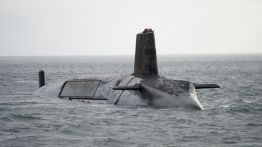
A recent report by the Royal United Services Institute (Rusi) argues that within the next decade, Russian missile defences may be able to stop a British and French nuclear strike. Russia’s strategic missile defences remain extremely limited in number and are concentrated largely around Moscow Britain is right to be concerned about this. After all, nuclear weapons are the ultimate guarantor of a country’s safety and territorial integrity. It is right, therefore, that we remain vigilant to any attempts to neutralise them. That said, the current state of Russia’s ballistic missile defences, and its likely future advancements, show little sign that a major shift in the nuclear balance of power

The Green party is playing with fire in Gorton

A good pub quiz question in the year 2050 will go something like this: ‘True or false, the “green” in the “Green Party” originally referred to the environment.’ By this point, the etymological origins of Britain’s sectional Islamic party will be as obscure as the relationship between British Conservatives and 17th century Irish bandits. A key milestone, our mid-century quiz regular will inform his teammates, was the 2026 Gorton and Denton by-election in which the Greens stood neck and neck in a three-way race with Labour and Reform before voting opened. If decades of generous immigration policies have created constituencies where people vote along religious lines, there is nothing to stop

North Korea’s nuclear ambitions know no bounds

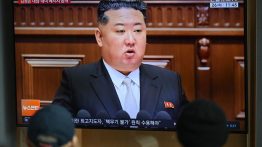
North Korea’s ninth party congress, held this week, was little more than a rubber-stamping exercise. That much was clear when the Chinese premier Xi Jinping congratulated Kim Jong-un on his re-election as the general secretary of the Workers’ party of Korea. But we would be wrong to dismiss this gathering as merely symbolic. The last time North Korea held such a congress, in January 2021, Kim outlined a shopping list of desired weapons and missiles. Since then, North Korea has tested or obtained each item. All this week’s congress did was cement North Korea’s self-perceived status as a nuclear-armed state. Whilst Kim underscored how North Korea’s nuclear weapons will never

Can Wes Streeting get the sick back to work?

Health Secretary Wes Streeting has tried using the NHS for social engineering before. Previously, he’s suggested that weight-loss jabs could get people back to work. This week he’s gone further. Yesterday, Streeting said that ‘for the first time’ he would be ‘making the NHS accountable for patients’ employment outcomes’.  Streeting is right that ill health is contributing to unemployment. Economic inactivity due to long term illness runs at a record level. The rise has been steep post-Covid, with assessments shifting from face-to-face to virtual. And what’s most striking is that the surge has particularly affected those between 16 and 34.  There are 1.9 million people unemployed, and another 2.8 million

Spring statement: Reeves' last throw of the dice?

Spring statement: Reeves' last throw of the dice?

16 min listen

Polls are open in Gorton and Denton for the by-election but as we eagerly await the result we thought we’d discuss economics, because looking ahead to next week we’ve got the spring statement. It’s not a major fiscal event – as Rachel Reeves will be anxious to point out – but one which is taking on lots more significance not least by what is being floated… which is not a huge amount. We are expecting a policy light announcement, although many are hoping there could be something in there on student loans. Will the Chancellor emerge from this statement stronger? Also on the podcast, The Spectator’s cover piece focuses on

How Silicon Valley is calling the shots on the battlefields of Ukraine

Sometime in the late morning of February 4, somebody at SpaceX headquarters pressed a computer key. A command line was beamed to Starlink’s 9,600 satellites in low Earth orbit. Their onboard processors, circling 550 kilometres above the Earth, instantly obeyed the command and fractionally changed their operational settings. Back down on the frozen ground, in the trenches, bunkers and ruined cities of Russian-occupied Ukraine, hundreds of Starlink terminals lost internet connectivity. As another freezing night set in, the Russian army’s drones and tactical comms went dark. A man with a keyboard in California has the power of life and death half a world away ‘We are left without communication!’ complained

The Alternative Covid Inquiry: the speeches in full

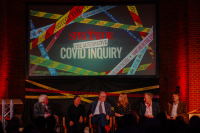
At The Spectator’s Alternative Covid Inquiry last night, science writer and journalist Matt Ridley; Sunetra Gupta, Professor of Theoretical Epidemiology at the University of Oxford; Jonathan Sumption, writer and former Supreme Court Justice; Christopher Snowdon, journalist and head of lifestyle economics at the IEA, and Tom Whipple, science writer and special correspondent at the Times, had their say on what went wrong – and right – during the pandemic. They asked the questions the experts didn’t – or wouldn’t – at the Covid Inquiry. Here is what they had to say. Spectator subscribers can view the full video of the event here. Jonathan Sumption This evening shouldn’t really be necessary. The reason why it is is the patent inadequacy

Starmer is destroying the ‘special relationship’

Britain’s relationship with the United States is special. Our ties run deeper than governments, are stronger than personalities and are resilient against ideological fashion. But under Keir Starmer’s leadership, this once unshakeable bilateral partnership is in danger of being profoundly damaged. The truth is that Starmer governs in defiance of Britain’s core interests. From here in America, an alarming realisation is taking hold: that Starmer is the first Prime Minister in memory to treat Atlantic alignment as discretionary, rather than structural. Starmer has chosen to introduce hesitation where instinct once prevailed When Donald Trump moved to restore credible deterrence against Iran’s accelerating nuclear capability, he did so openly and deliberately.

The Greens’ Urdu ad is Zack Polanski at his worst

Progressivism is politics as fashion. The product is status and provocation the marketing strategy. The socialist, the liberal and the conservative all address themselves to material circumstances, and aim to transform them radically, gradually, or as little as possible, but the progressive is concerned with the intangibles of life: identity, meaning and self-expression. His radicalism is mostly aesthetic, to be found in the symbol, the signal and the strut, and while it often gloms onto more substantive political programmes it is always concerned chiefly with ideological style. Prime example: Zack Polanski. The Green leader is a political fashionista, displaying not a skerrick of principle nor attachment to anything except what

The Alternative Covid Inquiry

Watch The Spectator’s Alternative Covid Inquiry. Six years after the world shut down, we’re still examining what happened and why. As the official Covid Inquiry finally comes to end, our panel asked the questions the experts didn’t – or wouldn’t. The Spectator’s commissioning editor Lara Brown was joined by science writer and journalist Matt Ridley; Sunetra Gupta, Professor of Theoretical Epidemiology at the University of Oxford; Jonathan Sumption, writer and former Supreme Court Justice; Christopher Snowdon, journalist and head of lifestyle economics at the IEA, and Tom Whipple, science writer and special correspondent at the Times.

Keir Starmer needs a reality check

In the film Goodbye Lenin, a German family has to convince a fussy, old woman who is also a committed socialist that everything going on outside her window is fine and dandy when, in fact, the Iron Curtain has fallen, the entire lie on which her life was built has crumbled and that this is clear to anyone who looks outside for even five minutes. I often think that this must be the closest we can get to knowing what working for Keir Starmer is like. Sir Keir didn’t want to return to the subject, so inevitably we got yet another mention of Liz Truss Again at Prime Minister’s Questions