Fabian Hoffmann

Fabian Hoffmann is doctoral research fellow at the Oslo Nuclear Project at Oslo University.


Who’s winning the missile war?

In the early hours of 28 February 2026, Operation Epic Fury commenced with large-scale US and Israeli air strikes against Iranian military, command, missile and infrastructure targets. Since then, the United States and Israel have conducted extensive operations against Iran, while Iran has retaliated with missile strikes against US bases, Israel and its regional neighbours. This is an initial assessment of the missile war, which has defined the early stages of this conflict. Over the past two nights, Iranian ballistic missile usage appears to have decreased sharply The central military dynamic between Israel and the United States on the one hand, and Iran on the other, can be understood as a race to the bottom.
Will Russia really be able to stop Britain’s nukes?

From our UK edition

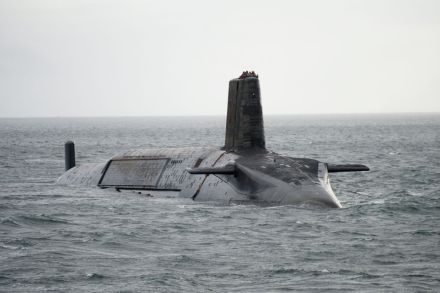
A recent report by the Royal United Services Institute (Rusi) argues that within the next decade, Russian missile defences may be able to stop a British and French nuclear strike. Russia’s strategic missile defences remain extremely limited in number and are concentrated largely around Moscow Britain is right to be concerned about this. After all, nuclear weapons are the ultimate guarantor of a country’s safety and territorial integrity. It is right, therefore, that we remain vigilant to any attempts to neutralise them. That said, the current state of Russia’s ballistic missile defences, and its likely future advancements, show little sign that a major shift in the nuclear balance of power in Europe is underway. Stopping any type of ballistic missile is a difficult task.

How the US bombed Iran’s nuclear sites

From our UK edition

Over the weekend, the US Air Force attacked three nuclear sites in Iran in an operation codenamed ‘Midnight Hammer’. According to Chairman of the Joint Chiefs of Staff, Dan Caine, the strike was ‘designed to severely degrade Iran’s nuclear weapons infrastructure’. The operation involved seven B-2 strategic bombers flying from the continental United States to Iran and back, reportedly a 37-hour mission. The bombers were escorted by 125 aircraft in total, including tankers, reconnaissance platforms, electronic warfare assets and fighter jets.

How Iran is piercing Israel’s state-of-the-art missile defences

From our UK edition

Since the beginning of ‘Operation True Promise III’ – launched after Israel’s strikes on Iranian nuclear infrastructure, leadership targets, and military sites – Iran has fired over 370 ballistic missiles at Israel, according to the Israeli Prime Minister’s Office on Monday. This is not the first time Israel has faced large-scale Iranian missile attacks. Similar volleys were launched in April and October 2024. The difference this time is that the strikes have caused casualties inside Israel. According to the latest reports, 24 people have been killed and roughly 600 injured in Iranian missile attacks.

Will Trump’s ‘Golden Dome’ missile shield ever be built?

From our UK edition

Donald Trump has outlined his plans for a ‘Golden Dome’ missile defence system over the United States. The aim is to establish a shield capable of defending against all types of missile threats, including hypersonic missile systems, cruise missiles and nuclear-armed ballistic missiles. The name is a nod to Israel’s ‘Iron Dome’ missile defence system, which protects Israeli territory against short-range rockets and projectiles, including mortar and artillery rounds. The Golden Dome envisioned by Trump is very unlikely to be realised within the next three years According to the plan, the US Congress is being asked to provide an initial ‘down payment’ of $25 billion, followed by an additional $175 billion over the next three years.

Does India still have an airpower advantage over Pakistan?

From our UK edition

In the early morning of May 7, India launched missile and air strikes – referred to as Operation Sindoor – at nine locations within Pakistan and Pakistan-administered Kashmir. Indian authorities said it was a response to the April 22 attack in Pahalgam, which left 26 civilians dead, most of them Indian tourists. The stated targets were terrorist facilities associated with groups like Jaish-e-Mohammed and Lashkar-e-Taiba. Several Indian losses have been verified, casting serious doubt on the success of the operation from India’s perspective Indian sources report that the strikes involved the use of SCALP-EG land-attack cruise missiles and AASM HAMMER precision-guided bombs. India is believed to use the export version of the SCALP-EG, which has a range of roughly 250 kilometers.

The Houthi threat isn’t going away

From our UK edition

On 27 March, the Houthis launched two ballistic missiles at Israel. It also reportedly launched ballistic missiles, cruise missiles, and long-range one-way attack drones at US Navy warships in the region, including the USS Harry S. Truman aircraft carrier. The attack likely came in response to a series of US air and naval strikes against Houthi forces and military infrastructure in Yemen. These US strikes are part of a broader effort to degrade the Houthis’ ability to threaten international shipping in the Red Sea. What is notable about the Houthi attack is that it occurred in broad daylight.

The missile Putin actually used to hit Ukraine

From our UK edition

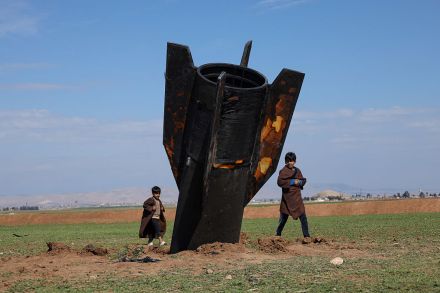
This week, Russia launched a missile attack on Dnipro, Ukraine, reportedly using a new medium-range ballistic missile named ‘Oreshnik’, as confirmed yesterday by President Putin. Putin stated that the missile attack was a response to Ukraine's use of western-built missile systems inside Russia, including US-supplied ATACMS ballistic missiles and British Storm Shadow cruise missiles. Before this confirmation, speculation arose that Russia might have launched an intercontinental-range ballistic missile. This claim was initially reported by President Zelensky the morning after the attack, who noted that the missile’s flight path characteristics matched those of an intercontinental-range ballistic missile.

How effective will Ukraine’s ATACMS be?

From our UK edition

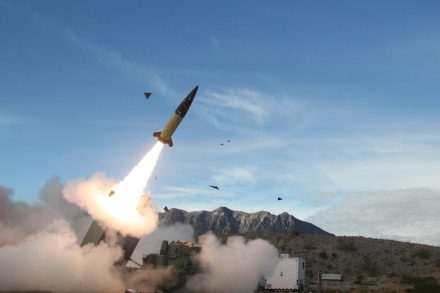
Last night, US President Joe Biden authorised Ukraine to use American ATACMS – or Army Tactical Missile Systems – against targets in the Russian region of Kursk. This decision came approximately six months after ATACMS were first deployed in Ukraine. Before now, they have been limited to targets in Russian-occupied Ukrainian territory. The decision from Biden appears to be a direct response to Russia amassing a large number of troops in Kursk, which Ukraine has held since August this year. Reports suggest that up to 50,000 Russian troops are currently preparing for a large-scale counteroffensive to take back the region, using 10,000 to 12,000 North Korean troops sent by Kim Jong-un.

The strike on Iran marks a dramatic change in Israel’s tactics

From our UK edition

On the night of 26 October, Israel conducted an aerial strike on Iran, marking the latest move in the ongoing tit-for-tat conflict between the two countries. The attack, which had been anticipated and was announced by the Israeli government, was in response to an earlier Iranian missile strike on Israel at the beginning of October, named Operation True Promise 2. The Iranian attack was itself a retaliation for Israel's assassination of senior leaders within Hamas, Hezbollah, and the Iranian Revolutionary Guard over the preceding months. Details of last night's airstrike remain unclear, but reports suggest that Israel targeted approximately 20 Iranian military sites.

What we know so far about Iran’s massive missile attack

From our UK edition

Last night, Iran launched a large-scale missile strike against Israel, dubbed ‘Operation True Promise II’. According to the latest reports, the attack involved approximately 180 ballistic missiles, making it one of the largest missile assaults in history. Iranian officials stated that the attack was in retaliation for the assassination of Hamas’s political leader Ismail Haniyeh in Iran in late July, the killing of Hezbollah Secretary General Hassan Nasrallah in Lebanon last week, and Israel’s broader conduct in the region in recent months. Details about the attack, including its targets and the damage caused, remain murky at this time. But it seems that Iran targeted Nevatim airbase, Tel Nof airbase, and the headquarters of Mossad, Israel's intelligence service.

How worried should we be about Putin’s nuclear threat?

From our UK edition

Vladimir Putin has announced that Moscow’s nuclear doctrine will be adjusted, telling a group of senior officials that Russia could use nuclear weapons if it is attacked using conventional weapons.  Inevitably there is concern that Putin could resort to a nuclear strike on Europe if western assistance to Ukraine crosses certain red lines. Putin’s remarks took place on 25 September, when the Russian Security Council held a meeting to discuss Russia’s nuclear deterrence posture. The Russian President said that the doctrine will be updated so that if a non-nuclear state attacks with the cooperation of a nuclear state, it will be seen as a joint attack.