Europe

Mr. Burnham, put on a suit and tie

A brass fanfare; a wide establishing shot of five men in three-piece suits, seated in a library of leather-bound tomes – this is Harold Macmillan doing informal. The scene is from a 1959 party political broadcast, which purports to show a “relaxed chat” between Macmillan and four of his ministers, all of whom he refers to by their cabinet titles. Almost everything about it is artificial (including quite possibly the claim that it took place the day after the parliamentary recess). Watching it now is a reminder of two things, perhaps contradictory. First, that prime ministers have always played a clever and not entirely authentic game when it comes to informality; second, how far we’ve fallen. Can you imagine the equivalent today?

suit andy burnham

Is Ed Miliband preparing to take on Donald Trump?

Just one day after Ed Miliband was made UK Foreign Secretary we heard in the Telegraph that the White House is upset about the appointment, and even warned against it. Donald Trump is apparently unimpressed by Miliband’s role in blocking North Sea oil drilling. Miliband has also railed against Trump in the past, calling him a “racist, misogynistic self-confessed groper” on the BBC’s World at One in 2016, as an example – but in fairness his predecessor David Lammy called Trump “beneath contempt” before he became foreign secretary. Trump can forgive and forget – so long as his interlocutor is willing to forget their own pride. Miliband could bend the knee, but there is also some appetite to confront Trump.

ed miliband

Macron won’t stop at a social media ban for children

France has become the first European Union country to ban social media access for under 15s. The National Assembly passed a Bill Tuesday evening that will prevent children using platforms such as TikTok and Snapchat. The Bill also bans the use of cell phones in high schools. In a message on X, a jubilant President Emmanuel Macron hailed the legislation and expressed his gratitude to MPs, who approved it by 279 votes to 81. “It’s up to the Constitutional Council to rule, then on to action to make this measure concrete and protect our children online,” he said. Macron would like the legislation to take effect from September, the start of the new school year, but first the Bill will be examined by the Constitutional Council, the highest constitutional authority in the Republic.

social media ban

Andy Burnham’s good vibes just won’t cut it

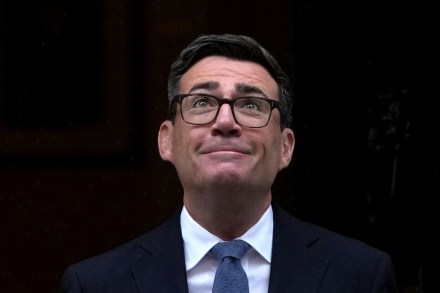
Andy Burnham became Britain's Prime Minister today – the seventh leader of the country in the last decade. It is a case of all hail the new messiah, who promises to build “a new politics” (the eternal empty vow of every politician when taking power), but this time with a shiny new twist. Burnham, who oozes a desperate desire to be liked, will lead a government focused on good vibes and the fantasy of a mythical Labour paradise lost, rather than anything grounded in the harsh political realities of today. His approach to power boils down to trusting his instincts (those vibes, again), based on the delusion that he has a special connection with ordinary voters.

united kingdom

Could Gibraltar fall to Spain?

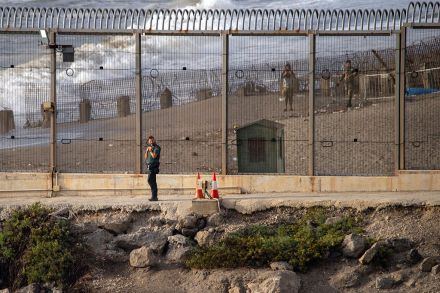
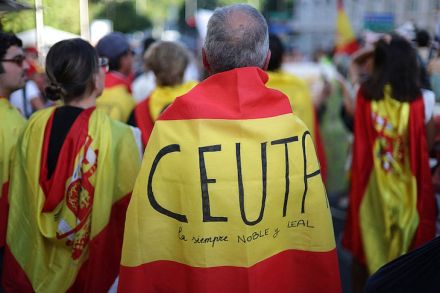
Key parts of the post-Brexit treaty that provides for a fluid border between Gibraltar and Spain will come into provisional effect today. Running to over a thousand pages, the treaty took far longer to negotiate than the entire Brexit Withdrawal Agreement. It has still to be ratified by the House of Commons and the EU parliament. The treaty effectively makes Gibraltar part of the EU’s passport-free Schengen area. Both Spain and Gibraltar were anxious to avoid long waits at the border: the 15,000 Spaniards who cross every day are half of Gibraltar’s work force and they are also an estimated 25 percent of the wage earners in the adjacent region – one of the poorest parts of Spain.

gibraltar

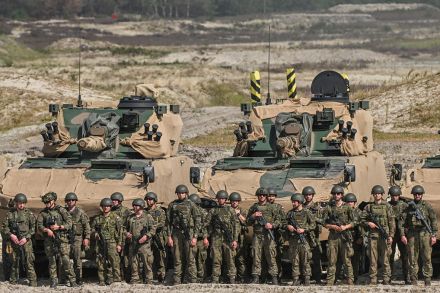
How Poland and Ukraine can repair their broken relationship

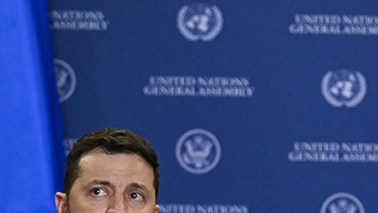
Poland was once a staunch ally of Ukraine. But President Zelensky's decision to name a unit of the Ukrainian Special Forces after the “Heroes of the UPA” appears to have shattered the relationship forever. Help may be at hand, though: in the form of the humble British historian. Others want Poland to go further: there are calls to close the border with Ukraine While Polish and Ukrainian politicians have their own agendas and aren't trusted by the other side, some British historians have near-mythological status in eastern Europe.

poland

Fact check: Rupert Lowe on Joe Rogan

The American right has developed a morbid fascination with Britain over the past two years, particularly after Elon Musk began tweeting about grooming gangs. Some European influencers have found it lucrative to present Britain and parts of the continent as having "fallen," posting videos of crimes by immigrants and appearing on American podcast networks as weary ambassadors from broken countries to warn: "It could happen here." Yesterday The Joe Rogan Experience podcast released a two-hour interview with Rupert Lowe, leader of Britain's Restore party. Was Lowe there merely to create content – or is Restore a serious political party? Some of his statements suggest it’s the former rather than the latter. https://www.youtube.com/watch?

rupert lowe

Andy Burnham is Britain’s Biden

Watching Andy Burnham in Manchester, dressed in his T-shirt and jacket and pronouncing the return of a more old-fashioned, pro-worker left, I had a sense of déjà vu. I had seen this movie before, but with different accents. For the politician Burnham obviously resembles is not British at all – it is Joe Biden. Just like Biden, Andy Burnham’s self-image is based on the idea that those on the left are the tribunes of ordinary working people, not progressive elites. Like Joe Biden, Andy Burnham is a provincial throwback to an earlier time, just from the North West, not the Midwest. Just like Biden, Burnham rails against the "neoliberal" changes of the 1980s, which he blames for the economic problems of today.

andy burnham

Will the ‘anti-Trump playbook’ work in Britain?

Commentators were so busy fulminating against Trump’s FIFA shenanigans yesterday they mostly missed his intervention in the big story now roiling British politics. "They’re Running the 2024 Anti-Trump Playbook on Nigel Farage," the President posted on Truth Social, linking to an article on the National Pulse, an American media site founded by Farage’s old mucker Raheem Kassam. The point, now being repeated by Reform’s talking heads on TV, is clear. "They" – the SW1 elite – are trying to stop Nigel Farage, just as the Washington establishment mounted a ridiculously elaborate lawfare campaign to try to stop Donald Trump.

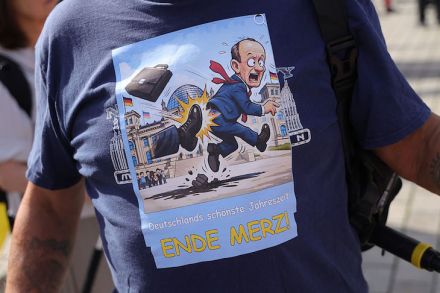
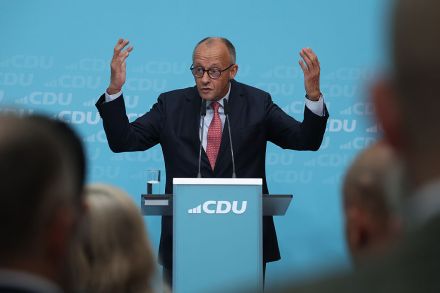
Germany is quietly falling apart

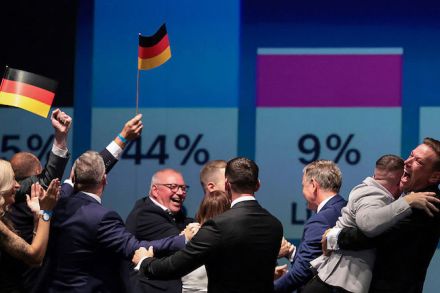
In Germany, the trains have stopped running on time, bridges have been shut over safety fears, and the country's largest carmaker, Volkswagen, is cutting a sixth of its workforce. The government's response amounts to a shrug, dressed up as reform. It seems like Germany is on a bad streak – and the AfD looks set to reap the rewards. Why does a country that still thinks of itself as Europe's engine room seem to have lost the ability to fix its own bridges? Take the railways, the infamous Deutsche Bahn. A few weeks ago, they ground to a total halt. Every train in the country stood still, because the radio system that lets drivers talk to signal boxes – a system that appears to date, in spirit if not in silicon, from the Kaiserreich – simply stopped working.

Why is the New York Times celebrating the slave-trading Vikings?

Norway plays the Ivory Coast tomorrow afternoon in the first knockout phase of the soccer World Cup, and one suspects the New York Times will be backing the Norsemen. The Gray Lady has gone gaga for Norway’s "Viking Row," a synchronized routine where fans mime the rowing of a Viking longboat to the bang of a drum. It’s caught on among the Norwegian players as well as politicians back in Norway, who performed the row in parliament last week. For the last two weeks the NYT has been publishing breathless pieces about the zany Norwegians and their Viking antics. “The 'Viking Row' is in full flow” was one headline on June 18; five days later they described how it "has taken the World Cup by storm." And their editorial office from the sound of things.

vikings

The death of British two-party politics has been greatly exaggerated

Every twist in the winding road of Britain's politics brings a latest thing to say. These wisdoms usually survive a season or two before succumbing to the new thing to say, which often asserts the opposite. This summer we have “Britain is moving into an era of multiparty politics.” Allow me, therefore, to leap ahead with my candidate for its successor: “Reports of the death of two-party politics are greatly exaggerated.” I don’t say our current governing party and principal opposition must always be the two parties in question. Labour may be dying. The Tories may be showing signs of life. In both cases I fervently hope so. But whether or not these remain our two options in elections to come, the tendency will always be for the choice to boil down to two.

politics
andy burnham

Even Andy Burnham doesn’t know what Andy Burnham stands for

The British constitution is an admirably flexible thing, so I would not claim that Andy Burnham’s leadership campaign, and the coverage thereof, is unconstitutional, but it is certainly unseemly. Why did a BBC helicopter follow his train from Manchester to London (which arrived, of course, late) as if he were Lenin heading for the Finland Station? And why was he allowed to preempt his result with a mass selfie with about 200 of his supporting MPs in Westminster Hall? He is merely a new Member of Parliament, until he isn’t. Turning the place into his stage set is a way of intimidating possible challengers. If he is challenged, he will surely still become leader, but the point of a challenge is to force him to say what he means to do.

The Brexit decade: was it worth it?

It may not feel or sound like it but Keir Starmer is a born-again Brexiteer. His achievements in office may be nugatory, his search for a legacy tragicomic, but there are countless actions this government boasts of which simply would not have been possible if we had stayed in the EU. Earlier this year, Labour moved to protect our steel industry with a tariff package possible only because we have an independent trade policy. I was delighted this month when the minister in the Lords made it clear this was a Brexit benefit. Those same Brexit freedoms allowed the Chancellor last month to cut tariffs on more than 100 foodstuffs to ease the cost-of-living crisis.

brexit
burnham

Can Burnham resist the siren call of the left?

Power, when it is gained and lost, is transferred in stages: the actual, the visual and the constitutional. The latter took place on June 23 when the prime minister presumptive sent a letter to Antonia Romeo, the Cabinet Secretary, requesting that she commence access talks with his team. Keir Starmer had already given permission for them to proceed, but the propriety and ethics team in the Cabinet Office had told Romeo she could not initiate proceedings. Andy Burnham had to ask first. To all intents and purposes, he is already the vessel from which power flows. At the same time, it became clear that James Purnell, the former Blairite cabinet minister, will lead the transition team and stay on to become chief of staff in 10 Downing Street.

Northern Ireland has been the biggest loser from Brexit

In the decade since the vote to leave the European Union, arguably no issue has consumed more energy, column inches, political capital and careers than how to solve the problem of Northern Ireland. It was on that narrow, jagged border between North and South that the substantive skirmishes took place between the UK and EU on what their future relationship would look like. While Michel Barnier and Lord Frost arguing the toss over the finer points of agri-food regulation may lack the luster of the Battle of the Boyne or the romantic connotations of 1916, it was no less significant a moment in Northern Ireland’s history.

northern ireland

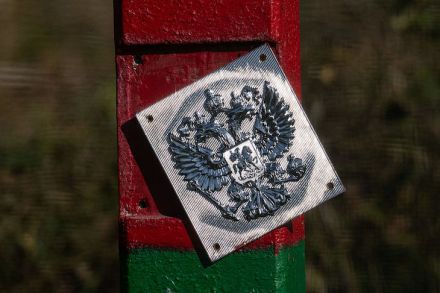
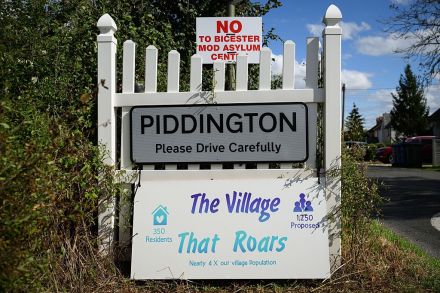
Britain is the weak man of Europe on border control

Britain and France have rewritten the "one in, one out" migrant deal nearly a year after it came into effect. The treaty, described as "groundbreaking" by both countries last summer, has struggled to stem the numbers of migrants heading from France to England in small boats. It soon became apparent that the deal contained a loophole that enabled a handful of deported migrants to return to Britain in the back of a lorry. Britain's Home Secretary Shabana Mahmood has agreed with her French counterpart, Laurent Nuñez, to close this loophole by tweaking the treaty to stipulate that its terms apply to any returning migrant regardless of whether they enter a second time by boat or by vehicle.

The real threat to democracy after Brexit

Ten years after the Brexit referendum, its long-term impact on British politics is evident. Not so evident is why this is the case. Every general election sees comparable debates. So too did the 1975 referendum on membership called by Harold Wilson. But none of these other elections has ever produced such an extreme and long-lasting reaction, or a concerted attempt to use both informal and formal methods – constitutional and legal – to block the result.

brexit

The truth about Keir Starmer’s legacy

It was when Keir Starmer claimed never to have had a dream that I knew we were dealing with potentially one of the funniest prime ministers Britain had ever seen. Sure, some people would have been amused by the magnetism for calamity exhibited by Theresa May, the almost comedically unbelievable mendacity of Boris Johnson or the downright absurdism of Liz Truss, but a really funny prime minister is the one who demands to be taken seriously, and particularly one who is convinced that he has forced the British people to do so.

keir starmer

The small Dutch town that said no to more asylum seekers

A political crisis is unfolding in the small Dutch town of Maassluis, a former fishing village which sits between Rotterdam’s vast port and industrial complex, the glasshouses of the agribusiness powerhouse known as the Westland, and the historic fishing town of Vlaardingen. Despite what some may claim, it is not a far-right insurgency, just a group of local politicians responding to concerns widely shared by their electorate The natives of Maassluis were once nicknamed "snails." They acquired the name in the 1770s, when the parliament of the Dutch Republic decreed that Psalms should be sung at a faster tempo in church.

dutch

‘I identify with Daenerys Targaryen before she went mad’: an interview with Kemi Badenoch

There was a moment backstage, before I interviewed Kemi Badenoch for a Spectator event, when I felt like John Sergeant with Margaret Thatcher bearing down on him as he pronounced her leadership in difficulty. I suggested to Badenoch that she was a rare example of a politician I had changed my mind about. “You mean you were very negative before?” she said, fixing me with the full alpha female glare. I muttered something placatory, but the truth is that a year ago I thought she was rubbish – and that was the mainstream view in her own party. She was arrogant, flat-footed, absenting herself from a stage that was being dominated by Nigel Farage, resistant to advice, convinced she was great at PMQs when even Keir Starmer was wiping the floor with her.

kemi badenoch
restore

Can Reform see off the threat from Restore?

Nigel Farage has always prided himself on being able to see off any threat from his right flank. But now a new force has emerged in the form of his ex-colleague Rupert Lowe. When the two Reform MPs fell out 15 months ago, friends shared memes of Farage’s past fallen rivals ascending to heaven. “Come and join us, Rupert!” they exhorted. Instead, Lowe fought back, setting up his own party, Restore Britain. In the Makerfield by-election on June 18, one poll puts Restore on 7 percent – enough to stop Reform and hand the seat to Labour’s Andy Burnham. Restore’s strategy is simple: use Farage’s playbook against him. Like Farage, Lowe has put his faith in social media, building up a noisy following that can then be turned into a campaigning force.

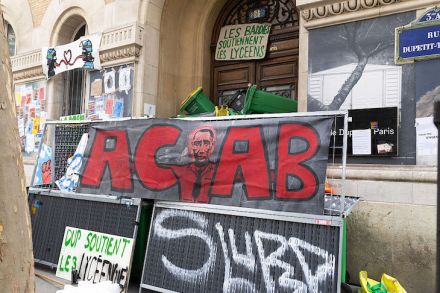
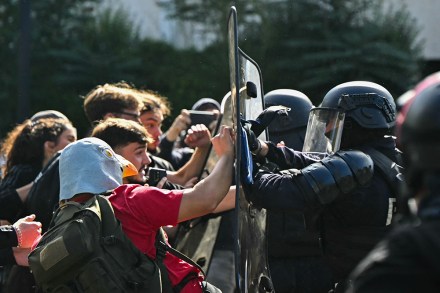
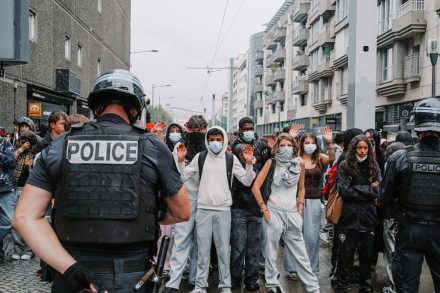
Why is it mainly loyalists rioting in Belfast?

Monday’s alleged attempted beheading in North Belfast was not the first time an act of brutality has taken place in the area. During the Troubles, it was one of the most violent and dangerous parts of Northern Ireland. Robert Curtis, the first British soldier to be killed in the Troubles, was shot by the IRA in New Lodge. North Belfast was also the grim stage for many of the brutal sectarian killings carried out by the Shankill Butchers. In North Belfast, the loyalist ceding of ground to nationalists has been compounded by the impact of immigration It is a deeply deprived part of the city and the population shifts and turmoil of the late 1960s and early 70s turned it into an ethnic and confessional maze.

loyalist