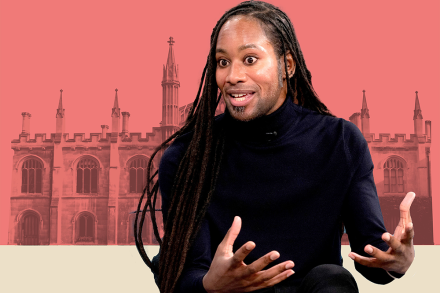
Druin Burch

Druin Burch is a consultant physician, a former junior doctor, and the author of books on history and medicine.

Will the NHS get serious about prescribing weight loss drugs?

From our UK edition

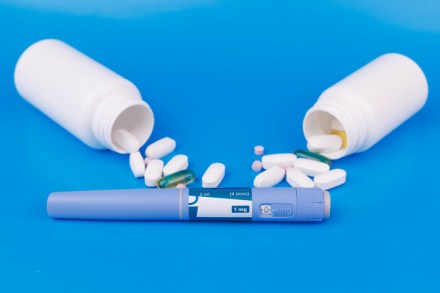
‘The weight is over,’ read an advert on the side of a bus outside my hospital this morning. The first really effective pill for weight loss has now been on sale in Britain for just over a month. Wegovy – it has the same brand name as its injectable equivalent – is a semaglutide. Ozempic is the same drug at a lower dose, sold to treat diabetes. Mounjaro is more effective than Wegovy but is injection-only. Lilly hopes its rival pill – Foundayo, orforglipron – will soon be licensed here; already it’s on sale in America. Drugs have a brand name, which is capitalised, and a generic name, which is not. (An odd exception is aspirin, which was Bayer’s trade name, but which they largely lost as the result of the first world war. Since, as part of the conglomerate I. G.

The NHS is not in a crisis of racism

From our UK edition

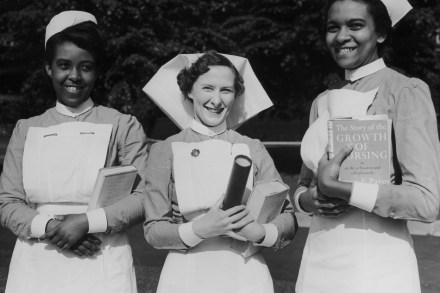
The Society of Radiographers have said racism is rising in the NHS.  They give the example of a patient refusing a chest X-ray from a black radiographer, saying ‘black people frighten me.’ Other anecdotes cite patients calling healthcare staff ‘dirty foreigners’ or ‘monkeys’. The Society of Radiographers says the problems have got worse in the past 18 months. They blame ‘increasingly hostile public attitudes’, and single out ‘nationalist movements such as Operation Raise the Colours’. They offer no evidence for that. Their published findings are neither large enough nor systematic enough to establish a trend, but at first glance they chime with a recent survey that is: the NHS Staff Survey, sent annually to 1.5 million NHS staff.

Why I’m ignoring the hosepipe ban – and you should too

From our UK edition

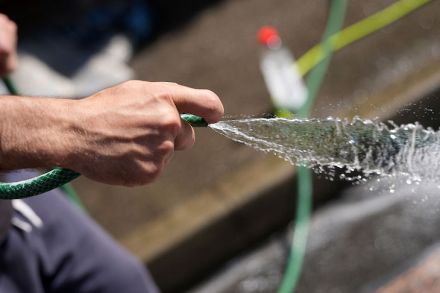
I returned from holiday to find parched lawns and a deliciously cool babbling brook where the road had been. Up the hill stood signs warning motorists that work was in progress, and the source of the leak was surrounded by temporary barriers. The scene was quiet and peaceful, dappled by sunlight on flowing water, and entirely undisturbed by human effort. The hosepipe ban takes a problem the government has created and tells us it’s ours My village is currently subject to a hosepipe ban, like much of England. Coming home yesterday I rescued my wilting hollyhocks – which are drought-tolerant plants – with a hosepipe, and I am willing to do so again.

Burnham is wrong to model social care reform on the NHS

From our UK edition

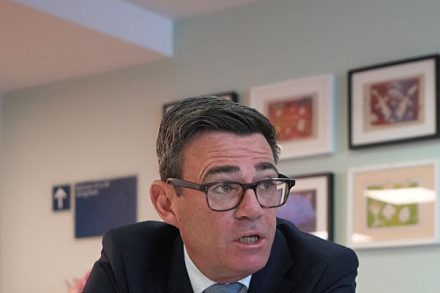
There have been trimmings and ornaments: the bus fare cap and the performative opening of a No. 10 North in an office block above a Manchester branch of the Slug and Lettuce. But Burnham’s first major act as Prime Minister is to walk back into the flames that consumed his last stint in high office. In 2010, his attempt at a legacy-defining Beveridge moment – creating a National Care Service – partially cost Labour power. Two failed leadership bids and exile to Manchester followed. Today, Burnham formally announced he’s having another go. 'I’m making this choice and I’m prepared to put everything I’ve got behind it,' he said. For now the Prime Minister is benefitting from the honeymoon glow of a bounce in the polls. That may not be enough.

A free-to-use National Care Service will never work

From our UK edition

As a former adviser on social care reform to a Conservative prime minister, allow me to explain why Andy Burnham's proposals on the issue – which I don’t know about, since he hasn’t revealed them – are wrong. Hints have been dropped, and a speech is planned for Wednesday. Burnham is committing himself to tackling the problem that brought David Cameron to my ward at the John Radcliffe Hospital in Oxford. He came in response to concern from a Witney constituent about delayed discharges. As ever, more than half my ward was occupied by patients termed ‘medically fit for discharge’. They were in hospital beds because the queue for carers at home, or for a care home bed or other supported accommodation, was long.

The NHS is fundamentally dishonest

From our UK edition

This weekend, the excellent health editor of the Sunday Times, Shaun Lintern, revealed how NHS England has been suppressing damaging reports from national clinical audits it funds. ‘The lesson from every major patient safety scandal is that failing to confront uncomfortable truths only allows unsafe care to persist,’ the paper quoted Jeremy Hunt as saying, adding that the NHS ‘should be championing independent scrutiny and transparency – not creating the impression that reputational management is taking precedence over patient safety.’ Unable to control what the NHS does, managers naturally concentrate on controlling how it’s perceived It’s more than an impression.

Why the bus £2 price cap might just pay off for Burnham

From our UK edition

Andy Burnham has announced a reduction in the cap on English bus fares, down from Starmer’s £3. Remarkably, he might be right to do so. 'For too long people have said that cheaper transport isn't an option,' he has announced. I don't accept that. I've done it before and I will do it again now: a £2 cap on bus fares for millions across the country. Lower fares will help people get to where they need to, giving them breathing space to help with the cost of living. The one-year measure will cost some half a billion pounds, and this time won’t apparently be freed up by cancelling an ID card scheme that wasn’t itself funded.

The joyous ridicule of Stella Creasy’s avian error

From our UK edition

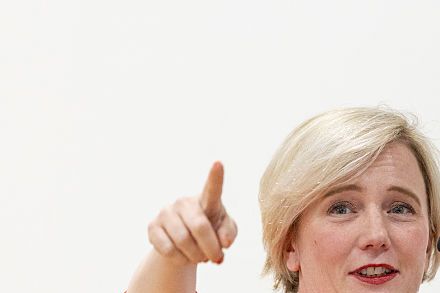
‘Stella Creasy’s bird-brained parrot alert,’ ran a Steerpike headline yesterday. The Labour MP for Walthamstow had posted a video of herself in a London park. The video showed a parakeet, with the MP explaining it was definitely not a parakeet.  ‘Walthamstow has anyone lost a parrot?’ she wrote. ‘There’s one in Lloyd park right now! Please share to help reunite it with its owner!’ For centuries Londoners made fun of country bumpkins by saying they hadn't even seen the lions – meaning those at the Tower. The lions are long gone, but somehow it is now possible to be a country bumpkin in Walthamstow  The MP has faced some serious abuse on social media in her time.

The NHS can’t cope with this heat

From our UK edition

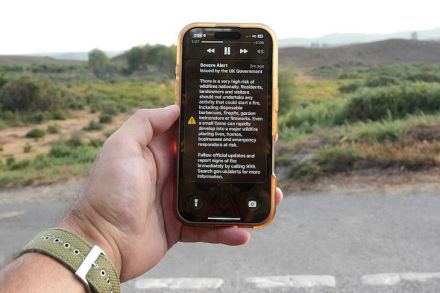
The weather in 1976, like the football ten years before, lingers in our national memory. But already on some measures this year is worse. Back then, the heat was drier and the nights cooler. We have already had six days above 35C, for the first time ever, and more warm nights in a single week than in the entirety of 1976. A recent study by British university researchers suggested that during eleven hot days in June, the weather in England and Wales was responsible for 2,200 deaths. Rather than a summer lull, my hospital is dealing with the sort of surge we normally see in winter. The same is true nationwide. Those of us not hospitalised by the heat will be noticing the sheer quantity of perspiration of which we’re capable.

It must be harder for the NHS to strike

From our UK edition

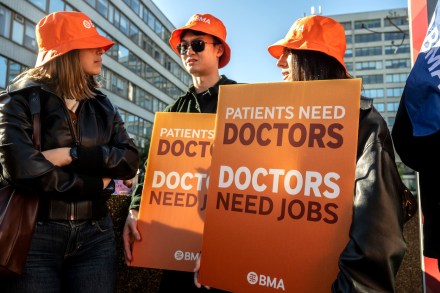
The BMA makes lots of vague demands for recognition and autonomy, control and civility – Madeline Grant, hearing similar words coming from Angela Rayner recently, called them generic, vibes-based slop. But what the BMA specifically wants is more money – for less work.  Wales is invoked as an exemplar; rarely a good sign in arguments not involving male-voice choirs or leeks. The BMA wants consultants’ top salary point immediately raised by £16,000, to match the Welsh, and to copy the contractual obligation there for doctors to get a fully-paid day and a half a week free of clinical duties. They want higher rates of pay for out of hours work, improvements in pensions, and the working week cut by five hours. Strike action to support these goals was backed by 76 per cent.

Does it matter what politicians drink?

From our UK edition

Keir Starmer is fond of a beer. We knew he liked beer when we knew nothing much about his policies except that they were in favour of everything that was good and against everything that was bad. We could be excused for feeling that the impending coronation of Andy Burnham offers more of the same. A Labour MP told the Today programme that Burnham explaining his policies was irrelevant given he’d ‘already shown he’s a very successful politician’. What we do know is that Burnham, too, likes beer. He and Starmer eagerly lean on the one point where their pose and their personality agree - Guinness for Burnham, real ale for Starmer.

Would Oxford still open its doors to a poor, white boy like me?

From our UK edition

Magdalen College, Oxford, is over-represented at The Spectator. Not long ago, Paul Johnson and Matthew d’Ancona were fixtures here. Today, there are Sam Leith, Douglas Murray, and Harry Mount. Unbeknownst to them, there is also me. I was there at the same time as all three, and a while after Matt Ridley. Poor white kids who are clever enough to go to Britain's ancient universities will find it much harder to get a look in Murray, I believe, spent time in a bad state school, but like Leith and Ridley reached Oxford via Eton; for Mount it was Westminster. I came the other way, a route which is now at the heart of a row over whether white kids from disadvantaged backgrounds are being shut out of many Oxbridge diversity schemes.

The true cost of ending the doctors’ strikes

From our UK edition

After three years, and a cost to taxpayers of over £3 billion, the junior doctor strikes are finally over. For now. The vote was narrow. Of those who voted, only 53 per cent backed the deal. The BMA reports the pay rise comes to 6.6 per cent by April 2027, with more to follow. Pay progression will be faster. The government will now pay doctors’ postgraduate examination fees, which the Royal Colleges run, as well as their college membership fees, a deal which guarantees the price of both will swiftly rise. A government with some steel would see the complaints of doctors as an opportunity. Workers’ rights too often mean the opposite, supporting the rights of those who work least In addition, the government has promised an extra 4,500 training posts.

Why Britain has a medicine shortage

From our UK edition

Across Britain today, people will take prescriptions to pharmacies and be told they can’t be fulfilled. After hearing a lifetime of speeches about the miracle of the NHS, they’ll find the miracle is out of stock. The National Pharmacy Association (NPA) warned earlier this month that we are short of medicines, with the shortages 'some of the most severe the UK has experienced'. Life is a muddle, and the best we can do is battle endlessly against imperfect trade-offs. That’s the lesson to be read in the NPA’s announcement, if it’s one you’re willing to see. Little in the world is an undiluted good, not even the modern decline of premature mortality. There are people who would find the downside to an England victory in the World Cup, although probably only Scots and Welsh.

Good intentions alone won’t fix Britain’s maternity crisis

From our UK edition

The Ockenden Maternity Review, published today, finds the NHS is not to be trusted – not for maternity care, possibly not at all. Set up in 2022 in response to concerns over the safety and competence of maternity care at Nottingham University Hospitals NHS Trust (NUH), the report finds failures of leadership, governance, and culture: Poor practice is not investigated; learning is not integrated; and mothers and babies are failed by an organisation they should be able to rely upon. Perfection is not to be found and should not be expected. My son’s arrival into the world was delayed by a junior doctor’s dishonest laziness. Spotting problems, she prevaricated, arranging unnecessary tests that delayed decision-making until her shift finished.

The Employment Rights Act will encourage striking doctors

From our UK edition

TThe junior doctors were due to strike again, and everyone was sick of the whole business. At the last minute, after a new government offer, the walkout has been called off. This is a relief, even if it isn’t yet a resolution. The vast majority of junior doctors I work with have become as fed up with the dispute as the rest of us. As the strikes have progressed, an ever-increasing number have turned up to work despite being members of the BMA. But even if this dispute now ends, new legislation means similar ones may soon return with dreary frequency in other trades and professions.  Junior doctors feel underpaid, and we ought to manage some sympathy for that, if only on the grounds that few of us feel we’re overpaid.

Why can’t Elon Musk’s critics just be pleased for him?

From our UK edition

The quiet kid from my friend’s school has become a trillionaire, and many people are unhappy that this should be so. Musk’s success narrows our lives only when we let it make us prisoners of our own resentment Being a boy in a white South African classroom isn’t easy if you’re not outgoing and sporty. The culture that grew in the shadow of the Boers is not forgiving of eccentricity or admiring of unvarnished intellect. Elon Musk appears to have suffered childhood misery that a trillion-dollar fortune can’t buy back. What money buys, for him as for the rest of us, is freedom - and he has more of it than anyone alive. “I call people rich,” Henry James had one of his characters say, “when they're able to meet the requirements of their imagination.

Marilyn Monroe was just like the rest of us

Marilyn Monroe was born a hundred years ago today. She was famous enough in her lifetime to be one of those rare figures referred to by their first name alone. Such fame seldom lasts. Even Frank now needs to be called 'Sinatra'. She is still 'Marilyn' partly because the name fell out of use; her fame survives partly because she died young – of a barbiturate overdose, presumed to be suicide – at the age of thirty-six.  My favourite Monroe story is one told by Billy Wilder, who directed and co-wrote the film Some Like It Hot. Newly engaged to Arthur Miller, the actress was taken to meet Miller’s parents in a small New York apartment with thin walls. Nervous of being overheard while she was using the bathroom, Monroe turned on the taps to cover the noise.

We cannot stop the small boats

From our UK edition

This April, we agreed another deal with France to stop migrants coming across the Channel. The Home Office has explained it is ‘bearing down’ on small boat crossings, and that this latest £662 million deal would ensure ‘enforcement action on beaches and put people smugglers behind bars.’ Over the last Bank Holiday weekend, almost a thousand migrants were recorded as coming across the English Channel. This is regrettable, but there is no alternative. Small boat crossings began at scale in 2018. Since then, the total number of recorded arrivals comes to about 200,000. We have to accept that they are now a fact of life.

Gene-editing drugs are opening a new frontier in medicine

From our UK edition

Older readers with bulging medicine cabinets, or parents eyeing their children’s distant futures, are not encouraged to read the New England Journal of Medicine – despite its prestige. A paper just published there, however, matters to them and to me. ‘In Vivo Base Editing of PCSK9 with VERVE-102 for Hypercholesterolemia’ is not a catchy title, but what it describes is going to catch on. VERVE-102 is a combination drug designed to edit the bases of a gene – PCSK9 – using a development of CRISPR technology, all packaged so the edit reaches the cells that matter in the liver. Some of those born with superior versions of the PCSK9 gene have their lifetime risk of coronary heart disease – the world’s biggest killer – halved. For others it is all but abolished.