Tatyana Kekic

Tatyana Kekic is a freelance journalist in Belgrade, Serbia.

Rumen Radev won’t be the next Viktor Orban

From our UK edition

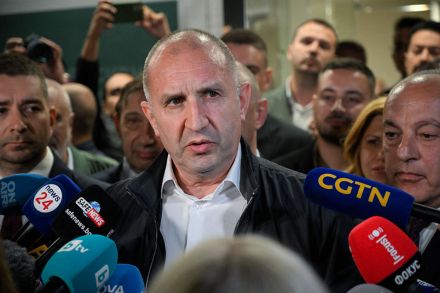
Rumen Radev won a majority in Bulgaria’s parliamentary election this week, giving him the ability to form a single-party government. It was Bulgaria’s eighth general election since 2021, and the first since 1997 to return an outright majority for a single party. After years of coalition churn, there might be a rare break from the near-constant voting. Radev – a former air force chief, then president, now incoming prime minister – is one of the most recognisable and popular figures in Bulgarian politics. Early international coverage has already cast him as the EU’s next potential disrupter, following Viktor Orbán’s exit from Hungarian politics. He certainly shares some of Orban’s views.
Serbia is descending into violence

From our UK edition

Belgrade There are two kinds of Balkan crises: the ones that actually happen, and the ones that feel inevitable until they fizzle out. Serbia’s current descent into street violence and political dysfunction is somewhere in between. Whether it ends in fresh elections, implosion, or continued chaos depends on one man. Sit-ins and marches have given way to nightly clashes between anti-government protesters on one side and pro-regime thugs and riot police on the other. In the past week, long-running student protests against the government of President Aleksandar Vucic have turned into something far less orderly. Sit-ins and marches have given way to nightly clashes between anti-government protesters on one side and pro-regime thugs and riot police on the other.

Is Serbia heading for its 1968 moment?

From our UK edition

Serbia has been gripped by months of student protests in response to a tragic accident at Novi Sad railway station in November 2024, when the collapse of a concrete canopy roof claimed 15 lives. The protests have come to resemble a sort of May ’68 moment. Not in the sense that they are occurring in the same global context of cultural change, social liberation and anti-war activism. The demands of the protesters today are much narrower. But the students’ inventive tactics, grassroots organising, daily blockades and sit-ins at universities invite such comparisons.

Why Belgrade is cosying up to Beijing

From our UK edition

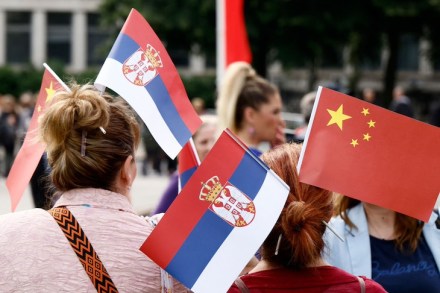
Thousands of Serbs gathered outside the Palace of Serbia today to welcome the Chinese president Xi Jinping, chanting ‘China, Serbia’. Addressing the audience, Serbia’s President Aleksandar Vučić thanked Xi for choosing to visit Serbia: ‘We are writing history today...[Xi] hasn’t come to Europe in five years and he has again chosen our little Serbia.’ The visit has been choreographed to coincide with the 25th anniversary of Nato’s bombing of the Chinese embassy in Belgrade in 1999. The strike killed three Chinese journalists and sparked mass protests across China. It is an incident China will never forget and has been a constant thorn in Sino-American relations.

Meet the Russians in Serbia who voted against Putin

From our UK edition

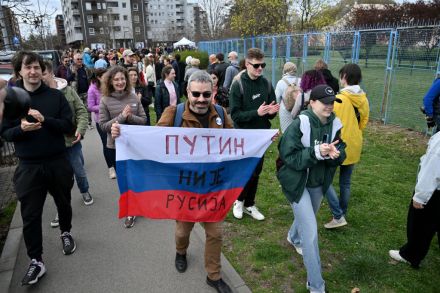
Today, Russians in Serbia are heading to the polls to cast their vote and protest against what many see as a sham presidential election. A polling station in the capital Belgrade opened this morning at 8am, but many decided to turn up at ‘Noon against Putin’, a protest called by the late Russian opposition politician Alexey Navalny.  Tens of thousands of Russians have settled in Serbia since the start of the war in Ukraine. Like millions of other Russian exiles around the world, they are eligible to vote in this weekend’s polls—which are almost certain to hand Vladimir Putin another six years in power. With no credible opponent and only one possible result, I asked Russians why they are bothering to show up at the polls.

Russian dissidents in Serbia are struggling

From our UK edition

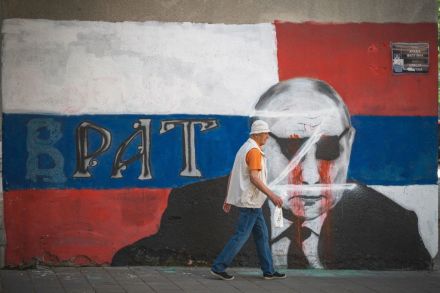
It must be strange to be Russian and living in Serbia these days. On the one hand, Serbs are very welcoming. The country’s historic ties with Russia and their shared Orthodox faith means that most Serbs have been happy to see tens of thousands of Russians settling in their country since the start of the Ukraine war. On the other hand, if you are Russian in Serbia, you might find you are only welcome for as long as you keep your mouth shut. Once seen as a safe-haven for Russians, Serbia is cracking down on those who dare to speak out against Russia’s war in Ukraine.

Why protests in Serbia won’t lead to regime change

From our UK edition

Serbia’s president, Aleksandar Vučić, has followed in Vladimir Putin’s footsteps this week by blaming popular protests on western meddling to discredit the opposition.   Protests over alleged vote rigging erupted in Belgrade after Serbia’s national and municipal elections on December 17. Vučić and his Serbian Progressive party (SNS) won an emphatic victory in the national poll, with 48 per cent of the vote to the opposition’s 24 per cent. But the results were closer in the Belgrade elections, where the SNS won only a few percentage points more than the opposition coalition, Serbia Against Violence (SPN).

How to rig a Serbian election 

From our UK edition

Serbia is heading to the polls, again. On Sunday, the country will vote to elect a new national parliament and several local assemblies, including in the hotly-contested capital Belgrade.     This is the seventh time President Aleksandar Vučić has taken his country to the polls since he was first elected in 2012, and the fourth consecutive time he has called elections early. Vučić has developed a habit of holding elections every two years, and he has honed his techniques for winning. With his Serbian Progressive party (SNS) set to win again, what’s his secret?    As elsewhere in the Balkans, Serbia's rulers depend on a political patronage system to maintain power.