Max Jeffery

Max Jeffery

Max Jeffery is The Spectator’s writer-at-large.

My day with the Schöffels of Badminton

From our UK edition

The first arrest of the weekend at Badminton Horse Trials occurred at 7.17 p.m. on Saturday. Fight, separation, removal, detention, escape, capture, arrest. Things had accelerated in the preceding hours on the Duke of Beaufort’s estate. With the day’s eventing over, there was nothing to punctuate the drinking and the drugs. Attendees gathered at Lakeside – an enclosed boozing zone on the grassy, tented banks of a 600-foot-long pond – and consumed until nightfall. ‘Badminton is the best event of the year,’ said Ollie, a late-teen boy familiarising himself with the attractions. ‘Fanny, beer, horses – what else do you want?

The new age of transgender rage

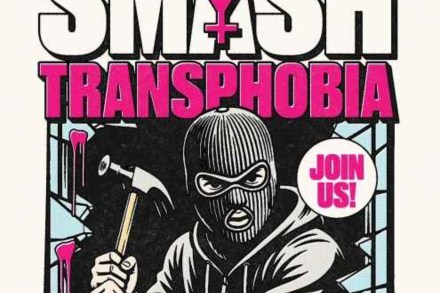
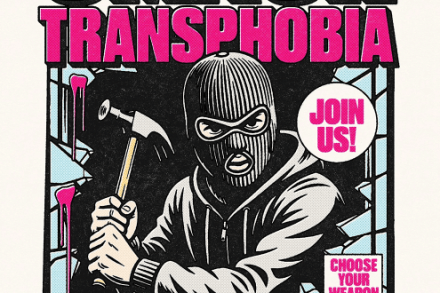
It’s a year since the Supreme Court ruled that gender means biological sex – and not much has changed. The Equality and Human Rights Commission (EHRC), which is advising the government on how to apply the judgment to law, has spent a long while drafting guidance. But last week, word arrived that Bridget Phillipson, the women and equalities minister, wants the EHRC to ‘tone down’ its advice, leading to further delays. Why the hold-up? My guess is that it has something to do with a new era we are entering. An era of ‘TRANS RAGE’. That’s not my expression. It’s from Bash Back, a recently formed anonymous collective going after people and organisations it believes frustrate the transgender experience.

Apart from Mandelson, who is Labour’s biggest freebie lover?

From our UK edition

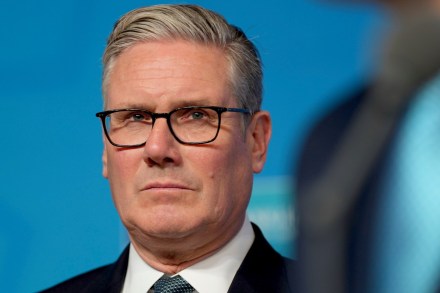
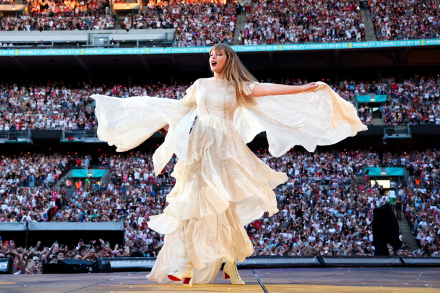
Keir Starmer is Labour’s king of freebies. He promised to clean up politics, but has accepted more free stuff than all his party’s leaders since 1997 combined: more than £100,000 in tickets, accommodation and clothing. In 2024, the Prime Minister said it was ‘right to repay’ the cost of some freebies, and stumped up for six Taylor Swift tickets, four tickets to the races and some clothes for his wife (total value: £6,000). Where Starmer has led, his MPs have followed – including those who now might hope to succeed him. Eleven other Labour MPs (and Ed Davey) accepted Taylor Swift tickets courtesy of football clubs and music companies. Seven cabinet members took money from Lord Alli. Few have not watched a football match from complimentary box seats.

A day with Bristol’s van dwellers

From our UK edition

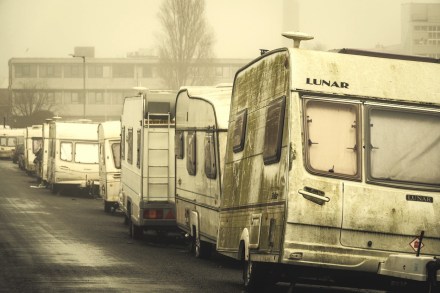
Four weeks since a caravan was torched on Goodneston Road in north-east Bristol, and still no one has bothered to clear the debris. The black carcass of the caravan remains, dressed with yellow tape reading ‘CRIME SCENE DO NOT CROSS’ and sitting among expired syringes, used laughing gas canisters, a shopping trolley of indiscriminate electrics, and unmarked bottles of off-coloured liquids. The caravans settled on this street some time ago. They brought drugs and left faeces on the pavement and made many local people unhappy. Police think the fire was started deliberately. By luck, nobody died. In Bristol, caravans are everywhere. They squat on residential roads and outside parks and under bridges and right in the city centre.

Criminal candidates, grooming gangs and petrol bombings – welcome to Oldham

From our UK edition

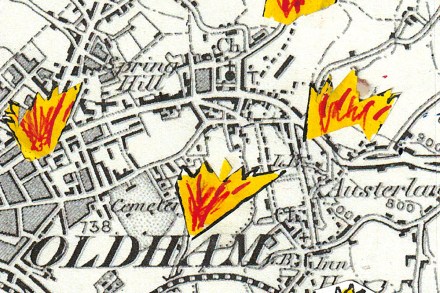
Everyone who’s anyone in Oldham knows Irish Imy. Born Mohammed Imran Ali in Dublin in 1980 and raised in Werneth in south-west Oldham, Imy is the borough’s recurring bad guy. He’s done time for assault, trafficking heroin and being the getaway driver for the murderer Dale Cregan, who shot three people and blew up their bodies with grenades in 2012. Naturally, Imy now wants to be a politician. He’s standing in this year’s local elections as an independent, promising to ‘Make Werneth Great Again’. His campaign is not regarded as insane. He may win. Imy is capitalising on the sense that this Greater Manchester borough is corrupt. People in Oldham say the local elections are rigged and believe that council seats are handed out through the South Asian biradari clan system.

Who was ‘Stakeknife’?

From our UK edition

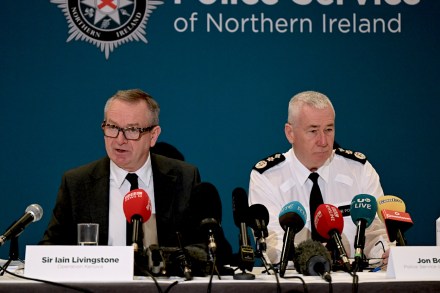
Freddie Scappaticci was a thickset man with dark features and a walrus moustache. He was born in Belfast in 1946, joined the Provisional Irish Republican Army when the Troubles began and by the 1980s was a senior member of the organisation, whose job was to hunt for British spies. It has been widely believed for years that Scappaticci was himself a spy for the British government, operating under the codename ‘Stakeknife’. The government has always said it could ‘neither confirm nor deny’ (NCND) this suggestion. Today, Operation Kenova, which has spent nine years investigating Stakeknife’s crimes, urged the government to officially reveal the identity of this ruthless undercover operative.

The ‘Crewkerne Man’ is reviving political satire for the AI age

From our UK edition

You’ve probably seen the videos. Kemi Badenoch delivering her Budget response in the form of a rap to a sobbing Rachel Reeves. Keir Starmer as a McDonald’s drive-thru worker. David Lammy as a Spice Girl in a tight dress. Reeves (again) as the Grand High Witch from The Witches. Behind the videos is one man. He runs the Crewkerne Gazette, an online publisher of viral political videos made with artificial intelligence. The ‘Crewkerne Man’ would not give me his name when we met for lunch in Somerset last week.

John Major is shouting at the void

From our UK edition

They were John Major’s kind of people, the audience in the Sheikh Zayed Theatre in the Cheng Kin Ku Building at the London School of Economics last night. They filed in quietly, took their seats politely, and waited relaxedly for the ex prime minister. One man slouched, careless blotches of black dye on his thinning cirrus hair, while another sterilised his glasses with an individually wrapped wipe, going in every corner and crevice until it all looked stupidly clean. A third flicked through the Financial Times. It was 6:25 p.m., five minutes before Sir John was due. Only a man with no worries takes the morning’s news in the evening. Sir John would say the audience was ‘at ease with itself’, and that is exactly how he likes his people.

Max Jeffery, Sam Leith, Michael Henderson, Madeline Grant & Julie Bindel

From our UK edition

37 min listen

On this week’s Spectator Out Loud: Max Jeffery examines Britain’s new hard left alliance; Sam Leith wonders what Prince Andrew is playing; Michael Henderson reads his letter from Berlin; Madeline Grant analyses the demise of the American ‘wasp’ – or White, Anglo-Saxon Protestant; and, Julie Bindel ponders the disturbing allure of sex robots. Produced and presented by Patrick Gibbons.

Inside Britain’s socialist dogfight

From our UK edition

For a few days in Manchester last weekend, there was a utopia. The World Transformed conference of British socialists had taken over Hulme – the once rough but now bohemian part of the city – and in the middle of it all, at the Community Garden Centre, a collectivist’s dream was established. All day comrades sat there in the sun on the edges of flower beds and on picnic benches, having doctrinal debates, eating vegan food, reading homemade pamphlets. The garden centre was the conference’s locus, where attendees mixed joyfully between workshops and discussions away from the horrors of the real world. ‘Comrades have done an awful lot of work to get us to this point,’ said one lounging revolutionary.  And they were right.

Jeremy Corbyn’s new party is self-destructing

From our UK edition

On Friday evening in the Windrush Lounge at The World Transformed conference in Manchester, British socialism was autocannibalising. No more comrade this or comrade that. No other little politburo manners. In a storage unit in an industrial estate – this was the lounge – Max Shanly, an influential left-wing activist and former Momentum member, was jabbing his finger in the direction of Alan Gibbons, an independent councillor in Liverpool who is involved in building Jeremy Corbyn’s new party, which is for now confusingly named Your Party. ‘You are one of the select few!’ Max said. ‘You are the Comical Ali of Your Party!

The cult of Obama is over

From our UK edition

Everyone wanted to get close to the president. For three hours outside the O2 Arena in London, a queue of admirers pawed at and posed with a fifteen-foot-tall billboard of his face. All of the marketing for yesterday’s event, titled ‘An Evening with President Barack Obama’, had used his official presidential portrait from 2012 in the Oval Office. It was a reminder of the good old days – before Trump ever happened. ‘I’m just looking forward to being in the same room as him,’ said a woman called Fran who had taken a photo with the billboard, leaning on it for support. She started crying. ‘I’m looking for a little bit of hope.’ All Obama’s life people have staked their hopes on him. His white mother was the first.

A revolution in the arms bazaar

From our UK edition

The global military-industrial complex and its outriders were rammed into a giant indoor pigsty. Dealers and manufacturers and military men and politicians and officials from murky agencies and guys in cowboy hats and sunglasses who only really came to have their photos taken with guns – all of them in a crush to use a printer. It was day one of the arms fair, and they had forgotten to print their credentials at home. ‘Someone’s going to faint!’ cried a failing voice. ‘You can’t do this to humans!’ yelped another. ‘Bro,’ said an American on the phone to someone, ‘this is a complete fuckshow.’ As the bundle swirled and groaned, a Royal Marines band marched past. This did not improve the mood.

How volunteer groups are taking the place of our absent police

From our UK edition

Chris Hargreaves used to be a wellness coach with a promising future in reality television. In 2023, he starred in E4’s Big Celebrity Detox and tried to cleanse Kerry Katona’s soul with piñón blanco seeds. Today, he leads The Shield: a private volunteer police force of hundreds of officers. They plan to begin patrolling Britain’s streets imminently. Hargreaves and his team regard Britain as a place of increasing lawlessness. Many would agree. Shoplifting is at record highs, prosecutions are near record lows and people are asking where the authorities have gone. According to a poll by Merlin Strategy for The Spectator, only around half of British people have spoken to a police officer in the past 12 months.

Bournemouth police are losing control

From our UK edition

Who is Ritchie Wellman? He is a father, a boyfriend, an assistant operations manager at a local business and a part-time paedophile hunter. Right now, however, at 7 p.m. in a dusty car park down the road from Bournemouth pier, Ritchie is the commander of his own private policing unit, briefing his officers before their first patrol. He tells them not to assault anybody, not to be provoked, not to drink or smoke on the job, and to reassure the public if they are concerned by this new authority on their streets: ‘This is not a takeover.’ Ritchie is a normal guy, and he and his officers and others in Bournemouth like them believe that their town is falling apart and that the state is not coming to save it.

Max Jeffery, Cosmo Landesman, Henry Blofeld, David Honigmann and Rachel Johnson

From our UK edition

29 min listen

On this week’s Spectator Out Loud: Max Jeffery reports from court as the Spectator and Douglas Murray win the defamation cause brought against them by Mohammed Hijab; Cosmo Landesman defends those who stay silent over political issues; Henry Blofeld celebrates what has been a wonderful year for test cricket; David Honigmann reflects on the powder keg that was 1980s New York, as he reviews Jonathan Mahler’s The Gods of New York; and, following the Oasis reunion, Rachel Johnson reflects on her run ins with the Gallagher brothers.  Produced and presented by Patrick Gibbons.

Reform’s motherland, Meloni’s Italian renaissance & the adults learning to swim

From our UK edition

46 min listen

First: Nigel Farage is winning over women Does – or did – Nigel Farage have a woman problem? ‘Around me there’s always been a perception of a laddish culture,’ he tells political editor Tim Shipman. In last year’s election, 58 per cent of Reform voters were men. But, Shipman argues, ‘that has begun to change’. According to More in Common, Reform has gained 14% among women, while Labour has lost 12%. ‘Women are ‘more likely than men… to worry that the country is broken.’ Many of Reform’s most recent victories have been by women: Andrea Jenkyns in the mayoral elections, Sarah Pochin to Parliament; plus, there most recent high profile defections include a former Tory Welsh Assembly member and a former Labour London councillor.

Inside the Mohammed Hijab trial

From our UK edition

Mohammed Hijab sat at the back of the courtroom and ate doughnuts while his lawyer, Mark Henderson, delivered his closing submission. ‘You will have seen that my client is argumentative, can be provocative,’ said Henderson. ‘Some people might think that he is a bit of a smart alec, a bit too cocky.’ Hijab reclined in his chair and licked the sugar from his fingers. Hijab acted like a schoolboy throughout last month’s four-day trial at the Royal Courts of Justice. He laughed and shouted while giving evidence. ‘It’s an unsalvageable case, Greg! It really is!’ he yelled at The Spectator’s legal counsel Greg Callus at the end of his second day in the stand, leaning over the side. Well, he lost.

What Douglas Murray’s court win means for press freedom

From our UK edition

10 min listen

The Spectator and Douglas Murray have comprehensively won a defamation case brought by Mohammed Hegab. Hegab, a YouTuber who posts under the name Mohammed Hijab, claimed that an article about the Leicester riots, written by Douglas Murray and published by The Spectatorin September 2022, caused serious harm to his reputation and led to a loss of earnings. However, the judge found that the article did not cause serious harm to Hijab, that what was published was substantially true, and that Hijab had ‘lied on significant issues’ in court and had given evidence that ‘overall, is worthless’. What does this case mean for the future of press freedom?