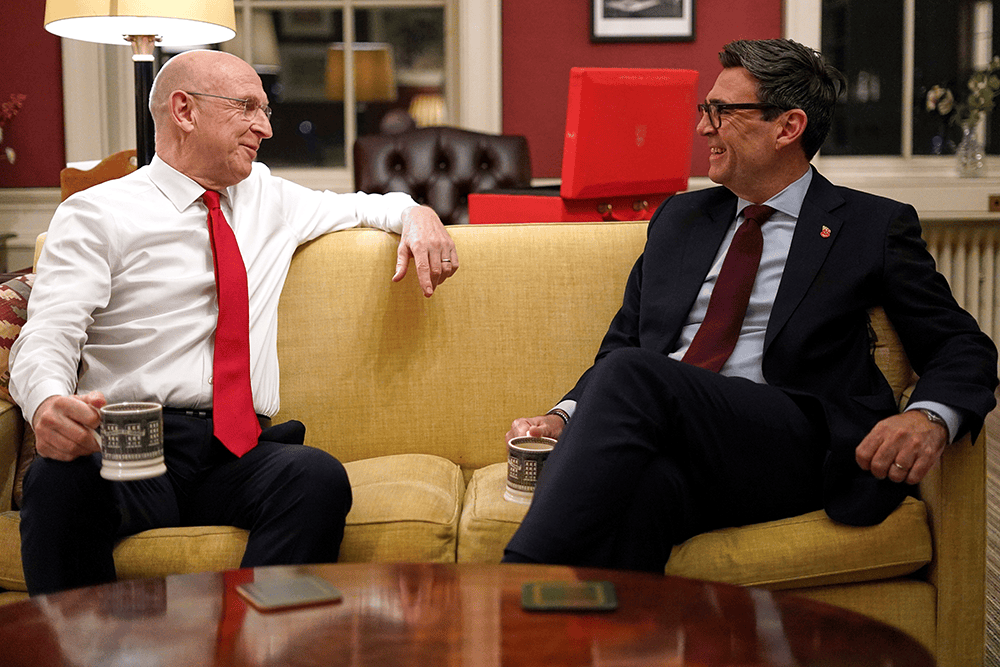


What is the purpose of a Budget? To stabilise the national finances? To kickstart economic growth? If you’re John Healey, it may be to show the markets that you’re fiscally responsible and the public finances are safe in your hands.
If you’re Andy Burnham, the goal is to show the public that you’re trying to do something about the rising cost of living – and to convince Labour MPs that they were right to give you the job. But Burnham also has big plans to transform the country and this was a Budget more about tinkering than transformation.
Yes, defence will get £5 billion more by letting the National Wealth Fund borrow off the public balance sheet to invest in defence companies. By introducing a new ‘founder’s relief’ to give tax breaks on entrepreneurs’ first £10 million of earnings, Healey showed that he understands the need to win back business. It is certainly no bad thing that Healey only put up tax by £6.9 billion, dwarfed by the £75 billion by Rachel Reeves.
A December election would also mean Reform would have little time to install paid campaigners in key seats
But when even the Prime Minister agrees the country is in crisis, why was it all so milquetoast? The explanation the Chancellor gave is that the international situation is likely to make things unpredictably worse in the months ahead – particularly if Israel and the US reopen hostilities with Iran.
But another explanation is more intriguing. It looks very much as though the Budget was designed not to disrupt Labour’s steady climb in the opinion polls, leaving open the possibility of an early general election. And why not? The Office for Budget Responsibility upgraded its estimates of growth this year to 1.2 per cent and downgraded growth for next year to just 1 per cent. With this in mind, it may not even be that the Budget was the most important event this week in British politics: a poll on Monday put Labour on 30 per cent, ten points clear of Reform UK and eight points ahead of the Tories.
Labour’s chances of victory are partly determined by the battle on the right. One pollster’s model shows that between a Reform lead of two points over the Tories and a Conservative lead of four points over Reform, Labour could secure a majority with just 32.5 per cent of the vote. If the Tories had a two-point lead over Reform, Labour could get a majority of 50 with just 34 per cent of the vote.
Everything the Prime Minister has done since Labour party conference suggests he wants that option on the table. Firstly, he outlined a series of pledges (social care, electoral reform and reversing Brexit) which would require him to rewrite Labour’s manifesto. The real crunch decisions about public spending have been delayed until the spending review next autumn.
And then there is the most headline-grabbing bit of the budget – £100 off energy bills for 20 million families with homes in council tax bands A to D, a £2.6 billion bung to voters.

The evidence suggests Labour is preparing. It is understood that party HQ has secured a large deal with a German print company that could be used to produce election literature. Sources in the Commons say that civil servants have been in contact with the Royal Mail to discuss the practicalities of mass mail drops in the run-up to Christmas.
This has not gone unnoticed. Last week, the Lib Dems sent an email to their members. Mark Pack, the chair of the Lib Dems’ election committee, revealed the party board had decided they ‘should start preparing seriously for a snap general election’. He explains: ‘We think there’s around a 30 per cent chance of a 10 December election. That’s far higher than most people are predicting, and high enough that we have to be ready.’
A senior strategist in a rival party says: ‘For Labour, two strategies make sense. The first is that you capitalise on the warm, positive feeling in the polls and go early while you’re still in your honeymoon. The second is that you let it run long and try to demonstrate delivery in government… If you’re going to cash in on the honeymoon, the window is quite narrow.’ Moving quickly would limit Reform’s ability to spend the £72 million it was given recently by two crypto billionaires.
Nigel Farage’s party has just sent an eight-page paper to around 330 constituencies, at a cost of several million, all of which would come off the £34.1 million maximum allowed for a party fighting every seat in the country. A December election would also mean Reform would have little time to install paid campaigners in key seats and regions, an important use of the money.
‘I suspect [Burnham] is unlikely to get a better chance than now to put Farage out of business,’ says a former civil servant. ‘If he can finesse the Budget, I’d call it for December if the polling was in any way supportive.’
The Tories also seem woefully unprepared. Many candidates have yet to be selected for key seats. Labour, which would only be defending sitting MPs (and probably not all of them), does not have that problem.
In fighting the Makerfield by-election and ousting Keir Starmer, Burnham showed he is prepared to gamble. He has also proved, so far, to be lucky. Bond traders tend to pick on the weakest link among the major economies. In 2022, when Liz Truss and Kwasi Kwarteng’s ‘mini’ Budget blew up the pound and gilt rates, Britain was the sick man of the G7. This month, the weakest link is France, where pseudo-revolutionary violence is ripping through the country.
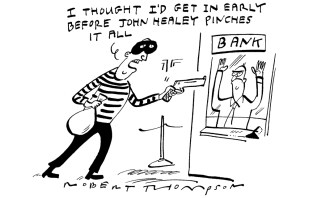
You can imagine a world in which Burnham uses Alan Milburn’s report into Neets to announce modest changes to the welfare system, secures some sort of deal with the EU on 20 November and rides a wave of public goodwill to a modest but workable majority.
Burnham’s team, of course, says it won’t happen. The biggest impediment remains the argument Burnham would make in a general election, where he would be accused of seeking a mandate to raise taxes. Theresa May was not thanked for trying to cash in early. ‘There is so much that could unravel,’ says a former Downing Street Tory. ‘What’s the reason for the election? Quite clearly to increase taxes just as bills are going up. He has no answers on the EU, the care service and so on. Are you really going to string out “hope in every heart” for six weeks?’
But Burnham might think, accurately, that he is a better campaigner than May – and Badenoch. And if an early election is not his game plan, the Budget will probably just have deferred the difficult decisions which he knows are needed.



Comments