Chinese Whispers
A podcast hosted by Cindy Yu on Chinese politics, society, and more.
A podcast hosted by Cindy Yu on Chinese politics, society, and more.
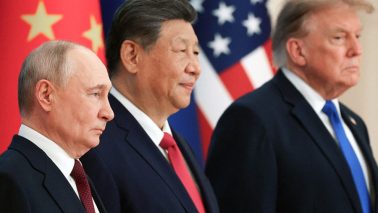
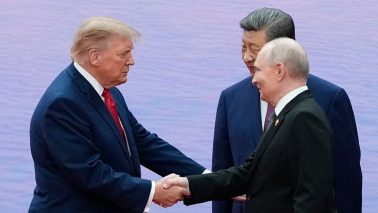
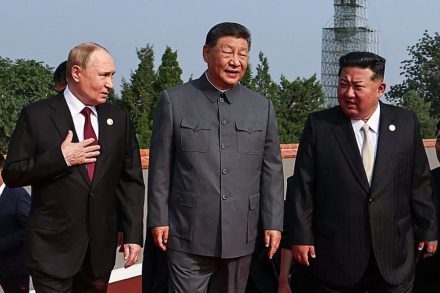
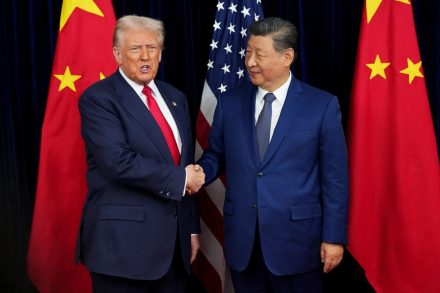
Vladimir Putin did not get to carve up the world at today’s historic summit in Shenzhen with Donald Trump and Xi Jinping. But he got the next best thing, which was a photo opportunity. Plus, warm words of friendship from Donald Trump. And from the Chinese side, the validation that Xi still values the two inheritances of Cold War superpower status that Russia has hung on to – a large nuclear arsenal and a permanent seat at the UN’s Security Council. Best of all for Putin – and most shocking to Trump’s critics – was the moment when Trump called Putin “my friend” and promised that they would do “a lot of wonderful things” together.
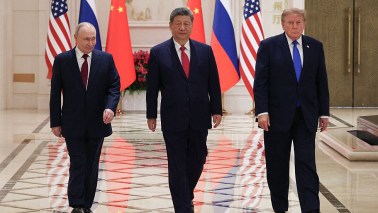
He may not have got a hug on the tarmac from Xi Jinping, but it’s been a good APEC summit in Shenzhen for Vladimir Putin nonetheless. Of course, the optics were always going to be good, with the trilateral meeting between Putin, Xi and Donald Trump elevating the Russian president to the same status as his superpower interlocutors. No wonder it has been hyped in the domestic media for days, even as they (rightly) downplayed the idea that this was ever going to be a “Yalta 2.0” dividing up the globe. It is, however, about more than just optics. The Russians were not expecting any concrete agreements to emerge from the event but hoped to be able to accomplish three things. First of all, keep the Donald onside.
China is the master of political theater, and the country’s technology capital is the perfect stage for President Xi Jinping to strut and pose. World leaders arriving in Shenzhen today for the APEC summit reportedly will be treated to drone displays, shuttled between venues by driverless electric vehicles and ushered to their seats by humanoid robots. Alongside the copious banquets, they will be served up a diet of platitudes about “building a community with a shared future for mankind” – Communist party speak of a China-centric world. Enter stage left, a wounded and unpredictable Donald Trump. When he and Xi last met, at the White House in September, the President presided over a summit of almost cringeworthy obsequiousness.
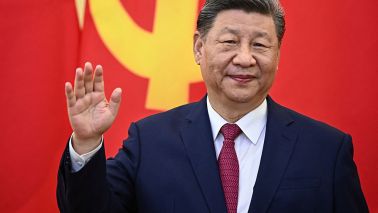
Mao Zedong was certainly a dictator, French footballer Kylian Mbappé was right about that, but the label still feels inadequate for a man who was responsible for the deaths of tens of millions of Chinese. He was a mass murderer, one of the worst tyrants of the 20th century, in a super-league alongside the likes of Hitler, Stalin and Pol Pot. When he died in 1976, after endless and barbaric campaigns and purges, his legacy was a traumatized and impoverished land of fear and paranoia.
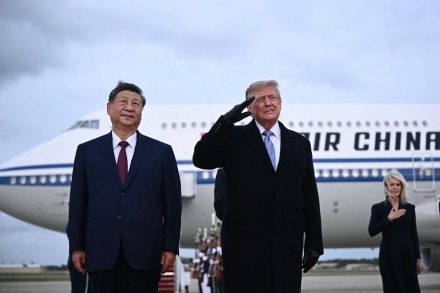
Moments before President Xi Jinping climbed down the steps of his aircraft to be greeted by Donald Trump, US marines were filmed on their hands and knees smoothing out the red carpet, Chinese officials looking down from the top of the steps. It was an uncomfortable image, ridiculed on social media for the symbolism of kowtowing to the emperor. But it set the tone for a summit which so far has been heavy on pomp and ceremony, rich in platitudes, but with very little in the way of substance. A strong diplomatic case can be made for political fawning – where the power dynamics are lopsided against you, and if there’s a chance of a reasonable payback.
When Xi Jinping arrives in Washington today for a much-anticipated summit with President Donald Trump, the Chinese leader will want to show the world that this is more than just an act of reciprocity for hosting the US president four months ago. At a time of ongoing global disputes ranging from trade to the Iran war to the ever-elusive North Korea problem, Beijing will want to give the impression of stabilized relations with the global hegemon. Beneath the surface, however, China shows few signs of altering its worldview. This not only remains fundamentally in opposition to what it calls the “anti-China” West but crucially involves its support for western adversaries, including North Korea. The last time Trump and Xi shared a tête-à-tête was in May.
A 20-year-old Chinese researcher dressed in a red crayfish costume has become a symbol of Beijing’s ambition. At a scientific conference in Paris last fall, he explained that he was working on an important project. His plans would enable his country’s astronauts to prepare spicy crayfish soup, a Chinese favorite, on Mars. “That’s what we’re competing with. The vibe is good in Beijing,” Drew Endy, associate professor of bioengineering at Stanford University, said in evidence to a Senate hearing last month. The hearing examined whether the US is losing its innovation advantage to China. Concerned senators saw the big red crayfish as further evidence of the scale of Chinese ambition when it comes to Mars.
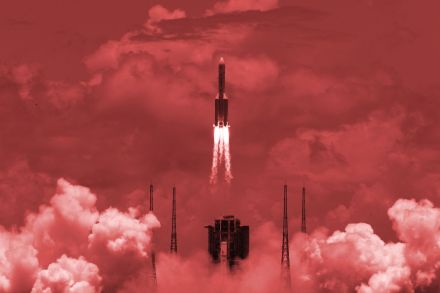
If you were Kim Jong-un, you’d be pretty happy right now. North Korea’s third supreme leader is not only the hermit kingdom’s most successful leader – he is also the richest. With the sanctions-stricken country having amassed over $20 billion in foreign currency earnings as of last year, Kim is at his most emboldened since he took power in December 2011. As more North Korean artillery, missiles, and manpower head in Moscow’s direction to aid its war against Ukraine, Kim knows that for now, North Korea can count on its Cold War patrons of Russia and China for brotherly support. Pyongyang’s neighbors offer a crucial helpline in circumventing international sanctions and ensuring the Kim regime continues to reap rewards. North Korea is no stranger to evading sanctions.
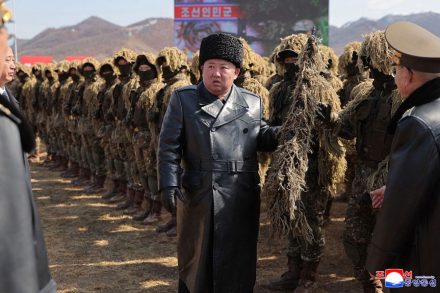
China’s political interference is in many ways worse than President Trump asserts, but the true nature and scale of Beijing’s activities may be obscured by his efforts to use it for partisan gain. Whatever Trump’s motives in accusing China of meddling in the 2020 presidential election – “the largest compromise of election data in history,” as he put it – Beijing has undoubtedly become more aggressive in its political interference. Beijing has adopted Russian-style disinformation operations in its attempts to undermine its western rivals, and the United States in particular. The pandemic was a turning point.
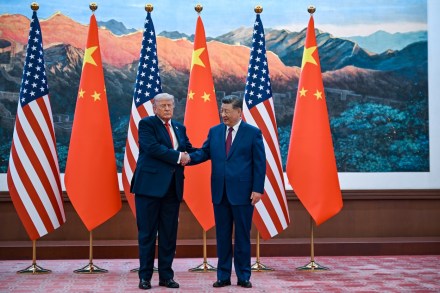
When Xi Jinping visited North Korea in June 2019 for his first state visit, he would not have expected nearly seven years later that the hermit kingdom would be in an alliance with Russia. As Xi concluded his second visit to the country yesterday, the Chinese president’s pledges to "strengthen strategic coordination" and "uphold regional peace and development" with his North Korean counterpart emphasized how Beijing wants to ensure that its northeastern neighbor does not cross any red lines. With Beijing having been Pyongyang’s largest economic partner for nearly two decades, Xi’s visit serves as a clear reminder to North Korea that China wants to maintain close ties and, crucially, ensure stability on the Korean Peninsula.
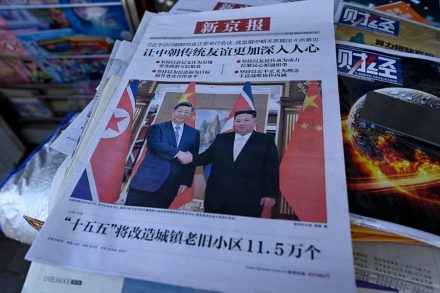
On Donald Trump's sojourn to China – the first visit by a US President in almost a decade – North Korea was hardly at the top of the agenda. Trump and Xi Jinping had bigger fish to fry, be that China’s desire to secure rhetorical US concessions on Taiwan, Trump’s wishes for greater Chinese investment in US manufacturing or whether Beijing can compel Iran to ease the effects of the Iran War. But US-China relations are not just a two-player game. Only last weekend, history was made as North Korean soldiers participated in Moscow’s Victory Day parade for the first time. A day beforehand, Kim Jong-un had pledged to Vladimir Putin that North Korea would "give top priority" to its relations with Russia.
President Donald Trump struck a conciliatory tone during his trip to China. He returned from his Beijing summit with Xi Jinping yesterday full of praise for the “great leader,” who is, in Trump’s estimations, “an incredible guy.” The summit was “very successful, world-renowned, and unforgettable,” according to the President, who insisted that “a lot of different problems were settled.” But there’s one problem that hasn’t been addressed: the growing number of Chinese operations on US soil. China’s espionage and influence operations are extensive Last week Eileen Wang, the mayor of the southern Californian city of Arcadia agreed to plead guilty to acting as an illegal agent of China.
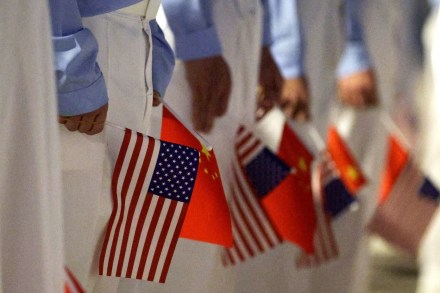
Air Force One is in the air as I write, whizzing from Beijing back to Washington – and Donald Trump leaves China with many questions unanswered. There were warm words on both sides and plenty of friendly symbolism in the President’s big summit with Xi Jinping. But the fundamental great power tensions remain – over trade, technology, and war and peace in the Middle East and Taiwan. Washington and Beijing agree that Iran should never have a nuclear weapon – though it remains unclear the extent to which China will help reopen the Strait of Hormuz. Its closure hurts the Chinese economy, of course, but China has significant energy reserves and Xi knows that the pain spreads around the world to his advantage.
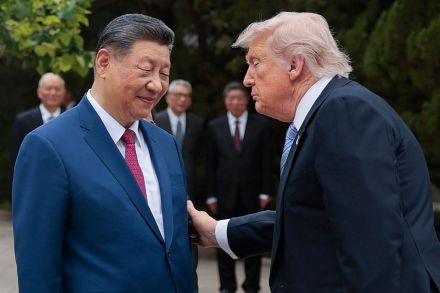
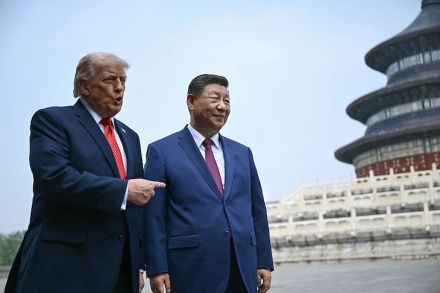
Although the substance of the Donald Trump-Xi Jinping talks are about tariffs, trade, supply issues (rare earth metals etc), fentanyl, Taiwan and most importantly Iran, the main purpose of the meeting for both leaders will be their future political survival. This is the essential subtext that you will probably not hear about from most legacy media. Xi needs a successful deal with Trump to show that he is still useful as Secretary General of the CCP Trump needs to bag wins soon to bring to prevent a Democratic sweep of Congress in November’s midterm elections. Lose both houses and the President can be sure that impeachment will follow.
Taiwan is “the most important issue,” Xi Jinping warned Donald Trump. “If mishandled, the two nations could collide or even come into conflict, pushing the entire China-US relationship into a highly perilous situation,” according to Chinese state media. The contrast with Trump’s comments was striking. Trump had earlier named trade as the most important issue. In opening remarks, the American President stuck to bland flattery, saying he and Xi had a “fantastic relationship,” that Xi was a “great leader” and that “it is an honor to be your friend.” “The relationship between China and the USA is going to be better than ever before,” he insisted.
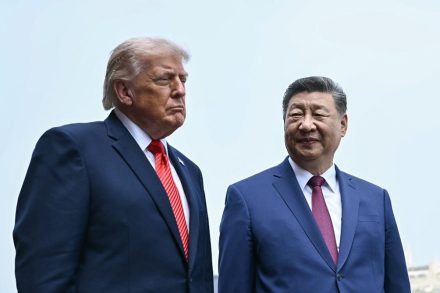
Donald Trump flew to Beijing this week and wants three things when he sits down with China’s President Xi Jinping: a tariff truce that survives his own courts, Chinese pressure on Iran to end the war that never seems to end and a photograph that makes him look victorious. Xi has problems of his own. But he has watched four American presidencies from Zhongnanhai, the walled compound beside the Forbidden City where the Communist party leadership rules, and he knows the value of silence when his counterpart is talking himself into trouble. Trump’s approval rating is the lowest of his second term. What Xi wants from this meeting with Trump is recognition: two great powers, two systems, meeting as equals Trump has obliged Xi noisily.
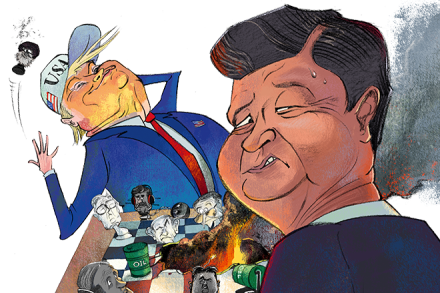
As President Trump travels to China today, his original plans for the visit have been upended. He wanted to arrive as a triumphant conqueror but increasingly resembles a supplicant. Will he strike a "Two T’s" deal – a grand bargain that trades Taipei for Tehran? Trump has periodically voiced his irritation with China, but at bottom he respects – and even admires – President Xi Jinping as the kind of tough guy that he can do business with on a variety of fronts. The most important one has become Iran, which is threatening to increase its nuclear enrichment program and successfully defying Trump’s threats to blow it into oblivion. China is Iran’s biggest backer. It previously pushed Tehran into ceasefire talks with Washington.
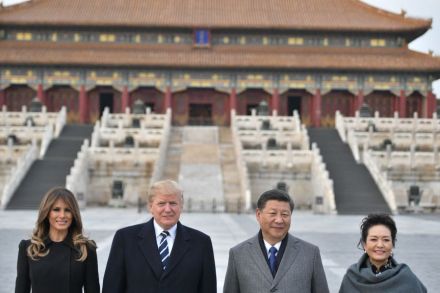
Despite the hype surrounding China’s artificial intelligence capabilities, progress remains heavily dependent on theft and smuggling. The Chinese Communist party (CCP), meanwhile, is determined to maintain tight control. That has become increasingly clear ahead of this week’s Beijing summit between Donald Trump and Xi Jinping. The Chinese leader is determined to lead the world in what he terms an "epoch-defining technology." He appears confident that Trump, preoccupied by his war against Iran, has limited options to counter Beijing’s increasingly brazen activities. Last month, the White House accused Beijing of "industrial-scale" theft of know-how from American AI labs.
China’s largest trade show is now under way in the southern city of Guangzhou. The Canton Fair is a colossal month-long affair with around 32,000 exhibitors and is often described as a shop window for Chinese manufacturers – a barometer of the China trade – where just about anything and everything can be bought. This year the mood is subdued. "The specter of the Iran war hung heavy like the banners inside the gigantic exhibition halls," as Bloomberg described it. Exhibitors reportedly complained of soaring costs and falling orders, most notably from the Middle East.
The West’s technology brains and universities are arming China. A few of them are potentially breaking the law to do it, but most of them don’t need to. The front door has been open for years, and nobody in London or Washington has thought to close it. According to a federal indictment unsealed in Manhattan last month, on December 18, 2025, in a warehouse somewhere in Southeast Asia, a team of men used a hair dryer to peel serial-number labels off genuine server boxes and press them onto fakes. The real servers, loaded with some of America’s most restricted artificial intelligence hardware, are alleged to have long since been shipped to China. What remained, according to the indictment, were dummies – non-working replicas repackaged to look untouched.
30 min listen
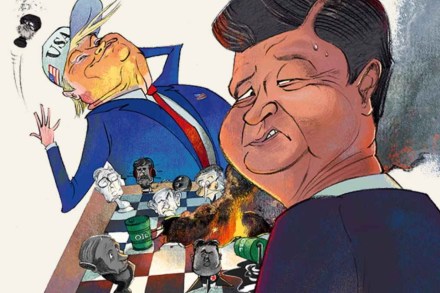
As the crisis in the Middle East has escalated, Donald Trump's posturing has led many to question his strategy – and if he even has one. Geoffrey Cain, former foreign correspondent, expert on authoritarian regimes – and the author of this week's cover piece in The Spectator, joins Freddy to explain why Trump's ultimate target in the war is China. From the Belt and Road development initiative to more tacit bilateral support, President Xi has been playing a game of chess, to try to check America's power. With Nicolás Maduro arrested and Ayatollah Khamenei assassinated, President Trump is showing his willingness to project American power, at whatever cost – so far. Cain raises questions for those who assume we're moving to a multipolar world.
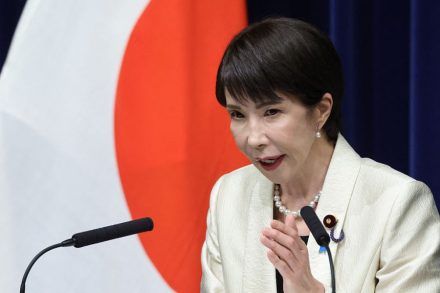
One of the most serious issues in the well-filled in-tray of freshly endorsed Japanese Prime Minister Sanae Takaichi is Taiwan, which China claims as its own sovereign territory, and the lamentable state of Sino-Japanese relations. Takaichi provoked fury with comments in the Japanese parliament in November when she stated that were China to attack Taiwan, it would be interpreted as a "survival-threatening situation" for Japan, implying a military response could follow. Under the terms of its constitution, Japan is severely limited in its military options but Takaichi appeared to be preparing more solid ground with her phrasing. A 2015 law changed the constitution allowing Japan to retaliate if the country faced a "life-threatening" situation.
The decision to sentence Jimmy Lai to 20 years in jail in Hong Kong is no surprise, but it is no less shocking or heartbreaking. For his family, especially his courageous wife Teresa, son Sebastien and daughter Claire, who have advocated so tirelessly for their father over the past five years, one can only imagine the pain and grief they feel. Sebastien and Claire have walked the corridors of power in Washington, DC, London, Ottawa, Brussels, Paris and beyond, and sat in television studios for hour after hour, seemingly to no avail. For Hong Kong, this is yet another dark day, yet another nail in the coffin of the city’s freedoms. And for everyone who cares about liberty, the rule of law and basic human rights, this sentence is a punch in the solar plexus.
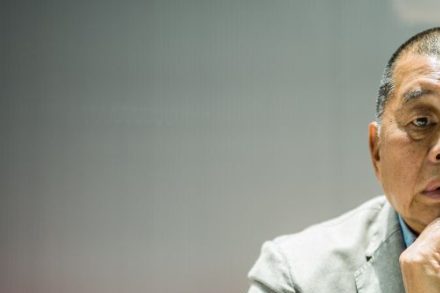
According to unconfirmed reports, General Zhang Youxia, China’s vice-chairman of the Central Military Commission (CMC), sent a company of troops (over a hundred or more) to the government’s Yingxi Hotel in western Beijing on January 18. Their mission was to arrest Xi Jinping. A few hours before, the Chinese president – alerted by an informant – set in motion countermeasures. Troops under the command of Cao Qi, head of Xi’s Central Guards Bureau, ambushed Zhang’s soldiers. In the ensuing gunfight at Yangxi Hotel, nine guards were reportedly killed along with dozens of Zhang Youxia’s soldiers. Throughout China, military movements have been banned and troops and officers have been confined to barracks.