Economy

  • AAPL

    213.43 (+0.29%)

  • BARC-LN

    1205.7 (-1.46%)

  • NKE

    94.05 (+0.39%)

  • CVX

    152.67 (-1.00%)

  • CRM

    230.27 (-2.34%)

  • INTC

    30.5 (-0.87%)

  • DIS

    100.16 (-0.67%)

  • DOW

    55.79 (-0.82%)

Is Britain losing its sense of fairness?

Has Britain become a freeloader’s paradise, asks the Spectator’s economics editor Michael Simmons in our cover piece this week. Michael analyses ‘the benefits of benefits’, at a time when Britain’s welfare bill is burgeoning and most households are struggling with cost of living. For example, while a family of four can expect to pay £111 to visit the Tower of London, that is just £4 total on Universal Credit (UC), and for London Zoo it is £108 compared to £26. Michael is not arguing against the idea of helping those in need, but pointing out that – as the benefits bill continues to increase – this is another case of


Spotlight

Featured economics news and data.

Cutting Britain’s giant welfare bill would be an act of kindness

Does having money really matter that much? There are those, usually with quite a bit of it, who want us to care less about materialism. But, unequivocally, money really does matter – not because of any status it supposedly brings, but for the freedom it buys: freedom to choose how we live and how we look after others. Considering this, it seems that the deep disillusionment with mainstream politicians in recent years stems from a protracted and ongoing period of stagnant living standards over which they have presided. But the truth is that the average person has not got poorer since the global financial crisis. They have got a little

Jonathan Portes – my part in his downfall

In 2018, the Equality and Human Rights Commission commissioned and promoted a report which predicted that an extra 1.5 million children would be plunged into (relative) child poverty by 2021/22 if the government implemented Universal Credit. The proportion of children living in (relative) poverty would, it said, rise from 29 per cent to the unprecedented figure of 41.3 per cent. Portes’ prediction was a totem for all economic forecasting, most of which is little better than guesswork and should not be taken seriously If you think such prognostication is beyond the remit of the Equality and Human Rights Commission, I can only concur. The report was written by Howard Reed

The Fed’s rate rise shows it is confident about the banks

So, things really are different this time. The US Federal Reserve has decided to raise its Federal Funds Rate (its main interest rate) by a quarter-point, to 4.75 per cent – 5 per cent, in spite of a banking crisis that has seen two large banks fail in the past fortnight. For the past two decades, this sort of thing didn’t happen. Under the unwritten laws of the ‘Greenspan put’, the Fed could be relied upon to provide some form of stimulus at the first sign of financial trouble. It began with the collapse of the hedge fund Long Term Capital Management in 1998, when the Fed put together a

The high price of low interest rates

You’ll recall that I’ve railed for years against zero interest rates, which transplanted a cancerous marrow into the very bones of the financial system. Originally a novel emergency expedience to shore up a fiscal skeleton riddled with osteoporosis in 2008, effectively free money was allowed to persist for an improbable 14 years. Not to forget, bank rates also plummeted in 2002, barely recuperating to a modest 5 per cent at last when the spectre of the end of the world shoved rates smack down to nothing. Brief expedience slid to long-term crutch. So we’ve really had two decades of central banks setting up lemonade stands on the corner: cups brimming

Why was Credit Suisse allowed to linger for so long?

If G-SIBs were a gentlemen’s club rather than a category invented by the Basel-based Financial Stability Board, Credit Suisse would have been kicked down the front steps months ago. G-SIBs are the 30 ‘global systemically important banks’ and even within that list, Credit Suisse counted among those with the lowest ‘required levels of addition capital buffers’: in short, regulators considered it rock-solid. But that was a judgment on its end-2021 balance sheet, not its management. Credit Suisse has been so badly run for so long – so riven by tension between the dull Swiss wealth business it ought to have been and the global player it imagined itself to be

Why is inflation going back up?

For the past few months, the debate over inflation in Britain has centred around just how fast the rate might fall. Both the Bank of England and the Office for Budget Responsibility’s most recent forecasts have been very optimistic, showing inflation falling back down to something approaching the Bank’s target of 2 per cent by the end of the year. Despite a slow start to the year, and CPI (core price inflation) remaining in the double digits, virtually everyone has assumed the headline rate was on a one-way track, heading downwards.  This makes this morning’s update a surprise and a blow to the economic consensus, as the Office for National

Why is bitcoin surging following SVB’s collapse?

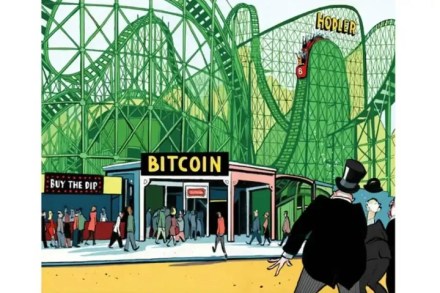
For more than a decade, bitcoin bores have been banging on about cryptocurrency as the future of money. The emergence and spectacular growth of digital currencies, according to these evangelists, prove that the financial system upon which we all depend is broken. Bitcoin was after all created in 2009, after the great meltdown of 2008, as a revolutionary concept to fight the corrosive global power of central banking. Bitcoin was pitched as the new digital gold. It was limited in supply and could not be centrally controlled – its value couldn’t be distorted by quantitative easing and morally bankrupt governments hooked on debt. Bitcoin wasn’t just for buying illegal stuff

Credit Suisse has been bought out – but at what cost?

Another Sunday, another banking takeover swiftly arranged before markets open on Monday morning. This time Credit Suisse has agreed to be bought by fellow Swiss bank UBS for 0.5 Swiss Francs a share – less than a third of its closing price on Friday and less than a tenth of what the bank was worth a year ago. A banking collapse which was beginning to look inevitable in spite of a 50 billion Swiss Franc bailout by the Swiss central bank on Friday has been averted, market turmoil has been avoided, or postponed, jobs have been saved (although many are expected to be lost in London as Credit Suisse’s investment banking

Is the banking system on the brink?

Has a full-scale banking crisis been avoided? UBS has announced a takeover of rival Credit Suisse for just over $3 billion – half of its valuation on Friday and a tenth of its valuation just two years ago. The deal, timed to conclude before the Asian markets opened, is intended to stop any domino effect that might have been created had Credit Suisse folded this week and started to call into question the viability of other banks. Reflecting the announcement, UBS shares fell 14 per cent in early trading. Credit Suisse calls it a ‘merger’, UBS calls it a ‘takeover’ but it can also be called a ‘bailout’. The deal

Mental health: an anatomy of a very British crisis

No victory is ever final in politics – and the wrecking-ball of lockdowns now seems to have destroyed almost every success of the 2012-20 welfare reforms. The workless numbers are again as bad as they they were under Labour. People who stopped working during lockdowns never quite got back into it and the UK has done a worse job than almost any other country at rebuilding its post-pandemic workforce. In 2009 I was filling Coffee House with attacks on the Labour government for keeping so many on benefits. And the story now? See below. Remember, this joblessness is not induced by recession and layoffs but incubated by welfare to produce

Can the UK economy outperform Russia?

First the good news. Unlike the IMF, which predicted in January that the UK economy would have a worse 2023 than even Russia, the OECD’s latest forecast has Britain outperforming Russia. Now the bad news: the OECD still predicts the UK to perform worse than any European country other than Russia.  Forecasts aside, the actual data for the UK economy is a slightly improving story Its latest bulletin, published this morning, sees Britain shrinking by 0.2 per cent in 2023, compared with growth of 0.3 per cent for Germany, 0.7 per cent for France and 0.8 per cent for the Euro area as a whole. The Russian economy, by the way,

Welcome to Big State Toryism

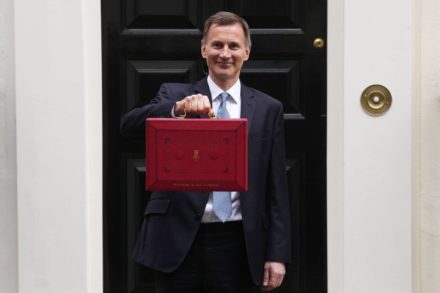
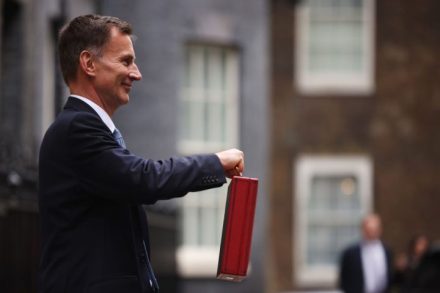
A million pounds is very small change in the context of wider government spending – especially compared to the £20 billion of extra giveaways Jeremy Hunt has announced for the next few years. But sometimes that small change tells you more about a government’s priorities, and its sense of direction, than the big announcements. I suspect that was true in this week’s spring Budget. Alongside billions dished out for freezing fuel duty and extending the Energy Price Guarantee for another three months, the Chancellor also announced a government-sponsored prize, to run for the next ten years, ‘to the person or team that does the most ground-breaking British AI research’. What’s so

Is Jeremy Hunt’s childcare revolution something to celebrate?

Jeremy Hunt has announced plans to extend the 30 hours a week of ‘free’ childcare for three and four year olds to include babies as young as nine-months old. This expansion of childcare provision has been hailed by the Chancellor as a measure to allow mothers to return to employment if they want to; it will also, according to Hunt, help boost the economy. But has anyone paused to think about the impact on the children themselves – and families? The truth is that Hunt’s proposed changes aren’t a win for mothers, children, and families as a whole. Why? Because the childcare plans suggest that a mother’s worth comes from

Is it curtains for the Conservatives?

Can the Conservatives do it again? The Tories have won four elections in a row but face a struggle to emulate that success next year. The Budget yesterday offered a taste of the Tories’ election pitch. But the government cannot escape some difficult numbers: Labour has led the Conservatives in the polls for more than 480 days. Keir Starmer’s party enjoys a current average poll lead of around 21 points. If Rishi Sunak does defy these odds, his would be the first party since 1830 to win a fifth election on the trot. Back then, the Duke of Wellington was prime minister, the Slavery Abolition Act (abolishing slavery across the

The Budget in twelve graphs

Jeremy Hunt has just delivered his second Budget as Chancellor. The top message the Chancellor wants to push is that Britain will avoid recession. But the Office for Budget Responsibility’s report suggests immigration may be the real story. Among the policy announcements were an extension to the energy price guarantee, currently at £2,500, to July (effectively scrapping the price hike), committing £5 billion to fund free childcare for one and two year-olds and abolishing the pension Lifetime Allowance. But what else did we learn from today’s Budget? You can follow these metrics every day on the budget page of The Spectator’s data hub.

The biggest Budget surprise wasn’t one of Jeremy Hunt’s announcements

The biggest surprise from today’s Budget was not an announcement, but the forecasts that gave Jeremy Hunt room for manoeuvre.  The Office for Budget Responsibility has revised its forecasts for economic growth and inflation towards the upside. The OBR no longer expects the UK to enter into a technical recession (two consecutive quarters of negative growth). Overall, it is predicting a small contraction of 0.2 per cent this year, which will be followed by an average of 2 per cent growth (1.8 per cent in 2024, 2.5 per cent in 2025, 2.1 per cent in 2026 and 1.9 per cent in 2027).  Moreover, the OBR predicts a big fall in

What economic crisis comes next?

As we come to the end of an era in which money was practically free, the big question is what the fallout will be from rising interest rates. It isn’t difficult to spot possible problems. Many governments look vulnerable. There are concerns about the UK, where the national debt is now equivalent to roughly 100 per cent of economic output. But what about Italy, where national debt is 150 per cent of national income? Might it succumb to a new vicious circle of rising debt and borrowing costs? How long can its bonds be propped up by low interest rates in the eurozone and backstops provided by the European Central

Crash test: the new era of economic uncertainty

Why did nobody see it coming? When the late Queen asked this question about the crash of 2008, on a visit to a London business school, no one had a clear answer. Why, in a financial world crawling with regulators, did no one spot that subprime mortgages were toxic, on the brink of falling apart?  The simple answer is that we got too comfortable. We assumed that times had changed and dropped our guard. It looks as if we’ve dropped our guard again. On the way out of the financial crash, we seem to have simply and blindly assumed another set of false beliefs: that ultra-low interest rates, designed to help

Will Credit Suisse trigger a global banking crisis?

When your largest single shareholder decides that enough is enough, that it is no longer prepared to throw good money after bad to prop up your finances, you really do have a problem. And that is exactly what has happened to Credit Suisse this morning. The Saudi National Bank, which owns a 10 per cent share in the Swiss bank, announced that it is no longer prepared to put up any more capital to prop the bank up. Credit Suisse shares promptly fell by 20 per cent before trading was suspended. Yes, Saudi National Bank has trashed the value of its own holding – but evidently reckoned that that is a

In defence of old-fashioned British banks

How is it possible for a bank to collapse because it holds too many customer deposits – rather than too few, or too many bad loans? That was the mystery of the sudden failure of Silicon Valley Bank, America’s 16th largest, which had seen its cash holdings double to almost $200 billion during the pandemic period because its customers, mostly high-growth tech companies, were awash with venture capital funding that they could not immediately spend. So they deposited it with SVB, which in turn invested a large portion in illiquid long-term fixed-rate mortgage bonds offering the highest yield available from a meagre range of choices. But as interest rates rose