Economy

  • AAPL

    213.43 (+0.29%)

  • BARC-LN

    1205.7 (-1.46%)

  • NKE

    94.05 (+0.39%)

  • CVX

    152.67 (-1.00%)

  • CRM

    230.27 (-2.34%)

  • INTC

    30.5 (-0.87%)

  • DIS

    100.16 (-0.67%)

  • DOW

    55.79 (-0.82%)

Is Britain losing its sense of fairness?

Has Britain become a freeloader’s paradise, asks the Spectator’s economics editor Michael Simmons in our cover piece this week. Michael analyses ‘the benefits of benefits’, at a time when Britain’s welfare bill is burgeoning and most households are struggling with cost of living. For example, while a family of four can expect to pay £111 to visit the Tower of London, that is just £4 total on Universal Credit (UC), and for London Zoo it is £108 compared to £26. Michael is not arguing against the idea of helping those in need, but pointing out that – as the benefits bill continues to increase – this is another case of

Spotlight

Featured economics news and data.

Cutting Britain’s giant welfare bill would be an act of kindness

Does having money really matter that much? There are those, usually with quite a bit of it, who want us to care less about materialism. But, unequivocally, money really does matter – not because of any status it supposedly brings, but for the freedom it buys: freedom to choose how we live and how we look after others. Considering this, it seems that the deep disillusionment with mainstream politicians in recent years stems from a protracted and ongoing period of stagnant living standards over which they have presided. But the truth is that the average person has not got poorer since the global financial crisis. They have got a little

Is Britain getting back to work?

The UK’s labour market is cooling down, slowly. Although unemployment rose from 3.7 per cent to 3.8 per cent, figures published by the Office for National Statistics this morning show that job vacancies have fallen for the ninth consecutive period. They’re now down 47,000 but still stand at over a million. The number of people out of work and not seeking it (economically inactive) fell too, as students started hunting for work. The most startling figures, however, were those for wage growth. They showed that average pay rose 6.6 per cent in the three months to February. Hefty pay raises in normal times – but adjusted for inflation, that’s a

What will happen to interest rates once they peak?

As the battle of the economic forecasts rages on, it’s useful to note that (right now, anyway), the predictions aren’t all that different. The more optimistic scenarios, like the one published by EY ITEM Club today, suggest the UK will see minuscule growth this year but avoid technical recession. The pessimistic scenarios, like the IMF’s latest forecast, are being revised upwards but still show the UK economy experiencing a short and shallow contraction.  The good and bad scenarios are, therefore, both largely within the margin of error –  and all are pretty lousy at that (albeit better than previously expected). Regardless of which proves right, this is shaping up to

London’s stock market risks sinking into irrelevance

The chip maker ARM decided against listing its shares in London, despite plenty of arm twisting from the government. The building materials group CRH decided last month that New York was a better place for its equity to be traded, leaving the FTSE for good. The mining giant BHP has moved its listing from London to Sydney, while another materials group, Ferguson, switched from London to New York last year. And now hotel group IHG may make the same journey.  At these rates, no one will need the Prime Minister’s new plan to boost numeracy to count the number of companies still listed on the London market. The fingers of

What’s the truth about long Covid?

How big a deal is long Covid and can it be treated? Opinions range from it being a serious impediment to the health of millions of those who suffered from Covid-19 to a figment in the imagination of the workshy. A study by the University of Oxford of a drug developed by US Pharmaceutical company Axcella Therapeutics may just help to shed some light. The drug, AXA1125, is designed to boost the performance of mitochondria, which generate energy for our cells and control the amount of inflammation in the body. It is believed that long Covid causes fatigue – among other symptoms – by inhibiting the mitochondria.    While a drug to treat

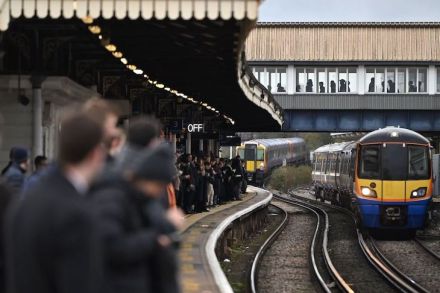
The strikes are taking their toll on UK growth

February was a no-growth month, according to the latest update from the Office for National Statistics, published this morning. A rise in construction was offset by a fall in services, resulting in zero headline growth. The strikes are taking their toll. The biggest contribution to the fall in services came from education and public administration, as striking teachers downed tools. Education fell by 1.7 per cent. Meanwhile public administration fell by 1.1 per cent, as ‘this industry also saw industrial action take place within the civil service during February 2023.’ An optimist might note that while the strikes offset economic activity in other sectors, at least there was some growth to point

Who speaks for pie factories if the CBI goes down?

Three months ago I praised Tony Danker, director general of the Confederation of British Industry, for berating the government over corporate tax rises and skill shortages: at last, I said, a CBI chief con brio. But now he’s been fired following an investigation into his ‘workplace conduct’ and three other CBI staffers have been suspended over other claims, including a rape allegation. The taint is life-threatening: if members flee, the CBI won’t survive. And if it doesn’t, say critics, not much is lost – because as a lobby group for the interests of its dominant large corporate subscribers, the UK’s leading employers’ organisation was already past its sell-by date. Fair

Interest rates can’t go back to being as low as they were

Good news – at least for those who hold faith in economic forecasts. The IMF has just eradicated half the recession it forecast, in January, for Britain. At that point, it expected the UK economy to shrink by 0.6 per cent over 2023 – which would have meant Britain uniquely suffering a recession among advanced nations. Today, in its latest World Economic Outlook, the IMF has revised that down to a fall of 0.3 per cent. Moreover, while the outlook for Britain has improved, for a number of other countries it has worsened, most notable for Germany and Japan. Germany is now also forecast to share our recession, with output

What I learned from Nigel Lawson

The memory of Nigel Lawson will always be a blessing. He was the embodiment of serious radicalism, a politician who changed Britain for the better – and for good. When I became chancellor, I hung a picture of Nigel behind my desk in No. 11. It was a large photograph of him holding up his red Budget box. It was an image which summed up the intellectual confidence that he brought to the job. But it was also a reminder of the sheer amount of preparation, hard work and attention to detail that he had put in to get the party and the government into a position where it could do

Should we really sell chocolate to Mexico?

BBC News reported Britain’s imminent accession to the Comprehensive and Progressive Agreement for Trans-Pacific Partnership behind two stories about racism in cricket, giving no suggestion that it might represent a major economic breakthrough. Rather the opposite, with emphasison the cautious official prediction that CPTPP membership will add just 0.08 per cent to UK GDP over the next 15 years. But as a former Asia-Pacific wanderer myself, I’m almost as excited as Lord Frost about the prospect of tariff-free trade with Australia, Brunei, Canada, Chile, Japan, Malaysia, Mexico, New Zealand, Peru, Singapore and Vietnam. This canny grouping of 500 million consumers should offer huge opportunities for UK businesses – and no

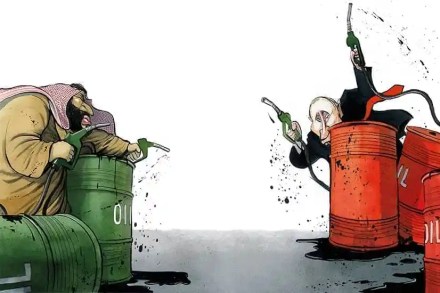
By reducing oil production, Opec is only helping Russia

Just when we thought inflationary forces were softening, the price of crude oil has shot up sharply today in response to an announcement by Opec that it will try to reduce production. A barrel of Brent crude, which touched $120 last summer before falling back to $75 last month, reached $85 at one point today. Some analysts expect it to hit $100. Given that the benign forecasts for inflation which shaped Jeremy Hunt’s budget were predicated on a falling oil price, has the case for economic recovery now collapsed? Unfortunately, in spite of the US’s drive towards energy independence in recent years, the world remains depressingly reliant on Opec for

Dominic Cummings understands Singapore. The Tories still don’t

I’ve read Kwasi Kwarteng’s surprisingly positive review of my book, Crack-Up Capitalism. Although it was unexpected to see someone from the libertarian corner being so enthusiastic about what is clearly a critical book, the experience was not new. After my previous book, Globalists: The End of Empire and the Birth of Neoliberalism, was published in 2018, I was startled to find Deirdre McCloskey, a leading classical liberal historian, praising the book as a manual for ‘keeping a liberalism which has made us rich and free.’ Globalists explained how neoliberals wanted to keep decision-making from democratic electorates. I took McCloskey’s praise as a validation of my core thesis. If it’s bracing to see a neoliberal academic

For once, there’s a battle of ideas happening in the Tory party

Yesterday’s announcement that the UK has joined the Comprehensive and Progressive Trans-Pacific Partnership brought with it a unique sense of unity within the Conservative party, with very different Tory factions praising the new trade bloc. But yesterday is behind us. Now it’s back to business as usual. Today ushers in the corporation tax hikes that Rishi Sunak first announced as chancellor back in 2021. The rise – from 19 per cent to 25 per cent for the largest companies – is, if anything, more divisive today than it was two years ago, as the decision was fiercely debated during the leadership election last year and then scrapped by Liz Truss

After 50 years: where next for VAT?

What is the appropriate act to mark the fiftieth anniversary of Value Added Tax in the UK? Are we celebrating? Surely not. Are we mourning? If only. But we should at least pause and reflect on the central role that VAT has played in our recent economic history.  The third largest source of tax revenue, forecast to deliver over £160 billion to the Exchequer this year, VAT has always been a cash-cow, but never without complaint. Most of the debates surrounding its introduction in 1973 focused simply on who and what should remain outside its claws. If you want an indication of what a different world this was, just look

No wonder some Remainers are unhappy about the UK joining the CPTPP

The United Kingdom has become a member of a free trade bloc embracing 500 million consumers. And it isn’t the European Union. No wonder, then, that some Remainers are feeling triggered by Rishi Sunak’s success in steering Britain to join the Comprehensive and Progressive Trans-Pacific Partnership (CPTPP). David Henig, UK director of the European Centre For International Political Economy and a longtime Remainer, griped: ‘It assists particularly those companies with trans-Pacific supply chains…The UK is mostly involved in European supply chains. And that’s why the economic impact is trivial. It could even be negative.’ The FT’s chief feature writer Henry Mance even used an old skit from Father Ted in

The CPTPP trade deal shatters the ‘little Englander’ Brexit myth

Britain’s acceptance into the Comprehensive and Progressive Trans Pacific Partnership (CPTPP) will be presented by the government as a triumph, a statement that Britain really does, finally, have something substantive to show for Brexit.   It is a deal which could not have been done so long as Britain remained a member of the EU, as the only trade deals we were allowed to enter into were those negotiated by the EU on our behalf. Cynics might counter that there is limited point in joining a trade bloc when you already have bilateral trade deals with seven of its 11 members and have negotiated deals with two others which have yet to

The next banking calamity: office blocks

When markets are in ‘seek and destroy’ mode, like the last dragon in Game of Thrones, it’s fruitless to guess where they might attack next. Silicon Valley Bank’s excess of deposits was not in itself a signal of distress. Credit Suisse’s balance sheet was stronger than those of many other leading European banks. Deutsche Bank is a lot better-managed than Credit Suisse. But still investors swarm in search of weaklings. And their next focus – alongside the impact on bond portfolios of fast-rising interest rates, as in SVB’s case – will be the most traditional of all causes of banking crises: commercial property. America has $20 trillion worth of it.

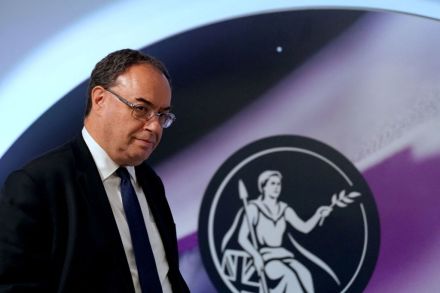
Can the Bank of England escape the blame for the inflation spike?

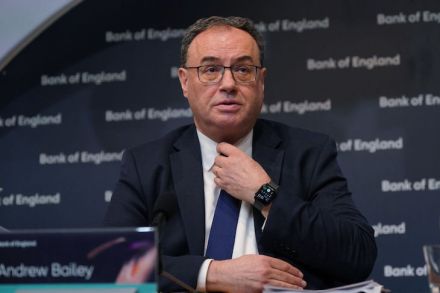
Who, or what, is responsible for the UK’s sky-high inflation rate? Not me, says the Bank of England’s governor. Andrew Bailey has pointed the finger at a number of causes: pandemic and lockdowns, Russia’s war against Ukraine and Britain’s tight labour market. But he singled out one group in particular – early retirees – as a contributing factor for the recent inflation spike: ‘If those workers have accumulated enough savings to sustain a desired level of consumption much like the one they had before their early retirement, at least for a while, aggregate demand will not have fallen by as much as aggregate supply…we should expect this to put upward

It will take a lot for the dollar to die

The end of the dollar as the world’s reserve currency has been predicted so many times that it is tempting to nod along with Jay Powell, Federal Reserve chairman, who pronounced last week that there is no immediate threat. But with high inflation in the US and China cuddling up with Russia, is it something the world should be taking seriously?      If the dollar was dumped then it would have serious consequences for the global economy. The status of the dollar allows the US to borrow much more cheaply than other countries, allowing it to sustain public debt of more than 100 per cent of GDP for the past decade.

Deutsche Bank’s collapse would be a threat to the whole eurozone

It could be next month. It might be next week. Or it might well happen over the weekend. But today’s collapse in the share price of Deutsche Bank, and the huge rise in the cost of insuring its debt against default, means it is probably only a matter of time before there’s an intervention. It looks increasingly inevitable that Deutsche will require some form of rescue, led by the German government and the European Central Bank. The trouble is: that will be a threat to the entire eurozone. If you have any money in Germany’s largest bank, the only rational move right now is to get it out To market

Will the interest rate hike be enough to tame inflation?

There was no easy option for the Bank of England’s Monetary Policy Committee (MPC) this week. Raising interest rates, even by a small amount, could add to financial instability following the collapse of Silicon Valley Bank and takeover of Credit Suisse over the past few weeks. But holding the base rate at 4 per cent might lead to accusations of ignoring double-digit inflation, which rose on the year in February for the first time since the Consumer Prices Index (CPI) peaked last October. Today, the MPC opted for the latter – voting 7-2 in favour of raising the base rate by 0.25 percentage points, from 4 per cent to 4.25