Economy

  • AAPL

    213.43 (+0.29%)

  • BARC-LN

    1205.7 (-1.46%)

  • NKE

    94.05 (+0.39%)

  • CVX

    152.67 (-1.00%)

  • CRM

    230.27 (-2.34%)

  • INTC

    30.5 (-0.87%)

  • DIS

    100.16 (-0.67%)

  • DOW

    55.79 (-0.82%)

Is Britain losing its sense of fairness?

Has Britain become a freeloader’s paradise, asks the Spectator’s economics editor Michael Simmons in our cover piece this week. Michael analyses ‘the benefits of benefits’, at a time when Britain’s welfare bill is burgeoning and most households are struggling with cost of living. For example, while a family of four can expect to pay £111 to visit the Tower of London, that is just £4 total on Universal Credit (UC), and for London Zoo it is £108 compared to £26. Michael is not arguing against the idea of helping those in need, but pointing out that – as the benefits bill continues to increase – this is another case of

Spotlight

Featured economics news and data.

Cutting Britain’s giant welfare bill would be an act of kindness

Does having money really matter that much? There are those, usually with quite a bit of it, who want us to care less about materialism. But, unequivocally, money really does matter – not because of any status it supposedly brings, but for the freedom it buys: freedom to choose how we live and how we look after others. Considering this, it seems that the deep disillusionment with mainstream politicians in recent years stems from a protracted and ongoing period of stagnant living standards over which they have presided. But the truth is that the average person has not got poorer since the global financial crisis. They have got a little

Starmer’s house-building plan could prove a hit with young voters

The biggest hinderance for the Conservatives is that they have nothing to offer young voters. The Labour party, however, just might. It seems that Keir Starmer will announce in his conference speech a plan to return to the idea of post-war new town corporations, which were able to compulsory-purchase land at agricultural value. It could – just possibly – mean a sharp fall in the price of new housing, massively expanding the number of first time buyers.  The great shame is that the Conservatives couldn’t bring themselves to introduce a similar policy You don’t have to be a socialist to feel aggrieved at your inability to afford a home, something that you

Is the IMF right to be this pessimistic about the UK economy?

The International Monetary fund has published its biannual World Economic Outlook report – and it’s more bad news for the UK. While the IMF’s predictions for 2023 fall broadly in line with other forecasts – which show Germany having the most economic trouble this year – the IMF predicts that the UK will be an outlier come 2024. It expects the UK to grow by 0.6 per cent next year: the weakest growth among G7 nations and a downgrade of 0.4 per cent from its previous predictions. But there are reasons to be optimistic. Revisions to UK GDP of late has been more positive. Just last month the Office for National Statistics

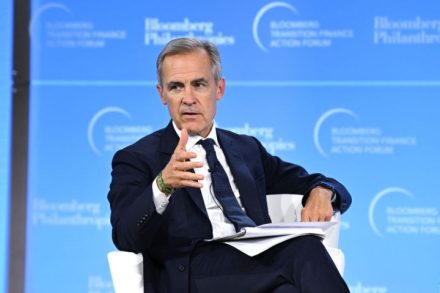
Mark Carney is wrong to endorse Rachel Reeves

The timing could hardly have been better. Other Labour leaders and shadow chancellors have had to make do with endorsements from the drummer in a 90s Britpop band, or a runner up for the Booker Prize. Rachel Reeves, however, rounded off her speech to the Labour party conference today with no one other than the former Governor of the Bank of England Mark Carney singing her praises. But hold on. Isn’t Carney starting to abuse his position – and possibly the Bank’s independence as well?  By taking sides so openly Carney is turning the Bank into a political body At least we know who Carney would be voting for if

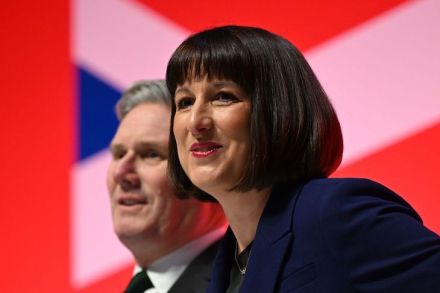
Mark Carney’s endorsement of Rachel Reeves will hurt the Tories

Listening to Rachel Reeves’s speech at Labour party conference one could be forgiven for thinking Liz Truss is still in 10 Downing Street. The shadow chancellor referenced the former prime minister more times than Rishi Sunak as she used her moment on the conference stage in Liverpool to try to depict Labour as the less risky choice on the economy. Reeves claimed that ‘Liz Truss might be out of Downing Street but she is still leading the Conservative party’. The shadow chancellor said that only a Labour government could safeguard against Truss’s Tories – and she was cheered when she mentioned her plan to introduce legislation to ensure the Office

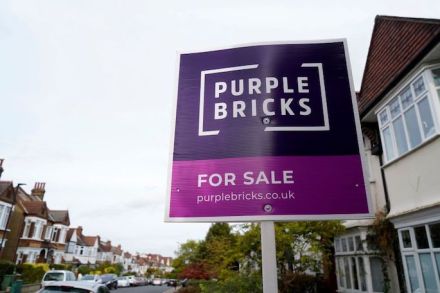
High interest rates aren’t the only reason for the house price slump

To no-one’s surprise, house prices fell again last month. Average prices were down by 0.4 per cent in September, according to Halifax, with the typical property now worth £278,600 compared with the peak of £293,500 in June 2022. Much of this, inevitably, has to do with high interest rates. For three decades until last year the housing market was pumped up by a downwards trend in interest rates, which increased the amount that buyers could borrow. Now that has come to an end, buying power is contracting. There is unlikely to be any rapid recovery. If rates remain high – and gradually it is dawning on markets that this is likely to

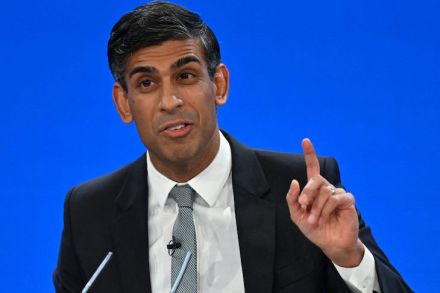
The many flaws in Sunak’s smoking wheeze

In the run-up to the Conservative party conference, Rishi Sunak was promoting himself as a serious politician who wanted workable policies that respect consumer choice. No more war on motorists! No more pie-in-the-sky net zero promises! Here was a practical man in tune with the concerns of ordinary people. Having teed himself up as a pragmatic, back-to-basics Conservative, it was all the more puzzling when, in his keynote speech, he announced a preposterous anti-smoking gimmick borrowed from Jacinda Ardern that no one was asking for. New Zealand is the only country to have taken seriously the idea of increasing the age at which people can buy cigarettes by one year

Jeremy Hunt: we underestimated the impact of money-printing

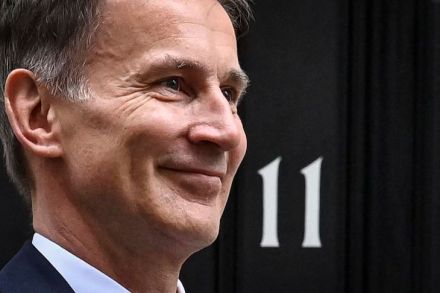
Speaking at the Centre for Policy Studies fringe event at Conservative party conference this afternoon, Jeremy Hunt reiterated once again that there would be no big tax cuts this year. ‘Debt interest payments have gone up so much in the past six months’, he told CPS director Robert Colvile, taking estimates for debt servicing payments over the £100 billion mark this fiscal year. The Autumn Statement, the Chancellor said, will lay bare just how dire the situation is: ‘It’s likely that our debt interest payments… are going to go up by more than £20bn pounds a year in the Autumn Budget compared to what was predicted in the spring.’ In other

Can the Tory party afford to keep delaying tax cuts?

The whispers going around last year’s party conference largely centred on the state of government – how it was deteriorating so quickly. This year’s whispers are about something that is by no means as dramatic, but possibly as existential to the future of the party: the prospect of tax cuts. The official line is simple: no tax cuts this year. Chancellor Jeremy Hunt has spent his summer trying to quell expectations that his Autumn Statement next month will include any major changes to the tax burden, which is set to reach a post-war high by the time of the next election. This morning he said now is ‘not the right

Why Dame Sharon White failed at John Lewis

There are lots of plausible explanations for Dame Sharon White’s failure at the department store and grocery chain John Lewis. The retail environment was too tough. Her predecessor expanded too quickly. During a cost–of-living crisis and with the shift to online shopping it was always going to be a very tough gig. Yet once you look a little deeper, the real explanation is this: the quango-cracy, of which she was a leading member, is useless at running a real business. With her early resignation today, Dame Sharon has, to her credit, recognised a fact that was already painfully obvious to everyone else. Put simply, she was not up to the

Britain’s tax system is a mess

The last time a Conservative Chancellor was in the business of cutting taxes, he pointed out that they reduce the incentive to work, invest, and start a business. This was why Kwasi Kwarteng proposed to abolish the 45 per cent additional rate of income tax last year. We really, really, shouldn’t have a tax system that can have a 68 per cent marginal rate, let alone a 20,000 per cent one He was right about the impact taxes have on incentives, but he was wrong to focus on 45 per cent as the highest rate of tax people pay in the UK. In fact, there are millions of people paying

The UK’s GDP is proving Remainers wrong

You can almost sense the agonising among hardcore remainers, the howls of anguish. The Office for National Statistics (ONS) has revised the UK’s economic growth figures since Covid upwards. Instead of still struggling to reach its pre-pandemic high it seems that the UK economy in fact surpassed 2019 levels two years ago.  Previously, the ONS had estimated the economy in the last quarter of 2021 to be 1.2 per cent smaller than pre-pandemic. It now calculates that in fact it was 0.6 per cent larger. The ONS says its initial forecasts were compromised by the difficulties of calculating GDP during the pandemic. Is there a bias which has led to

Slow economic growth won’t help the Tories reduce the tax burden

The Office for National Statistics has released the UK’s quarterly national accounts this morning, which show growth in the second quarter of the year remains unrevised at 0.2 per cent. Meanwhile growth in the first quarter has been revised slightly upwards, from 0.1 per cent to 0.3 per cent. This means the economy is now 1.8 per cent larger than it was before the pandemic hit. This is another upward revision of growth figures, though much smaller compared to the update at the start of the month, which revealed the economy was not in fact still below its pre-pandemic levels, but had actually recovered by the time the Omicron variant hit in 2021. This

The eurozone isn’t looking healthy

Bond yields are soaring. The cost of debt, and very soon mortgages, is rising. And the government is getting nervous about how it is going to borrow the next ten or twenty billion. This might sound like the opening of a one-year-on post-mortem of Liz Truss’s ill-fated mini-Budget (we have all been treated to those recently). But in fact, it is a description of what is happening right now across Europe. The eurozone is facing its Liz Truss moment, and the results are likely to be every bit as catastrophic.  Across Europe the bond markets are starting to look jittery. Over the last couple of days, the yield on ten-year

Has the true cost of net zero finally been revealed?

When the Commons nodded through Britain’s legally-binding net zero target in 2019 all MPs had to go on was the Climate Change Committee’s estimate that the whole process would cost £1 trillion. MPs failed to probe this figure and the government didn’t even try to calculate one. Indeed, when the Treasury attempted to come up with its own figure in 2021 it gave up, saying it couldn’t be done because there are too many unknowables. Net zero will require technologies, such as hydrogen production via electrolysis of water, which are still in an early stage of development and have not yet been scaled up. Now the think tank Civitas has weighed

HS2 has been a fiasco. It’s time to ditch it for good

In a fantasy world of wise government vision and decision-making, HS2 would have been announced in November 1964, shortly after the Tokyo Olympics. Visitors to those games saw the future in the form of the Tokaido Shinkansen – the first Japanese ‘bullet train’, which raced 320 miles from the capital to Osaka, carrying 1,300 passengers per train and eventually running 360 trains per day, with average delays measured in seconds. But in that era, UK ministers thought only of axeing railways and building motorways. A de novo British high-speed network could not have taken off in the 1970s, when the French were building the first ligne à Grande Vitesse from

Is Jeremy Hunt right that tax cuts are ‘virtually impossible’?

No one was expecting a big tax cut this year. Rishi Sunak’s government has been clear that 2023 is for the ‘difficult decisions’. If the Tories are to offer up a tax cut, it is much more likely to be announced in the Budget next March. Still, that didn’t make Jeremy Hunt’s comments on LBC last night any cheerier. Speaking to Andrew Marr, the Chancellor said that tax cuts were ‘virtually impossible’ due to soaring interest payable on government debt.  Hunt has a point: one of the many painful consequences of soaring inflation and higher interest rates has been the impact on public finances. In July, interest payments reached their highest

Labour will regret handing more power to the OBR

The Office for Budget Responsibility (OBR) will have to sign off on any changes to taxation. It will need to run its slide rule over any spending plans. And it will be mandated to commission an independent panel of experts to approve the Chancellor’s lunch, checking it for nutritional standards, and competitive pricing.  Okay, it is possible that I made that last one up. But the rest are right: the Labour party has just promised to vastly increase the powers of the OBR, allowing it to scrutinise the government machine in minute detail. In effect, it will surrender control of its economic programme to the same grey bean-counters who have

Falling wages aren’t stopping shoppers from hitting the high street

It looks like a case of recession postponed – again. Figures from the Office for National Statistics this morning show that retail sales volumes were up 0.4 per cent in August. These figures followed a shock fall of 1.2 per cent in July reported last month (and even this has been revised downwards to a fall of 1.1 per cent). Over the past three months – perhaps a better guide than month on month figures – sales volumes are up 0.3 per cent. Somehow, in spite of wages, which until last month had been falling in real terms, consumers are finding the means, and the will, to carry on spending. Today’s

Can Rishi Sunak afford a pre-election tax cut?

Will the government have room for tax cuts before an election? Politically, it’s thought to be non-negotiable that they must. Having put the tax burden on course for a post-war high by the end of this Parliament, Rishi Sunak and Chancellor Jeremy Hunt are going to have to relieve some of that pressure on taxpayers before going head-to-head with Labour next year. But will the public finances allow for it? On the surface, today’s update from the Office for National Statistics (ONS) appears to offer up some good news: public sector net borrowing in August came in at £11.6 billion. That’s £3.5 billion higher than August 2022, but £1.4 billion below the Office for

Bernard Looney shows why every board should be braced for scandal

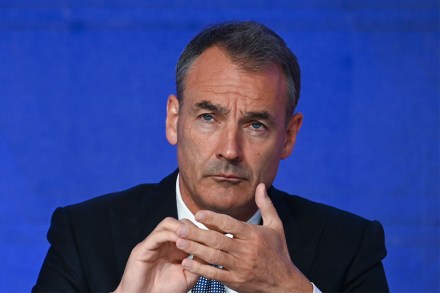
Bernard Looney, the fallen BP chief, always had a certain swagger about him. I’ve no idea whether he was unsafe in taxis, but he was certainly prone to unguarded remarks. ‘Not every barrel of oil in the world will get produced’ was a bold way, back in 2018, to introduce BP shareholders to the idea that the world’s energy giants will one day have to strand remaining carbon assets if they really intend to achieve net-zero targets. ‘This is literally a cash machine’ was not the best way to describe BP’s profit performance in November 2021, when British households were beginning to feel the pain of soaring energy bills. And