Economy

  • AAPL

    213.43 (+0.29%)

  • BARC-LN

    1205.7 (-1.46%)

  • NKE

    94.05 (+0.39%)

  • CVX

    152.67 (-1.00%)

  • CRM

    230.27 (-2.34%)

  • INTC

    30.5 (-0.87%)

  • DIS

    100.16 (-0.67%)

  • DOW

    55.79 (-0.82%)

Is Britain losing its sense of fairness?

Has Britain become a freeloader’s paradise, asks the Spectator’s economics editor Michael Simmons in our cover piece this week. Michael analyses ‘the benefits of benefits’, at a time when Britain’s welfare bill is burgeoning and most households are struggling with cost of living. For example, while a family of four can expect to pay £111 to visit the Tower of London, that is just £4 total on Universal Credit (UC), and for London Zoo it is £108 compared to £26. Michael is not arguing against the idea of helping those in need, but pointing out that – as the benefits bill continues to increase – this is another case of

Spotlight

Featured economics news and data.

Cutting Britain’s giant welfare bill would be an act of kindness

Does having money really matter that much? There are those, usually with quite a bit of it, who want us to care less about materialism. But, unequivocally, money really does matter – not because of any status it supposedly brings, but for the freedom it buys: freedom to choose how we live and how we look after others. Considering this, it seems that the deep disillusionment with mainstream politicians in recent years stems from a protracted and ongoing period of stagnant living standards over which they have presided. But the truth is that the average person has not got poorer since the global financial crisis. They have got a little

Inflation is slowing but don’t rule out another interest rate hike

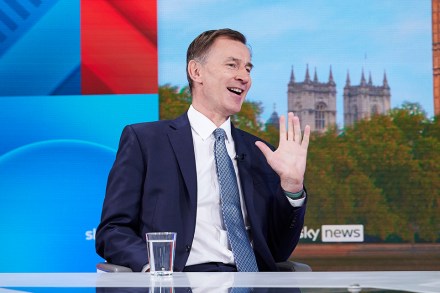
Jeremy Hunt has been warning for weeks that inflation could rise over the summer due to an increase in fuel prices. Economists said much the same: the consensus was that the headline rate would jump to 7.1 per cent on the year in August. But this morning the Office for National Statistics (ONS) revealed that the rate of inflation continued to slow last month: rising to 6.7 per cent on the year in August, down from 6.8 per cent in July. This is a rare occasion where ministers have under-promised on the inflation figures, triggering headlines like ‘surprise fall.’ In truth, it’s the smallest of dips – and prices are still going

‘Environmental vandalism’: Sunak’s net zero u-turn sparks fury

Rishi Sunak hasn’t even formally announced his plans to water down the government’s net zero pledges, but already the backlash has begun. Tory peer Zac Goldsmith, who stormed out of Sunak’s government this summer, described the u-turn as a ‘moment of shame’ for Britain. He called for an ‘election now’ and said the PM’s time in office will be remembered ‘as the moment the UK turned its back on the world and on future generations’. Labour’s Ed Miliband accused the PM of being ‘rattled’ and ‘out of his depth’ after it emerged the PM was considering postponing a ban on petrol cars and gas boilers. Miliband said the Tories have

The flaw in Rishi Sunak’s plan to water down net zero

Rishi Sunak will reportedly make a speech later this week watering down some of the targets the government has set itself on achieving net zero carbon emissions by 2050, although that target itself will not be touched). The proposed ban on new petrol and diesel cars will be put back by five years to 2035, which would bring Britain in line with the EU. The ban on new oil-fired boilers will be put back from 2026 to 2035, thus relieving the Conservatives of the prospect of mass grumbling in one of their natural constituencies, rural areas. Even in 2035, it seems, the target will be to reduce installations only by

UK set for highest inflation in G7 this year

You’d struggle to describe the start of 2023 as anything like ‘good economic times’. But according to the OECD’s economic outlook interim report, it’s better than what’s to come. The report, published this morning, expects rising rates around the world to take their toll on economic growth. Global growth has been downgraded for next year – from 2.9 per cent in 2024 to 2.7 per cent – which is lower than the 3 per cent growth expected this year. The report notes that a ‘stronger-than-expected’ start to the year makes it all but impossible for growth to keep pace: the fall in energy prices coupled with China’s comeback post-pandemic gave global

Why drivers are losing interest in electric cars

In his promised review of net zero policies, Rishi Sunak has already ruled out postponing the proposed ban on the sale of new petrol and diesel cars from 2030. Indeed, from the end of the year manufacturers are going to be under a mandate to make sure that a certain proportion of their sales are electric – although the details have not yet been published. But what chances of the car industry actually getting there? While sales of electric cars might seem to be healthy – the Society of Motor Manufacturers and Traders (SMMT) records that 193,221 pure electric cars were sold in the first eight months of 2023, up

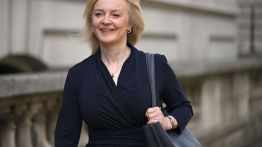
Liz Truss is no fiscal hawk

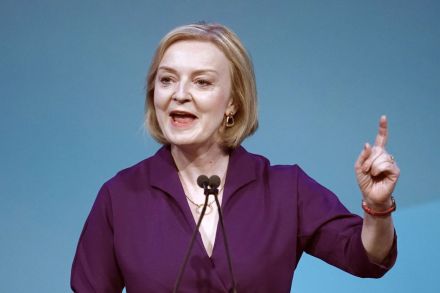
Was Liz Truss a fiscal hawk inside No. 10? That is the rather startling claim made by the former prime minister, speaking today at the Institute for Government about the future of economic growth. She has claimed public spending would be £35 billion lower over the next few years had her plans been followed, due to the real-term spending cuts that would have followed from not reopening the latest Spending Review. Moreover, she insists that her mini-Budget was not just about going for growth, but rather a ‘three-pronged approach’ that included ‘targeted tax freezes and reductions, supply side reform and holding public spending down.’ This is the first time we’ve

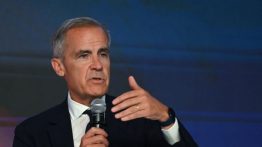
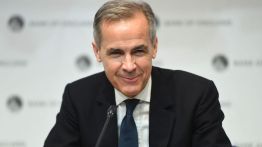
Mark Carney’s attack on Liz Truss has disgraced the Bank of England

He was a ‘global superstar’. He was the smartest finance official of his generation. He would bring global contacts and experience. When Mark Carney was appointed as the first foreigner to run the Bank of England he was meant to be a refreshing, technocratic figure who would blow some of the cobwebs off the institution. And yet, with his attack on Liz Truss for creating ‘Argentina on the Channel’, Carney has become a disgrace to the Bank. No former governor should ever be so openly partisan. Indeed, if anyone imposed Argentinian-style monetary policies it was possibly Carney himself. It is unheard of for a former governor of the Bank of

What Liz Truss’s big speech is really about

Liz Truss will take to the stage this morning for her first major intervention on the economy since leaving No. 10 last year. A year on from the mini-budget which saw the markets panic – and her premiership come to an abrupt end not long after – Truss will use her speech at the Institute for Government to argue that her original diagnosis was the right one: that the status quo cannot remain. The former prime minister will point to the fact there is agreement across the political divide that the lack of economic growth is a problem. Truss will lay the cause of the problem on ’25 years of

Watch: Mark Carney takes a pop at Liz Truss and Brexiteers

Poor Liz Truss. Today is the day Britain’s shortest-serving prime minister had hoped to launch an impassioned defence of her legacy. In a speech this morning marking the approaching anniversary of her disastrous mini budget, Truss planned to talk up her economic plan and attack her critics among ‘the London dinner party circuit’. But it looks like a member of that particular set has beaten Truss to it. Former Bank of England governor Mark Carney said that Brexiteers wanted to turn Britain into ‘Singapore on Thames’. Instead, he said, Truss and her colleagues, delivered ‘Argentina on the Channel’ because of their misguided views on economics. Carney’s withering verdict was delivered

Britain is heading for an autumn of discontent

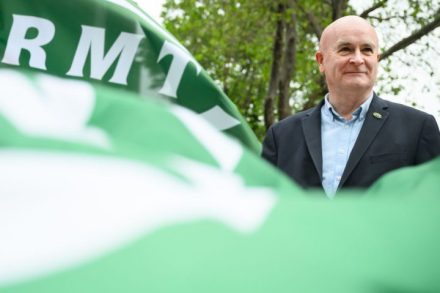
Train drivers will strike for two days in the coming weeks, on 30 September and 4 October. These dates are no coincidence: they directly overlap with when MPs and attendees will be travelling to and from the Conservative party conference in Manchester. This move from Aslef and the RMT is far from subtle: the unions may be locked in a pay battle with train companies, but it’s the government’s attention they are hoping to get. The train strikes add to a growing list of other walkouts planned over the next few weeks. Consultants and junior doctors will also be walking out separately this month. But then in an unprecedented move,

Can the high street still be saved?

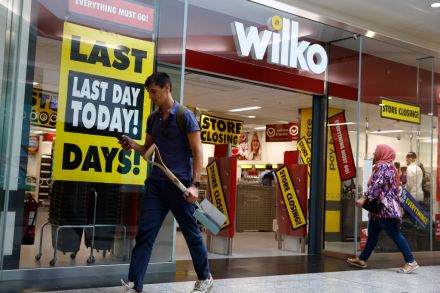
The closure of 400 Wilko stores – at the cost of 12,500 jobs – spells more misery for the high street. Wilko joins a pantheon of big brand names who have been forced to shut their doors since the pandemic. We have seen the loss of Debenhams, the Arcadia Group (which owned Dorothy Perkins, Topshop and Topman), Victoria’s Secret, Paperchase, Oasis and Warehouse, Made.com and Cath Kidston among many others.  According to the British Retail Consortium, the crisis on our high streets goes back further, with 6,000 storefronts closing since 2018. Last year was the worst year for retail in five years, seeing the loss of 150,000 jobs from the high street and out of town shopping centres. The situation has become so bad

How to do business with China

Amid reports of Chinese spies in Westminster, we learn that Huawei – the telecoms manufacturer western governments shun for fear of cyber espionage – has launched a smartphone containing microchips more advanced than anything China was previously thought capable of making. Some analysts say China is now ahead of the US in tech fields ranging from AI to robotics, while, in the auto sector, BMW chief executive Oliver Zipse (announcing plans to make electric Minis at Cowley from 2026) described Chinese electric carmakers with improved battery technology as an ‘imminent threat’ to his industry in Europe. In response, Rishi Sunak – after a brief and no doubt deeply oblique meeting

Britain can’t just blame the rain for its moribund economy

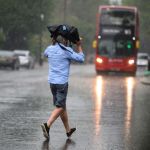
Did GDP fall in July because of the wet weather? That’s the argument being made this morning, as the Office for National Statistics reveals that the economy contracted by 0.5 per cent in July, after having grown 0.5 per cent in (warm and sunny) June. Services output, production output and construction sectors all fell, by 0.5 per cent, 0.7 per cent and 0.5 per cent respectively, as the bad weather took its toll. It stands to reason that weather did play a factor. Monthly GDP figures are sensitive to these kinds of effects, which also include disruptions like bank holidays or strikes. The impact of frequent industrial action this year has repeatedly

The problem with the ‘right to strike’

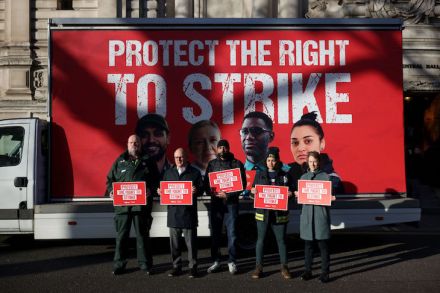
The Trades Union Congress (TUC) has vowed to report the government to the UN workers’ rights watchdog over its controversial strikes bill, but how seriously can we take this threat? The TUC’s leader, Paul Nowak, certainly sounds like a man on a mission: earlier this year, Nowak claimed the legislation was ‘almost certainly illegal’, a curious assertion given it was going through parliament at the time. Now that the bill has received royal assent, it appears the TUC is doubling down on its war on the strikes bill. Yet it’s hard not to see the TUC’s complaint as anything other than a stunt designed to further denigrate the Tories who, to the

Will Rishi axe the pensions triple lock?

Will the pensions triple lock survive the election? That’s the question being asked in Westminster after Rishi Sunak refused to commit to keeping it in the next Conservative manifesto. In a press huddle with hacks on his trip back from India, the Prime Minister said: ‘I’m not going to get into our manifesto now but the triple lock has been a long-standing policy for us.’ Sunak will argue that voters ought not to listen to politicians offering easy solutions This could be read two ways. The first is that the PM simply doesn’t want to get into the game of confirming manifesto commitments as doing so will invite further questions

Why is the EU forcing Apple to change its charger?

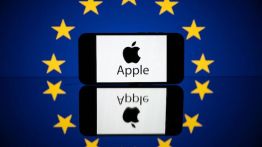
When the iPhone 15 is unveiled later today it will no doubt come with an array of flashy tweaks and upgrades. It may be slightly lighter, the camera might be better, and it could even have a slightly better battery life. But the really big change will be something mundane: its charging port. The European Union has forced Apple to adopt the same USB-C charger that is standard on Android and many other devices. New EU rules require all phones sold after autumn 2024 to use this connector for their charging ports. As a result, Apple has reluctantly decided to bin its lightning charger after 11 years and make the

Is Britain getting a pay rise?

Whisper it, but British workers seem to be getting a pay rise. This morning’s update from the Office for National Statistics reveals that average regular pay (which excludes bonuses) was up by 7.8 per cent between May and July this year, unchanged from the last three-month period. Wage growth has stayed a percentage point above headline inflation – at 6.8 per cent on the year in July – which suggests a relatively small, but meaningful real-terms pay raise. So after more than a year of real-terms pay cuts – as average wage hikes kept falling behind inflation – some workers may finally be feeling the slightest bit of relief as their purchasing

Can Liz Truss rewrite history?

Last week’s anniversary of Liz Truss entering Downing Street could have passed by quietly. But the Trussites had other ideas. Her supporters used the moment to make the case for Trussonomics once again: to say that Truss diagnosed the country’s problems correctly and that she was on track to find solutions – until her many conspirators took her down. As it turned out, the cheerleading was a warm-up to the big event: yesterday Truss announced the details of her upcoming book – Ten Years to Save the West – which will be published next spring. Speaking to the Mail on Sunday, the former prime minister promised a detailed account of her time in Downing Street,

Is the Bank of England done with raising rates?

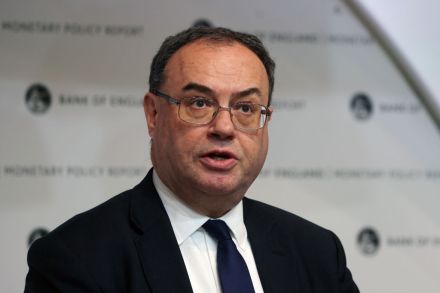
Is the UK set for its 15th consecutive interest rate hike later this month? Markets expect that rates will peak closer to 6 per cent – up from 5.25 per cent now – but this might not happen immediately – or at all. Speaking at today’s Treasury Select Committee, the Bank’s governor Andrew Bailey suggested rate hikes were no longer a matter of certainty, as the headline rate of inflation is now back on track with the Bank’s projections for a significant fall by the end of the year. Speaking to MPs this afternoon, Bailey said that the UK had moved on ‘from a period … where it was clear rates needed

The economy isn’t as sick as we thought

It would be churlish not to celebrate revisions from the Office for National Statistics that tell us the UK is not, after all, the post-Covid invalid of the G7. Contrary to previous figures suggesting we had struggled to regain pre-pandemic levels of economic output, it turns out that our gross domestic product passed that benchmark in late 2021 and our performance has been in line with France and ahead of Germany. Large sectoral revisions for agriculture and manufacturing tell us that statistical reporting is almost as much of a mug’s game as forecasting. But the brighter overall picture accords with the anecdotal sketch of ‘definite warming’ in consumer spending and