Economy

  • AAPL

    213.43 (+0.29%)

  • BARC-LN

    1205.7 (-1.46%)

  • NKE

    94.05 (+0.39%)

  • CVX

    152.67 (-1.00%)

  • CRM

    230.27 (-2.34%)

  • INTC

    30.5 (-0.87%)

  • DIS

    100.16 (-0.67%)

  • DOW

    55.79 (-0.82%)

Benefits Britain exposed: are you paying for someone else’s day out?

Britain has become a freeloader’s paradise. A working family of four will fork out £111 for a trip to the Tower of London, or £108 to visit London Zoo. With one parent on Universal Credit (UC), however, that drops to just £4 and £26 respectively. Welfare-advice websites expose how the public sector is ‘geared permanently to making welfare an increasingly attractive way of living’. Those on welfare are not enduring the cost-of-living crisis in the same way as the rest of us, with successive governments fiddling with prices and prioritising claimants. On its own, UC is not particularly generous by international standards, but health-related top-ups transform the picture, while it

Spotlight

Featured economics news and data.

Cutting Britain’s giant welfare bill would be an act of kindness

Does having money really matter that much? There are those, usually with quite a bit of it, who want us to care less about materialism. But, unequivocally, money really does matter – not because of any status it supposedly brings, but for the freedom it buys: freedom to choose how we live and how we look after others. Considering this, it seems that the deep disillusionment with mainstream politicians in recent years stems from a protracted and ongoing period of stagnant living standards over which they have presided. But the truth is that the average person has not got poorer since the global financial crisis. They have got a little

Does Rachel Reeves need an ‘escape route’ on winter fuel?

14 min listen

Fraser Nelson and Katy Balls join James Heale to look ahead to a crucial week for Labour. On Tuesday, Parliament will hold a binding vote on the changes to winter fuel allowance – how are Labour expected to deal with this? Former shadow chancellor Ed Balls, and husband of the current home secretary Yvette Cooper, has argued that Labour need an ‘escape route’ from the policy. What can we read from this intervention? And how influenced are the government by the spectres of George Osborne and Liz Truss? Also on the podcast, Fraser talks about both the problems facing Germany, and the surprisingly successful measure that Sweden has introduced, to

Starmer could regret trying to woo trade unions

The last two and a half years have seen a dramatic revival in trade union militancy, with working days lost through strikes reaching their highest level for more than thirty years. The arrival of a Labour government has already seen markedly more generous settlements than the Conservatives offered – and the new administration has committed to legislation intended to boost union power. It’s a situation that is unlikely to end well – for businesses and for workers. If the government is not careful, we could end up with a situation like that of France Keir Starmer has vowed to repeal the Conservatives’ 2016 Trade Union Act (which imposed voting hurdles

Will Angela Rayner really water down the right-to-buy scheme?

Housing Secretary Angela Rayner is said to be planning on watering down the right-to-buy scheme which enables council tenants to purchase their homes from local authorities at a significantly reduced price. The policy, famously introduced by Margaret Thatcher in 1980, has helped many thousands of families become home-owners, giving them greater security and a stake in their local communities. But councils are keen to cut the cost of Thatcher’s flagship policy. As a result, Rayner – who once blasted her opponents as Tory ‘scum’ – is considering axing the scheme for newly built council houses and cutting the discount offered to existing tenants. While Downing Street has insisted the policy won’t

Why is no one marching against VAT on school fees?

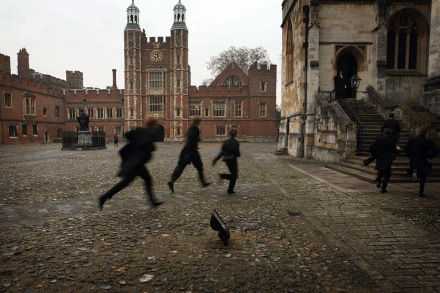
How passively we respond to revelations of Labour’s real direction of travel. As millions of pensioners brace for the confiscation of winter fuel payments and other Budget tax raids, shouldn’t they be pinning on their medals, raising their banners and marching down Whitehall – alongside columns of private school parents, furious at the imposition of VAT on fees? Yet so far barely a whimper of protest, as though those affected are racked with guilt at having kept the Tories in power for so long. In response to the school-fee fait accompli, Eton with its mile-long waiting list will hit parents with a full 20 per cent VAT hike from January,

Why London must get back to work

The commute is often unreliable, expensive and crowded. It is easy enough to understand why so many of London’s 5 million strong workforce are so reluctant to go back to the office. There is a catch, however. Working from home is costing the British economy a huge amount of lost output. In reality, the UK can’t afford for Londoners to carry on WFH for much longer.  According to a study just published by the Centre for Cities, London is one of the slowest major cities in the world to go back to the office full-time. Of the six cities it studied, London had the second lowest attendance rate, with full-time

Labour’s flirtation with price fixing won’t end well

Almost everyone is aware of the concept of peak hours pricing. If you buy a train ticket to travel during rush hour it costs more than at other times. Few people object to this. Indeed, most of us think it helps. It means that people who don’t need to travel in that period will pick another time instead, so there’s space on the train for the people that do need to travel then. Peak hours pricing is just one very simple example of what economists call ‘dynamic pricing’ or ‘surge pricing’ – a system in which the prices paid vary according to how much demand there is. Dynamic pricing has

Why is it so hard to buy a petrol car?

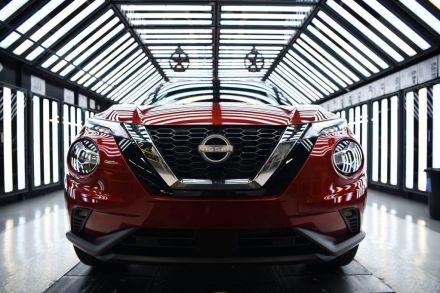
Is it really any surprise that car manufacturers have started refusing to sell us petrol cars? According to Robert Forrester, chief executive of dealership Vertu Motors, anyone trying to buy a petrol car at the moment is likely to be quoted a delivery date into next year. As I wrote here last December, unless electric vehicles (EVs) enjoyed a sudden rush of popularity, the inevitable result of the Zero Emission Vehicle (ZEV) mandate would be that car manufacturers would be forced to withdraw from the UK market. The reason was coming down the road at us like a three-ton electric SUV. Under ZEV, which began on 1 January this year,

Labour want to Frenchify the economy

It is not that long ago that the new Prime Minister Sir Keir Starmer announced that his would be the government of ‘growth, growth, growth’. What has he done in that time to try to realise that ambition? It is hard to think of a single measure that will genuinely do anything to improve the fortunes of wealth-creating businesses – other than promised planning reforms which seem destined to fail as they are based on the faulty premise that it is only Nimbys who hold up house-building and other development, and not reams of environmental regulations which Labour has shown no interest in reforming. We have a government which poses

Labour must beware crying wolf about a run on the pound

As winter approaches, and fuel prices go up, Keir Starmer’s honeymoon period is well and truly over. The Labour government is clearly getting a little nervous about Chancellor Rachel Reeves’s decision to scrap the £300 given to millions of pensioners to help keep warm over the winter. It is now claiming that it had no choice but to save some money somewhere. ‘If we hadn’t taken some of these tough decisions we could have seen a run on the pound, interest rates going up and crashing the economy,’ argued Commons Leader Lucy Powell over the weekend. ‘It’s something we were left with no alternative but to do.’ ‘If we hadn’t

Why Labour’s four-day week plan could backfire

Employees will have the right to ask their employers to compress their hours into four days a week rather than five, but employers will not be forced to agree. Just what is the point of the government’s latest employment reform, as proposed by Baroness Smith of Malvern, the minister for skills? Surely employees already have the right to ask for a four-day week, and always have had. There is no law I know that prohibits an employee knocking on their boss’ door and asking for a four-day week, a day off to go to the races, to bring their pet gerbil into the office or, indeed, anything else. We have

Is Starmer now a friend of the oil and gas industry?

Keir Starmer’s government appears to have softened its stance on oil and gas. Back in June 2023, the Labour leader told an audience in Edinburgh that there would be no new licences for oil and gas exploration in the North Sea. Instead, a Labour government would pursue green energy all the way, slashing our bills (it promised) and taking us ever faster to the nirvana of net zero. But how the responsibilities of government come to bear. A release from the Department for Energy Security and Net Zero (DESNZ) this morning indicates some notable shuffling of ground.  Far from cheering a recent Supreme Court ruling which quashed planning permission for a small oil

Labour is exposing its economic ignorance

It must be the worst kept secret in the country. At almost every opportunity, the Prime Minister Sir Keir Starmer, and his Chancellor Rachel Reeves, keep telling us that the Budget in October will have to be ‘very painful’, that ‘taxes will have to rise’ and that the ‘broadest shoulders will have to bear the heaviest burden’. It now seems inevitable that there will be a big rise in capital gains tax. The trouble is, there is a catch. Almost everyone will have avoided it by then – and all Labour is doing is exposing its hopeless ignorance of how the economy actually works. Neither Starmer nor Reeves have worked

A trade deal with Germany can only mean one thing

Britain will not be rejoining the EU, the single market nor the customs union – that ship has sailed, and all we seek now is a closer relationship with the EU. So Keir Starmer assures those who feel a little suspicious about his multiple meetings with Olaf Scholz in the weeks since becoming Prime Minister, the latest of which took place this morning. All he seeks, he says, is a better trade deal which would allow better access to EU markets for UK firms. Maybe Starmer dreams at night of being paraded through the streets of Brussels as the man who engineered Britain’s return to the EU Maybe Starmer dreams

The SNP can only blame itself for its budget mess

Higher-than-expected public sector pay deals, social security reform and the SNP’s freeze on council tax have all contributed to putting pressure on the Scottish government’s budget, according to a new report from Scotland’s fiscal watchdog.  In a statement accompanying its latest fiscal report, the Scottish Fiscal Commission (SFC) seems keen to remind Scots that the Scottish government bears most of the responsibility for the budget challenges it now faces. ‘While UK government policies contribute to the pressures on the Scottish budget, much of the pressure comes from the Scottish government’s own decisions,’ says the SFC. The SFC did not set out to put a spanner in the works of the SNP’s grievance machine but has

The Next equal pay victory is a dark day for British business

Who would bother to create jobs in modern Britain? Clothing retailer Next has done plenty of job-creation over the past few years – only to be whacked by an equal pay claim brought by 3,500 shop assistants. An employment tribunal has ruled that the company was wrong to pay them less than it paid staff at its warehouses. With back pay it could cost the company £30 million. The cost of this kind of case goes far beyond the potential legal liability itself Equal pay is one thing where it concerns men and women working alongside each other in the same jobs. It is quite another when it is extended

Just how ‘painful’ will Starmer’s October Budget be?

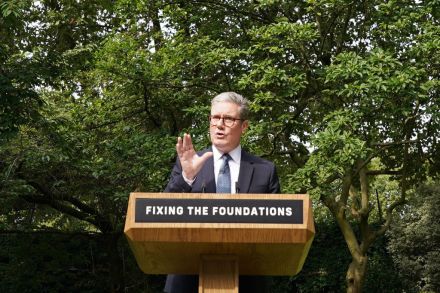
Winter is coming. That’s the message from Keir Starmer’s set-piece speech this morning from the No. 10 rose garden. After a tricky few weeks for the new Prime Minister on cronyism claims and anxiety about cuts to the winter fuel allowance, Starmer and his team attempted seize the agenda with a speech looking ahead to the months to come. However, anyone hoping for optimism will be disappointed. While Tony Blair was associated with the D:Ream anthem of ‘things can only get better’, Starmer warned that things can only get worse – at least in the short term: Frankly – things will get worse before we get better. I didn’t want

Is the energy price cap hike bad news for Labour?

17 min listen

Ofgem, the energy regulator, has announced that the price cap will rise by 10% in October. Is this bad news for Labour, or will they be successful in framing it as part of their economic inheritance from the Conservatives? And could this strengthen opposition to the proposed change to winter fuel allowance? Patrick Gibbons speaks to James Heale and John McTernan, former political secretary to Tony Blair.  Produced by Patrick Gibbons and Cindy Yu.

When will Rachel Reeves take responsibility for the economy?

Is Britain finally heading for growth? This week, the Treasury released its collection of short-term forecasts for the economy. The average growth prediction for this year has reached a new high of 1.1 per cent – still unimpressive, but a significant improvement from the 0.4 per cent expected at the beginning of the year. It’s welcome news for the Chancellor. JP Morgan bumped up its forecasts this week as well, predicting 0.4 per cent growth between July and September, which equates to an annual growth rate of 1.5 per cent. Even more good news came from the GfK Consumer Confidence Index, Britain’s longest-running measure of economic sentiment, which held at

The energy price cap hike is just the start of Labour’s problems

As far as the economy goes, Sir Keir Starmer has enjoyed something of a golden honeymoon. True, he has had riots to deal with, but economic growth has been stronger than many anticipated, while a small uptick in the Consumer Prices Index (CPI) allowed the Bank of England to reduce interest rates earlier this month. Everything appeared to be going in the right direction – until this morning, that is. Ofgem have announced that the energy price cap will rise in October by 9 per cent, adding an average of £149 to annual bills. While a rise was expected, this is a substantial rise at a time when inflation seemed

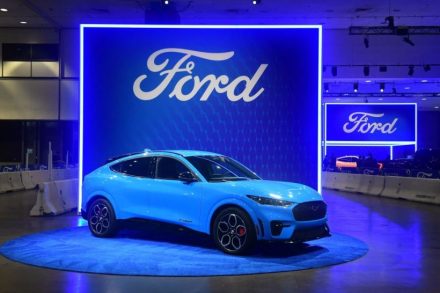
If Ford can’t crack electric cars, no one can

It had the history, the manufacturing muscle, the capital, and the brand to make it work. When Ford announced plans to create an all-electric SUV, it looked like the moment the major auto manufacturers could finally bring battery-powered cars into the mass market. Until today. The American company has abandoned its plans to build the new electric car, and announced a $1.9 billion write-off on the project citing cost pressures. The trouble is, if the company that more or less invented the mass production of cars a century ago can’t make electric vehicles (EV) work, then it is very hard to believe that any of the Western manufacturers can. If