Economy

  • AAPL

    213.43 (+0.29%)

  • BARC-LN

    1205.7 (-1.46%)

  • NKE

    94.05 (+0.39%)

  • CVX

    152.67 (-1.00%)

  • CRM

    230.27 (-2.34%)

  • INTC

    30.5 (-0.87%)

  • DIS

    100.16 (-0.67%)

  • DOW

    55.79 (-0.82%)

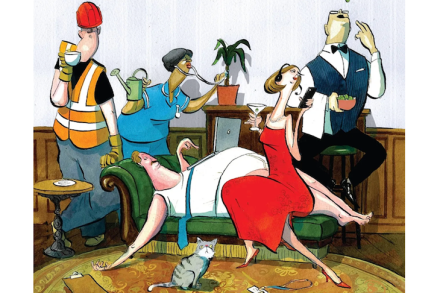
Is Britain losing its sense of fairness?

Has Britain become a freeloader’s paradise, asks the Spectator’s economics editor Michael Simmons in our cover piece this week. Michael analyses ‘the benefits of benefits’, at a time when Britain’s welfare bill is burgeoning and most households are struggling with cost of living. For example, while a family of four can expect to pay £111 to visit the Tower of London, that is just £4 total on Universal Credit (UC), and for London Zoo it is £108 compared to £26. Michael is not arguing against the idea of helping those in need, but pointing out that – as the benefits bill continues to increase – this is another case of

Spotlight

Featured economics news and data.

Cutting Britain’s giant welfare bill would be an act of kindness

Does having money really matter that much? There are those, usually with quite a bit of it, who want us to care less about materialism. But, unequivocally, money really does matter – not because of any status it supposedly brings, but for the freedom it buys: freedom to choose how we live and how we look after others. Considering this, it seems that the deep disillusionment with mainstream politicians in recent years stems from a protracted and ongoing period of stagnant living standards over which they have presided. But the truth is that the average person has not got poorer since the global financial crisis. They have got a little

Trump’s tariffs could kill Europe’s steel industry

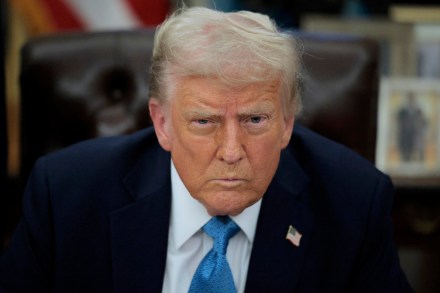
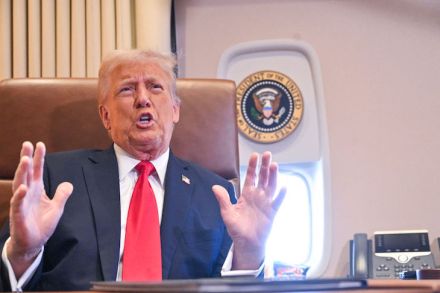
So, it seems that Donald Trump wasn’t bluffing after all. On his way to the Superbowl, the president made time to impose 25 per cent tariffs on steel and aluminium imports into the United States, ramping up a trade war that has been looming ever since he moved into the White House last month. Speaking aboard Air Force One, Trump said he would slap the tariffs on “everybody”. “If they charge us, we charge them,” he said. These measures will hit Australia, Mexico, and East Asian manufacturers hard. But it will deliver a terminal blow to the European steel industry, unless it finally abandons Net Zero targets that were already

Starmer will need a miracle to boost his ‘AI growth zones’

The government has unveiled its new ‘AI Opportunities Action Plan’ – a ten-syllable, fifty-point proposal to grow the UK’s AI industry. Among the only memorable points of the fifty unveiled last month was the creation of ‘AI growth zones’, clusters of AI expertise dotted around the country. The only growth zone named in the plan was Culham, a sleepy village in Oxfordshire. I went to pay it a visit. Culham and its nearby sister village Harwell were among the top sites in the world for scientific research in the mid-20th century and were run by what’s now called the UK Atomic Energy Authority, which conducts nuclear experiments. Rumour has it, the area

Badenoch is leading her party in the right direction on migration

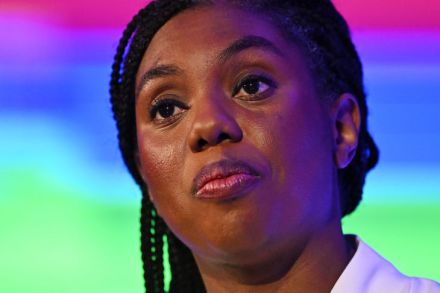
Since becoming Conservative leader in November, Kemi Badenoch has taken a restrained approach to saying what she’d do if she wins the next election. Given the slapdash ‘policy by press release’ approach of recent Conservative governments, it’s easy to see why Badenoch has been keen to avoid making careless policy announcements. But four years of silence won’t convince frustrated voters to turn back to the Tories. Announcing policy as Leader of the Opposition is a bit like planning to open a restaurant: you don’t need to reveal the whole menu, but you do need to let people know what cuisine you’ll be serving. The Conservatives have an opportunity to prove

Why the Bank of England is cutting interest rates

The Bank of England has cut interest rates for the third time since the inflation crisis, taking the base rate to 4.5 per cent. The Monetary Policy Committee voted by seven to two to further reduce rates by 0.25 percentage points – a move that was widely expected by markets, but had been put into doubt after government borrowing costs surged in January and President Donald Trump announced his plans for substantial tariffs last week. Even so, the MPC pushed ahead – interestingly with no one on the committee voting to hold rates at 4.75 per cent (two members voted instead for a 0.5 percentage point cut). It’s clear from the

Britain’s Trumpists should be careful what they wish for

When I visited Toronto with a UK delegation last winter, conversation focused on the issues of immigration, housing and inflation that were contributing to the unpopularity of Justin Trudeau, who finally announced his resignation as prime minister last month. The prospect of Donald Trump’s return to the White House was the slumbering python in the chandelier above the conference table: I sensed our hosts preferred not to think about how bad it might turn out to be. Well, now they know. In response to Trump’s declaration of 25 per cent tariffs on Canadian goods, plus 10 per cent on imported energy, Trudeau retorted with tariffs on many billions worth of

Revealed: ONS blames Ring doorbells for dodgy jobs data

What caused the Office for National Statistics (ONS) to lose faith in its own jobs figures? After the pandemic, the ONS asked for the ‘national statistic’ quality mark to be taken off its estimates of whether Brits are working when response rates to its labour force survey collapsed. Fewer and fewer people were willing to invite an interviewer into their home to give them the 45-minute questionnaire. Bank of England governor Andrew Bailey said ‘it is a problem’ to not have accurate unemployment numbers when setting interest rates, while Lord Bridges, chair of the House of Lords eco­nomic affairs com­mit­tee, asked: ‘How are the Treasury and the bank to make

Trump’s tariff war with China is just getting started

Over the weekend, Donald Trump described his sweeping 10 per cent tariffs against Chinese goods as an ‘opening salvo’. Within minutes of them taking effect at midnight last night, Beijing retaliated with targeted tariffs of its own against US coal, liquified natural gas (LNG), farm equipment and cars. It also announced export controls on a string of critical minerals to ‘safeguard national security’, and what it described as an ‘anti-trust’ investigation into Google. Like most Western internet and social media firms, Google is already banned from China, but earns money from Chinese businesses advertising abroad. The US President has described tariffs as ‘the most beautiful word’ In spite of the

Asda and the absurdity of ‘work of equal value’ 

At last, some news of an industry in Britain that is flourishing. Unfortunately, it is one that is helping to suppress growth in every other sector of the economy. I am sure that the lawyers who have brought a case involving 60,000 female workers at Asda think they have won a famous victory after an employment tribunal ruled that most of them were victims of sex discrimination for being paid up to £3.74 per hour less than the company’s warehouse staff. But all they have really achieved, other than lining their own pockets and those of their backers, is to impose vast bills on hard-pressed retailers which, in some cases,

Who cares about the cold old?

When I was a child, we lived in a two-up, two-down terraced slum in Walthamstow, East London with bombsites at the back. My father made me a doll’s house by dividing a box into four for the rooms. One year when we hadn’t any coal, I watched my doll’s house, disassembled, burning in the living room grate. I couldn’t grumble. I had asthma and for the first couple of years of my life there was no NHS. Just being alive was a bloody miracle. I rather admired the glittering ice patterns on the inside of my bedroom window.  I was cold then, and I am cold now. I had hoped things might improve in the

Are Trump’s tariffs really that bad?

34 min listen

The Spectator’s economics editor Kate Andrews and Social Democratic Party leader William Clouston join Freddy Gray to try and make sense of Donald Trump’s decision to impose tariffs on Canada, Mexico and China. He has since threatened the European Union, and has warned the UK. Is this a negotiation tactic or something more? What political philosophy underpins the decision? And what will the impact be? Produced by Patrick Gibbons and Megan McElroy.

Starmer has much to gain from cosying up to Donald Trump

Donald Trump loves giving two fingers to the world’s great political brains. Before the US election, for example, Rory Stewart predicted that Kamala Harris would strut to victory. The sage of the centrist dads had egg on his face when the Donald won with 77 million votes. But now he’s in power, there’s a less likely – and considerably more impressive – commentator Trump is posthumously contradicting: Immanuel Kant. In his 1795 essay ‘Perpetual Peace’ (which any undergraduate student of politics will be painfully familiar with), Kant posited that a world made up of constitutional republics is the only possible precondition for a lasting global peace. It is this principle that

Donald Trump kicks off the tariff wars

He did it, Joe! Following on from the $79 billion worth of tariffs he implemented in his first term – which went largely untouched by Joe Biden’s Administration –  last night Donald Trump made good on his election promise to opt for another round of tariffs: this time, a 25 per cent tax on imports from Canada and Mexico, with China facing an additional 10 per cent levy on its goods. Despite whispers that the President might water down his plans in the last hours, he carved out very few exceptions for his new tax orders, which include Canadian oil and energy supply. It is now expected that America will

Liz Kendall’s benefits crusade could make or break Labour’s fortunes

Could Liz Kendall turn out to be the most significant figure of Keir Starmer’s government, and a Chancellor in the making? When I wrote on the Work and Pensions Secretary’s proposed reforms here in November, I was sceptical that Labour really had much intention of pushing through benefits cuts, not least because the party had spent the past 14 years shouting ‘austerity’ every time the Tories so much as proposed to cut a bean from the benefits bill. Starmer himself has accused the previous government of “turning on the poorest in our society” when it proposed to end the temporary £20 weekly bonus added to benefits during Covid. Kendall has gained

Sacrificing farmland for net zero is a big mistake

Yesterday it was a court ruling to invalidate licences for oil and gas extraction in the Rosebank and Jackdaw fields. This morning comes another perverse consequence of Britain’s legally-binding net zero target. Environment Secretary Steve Reed is to announce that he intends 9 per cent of farmland in England to be taken out of production in order to help achieve net zero carbon emissions by 2050. This continues a rewilding programme set up by the last government. From the point of view of achieving the net zero target it makes perfect sense; in fact it would make even more sense to take 100 per cent of farmland out of production

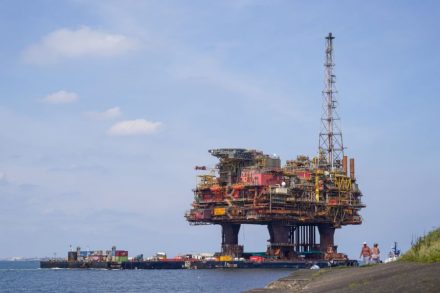
Britain is not ready to give up North Sea oil and gas

Ed Miliband seems to have gone missing since Rachel Reeves announced her ambition for a third runway at Heathrow yesterday. Just before he disappeared, he mumbled that ‘of course’ he wouldn’t be resigning over the issue – in spite of threatening to do just that when he was climate secretary in Gordon Brown’s government. But then who needs Ed Miliband to thwart government growth plans when we have the courts to do it for him? This morning, Lord Ericht in the Scottish Court of Session hammered another great brass nail into the coffin of the North Sea. He ruled that licences granted to extract oil and gas from the Rosebank

Is Rachel Reeves right that there is no trade-off between growth and net zero?

Why is it that some lies get endlessly repeated without ever being challenged, even though they are quite obviously wrong? In her pro-growth speech today, the Chancellor Rachel Reeves asserted: ‘There is no trade-off between economic growth and net zero’. Government ministers, advisers and many others have been saying such things for years – and hardly ever do they get properly challenged. To pretend that no such trade-off exists is foolish It is easy to see why, for political reasons, you might want to argue that committing Britain to achieve net zero carbon emissions by 2050 will not make us poorer and indeed might make us wealthier. You want to

Rachel Reeves tries to reverse Labour’s economic gloom

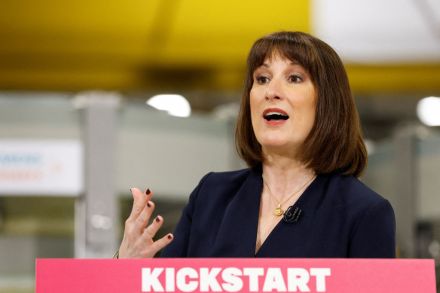
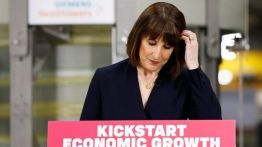
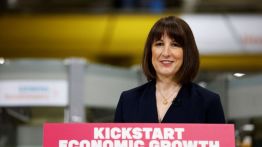
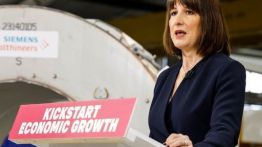
As expected, Rachel Reeves used her big – and long – growth speech this morning to back the expansion of Heathrow and argue that Britain was taking too long to make decisions on building infrastructure, let alone getting it done. The Chancellor did devote large passages of her speech to criticising the ‘structural problems in our economy’, and to blaming the Conservatives, but she was clearly trying not to make the whole thing about what her predecessors had got wrong. This speech had to be about how Labour was going to grow the economy, after months of criticism that Reeves and Keir Starmer are taking the wrong approach. Reeves said

Do Rachel Reeves’s growth plans go far enough?

Has Rachel Reeves got her growth? Today’s speech from the Chancellor in Oxfordshire was not this government’s first attempt to pivot towards a more business-friendly, growth-generating narrative. But it was its best effort yet.  Starting with the highlights. Reeves threw her unabashed support behind a third runway at Heathrow, insisting that the expansion was ‘badly needed’ and that the case had never been stronger for boosting trade; the airport ‘connects us to emerging markets all over the world, opening up new opportunities for growth’. Let’s not get carried away She called on proposals to be submitted by the summer, to start a process that would ensure the fastest and best-value

Why Britain needs growth

‘Growth’ – the focus of the Chancellor Rachel Reeves’ speech this morning – can be a confusing word. It’s intangible, obscure, hard to visualise. It happens slowly, often imperceptibly, over a political cycle – when it happens at all. The changes needed to achieve it can be tough and involve trade-offs. Often voters feel those changes will not directly benefit them, or may even make their lives worse – whether it’s new housing developments, HS2, a new runway at Heathrow (which Reeves backed) or new nuclear power stations. For anyone who stood on the doorstep during the last election, we know that making and doing more things can be a hard