Economy

  • AAPL

    213.43 (+0.29%)

  • BARC-LN

    1205.7 (-1.46%)

  • NKE

    94.05 (+0.39%)

  • CVX

    152.67 (-1.00%)

  • CRM

    230.27 (-2.34%)

  • INTC

    30.5 (-0.87%)

  • DIS

    100.16 (-0.67%)

  • DOW

    55.79 (-0.82%)

Is Britain losing its sense of fairness?

Has Britain become a freeloader’s paradise, asks the Spectator’s economics editor Michael Simmons in our cover piece this week. Michael analyses ‘the benefits of benefits’, at a time when Britain’s welfare bill is burgeoning and most households are struggling with cost of living. For example, while a family of four can expect to pay £111 to visit the Tower of London, that is just £4 total on Universal Credit (UC), and for London Zoo it is £108 compared to £26. Michael is not arguing against the idea of helping those in need, but pointing out that – as the benefits bill continues to increase – this is another case of

Spotlight

Featured economics news and data.

Cutting Britain’s giant welfare bill would be an act of kindness

Does having money really matter that much? There are those, usually with quite a bit of it, who want us to care less about materialism. But, unequivocally, money really does matter – not because of any status it supposedly brings, but for the freedom it buys: freedom to choose how we live and how we look after others. Considering this, it seems that the deep disillusionment with mainstream politicians in recent years stems from a protracted and ongoing period of stagnant living standards over which they have presided. But the truth is that the average person has not got poorer since the global financial crisis. They have got a little

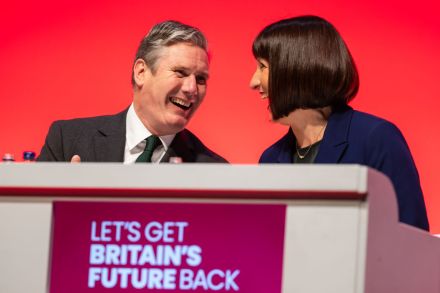
Who becomes a Labour politician to slash benefits?

If you are an idler sponging off the state, you have every excuse to feel cheated. Throughout his years in opposition, Keir Starmer gave you every impression that he was on your side. During his Labour leadership election campaign in 2020, he promised to end Universal Credit and replace it with something more generous. In 2021, when Boris Johnson’s government proposed to remove the £20-a-week uplift in benefits, which it had introduced at the beginning of the pandemic, Starmer called a vote to oppose the move, accusing the then government of ‘effectively turning on the poorest in our society’. Shortly before last year’s general election, he agreed with the Big

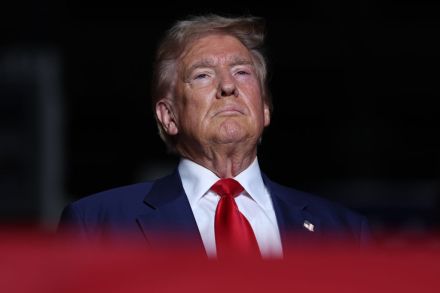
Who’s doing well out of the Trump slump?

Markets are not enjoying Donald Trump’s tariffs. Some 125 days have passed since his second election victory and the S&P 500 is on a clear downward trajectory thanks to Trump’s tariff policies and other poor US economic data. After the same number of days following Biden’s election, the S&P was up 13 per cent; for Obama’s second term it was up nine per cent; and at the same point in Trump’s first presidency it was up 11 per cent. For Trump 2.0 it’s down 3 per cent from election day. Trump has summoned Wall Street bosses to the White House in an attempt to calm nerves, but while US equities

Does Trump want a stock market crash?

There ‘could be a recession’, said President Trump over the weekend with the kind of nonchalant shrug that suggested he was not too bothered one way or the other. He was even going to buy a Tesla to help out his ‘first buddy’ Elon Musk as the company’s share price collapsed. The markets had assumed there was a ‘Trump put’ – that is the President would always ride to the rescue to keep the bull market running. But there is no sign of it. Instead Trump seems perfectly relaxed about the huge losses, even encouraging the sell-off. Of course, it might just that he does not know what to do.

The Wall Street plunge isn’t over yet

The plunge continues. It’s always a mug’s game trying to call the top of any market, but the plunge on Wall Street does feel as though it has got legs, so it is quite possible that we have indeed seen the peak for US equities.  Since last week the Nasdaq has moved into correction territory – jargon for a 10 per cent or more fall – and on Monday was off another 3 per cent. I rather like the expression ‘correction’ because it implies that the markets have simply made a bit of an error, a ‘terribly sorry, folks, but we all make mistakes, and give us a few weeks

Will Trump cause a recession?

Donald Trump has refused to rule out an American recession. He ‘hates to predict things like this’, he said yesterday. When asked if a downturn was coming this year, the President responded that a ‘period of transition’ was on the cards. On Thursday last week the Atlanta Fed’s GDP ‘nowcast’ model was forecasting that America’s economy would shrink by 2.4 per cent in the first quarter of this year – a slight improvement on the 2.8 per cent contraction it had predicted three days earlier. If this reading for the first three months of 2025 proves to be true, and things don’t pick up shortly, could the USA be heading

Are the markets turning on Trump?

China does not like tariffs, but big money in America likes them even less. If one thing has become clear amid the fog of the past week, it is that what will contain Donald Trump are the financial markets. China’s foreign minister, Wang Yi, attacked Trump on Friday for his imposition of tariffs, adding that major powers ‘should not bully the weak’. While people in Taiwan might find that latter comment a bit rich, his line on tariffs squares with the reaction on Wall Street. The markets do not like it. This week has seen the Nasdaq Composite index of high-technology companies move into a ‘correction’ – a 10 per

What’s the point of foreign aid?

The UK signed up to a UN target of spending 0.7 per cent of GNP on aid way back in 1970, but didn’t hit that level until 2013. In 2020, aid spending was cut to 0.5 per cent and last week Keir Starmer reduced it further to 0.3 per cent. This will save about £4 billion which will instead be allocated to military spending. There were predictable howls of anguish from aid advocates at the news, and the development minister resigned. There was also begrudging praise from Starmer’s Conservative opponents. But few seemed to question what the point of aid is, and whether a spending target, at any level, makes

Could spending cuts herald a ‘winter of discontent for Labour’s left’?

15 min listen

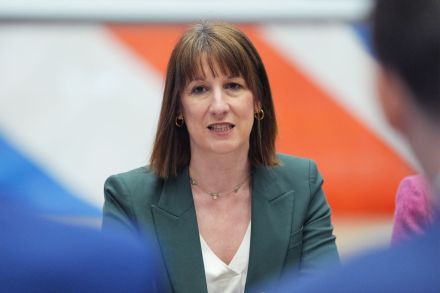
With reports of ‘billions’ of spending cuts earmarked for the Chancellor’s Spring Statement, taking place later this month, Michael Gove and Kate Andrews join Katy Balls to discuss what exactly Rachel Reeves could cut. With little fiscal headroom and sluggish forecasts of growth, Reeves doesn’t appear to have many options. It’s likely that welfare will be targeted, and there are reports that Labour’s opposition to new North Sea oil & gas licences may be relaxed to stimulate growth. One area that appears off the table is defence – following the Prime Minister’s pledge to cut international aid in order to fund new defence spending.  But if all these reports are

Why is the UK economy stalling?

Giving evidence to the Treasury Select Committee this afternoon, Bank of England Governor Andrew Bailey doubled down on a point he has previously made to the committee: the economy is being pulled down by an extraordinary fall in productivity in the public sector. Relative to 2019, he said, productivity across the public sector is now 8 to 9 per cent lower. In the health sector, it is 17 to 18 per cent lower. In what he described as a ‘back of the envelope calculation’ the overall effect has been to reduce GDP by between 1 and 3 per cent. Last year, Bailey added, something extremely unusual happened: UK productivity fell

Europe could pay the price for Germany’s debt shake-up

Germany has finally decided to join the party – but Europe may come to regret it. After two decades of limited borrowing and fiscal restraint, Europe’s biggest economy is finally joining the high-debt club. Incoming chancellor Friedrich Merz will borrow €800 billion (£670 million), and perhaps much more, to pay for extra spending on defence and infrastructure. Sure, Germany needs to spend more on its armed forces and on restructuring its economy. But it will also likely mean the euro-zone no longer has a single solvent member to anchor it. It is hard to see how this situation will end well for Europe. Merz is a centre-right, pro-business leader, but

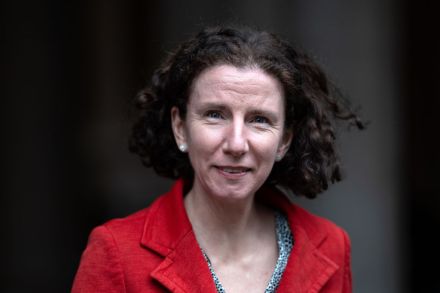
Angela Rayner is exercising her ‘right to switch off’ Britain’s growth

It was reported over the weekend that the government has dropped ‘the right to switch off’ from its Employment Rights Bill. Such a right, it has been widely asserted, had appeared in Labour’s manifesto for last year’s general election, promising that employees would be granted a legal right to ignore their boss’s emails outside their contracted working hours. However, it was left out of the bill as originally published last autumn, and neither has it been introduced as an amendment. But it seems that we were not really paying attention. It is true that Angela Rayner, in an interview with the Financial Times in May, made the suggestion that the

The fatal flaws in Trump’s crypto reserve plan

President Trump was very bullish about his decision over the weekend to create a ‘crypto reserve’. It will legitimise crypto currencies, he said. It will turn the United States into the global hub for trade. And it will build the national wealth. In effect, the American government will build up a stock of Bitcoin and other digital currencies, much like the gold held in Fort Knox. But Trump’s promise is too good to be true: it is a dangerous scam. Trump’s crypto reserve will be wide open to market manipulation by the tech tycoons around him ‘I will make sure the US is the Crypto Capital of the World,’ Trump

Will Labour MPs scupper a US-UK trade deal?

A UK-US trade deal is on the table. On a surprisingly successful trip to Washington, US President Donald Trump made it clear to the Prime Minister Sir Keir Starmer that a trade agreement with the United States was close. “We could very well end up with a real trade deal where the tariffs won’t be necessary,” Trump said after his meeting with the British delegation. “We’ll see.” Britain’s dire economic performance means that the UK is hardly in a position to turn down a deal With our economy in dire trouble, Britain needs this agreement more than ever. There is just one problem: Sir Keir will have to take on

The problem of Britain’s idle generation

The number of young people not doing anything with their lives has hit its highest level in 11 years. Figures released this morning by the Office for National Statistics (ONS) on 16- to 24-year-olds not in education, employment or training – so-called NEETs – show that the number has reached just under one million in the last three months of 2024. Standing at 987,000, the number of NEETs is up by 110,000 since the end of 2023 – equivalent to a town the size of Oldham. The new data means that nearly one in seven Britons aged 16 to 24 are not in education, employment or training. The figures are

Will Trump’s ‘golden visas’ threaten Rachel Reeves’s tax plans?

Fed up with Rachel Reeves’s tax rises, with the calls for wealth and mansion taxes, and the loss of non-dom status? For $5 million (£3.95 million), there is now a very easy escape route. President Trump has just announced a ‘golden visa scheme’, allowing investors an easy path to American citizenship. That is aimed at attracting global entrepreneurs to the US. But it could also pose a real threat to the British economy. The UK depends on a small group of taxpayers to keep its huge state machine financed It is certainly a dramatic move. Golden visas that allow citizenship in return for investment have traditionally been restricted to a

The energy price cap rise heaps more misery on Brits

Average gas and electricity bills will rise by £111 a year in April after the regulator Ofgem announced an increase to the energy price cap. The 6.4 per cent hike means the average dual-fuel household bill will hit £1,849 annually. The rise is more than anticipated, with analysts at Cornwall Insight predicting that bills would rise by just 5 per cent in April. Ofgem blamed inflation and ‘rising global wholesale prices’ for the bigger-than-expected increase. As a result, the cap will be £159 (nearly 10 per cent) higher than for the April to June period last year. The rise in energy prices is why the Bank of England recently forecast

Why BP is ditching renewables

Among the big, bad oil companies in borstal for environmental offenses, BP has long been the relatively benign one, the class pet. Remember how former chief executive Lord Browne two decades ago promised to take the company ‘Beyond Petroleum’ to a golden future of clean energy? In 2004, in a forerunner of the ESG indices which are commonplace today, Goldman Sachs picked out the company as the most environmentally and socially aware of all oil companies. BP was supposed to be the one which was best-placed to manage a transition to cleaner energy, which, according to Goldman Sachs, would reduce risks for the company and boost returns for shareholders. But

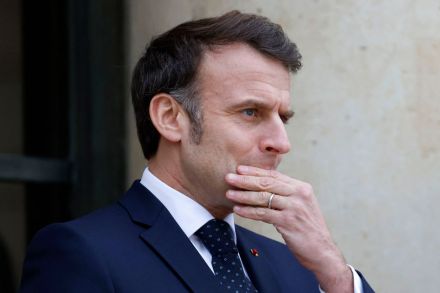
How France killed its start-up culture

It would encourage digitally savvy entrepreneurs. It would be a hub for artificial intelligence. And it would encourage a wave of new companies, replacing the ageing giants of French industry. When Emmanuel Macron became president, turning the country into ‘le start-up’ nation was central to his mission to modernise the economy. In fairness, he had some success. And yet with one of the world’s most punishing wealth taxes passed by the National Assembly last week it is about to be killed stone-dead. It was always slightly implausible for a country best known for its long lunches, short working week, endless holidays, and generous early retirement ages, but Macron was determined

Starmer’s Scottish headache

11 min listen

‘What does a party get after nearly two decades in office, collapsing public services, an internal civil war and a £2 million police investigation? Re-election again – perhaps with an even bigger majority’, writes James Heale in The Spectator this week. He’s talking about the SNP, whose change in fortunes has less to do with their leader John Swinney and more to do with the collapse of support for Scottish Labour and their leader Anas Sarwar. Who could benefit from the increased fragmentation of voters in Scotland? Will demands for more time, money and attention cause even more issues for Rachel Reeves? As Scottish Labour meets for its conference in Glasgow this

The online shopping boom is well and truly over

So much for ‘dry’ and ‘no buy’ January. The UK public seems to have thoroughly rebelled against efforts to persuade them to work off the excesses of the festive season. In particular, we seem to have stuffed our faces somewhat. The retail sales figures put out by the Office for National Statistics (ONS) this morning show that the volume of sales in food stores rose by 5.6 per cent in January relative to December. That helped overall retail sales volumes to rise by 1.7 per cent, compared with a 0.6 per cent fall in December. Chancellor Rachel Reeves has good reason to feel relieved. Until a week ago it seemed