Economy

  • AAPL

    213.43 (+0.29%)

  • BARC-LN

    1205.7 (-1.46%)

  • NKE

    94.05 (+0.39%)

  • CVX

    152.67 (-1.00%)

  • CRM

    230.27 (-2.34%)

  • INTC

    30.5 (-0.87%)

  • DIS

    100.16 (-0.67%)

  • DOW

    55.79 (-0.82%)

Is Britain losing its sense of fairness?

Has Britain become a freeloader’s paradise, asks the Spectator’s economics editor Michael Simmons in our cover piece this week. Michael analyses ‘the benefits of benefits’, at a time when Britain’s welfare bill is burgeoning and most households are struggling with cost of living. For example, while a family of four can expect to pay £111 to visit the Tower of London, that is just £4 total on Universal Credit (UC), and for London Zoo it is £108 compared to £26. Michael is not arguing against the idea of helping those in need, but pointing out that – as the benefits bill continues to increase – this is another case of

Spotlight

Featured economics news and data.

Cutting Britain’s giant welfare bill would be an act of kindness

Does having money really matter that much? There are those, usually with quite a bit of it, who want us to care less about materialism. But, unequivocally, money really does matter – not because of any status it supposedly brings, but for the freedom it buys: freedom to choose how we live and how we look after others. Considering this, it seems that the deep disillusionment with mainstream politicians in recent years stems from a protracted and ongoing period of stagnant living standards over which they have presided. But the truth is that the average person has not got poorer since the global financial crisis. They have got a little

Has Rachel Reeves broken her fiscal rules?

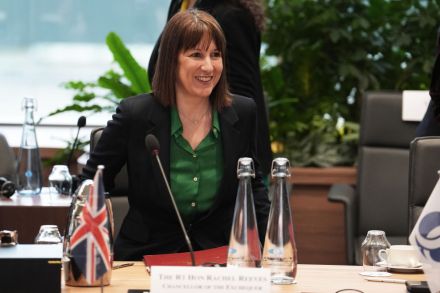
Rachel Reeves is having to borrow more money than even the worst estimates expected. Figures on the public finances, published this morning by the Office for National Statistics (ONS), show that in the financial year to January we borrowed over £118 billion. This is £11.6 billion more than at the same point in the last financial year and is the fourth highest borrowing period since comparable records began in 1993. The Office for Budget Responsibility (OBR) had expected borrowing to be some £13 billion lower by this point in the year. This news puts even more pressure on the Chancellor who, reports now suggest, has blown her fiscal headroom and

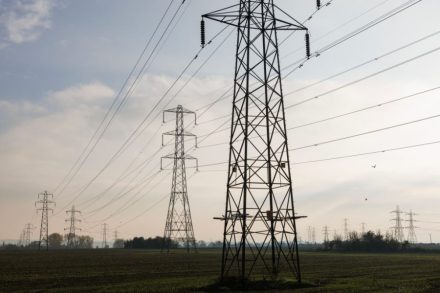
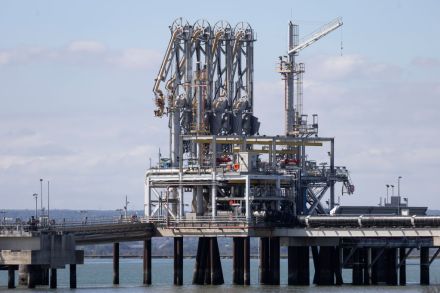
The shame of Big Energy’s £3.9 billion profit windfall

It is one of the world’s great mysteries: if wind and solar energy are supposed to be so cheap then why does the UK – which generates a higher proportion of its electricity from wind or solar than virtually any other developed country – have higher electricity prices than any other member of the International Energy Agency? There are several reasons for this, in fact. Wind and solar energy are only cheap if you look at the marginal price of generation, which is very low because the wind blows and the sun shines for free. Add on the cost of back-up and/or energy storage to make up for the gaps

Is X still worth £38 billion? Elon Musk thinks so

When Elon Musk bought Twitter in 2022, his many critics gleefully predicted a catastrophe. We were told that everyone would quit the site for its rivals, such as Bluesky and Mastodon. The rebranding to X made Musk the object of ridicule. Musk was warned that he was unlikely to see a return on the $44 billion (£38.1billion) he had splashed out on the site. But hold on: today brings news that Musk is attempting to raise extra cash for his site at the same valuation as what he bought it for. Musk’s critics will no doubt say he is deluded. But his business acumen speaks for itself: this is a

Inflation rises to 3% – should we panic?

Prices are rising. Inflation rose to 3 per cent in the twelve months leading up to January, up from 2.5 per cent in December. It’s a bigger jump than expected, with markets and the Bank of England expecting a rise to 2.8 per cent, driven largely by higher transport costs, as well as higher costs for food and non-alcoholic drinks. Is there reason to panic? While the CPI figures are higher than expected for January, they are not far out of line with the Bank’s latest forecast, which expects inflation to peak closer to 4 per cent this summer, due to rising energy costs. As Capital Economics notes this morning,

Are 3.1 million Brits really too sick to work?

Is it any wonder that the economy is struggling in spite of an apparently booming jobs market, with employers finding it difficult to hire recruits and average earnings rising by 5.9 per cent in the past year? Here is a shocking statistic which goes a long way to explaining the apparent paradox: there are now 3.1 million people claiming Universal Credit with no requirement to seek work – a number which has doubled in just three years. We have to be careful with the absolute numbers, because as benefit claimants are gradually moved onto Universal Credit the figures are bound to grow. But as the chart from the Department for

Does it matter if Rachel Reeves fibbed on her CV?

Rachel Reeves is in the headlines again, for all the wrong reasons. The Chancellor’s entry in Who’s Who lists her as a contributor to the Journal of Political Economy. The problem? Reeves has, in fact, only published a single article in a far less prestigious publication, the European Journal of Political Economy. At this rate, it is hard to feel confident she is actually called Rachel The latest revelations follow claims that Reeves exaggerated the amount of time she spent working for the Bank of England. Her LinkedIn profile lists her as working at Threadneedle Street for nine months longer than she actually did. Reeves has also previously said she

The crypto crash haunting Javier Milei

When Javier Milei took power in Argentina there was one group whose ears pricked up with interest: the global crypto bros. After all, here was a president who seemed perfectly aligned with their values. A lover of economic freedom who harbours a deep hatred for state regulations and government spending. Surely this ‘anarcho-capitalist’ was a fan of cryptocurrencies? Twitter filled with threads about why Milei’s election victory was a ‘big moment for Bitcoin’. Once in power, however, he did not seem all that interested. That is until Friday, when he took to his X account to post about a new crypto coin that was ‘dedicated to boosting the growth of

Britain’s banks never cared about net zero

Several weeks ago, just in advance of Donald Trump’s second presidency, there was a mass withdrawal of US financial institutions from Mark Carney’s Net Zero Banking Alliance – which committed members to adopt policies of reducing lending to fossil fuel companies and to take other measures aimed at reducing carbon emissions. Are UK banks now preparing the ground to do the same? The senior executives of Barclays and NatWest have decided that they would rather that their annual bonuses were not based on climate targets. Both have removed sustainability metrics from the formulas used to determine the size of their bonuses. Although both banks will still use climate targets in

Strong pay growth will alarm the Bank of England

Britain’s workers have experienced strong pay increases for the third month in a row. Figures on the jobs market, just released by the Office for National Statistics (ONS), reveal that pay rose 6 per cent in the final three months of 2024 – the fastest pace of pay growth in over a year. Strip out inflation, and the average worker saw a 2.5 per cent pay increase – the highest real terms pay rise for three years. While more money in pockets is obviously good news for the workforce, these figures will be ringing alarm bells at the Bank of England. The Bank’s interest rate setters see pay increases as

Kemi Badenoch is more interested in liberalism than conservatism

Kemi Badenoch made a speech today which mentioned the terms ‘liberal’ or ‘liberalism’ seven times before the word ‘conservative’ got a look in. The liberalism she was extolling in her address at the ARC conference in London was not of the leftist kind, but the ‘classic liberalism of free markets, free speech, free enterprise, freedom of religion, the presumption of innocence, the rule of law, and equality under it’. And there is not much to cavil over in that little list. Although when one person’s desired ‘freedom of religion’ impinges on other people’s basic freedom of expression then clearly there are priorities to be ranked. Since the Brexit vote, the

Will Ed Miliband see sense and drill British gas?

The government says it wants to stop the ‘blockers’ which are holding back Britain’s economy. It also says it wants to boost the nation’s energy security. How convenient, then, that along comes a project which could achieve both at the same time. The only trouble is that it is something which will drive Ed Miliband nuts. Over the next few weeks, it is reported, a little-known oil and gas company, Egdon Resources, will announce that it has discovered 480 billion cubic metres worth of shale gas reserves in a large trough extending westwards of the Lincolnshire town of Gainsborough. Onshore oil and gas is Egdon’s business – it already operates

Does Rachel Reeves’s industrial strategy even exist?

The Labour government was pinning everything on an ambitious industrial strategy to boost growth. It was meant to make the UK the fastest-growing economy in the G7, reboot the economy, raise real wages and generate all the extra tax revenues that were going to pay for improved public services. The trouble is, there is not much sign of it. First we were told that it would be published in the spring, and now it has emerged that we will have to wait until June to finally see it. It is increasingly hard to avoid the conclusion that it may not actually exist.  Today’s GDP figures will have come as a

UK recession fears ease but Rachel Reeves has little to celebrate

The UK economy grew by 0.1 per cent in the last three months of 2024, according to the Office for National Statistics’s latest report. December, when the economy expanded by 0.4 per cent (the market consensus had been 0.1 per cent), was the saving grace. This helped tip the final quarter of 2024 onto the right side of positive growth. Talk of recession will quiet down, at least for now. But this morning’s update is not going to take anyone in No.10 or the Treasury off high-alert. Monthly growth in December was stronger than expected, mainly thanks to a continued rise in services activity and a recovery in production from

OBR gloom spells trouble ahead for Rachel Reeves

Has Rachel Reeves broken her fiscal rules? It’s been speculated for some time now that the Chancellor lost her headroom when borrowing costs surged last month. Capital Economics forecast at the start of the year that Reeves’s limited headroom (about £10 billion) had been wiped out by rising gilt yields. This left the Chancellor in the uncomfortable spot of having to weigh up more tax hikes or serious spending cuts just months after unveiling her first Budget – the kind of tax-hiking Budget she insisted would not be needed again. Today, the news gets worse. The Office for Budget Responsibility has reportedly downgraded its growth forecast for the UK –

Cheaper mortgages won’t save Britain from recession

Electricity bills are going up. Netflix is adding a couple of pounds a month to the price of a standard subscription, and council tax is going through the roof. Most of us are probably struggling with the cost of living. There is, however, one piece of good news: the sub four per cent mortgage is back. The only catch is that it won’t be around for long. Santander will this week start offering two- and five-year fixed rate mortgages at just 3.99 per cent, the first time any of the major lenders have been willing to lend money to homeowners for less than four per cent for several months. A

Could Russian sanctions soon be lifted?

Markets are rife with rumours of impending talks between presidents Donald Trump and Vladimir Putin on a ceasefire for the war in Ukraine. Even before Trump told the New York Post last week that he had spoken with Putin over the telephone and that the Russian president wanted to end the war, stock market traders were rushing to buy stocks from the businesses associated with Ukraine. Ukrainian sovereign bonds, shares in the Austrian bank Raiffeisen, the Ukrainian mining company Ferrexpo and global steelmaker Arcelor Mittal have all posted record gains over the past week. The markets are betting on a prompt ceasefire and for sanctions against Russia to be eased. However, Moscow

Could Trump target Britain with tariffs?

25 min listen

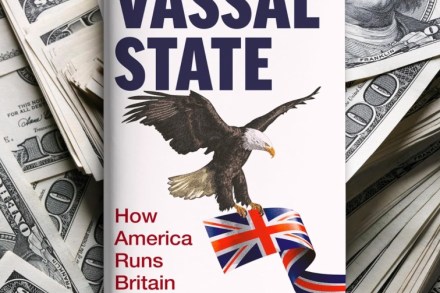
Angus Hanton, author of Vassal State: How America Runs Britain, joins Freddy Gray to talk about the economic relationship between Britain and America. As the world adjusts to the new US administration, every day seems to bring news of new potential tariffs. Is the UK a prime target for Trump? What could the impact of tariffs be? And what are the long-term questions facing British politicians about both the economic and political relationship with the US? Produced by Megan McElroy and Patrick Gibbons.

Vance is right, Europe is smothering AI

They won’t have liked the message or the messenger. With characteristic bluntness, the American vice president J. D. Vance tore into the European Union’s smothering regulation of artificial intelligence today.  Still, Europe’s leaders should listen. Vance happens to be absolutely right. When President Macron convened an AI summit in Paris this week, he was probably hoping for the usual platitudes from world leaders about ‘transformative technologies’ and ‘empowering change’ – along with a few billion euros for some data hubs in France. Unfortunately, no one told Vance how these things are meant to work. In his speech he spoke his mind, and tore into his hosts.  ‘We believe that excessive

Starmer should split from the EU if it hits back at Trump on tariffs

The European Union has hit back against Donald Trump’s decision to impose 25 per cent tariffs on steel imports. “Tariffs are taxes – bad for business, worse for consumers,” the European Commission president Ursula von der Leyen has said, adding that the levy “will not go unanswered”. Yet for all the fire and fury, Europe will not be quite as united as it wishes. The British government has made it quietly clear that it will not be joining the fight. The Daily Mail reports that the Prime Minister is poised to split from the EU by holding off retaliating. The PM right: this is a fight from which Britain has little