Economy

  • AAPL

    213.43 (+0.29%)

  • BARC-LN

    1205.7 (-1.46%)

  • NKE

    94.05 (+0.39%)

  • CVX

    152.67 (-1.00%)

  • CRM

    230.27 (-2.34%)

  • INTC

    30.5 (-0.87%)

  • DIS

    100.16 (-0.67%)

  • DOW

    55.79 (-0.82%)

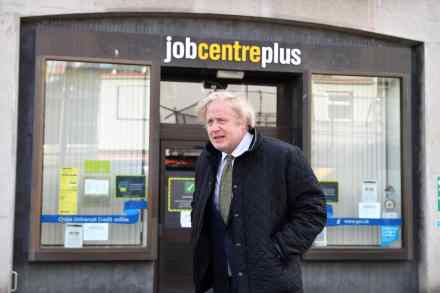
The IMF growth downgrade is more bad news for Rachel Reeves

Rachel Reeves lands in Washington tonight to be greeted with bad news. The International Monetary Fund (IMF) – whose spring meeting the Chancellor is attending – has just handed Britain the largest GDP downgrade of any G7 country.  In the freshly released update to their world economic outlook, the IMF forecast growth for the UK this year of just 0.8 per cent – down from the 1.3 per cent they’d previously projected. Things don’t get much better next year either, with just 1.3 per cent growth forecast, again downgraded from 1.5 per cent.  This downgrade singles out Britain and our European neighbours. While the IMF calls the overall effect of


Spotlight

Featured economics news and data.

Cutting Britain’s giant welfare bill would be an act of kindness

Does having money really matter that much? There are those, usually with quite a bit of it, who want us to care less about materialism. But, unequivocally, money really does matter – not because of any status it supposedly brings, but for the freedom it buys: freedom to choose how we live and how we look after others. Considering this, it seems that the deep disillusionment with mainstream politicians in recent years stems from a protracted and ongoing period of stagnant living standards over which they have presided. But the truth is that the average person has not got poorer since the global financial crisis. They have got a little

Scotland’s four-day week policy would be a disaster

A shock poll commissioned by the IPPR Scotland thinktank has revealed this week that more than 80 per cent of Scots would like to work fewer hours for the same pay. This may well prompt further revelations about the religious leanings of the Pope, or the toilet habits of bears, but in the meantime, the IPPR has called on the Scottish government to extend its financial support for companies who want to trial a four-day working week. This is still quite a modest proposal. The SNP manifesto for the May elections promised to establish a £10 million fund for companies trialling the shorter week, with the results used to consider

Boris could pay a big price for his flawed social care shake-up

Boris Johnson pledged to ‘fix the crisis in social care’ over two years ago. Next week, the Prime Minister is set to announce his plan to do just that. In doing so, he is also expected to opt for a major break from his manifesto pledge not to raise key taxes. So what is Boris’s solution, and will it work? The Prime Minister remains wedded to the 2011 Dilnot reforms to answer today’s problems. This includes bringing in a cap on the cost one would be required to pay for their social care. At least a 1p tax hike on National Insurance is also expected, to raise around £6bn. This pot of

Three big problems with the government’s planned tax hike

We are in the middle of a once-in-a-generation shift: working from home. There are skill shortages across the economy, supply bottlenecks, and empty supermarket shelves. A couple of million people are still set to come off furlough, back into jobs that may no longer exist. The labour market is in utter chaos. But, hey, here’s a good idea. Let’s whack a tax on jobs. Really? The government’s widely leaked plan to increase National Insurance, a tax on jobs, could not come at a worse possible time.  The government’s widely leaked plan to increase National Insurance, a tax on jobs, could not come at a worse possible time We can all debate whether

The government’s social care reform plans don’t add up

As Covid-19 swept through care homes in the spring of last year, the public watched on with horror and helplessness. About a third of all Covid deaths in England took place among residents of these homes. It was worse overseas. In Spain, care home residents accounted for 40 per cent of Covid deaths last year. In the Netherlands and Sweden, it was around 50 per cent. In Canada, almost 60 per cent. But this doesn’t provide much comfort. Britain may belong to a large club of countries that got their pandemic policy wrong — but the results, regardless, were deadly. The huge holes in Britain’s social care system have been

How to solve the looming pigs-in-blankets crisis

This is getting serious. Never mind global shortages of microchips, plastics, copper and container ships; now we’re running out of pigs in blankets. The British Meat Processing Association says its members are so understaffed that annual production of 40 million packs of this popular pork item for the Christmas market is under threat. The British public have so far stoically accepted occasional empty supermarket shelves as a pandemic knock-on, to be blamed in part on necessary pinging of key workers and delivery drivers and in part on neighbours’ stockpiling, rather than on systemic government cock-up. But if the succulent sausage-in-bacon delicacy is nowhere to be found, trouble will surely follow.

The Bank of England’s new monetary hawk

Andy Haldane’s departure from the Bank of England opened up one of the most influential roles in guiding UK monetary policy — and that role has now been filled. Huw Pill has been announced as the BoE’s new chief economist, taking up the post from next Monday. Some of the snap reaction is focusing on Pill’s similarities to those who came before him. Despite resources being poured into diversity teams to recruit a mix of applicants, it was Pill who was selected, a former Goldman Sachs economist and most recently a senior lecturer at Harvard Business School. Pill won’t take kindly to ideas about reneging the Bank of England’s independence

How the pandemic pushed up inflation

Eurozone core inflation came in at 1.6 per cent in August, while headline inflation hit 3 per cent. In Germany, at least, the all-important national metric went up by a notch — to 3.9 per cent. The recorded inflation data are, to some extent, a bounce-back recovery effect — coupled with the rise in German VAT — which will distort inflation numbers from July until December. But there has been a 2.7 per cent rise in industrial goods, minus energy, which is partly a supply chain effect that could prove persistent. Food, alcohol and tobacco are up 2 per cent but services only 1.1 per cent. It is services that

Rishi Sunak should blame Brexit for ditching the pensions triple lock

Car workers in Sunderland are doing just fine. Construction workers still have jobs. And the food is still getting to the supermarkets, even if there are some occasional disruptions to supply.  Not many of the dire warnings about the consequences of leaving the European Union have actually come to pass. There is, however, one group that looks likely to be hit, even if no one quite predicted it. The pensioners. It looks certain to cost them the ‘triple lock’ on their pensions: although since many of them voted for Brexit, they can hardly complain. The government is tying itself up in knots on how to wriggle out of the ‘triple lock’

The Liberal Democrats have a dangerous vision for the City of London

Liberals have always set great store by laws and declarations. It was joked about Lord Loreburn, the liberal Lord Chancellor in the years before the First World War, that if told the Germans had landed he would immediately have taken steps to obtain an interim injunction from the Chancery Division requiring an immediate withdrawal. These days something similar seems to be happening as regards the Liberal Democrats’ approach to climate change. Last Thursday Ed Davey took aim at the City, which he has decided to add to the party’s growing list of climate change villains. In a curious interview with the Guardian he put forward a modest proposal to deal

Rishi’s stamp duty gimmick did little but help greedy builders

The Hundred — some sort of pimped-up cricket tournament, I gather — passed me by entirely, but I’ve been admiring the spin bowling of the Clayton, Dubilier & Rice team in another big contest, namely the bid battle for Morrisons. When CD&R made its initial 230p per share offer in June, there was much talk of the ruthless financial wizardry this New York private equity firm might apply to the supermarket group to extract maximum profit within a short timescale. But there was no more than a passing mention of the role as CD&R’s adviser of the former Tesco chief executive Sir Terry Leahy. Now the offer has been raised

Post-Brexit divorce is getting messy

The City has resigned itself to being locked out of the EU. The hauliers are adjusting to all the extra paperwork. Now it looks as if the lawyers will have to get used to no deal as well — and while that won’t do any serious long term damage to the profession’s booming global status, it now looks as if a lot of divorcing families will be collateral damage. Over the last month, it has become clear the EU plans to block the UK from joining the Lugano Convention, which helps settle in which jurisdiction disputes should be resolved. The reason is no great mystery to anyone. Brussels wants to make

Brexit is good news for Africa

Few who voted for Brexit were actually racists, much as those opposed to the project would like to have you believe. There were probably as many reasons as the 17.4 million people who voted to leave the EU. For example, I am an African-born British citizen who enthusiastically campaigned for Brexit, hoping that an independent United Kingdom would offer mother Africa a better future. Brexit should create an opportunity for Africa, not only to escape the crippling EU Common Agricultual Policy but also to trade itself out of the dehumanising poverty through equitable trade deals. Even the EU’s supporters accept that the Common Agricultural Policy is a disaster for its

Covid has exposed the flaws in the welfare state

Upheavals in welfare policy have historically followed major crises such as wars, civil unrest, recessions and pandemics – the Ministry of Health itself was established in 1919. The experience of the second world war led to the creation of the contemporary welfare state. If a course of action (a furlough scheme, say) is pursued in an emergency, we know it is possible. Keep the measure in place too long and it can swiftly become an accepted norm — and politically awkward to unwind. But those expecting a post-Covid reboot of the welfare system might be disappointed. Shadow work and pensions secretary Jonathan Reynolds talked a good talk on overhauling universal

No. 10 is distorting the economy

Job vacancies at a record high, a shortage of 90,000 lorry drivers, farmers complaining about a lack of seasonal workers, care homes complaining about difficulties in recruiting staff — and 1.9 million people still on furlough at the end of June. It shouldn’t be difficult to put these figures together and work out what is going on — even if Lord Adonis, with his usual tunnel vision, has been busily tweeting blaming everything on Brexit. When the furlough scheme was introduced it was intended as a short-term measure to tide over businesses that had been forced to close as a result of Covid restrictions. So why is it still in place when

When will Nicola Sturgeon see sense on Scotland’s mounting deficit?

UK borrowing in 2020-21 hit a record level of almost £300 billion, representing 14.2 per cent of British GDP, reported the Office for National Statistics in June. In the face of the biggest spending challenge since the Second World War, the Treasury, backed by one of the world’s most established central banks, stepped up to supply all the funding needed to pay for furlough, business support and a highly successful vaccination programme. Now imagine a prime minister in receipt of those borrowing numbers announcing that the future path for the UK is clear: we must disband the Treasury and Debt Management Office; shut down our central bank; start again from scratch

Greta Thunberg is right

I am not usually on the same page as Greta Thunberg but she is absolutely right when she accuses the UK of lying about cutting its carbon emissions by 44 per cent since 1990. I have heard ministers repeatedly make this claim on radio and television while hardly ever being challenged on it — so I am thankful that Thurnberg has done what others have failed to do. The government’s 44 per cent claim is based on its official figures for territorial emissions — i.e. those physically spewed out within the UK. It excludes emissions from international shipping, aviation, the manufacture of goods elsewhere in the world for the benefit

Head back to the office – it’s your patriotic duty

Give or take a few leader-writing shifts and editing projects, I’ve been working from home for the past 30 years, so it may seem hypocritical to tell anyone else to return to the office. But it’s time to bring normality back to the world of work. I believe few people are capable of higher productivity in isolation than they are amid the shared energy and competitive pressure of a physical congregation of colleagues. Employers should not be allowed to use WFH as cover for cutting office space and certainly not for cutting wages. So on this issue I’m unusually but firmly at one with Goldman Sachs boss David Solomon, who

The rise of the Nationalist deficit conspiracy

On the face of it, the numbers are damning. The Scottish government has released the latest annual edition of Scotland’s public finances. It does not paint a pretty picture. Scotland’s notional deficit has more than doubled from £15.8 billion to £36.3 billion, taking the nation’s fiscal shortfall from 8.8 per cent of GDP to 22.4 per cent. This figure factors in a geographical share of North Sea oil revenue and compares to a UK deficit of 14.2 per cent. That is not only the largest deficit of the devolved era but more than double that seen in the wake of the global financial crisis in 2009/10. If anything, GERS puts

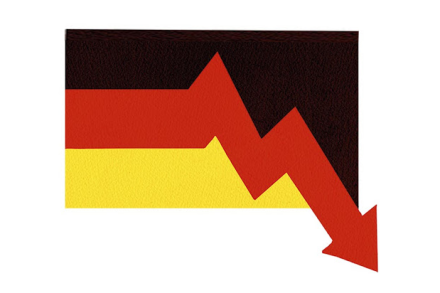
Europe will suffer as Germany drifts

Over the last 15 years Germany has come to be seen by many in Europe as a paragon of political stability. Whereas other countries have suffered rising unemployment, unmanageable levels of public debt or a rising wave of far-right support, Germany’s perennial chancellor Merkel demonstrated that her talents as a political fixer were superior to any challenge. Never very keen on taking the long term view of politics, she cultivated the most essential art of politics: survival. There were certainly moments of real danger for her. The Euro and migrant crises triggered discontent both in her party and the electorate at large. But she never lost her nerve and in

It’s time to scrap the triple lock

For a government to break a manifesto commitment is a serious matter which, quite rightly, is sure to rebound at the ballot box. But there is one commitment in the Conservatives’ 2019 manifesto which has simply got to go: the promise to maintain the ‘triple lock’ on pensions which sees the basic state pension increased each year by either inflation, average earnings or 2.5 per cent, whichever is the highest.  At the time the party made this promise it could not have foreseen the peculiar circumstances which would result in today’s remarkable ONS figures showing that average earnings are up over the past 12 months by 8.8 per cent. Unless