Economy

  • AAPL

    213.43 (+0.29%)

  • BARC-LN

    1205.7 (-1.46%)

  • NKE

    94.05 (+0.39%)

  • CVX

    152.67 (-1.00%)

  • CRM

    230.27 (-2.34%)

  • INTC

    30.5 (-0.87%)

  • DIS

    100.16 (-0.67%)

  • DOW

    55.79 (-0.82%)

The IMF growth downgrade is more bad news for Rachel Reeves

Rachel Reeves lands in Washington tonight to be greeted with bad news. The International Monetary Fund (IMF) – whose spring meeting the Chancellor is attending – has just handed Britain the largest GDP downgrade of any G7 country.  In the freshly released update to their world economic outlook, the IMF forecast growth for the UK this year of just 0.8 per cent – down from the 1.3 per cent they’d previously projected. Things don’t get much better next year either, with just 1.3 per cent growth forecast, again downgraded from 1.5 per cent.  This downgrade singles out Britain and our European neighbours. While the IMF calls the overall effect of

Spotlight

Featured economics news and data.

Cutting Britain’s giant welfare bill would be an act of kindness

Does having money really matter that much? There are those, usually with quite a bit of it, who want us to care less about materialism. But, unequivocally, money really does matter – not because of any status it supposedly brings, but for the freedom it buys: freedom to choose how we live and how we look after others. Considering this, it seems that the deep disillusionment with mainstream politicians in recent years stems from a protracted and ongoing period of stagnant living standards over which they have presided. But the truth is that the average person has not got poorer since the global financial crisis. They have got a little

Giving workers a ‘right to switch off’ could backfire

Millions of workers are ‘never quite switching off’ and are answering emails out of hours, warns Autonomy, a think tank. It suggests that the 1996 Employment Rights Act should be amended to give employees a legal ‘right to disconnect’. Unfortunately for Autonomy, Labour’s new deal for workers, outlined last month, somewhat stole its thunder. Spearheaded by deputy leader Angela Rayner, the party’s radical package of labour market reforms includes a default right to flexible working, new worker status for those in the gig economy and, of course, a French-style law barring employers from contacting workers outside strictly regulated hours. Nonetheless, Autonomy’s suggestion has received fawning coverage. The Guardian headline referring to

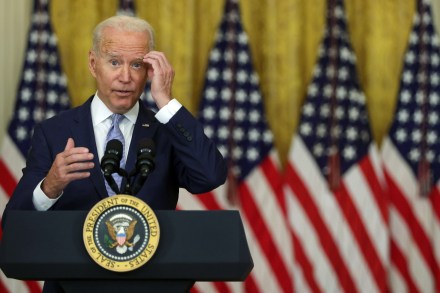
After Afghanistan, the economy is the next Biden catastrophe

The debacle in Iraq. The fall of Saigon at the end of the Vietnam War. The failed ‘Bay of Pigs’ invasion of Cuba. You can debate where exactly the collapse of Afghanistan ranks in the list of American military and foreign policy disasters. But one point is surely certain. It is a major setback, and one that will undermine the credibility of the United States for years to come. Here is the real problem, however. It is not going to end there. The economy will be the next major catastrophe of Joe Biden’s increasingly chaotic presidency. Biden has embarked on a drive for a bigger state, with more control over

Britain’s economic bounce back is less impressive than it seems

The UK economy is rebounding at the fastest rate in Europe, and faster even than the United States: that is the general tone of reporting of today’s GDP figures, which show that the UK economy expanded by 4.8 per cent in the second quarter of 2021. That is compared with 0.9 per cent in France, 1.5 per cent in Germany and 1.6 per cent in the US. But hang on, dig a little deeper and there is something a little odd going on with the figures. Compare nominal and real changes in GDP during the second quarter and it produces the following: UK, nominal growth in second quarter: +3.6 per cent;

Why filling Father Christmas’s sack will cost more this year

Bank of England governor Andrew Bailey looks increasingly uncomfortable as inflation notches upwards from ‘nothing to worry about’ towards the Bank’s latest prediction of a decade-high 4 per cent peak later this year and a possible ‘Oops, we’re back to the 1970s’ if spiralling wage and price pressures confound the forecasters. I wrote last week about the UK’s lack of lorry drivers, but that’s just one of many bottlenecks that need unblocking, as Bailey says, to bring ‘a wave of supply back on to the market’ and quell the blip. More significant globally, and much more difficult to resolve, is the logjam of shipping. The composite World Container Index published

How the ‘Nixon shock’ reshaped our economy

The dotcom bubble. The financial crisis of 2008 and 2009. The oil price spiral of the 1970s. The launch of the single currency. It would be fun, in a nerdish kind of a way, to debate which was the most seismic economic event of postwar history. But in fact the answer would be this: the ‘Nixon shock’, a fateful day when the final link between gold and the money you carry around in your pocket, or on your bank card, was finally severed. And it happened 50 years ago this week. A half-century on — enough time for some historical perspective — how’s it going? Well, since then we have

The SNP-Green alliance is a victory for the cranks

The SNP’s nationalist outriders, the Scottish Green party, are reported to be within touching distance of agreeing the terms of a formal cooperation agreement that will see them enter government for the first time. What will this mean for Scotland and its governing party? On the face of it, not a great deal. Some Green MSPs (the party has seven, including co-leaders Lorna Slater and Patrick Harvie) will get ministerial posts but will have minimal impact on SNP policy, which will likely remain tightly controlled by Sturgeon and her inner sanctum. The SNP will hope that the optics of hooking up with the Greens will boost their environmental credentials in

Google’s war on home workers was inevitable

Tapping out some code in the back garden. Working on a sales presentation while watching the school sports day. Or even better, traveling though a continent or two while still pulling down a ritzy six figure salary.  Over the last year, middle class professionals have bought into the Work From Home Dream – or WFHD as it’s known in HR circles – to create a working life that combines the best of all possible worlds. It is hardly surprising that so many highly-paid workers are happy to stay away from the office on a permanent basis. Forget Zero Covid. The WFH warriors will be aiming for Zero Flu and Zero

In praise of Mike Ashley

If you want to be thanked by a grateful nation, don’t ever buy a failing football club, especially not in a city where the local team has a tribal following. That is the moral of the tale of Mike Ashley, who has just stepped down as chief executive of Sports Direct’s parent company.  Never mind creating, or saving, 20,000 jobs. Never mind fighting price-fixing by rivals determined to rip off impressionable young football fans desperate to own their club’s strip. Never mind being brave enough to invest in High Street stores which almost everyone else thinks are doomed. Ashley’s public reputation was always going to be dependent on the performances

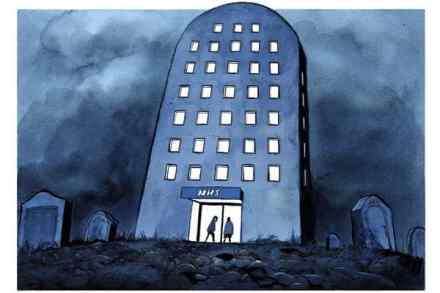
The NHS has never been the ‘envy of the world’

Usually when the Commonwealth Fund releases its ‘Mirror, Mirror’ study of healthcare systems, it makes waves across the UK media. You might not recognise the formal title of the study, but you’ll be familiar with its findings: this outlier research tends to rank the UK National Health Service as one of the best healthcare systems in the developed world. It’s a hallowed report for much of the UK medical community and commentariat, reaffirming their unquestioning devotion to the NHS as a truly unique system and the ‘envy of the world’. While other healthcare assessments – from the OECD, European Health Consumer Index, and World Health Organisation, to name a few

Is it time for a Dad’s Army of lorry drivers?

Here’s a patriotic proposal: let’s form a Dad’s Army of lorry drivers, of which the Road Haulage Association reckons there’s currently a 100,000 shortage. Daily headlines tell us this is causing supply disruptions that have led to reduced factory output and half-empty supermarket shelves, slowing recovery and contributing to the blip in inflation. We need Walmington-on-Sea’s trusty platoon at the wheel to compensate for the million-plus exodus of foreign-born workers that has afflicted the economy from hospitality (see this week’s last item) to fruit farms, slaughterhouses and construction sites — compounded in haulage by delays to thousands of HGV tests for new applicants last year. Right now, of course, all

Why British firms keep getting bought out by foreign investors

Sharks, vultures, asset-strippers: just a few of the names that have been applied to the likes of Parker Hannifin, the US company which is trying to take over UK aviation company Meggitt. It’s the latest in a spate of takeover attempts of UK engineering firms by US competitors and private equity firms. An alternative name for them would be astute businesses which can see the value in companies that dopey British pension fund managers are unable to spot. If the takeover of UK firms is a problem or a scandal, British institutions are the real villains. They have bid down the values of these firms as they go chasing returns on US tech

Rishi Sunak’s warm words won’t persuade workers back to offices

It will be better for our careers. We will network more effectively, spark ideas off one another, and learn new things from our colleagues, as well as getting a reminder from time to time of how annoying they are.  Chancellor Rishi Sunak took a break today from his usual occupation of dishing out vast sums of free money to remind us all of how much he learned from working in an office. Sunak is urging us all to get back to the skyscraper, shop, warehouse, or whatever, as quickly as possible. But hold on. Sure, there is nothing wrong with a few warm words to that effect – but we need more

Should Boris pay people to take the jab?

The steady stream of mixed messages coming from government ministers have been one of the few constants during the pandemic. Boris Johnson’s numerous u-turns have been well-documented and widely ridiculed. And while the news that the unvaccinated could be offered ‘kebabs for jabs’ may not constitute a full volte-face, it certainly flies in the face of the government’s ‘junk food’ advertising ban. Young people could now be offered discounts on Big Macs if they get vaccinated, but McDonald’s soon might not be able to promote the product on TV before 9pm or online at all. Where’s the logic in that? This latest approach on encouraging vaccine uptake makes life difficult for public health experts who

America’s surprisingly disappointing GDP growth

America’s economy has officially recovered to its pre-pandemic levels, as Q2 GDP figures saw an annualised increase of 6.5 per cent. This is a positive update, on the face of it, but that’s more or less where the good news stops. The country’s GDP figures have come in notably below the consensus of what was expected, which was something closer to 8.5 per cent.  The news comes just a day after the International Monetary Fund forecast the United States and the UK would lead advanced countries with their rate of economic recovery, revising its estimates for the States upwards to 7.0 per cent this year and 4.9 per cent next

Vaccine passports could threaten the employment recovery

Alongside the UK’s latest step in reopening, optimistic forecasts have been rolling in concerning the economy’s timeline for returning to pre-pandemic levels. This morning, we got another positive indication that businesses are resuming normal operations. The latest update on furlough figures shows 1.9 million workers are still on the scheme as of the end of June — the lowest level of people having their wages paid by the state since furlough was first introduced during last year’s spring lockdown. The number of people on the scheme fell by half a million last month, and by roughly three million since March. The continued fall is hardly surprising, as each month since

Is the airline ‘booking surge’ a load of hot air?

Be glad you’re not in Dr Mike Lynch’s shoes. A London judge has ruled that the founder of the Cambridge-based software venture Autonomy can be extradited to the US to face multiple fraud charges in relation to the takeover of Autonomy in 2011 by Hewlett-Packard of California. This was, undoubtedly, a disastrous purchase: HP paid a huge premium over Autonomy’s market value, swiftly found all was not as expected, wrote off most of the $11 billion price and accused Lynch of having artificially inflated the company’s numbers. His fate now hangs in the legal balance. The Serious Fraud Office looked at the file but dropped it on grounds of insufficient

Bitcoin’s whiplash volatility is still a problem

Crypto markets were in a tizzy over the past week following rumours – later quashed – that Amazon was planning to accept bitcoin for payments. Last Thursday, Amazon posted a job opening for a digital currency and blockchain lead, prompting a media frenzy that culminated with a report that the company would accept bitcoin payments by the end of the year. Bitcoin prices had been declining since April, but they surged by almost 15 per cent to hit £29,000, before moderating to around £27,000 yesterday after Amazon denied the report, saying the speculation around specific plans for cryptocurrencies was not true. Another roller coaster ride was to come, after Bloomberg

Whitehall’s Covid gloom could harm our economic recovery

As the government continues to put forward an extremely cautious narrative about re-opening, more evidence emerged today that the economy is surging ahead. The International Monetary Fund has once again upgraded its forecast for Britain’s growth this year: its April prediction of 5.3 per cent growth in 2021 has now been revised upward to 7 per cent. If correct, the UK could boast one of the fastest growing economies amongst major countries, with a recovery looking to be on par with the United States. Today’s update from the IMF fits a trend. Just this weekend the EY Item Club forecast 7.6 per cent growth this year – the fastest rate

Covid has revealed the limits of the big state

When Rishi Sunak turned on the spending taps last March, a triumphant Jeremy Corbyn said he had been proved ‘right’. History would be written by the losers. In the 16 months since, government spending on the pandemic has swelled to an eye-watering £372 billion. Wages have been nationalised, along with the railways. Individuals have radically altered their behaviour to shield a state institution. Many now hold the view that coronavirus demonstrates government can borrow and spend a large amount of money quickly and wisely — and that it can therefore continue to do so. But two new reports from the Commons Public Accounts Committee decisively debunk that myth. The picture

Australia shows the cost of zero Covid

The UK is growing at the fastest pace in 80 years. The United States, fuelled by President Biden’s stimulus programme, is expanding at a breath-taking pace, while Sweden is growing at a rapid rate. Most of the global economy is bouncing back from the Covid recession at remarkable speed. There is, however, one exception. Australia. What has long been one of the most successful economies in the world is heading back not just into lockdown but into recession as well — and giving the world a sharp lesson in the cost of ‘zero Covid’. Over the last year, Australia, along with New Zealand, has been heaped with praise for the