Economy

  • AAPL

    213.43 (+0.29%)

  • BARC-LN

    1205.7 (-1.46%)

  • NKE

    94.05 (+0.39%)

  • CVX

    152.67 (-1.00%)

  • CRM

    230.27 (-2.34%)

  • INTC

    30.5 (-0.87%)

  • DIS

    100.16 (-0.67%)

  • DOW

    55.79 (-0.82%)

The IMF growth downgrade is more bad news for Rachel Reeves

Rachel Reeves lands in Washington tonight to be greeted with bad news. The International Monetary Fund (IMF) – whose spring meeting the Chancellor is attending – has just handed Britain the largest GDP downgrade of any G7 country.  In the freshly released update to their world economic outlook, the IMF forecast growth for the UK this year of just 0.8 per cent – down from the 1.3 per cent they’d previously projected. Things don’t get much better next year either, with just 1.3 per cent growth forecast, again downgraded from 1.5 per cent.  This downgrade singles out Britain and our European neighbours. While the IMF calls the overall effect of


Spotlight

Featured economics news and data.

Cutting Britain’s giant welfare bill would be an act of kindness

Does having money really matter that much? There are those, usually with quite a bit of it, who want us to care less about materialism. But, unequivocally, money really does matter – not because of any status it supposedly brings, but for the freedom it buys: freedom to choose how we live and how we look after others. Considering this, it seems that the deep disillusionment with mainstream politicians in recent years stems from a protracted and ongoing period of stagnant living standards over which they have presided. But the truth is that the average person has not got poorer since the global financial crisis. They have got a little

The Tories’ muddled energy and climate change policy has been exposed

A perfect storm is battering the UK’s energy sector. Due to a mix of high demand, maintenance issues at some gas sites, and lower solar and wind output, wholesale gas prices are up 250 per cent since January, and a handful of energy firms have folded. Some economists are suggesting the huge rise in gas prices could be an indicator of nascent inflation, and senior Tories have warned that a looming ‘cost of living crisis’ could erupt into the biggest political issue of the decade. Ofgem has announced that it has appointed British Gas to take on 350,000 customers from People’s Energy, one of two smaller suppliers which collapsed last

Is China’s debt-fuelled economy doomed?

For years it seemed as though China’s massively inflated property bubble would just keep on expanding, seemingly defying the laws of economics, as well as regular warnings of the dire consequences for the economy should it burst. Now that moment may have been reached, as the country’s biggest developer teeters on the brink of bankruptcy. Evergrande is the biggest debtor in China – and in the world. It owes an estimated US$300 billion to Chinese banks, suppliers and foreign investors, and is struggling to meet interest payments. Some $US84 million of bond interest is due this Thursday, but the company has run out of money. Stock markets across the world are falling as the implications become more clear. By one estimate Evergrande has taken deposits for

Are low wind speeds to blame for Britain’s energy crisis?

Why has Britain suddenly been plunged into an energy crisis, with day ahead auction prices for electricity rising to over £400 per MWh, ten times what they were this time last year? The spike in global gas prices caused by economic recovery from Covid has been commented on often enough, as has the failure of Britain to maintain sufficient gas storage reserves – we have closed a large gas storage facility as other countries have been building up theirs’. So, too, we have learned of the failure of many smaller energy companies to hedge the prices of their energy, thus putting them at risk of spikes in wholesale prices. Global

Why building more houses won’t bring prices down

Does the law of supply and demand apply to housing? In other words, will building more houses and flats bring down prices? There is a growing economic consensus that the surprising, and rather counterintuitive, answer is: not to any significant extent. It is a conclusion that has revolutionary implications for housing policy, and what we need to do to help people realise their dream of owning their own home. Ian Mulheirn, chief economist at the Tony Blair Institute, concluded in a recent paper for the UK Collaborative Centre for Housing Evidence:  ‘The large body of literature on the responsiveness of house prices to supply indicates that even building 300,000 houses

The government should be helping, not hindering, start-ups

I’m hugely enjoying meeting the finalists for The Spectator’s Economic Innovator of the Year Awards. This year’s bumper entry was strong on paths to decarbonisation — as you’d expect for the new era of climate action — and on ventures rocket-boosted by the pandemic, whether designed to take pressure off the NHS or in the ‘edutech’ field of online learning. By contrast, ‘fintech’ and consumer apps were less prominent than in earlier years, reflecting changed priorities. And come to think of it, common to all the entrants I’ve talked to so far is that not one has said: ‘We couldn’t have done it without the help we’ve had from government.’

Are NFTs memes – or masterpieces?

You may think you have experienced buyer’s remorse. But until you’ve splashed out £4,000 on a Jpeg, you have not. That’s where I found myself the other day, after an adrenalin-fuelled afternoon bidding on a digital collectible ‘card’ depicting the Mona Lisa sitting on an easel. The item in question is a Curio Card, one of the earliest examples of a non-fungible token (NFT), a new technology used to buy and sell digital art. NFTs are the latest frontier for crypto-currency maniacs, the online gold rushers who keep financial watchdogs awake at night. Bored by a quiet summer for stock markets, memes and bitcoin speculation, the maniacs are piling into

The pandemic’s employment paradox

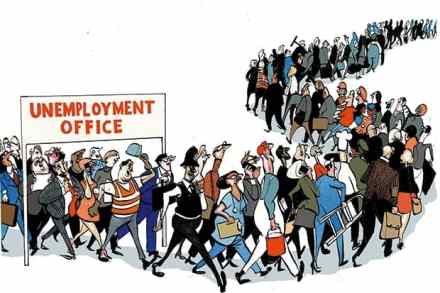
The pandemic continues to cause surprising events in the labour market — and challenges too, many of which were wholly unanticipated when the Covid crisis began. Today’s update from the Office for National Statistics on labour market numbers is case-in-point: the unemployment rate again, down to 4.6 per cent from May to July. Forecasts of nearly 12 per cent unemployment, once predicted by the Office for Budget Responsibility, are long in the past. The furlough scheme has starved off an unemployment surge and there’s good reason to think it’s been avoided altogether. Over one and a half million people were still on furlough at the end of July. But even

Is the inflation panic over? Probably not

So, is the post-Covid inflation panic over? That is how it looked last month, when the government’s preferred inflation index, CPIH, fell to 2.1 per cent from 2.4 per cent a month earlier. We will have the latest news on Wednesday morning, but for the moment it appears that consumer prices inflation hasn’t taken off like we feared. It is a similar story in the US, where inflation fell back from 5.6 per cent in July to 5.3 per cent in August. The fact that house prices have risen so strongly throughout the deepest recession in modern times ought to be a warning sign Yet there are good reasons to suspect that the summer

How the Tories can redeem themselves in the eyes of the self-employed

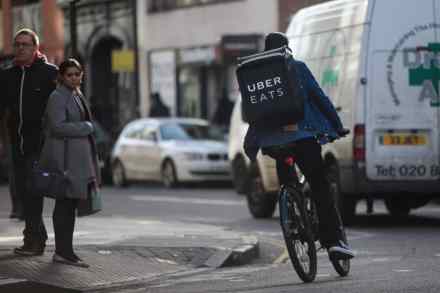
Private members’ bills don’t normally make for exciting reading. They give MPs and peers a chance to let off steam if they have a bee in their bonnet, and more importantly to lay down fairly cheap political markers. Most sink without trace, since the government through its control of the Commons legislative timetable has an effective veto. But some are worth a second look. One such is Lord Hendy’s Status of Workers Bill, which got its second reading in the Lords last Friday. Currently, businesses love the idea of designating as much of their payroll as possible as self-employed independent contractors rather than employees. And not surprisingly: it saves them

Government scraps mandatory vaccine passports

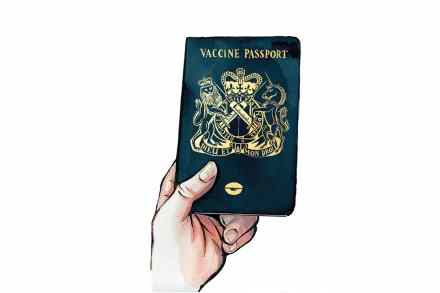
On BBC One’s Andrew Marr show Sajid Javid confirmed that plans for domestic vaccine passports in England were on the way out, even before they were formally brought in: ‘We should keep it in reserve,’ he said of the government’s plans to link vaccine status to entry into nightclubs, but ‘I’m pleased to say we will not be going ahead with plans for vaccine passports.’ Vaccine passports have been a roller-coaster policy for months now, with claims made by members of the Cabinet at the start of the year that they weren’t being considered: that nothing so ‘discriminatory’, in the words of vaccine minister Nadhim Zahawi, would be implemented. Since then,

Covid pingdemic takes its toll on Britain’s economic bounce-back

The arrival of ‘freedom day’ on 19 July enabled people to return to concerts, festivals, and ditch social distancing, but these rediscovered freedoms did not revive the economy. The ONS said this morning that growth was just 0.1 per cent in July, far lower than the consensus forecast. It was particularly disappointing given the growth seen in the locked-down months of June (one per cent) and May (0.6 per cent). The Pingdemic – and concerns about the Delta variant – cancelled out any animal spirits around reopening. August’s GDP boost is going to need to be much stronger for the more bullish forecasts to pan out Nightclubs reopened and the entertainment

What tea with the WI taught me about responsible investment

Late-breaking exam results: many of the City’s top fund managers have failed a vital test of ‘stewardship’ — defined for this purpose as ‘the responsible allocation, management and oversight of capital to create long-term value for clients and beneficiaries leading to sustainable benefits for the economy, the environment and society’. That mouthful comes from the Financial Reporting Council’s UK Stewardship Code; asset management firms seeking to become ‘signatories’ to the code were asked to submit essays describing their own investment principles, highlighting their approach to hot-button ‘ESG’ (environmental, social and governance) issues. Out of 189 applicants, 64 failed to reach the pass mark, while some major firms chose not to

Time to ditch the pension triple-lock for good

Perhaps it’s finally dawned on the government that they have an intergenerational inequality problem on their hands. The decision to suspend the pension triple-lock for one year to avoid an 8 per cent increase to the state pension would suggest so. Asset wealth is already excessively concentrated in the over-55s. To even this spendthrift government, a massive bump in pensions while the rest of the economy languishes is a step too far. But that’s exactly what happens every year anyway under the triple-lock. The policy means that even when the rest of the economy stagnates, pensioners receive a boost. It is a feature of the system, not a bug, which came into place

The red herring at the heart of Boris’s tax hike

One of the most dubious and meaningless parts of today’s health and social care plan is the pledge that the new tax will be a ‘legally hypothecated levy’ – ring-fenced so that the money raised can only go to health and social care services.  It’s dubious in the same way that the Tory manifesto pledge not to raise taxes turned out not to be worth the paper it was printed on. And it’s meaningless because a government that wants to unlink the tax could just pass a law doing that – and no legal ring-fence can stop it. It’s also worth remembering that the ring-fence around health and social care is

Are we trapped in an inflationary spiral?

Are we heading for a 1970s-style inflationary spiral? Not according to Catherine Mann, former chief economist at Citigroup, who argues that we are now less exposed to fluctuations in oil prices than we were then. She also makes the case that businesses are more reluctant to put up prices and that the link between inflation and wages is weaker than it was in the years of high inflation when wages often rose three or four times a year and prices in the shops were jacked up more frequently than now. Her opinion matters because she is the latest recruit to the Bank of England’s Monetary Policy Committee, which is charged

No, Britain isn’t a gerontocracy

Outrage over the government’s National Insurance hike is wholly justified. It is absurd to have the working-age population foot the bill for social care while those over state pension age with substantial incomes and assets don’t contribute. It is regressive, reneges on a 2019 manifesto pledge and is nothing more than a sticking plaster to heal the festering wound that is our social care system. As for employer NI, this is a crude payroll tax that discourages employment at the margin and which will translate into lower wages down the line. But the insistence by inter-generational warriors that we increasingly live in a gerontocracy, where the needs of the young

Why Johnson’s tax gamble will pay off

Boris Johnson’s announcement today, promising he will fix the £15 billion hole in health and social care, may well be the decision that determines his and his party’s fate at the next election — and, by implication, Keir Starmer’s reaction will also determine his destiny.  Probably the most important point is that after the 18 months we’ve had, most people would argue that putting the NHS and care for the elderly and vulnerable on a stable financial footing should be the Prime Minister’s number one priority.  Johnson’s critics would say he shouldn’t break two important manifesto pledges to pay for it Johnson’s critics would say he shouldn’t break two important

Javid’s cash boost can’t fix a battered NHS

The new £5.4 billion cash boost for NHS England is the easy bit of a very tricky situation for the health service and the politicians trying to work out how to deal with it. As Health Secretary Sajid Javid made clear on Monday, while the money will help deal with the backlog in treatment caused by the pandemic, it won’t do so immediately. He said that waiting lists would go up before they started to go down because people are still coming forward for treatment. Javid has been pitch-rolling for a dreadful winter ever since he took on the job, warning almost immediately that waiting lists could reach 13 million.

Why are Boris’s tax rises so popular?

It is a curious thing to exclude a vast group of generally quite well-heeled voters from funding a policy innovation that they will benefit from more than any other group. One might almost call it blatant favouritism. But Boris Johnson’s plan to pay for a big increase in resources going into social care long-term and the NHS short-term amounts to just that. By opting for a National Insurance increase to fund his proposals, the PM is ensuring that nobody over the state pension age of 66 will have to put their hands in their pockets. Neither will the extra financial burden fall on so-called ‘unearned’ income such as dividends on