Book Reviews

Our reviews of the latest in literature

Joanna Kavenna: How To Play A Game Without Rules

35 min listen

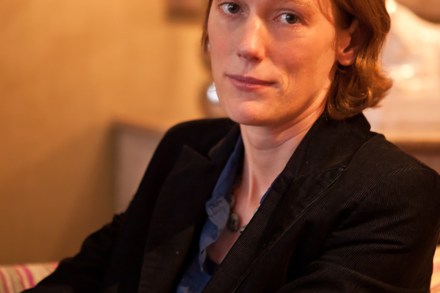
My guest in this week’s Book Club is Joanna Kavenna, who talks about her witty, philosophically riddling new novel Seven: Or, How To Play A Game Without Rules. She tells me about taking her bearings from Italo Calvino, making up a board game and then being the world’s worst player at it, how AI challenges our sense of ourselves – and how Morten Harket found his way into her fiction.

The serious business of games: Seven, by Joanna Kavenna, reviewed

Joanna Kavenna is very serious about games. Her novels have a certain playful quality, even her debut Inglorious, where the humour and allusions are Mittel-european. More markedly ludic are her Lewis Carroll-esque fantasy about quantum physics, A Field Guide to Getting Lost and the Philip K. Dickish tech-dystopia of Zed. In Seven, however, it’s not just the style but the subject. As if to make clear that games are neither childish nor mere distractions, there is a pointed reference to Johan Huizinga’s study Homo Ludens¸ published on the eve of the second world war. The narrator here is working for a formidable philosopher in Oslo, whose current project is entitled

A young Englishwoman is caught up in the Russian Revolution

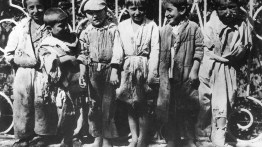
This vivid account of a young English-woman caught up in the Russian Revolution was first published in 1919 as Under Cossack and Bolshevik, but it’s possibly even more gripping today. Rhoda Power, a political science graduate, was 26 when she was hired as a tutor to a 16-year-old Russian girl, Natasha Sabaroff, living in Rostov-on-Don. Going to Russia had for years been one of her dreams, so off she sailed from Newcastle to Bergen through U-boat-infested seas; and, indeed, future sailings were cancelled after four ships were torpedoed. But she arrived safely in Bergen, where the Cook’s man put her on a train to Petrograd (St Petersburg), which she spent

Bookshop blues: Service, by John Tottenham, reviewed

A friendly admonition for the thwarted or struggling writer in your life: that tempting little job at the local bookshop might not be the best way to keep the show on the road until the Muse comes through. Would-be actors who take a front-of-house gig at the National Theatre aren’t constantly buttonholed by strangers raving about how brilliant Andrew Scott’s Hamlet was. Plus, of course, their more successful contemporaries will generally be elsewhere of an evening, doing shows of their own. But imagine slinking out of your modest lodgings, your dreams of what John Tottenham calls ‘actualisation’ left simmering behind you, to spend eight hours wrangling a roomful of people

The madness of Prince Rogers Nelson

In June 1993, the Artist Who’d Just Decided He Didn’t Want to be Called Prince Any More handed his passport to his long-suffering tour manager Skip Johnson and told him to get the name on it changed to the squiggly symbol with which he’d decided to rebrand himself. It is ironic that he felt ‘oppressed’ by a name bestowed on him by others while insisting on renaming most of his colleagues and lovers. The passport incident is one of the more comical demands listed in the exhausting catalogue of employee grievances that make up John McKie’s sprawling biography of Minnesota’s own Prince Rogers Nelson, the virtuosic visionary who died, aged

What is it about Bob Dylan that sends writers mad?

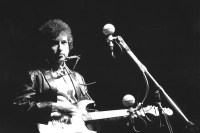
Ron Rosenbaum is a man of galactic learning. Theology, neuroscience, American history, psychology, Shakespeare, cosmology, ‘all of Dickens’, nuclear weapons, quantum theory, iron ore – nothing escapes his hungry eye. Except, perhaps, Bob Dylan. Which is unfortunate, given that he’s written a book about him. What is it about Dylan that sends writers mad? Christopher Ricks’s usual mellifluousness succumbs to a pun-overdose; Clinton Heylin’s blindingly completist biographies are as impenetrable as their subject; Sean Wilentz lurches from the unlikely to the banal. With Things Have Changed, Ron Rosenbaum, the de facto ‘Dylan correspondent’ for the Village Voice in the early 1970s, proves that even ‘being there’ confers no immunity. As

Does running 42 Lakeland fells in less than 24 hours really bring ‘serenity’?

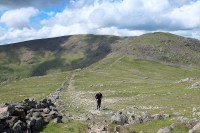
‘We continue to grapple as a species,’ writes Carl Morris, ‘with a knotty philosophical divide between anthropocentric and biocentric approaches to the natural world. Our bodies are both transcendent – seemingly beyond nature and capable of rationalised enhancement – but also immanent – that is within nature and therefore subject to the same frailties and limitations.’ What is he addressing? Space travel? Diving to the bottom of the Mariana Trench without oxygen? Not quite. He is talking about the process of human locomotion. He is talking about running. Stay with me. Books about running can be as dull as a ten-mile road race in the Illinois flatlands, and I say

The scourge of plagiarism reaches crisis point

‘Talent borrows, genius steals.’ Do you like it? I just came up with it. No, honestly. Any resemblance to the work of anyone else is purely coincidental. The idea that taking someone else’s words and passing them off as one’s own constitutes a form of theft goes back to antiquity. Aeschines, one of Socrates’s disciples, was said to have read out dialogues appropriated from his master, to which one philosophically informed heckler blurted out: ‘Oh! you thief; where did you get that?’ But, as I learned from Roger Kreuz’s Strikingly Similar, it was the Roman poet Martial who gave us our modern word for this crime. Plagiarius means kidnapper. So

The anxious gaiety of Britain’s interwar years

However many times one absorbs the brevity of the interlude between the first catastrophic worldwide conflict of the 20th century and the next, it was the not-knowingness of that timetable that allowed society to cope. In the 20 years between world wars that shattered several generations, Britain’s full emotional recovery was never really accomplished. But with his eye for the political and the cultural, for the game-changing and the deliciously absurd, for comedy and for tragedy, Alwyn Turner demonstrates the irrepressible optimism of humanity, whatever the circumstances: ‘Highbrows and lowbrows [lived] cheek by jowl, rubbing along with politicians, priests and pressmen.’ Relentlessly twisting the kaleidoscope, Turner finds a stunned nation

The last chapter: Departure(s), by Julian Barnes, reviewed

Departure(s), whose publication co-incides with Julian Barnes’s 80th birthday, will be his last book, a thank you and goodbye to his readers. Barnes has blood cancer, but the condition is manageable and not terminal; when he dies, it will be with, and not of, the disease. Or rather, as he puts it: ‘I, in dying, shall have killed my cancer! Barnes 1, Cancer 0 – result!’ Otherwise he is in good nick and still master and commander of his narratives. He is bowing out because his body of work is complete: his 18 novels and two memoirs – or, depending on how Departure(s) is categorised, his 17 novels and three

C. Thi Nguyen: How To Stop Playing Someone Else’s Game

45 min listen

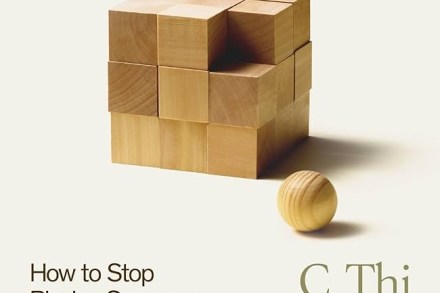
In this week’s Book Club podcast, my guest is the philosophy professor C. Thi Nguyen, whose new book The Score: How To Stop Playing Someone Else’s Game asks why rules and scores and metrics are so liberating in games, yet so deadening in real life. He tells me about the societal perils of our growing dependence on quantitative information, what Aristotle got right, and what yo-yos can tell us about the meaning of life.

The spiritual yearnings of David Bowie

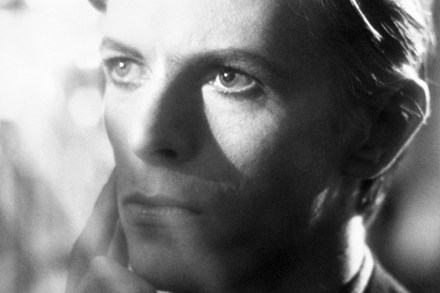
What did David Bowie mean by ‘No confessions/ No religion’ in his lyrics to ‘Modern Love’? Peter Ormerod proposes what at first seems an unlikely theory – that Bowie was talking about Gnosticism, the complex spiritual, though not religious, belief that God lies beyond the material world and that all humans carry a divine spark within. Ormerod admits that perceiving intellectual depths in a hit single sounds far-fetched – ‘an attempt to find weight in a scrap of fluff’. But he points out that Gnosticism, with its rejection of organised religion and its trust in God and man, was one of Bowie’s lifelong obsessions: a sincere enthusiasm he shared with

The scandal of California’s stolen water

As the poem goes: Water, water, everywhere, Nor any drop to drink  – which might well describe how residents of the Owens Valley felt after Los Angeles stole their lake. Immortalised in Robert Towne’s screenplay for Chinatown, this early 20th-century water diversion via the 233-mile Los Angeles Aqueduct quickly led to an endless property boom for the Southland, and a near-biblical ecological disaster for Inyo County, California. Towne later described the main perpetrators of this crime as ‘an old boys Wasp network’ that included the LA Times publishers, Harrison Gray Otis and Harry Chandler, and the self-taught civil engineer William Mulholland. In other words, there has always been enough drinking

Coming of age in Melbourne: Landscape with Landscape, by Gerald Murnane, reviewed

Gerald Murnane’s Landscape with Landscape opens with a splendidly disgruntled preface. The book is a collection of six longish stories and was originally published in 1985, when it was panned by a reviewer. ‘Some writers may claim not to be affected by reviews or even not to read them,’ he observes in his preface: ‘I make no such claim.’ And he explains how this brutal notice (‘I call to mind easily some of the nastiest passages’) led to poor sales and the disappearance of the collection, his fourth book. There is some comedy in this alongside the spiky pathos. Murnane is about as close to review-proof as any writer can

Odd man out: The Burning Origin, by Daniele Mencarelli, reviewed

This terse, unsparing novel can be summed up thus: after nearly a decade’s absence, the successful designer Gabriele Bilancini returns home to suburban Rome, where he wrestles with an identity crisis. His family and friends – his intimates before he moved to Milan and raced up the social ladder – feel like shameful reminders of his proletarian origins, which he keeps hidden – in ‘the way you hide a sin’ –  from the Milanese élite he is anxious to fit in with. In Milan, where he works and lives with his girlfriend Camilla, the daughter of his mentor, the celebrity designer Franco Zardi, Gabriele dresses smartly, limits lunch to ‘a

After the party: One of Us, by Elizabeth Day, reviewed

This is the sixth novel and tenth book overall by the highly successful journalist and podcaster Elizabeth Day. She hit her stride as an author with her third novel Paradise City (2015), which was leaps and bounds ahead of her first two in terms of narrative propulsion. Her next was what might be considered her breakout book, The Party (2017), after which came Magpie (2021).  One of Us returns to the characters and story of The Party, but it can easily be read as a standalone. Day has said that the earlier novel was partly inspired by reading The Great Gatsby at the age of 12; and while she has

The glorious ventilation shafts hiding in plain sight

In the centre of London’s Paternoster Square there is a tall column on a heavy octagonal base that provides a few seats and shelter from the winds whipping around St Paul’s. If you look closely, you see a mishmash of styles, with the Corinthian column topped by a gold-covered flaming urn and various baroque flourishes. Passers- by might be surprised to find such an ode to eclecticism amid the rather modern neoclassicism of what was a highly controversial development in 2008 that attracted the attention of the then Prince of Wales. What few of them will know is that the column is not just a decorative addition to a dull

The adventures of an improbable rock journalist

The filmmaker Cameron Crowe had the coolest childhood. Growing up in California, he started writing for Rolling Stone magazine at the age of 15. His big break came in 1973, when he had the chance to interview the Allman Brothers Band, then one of America’s biggest rock groups, for a cover piece.  For days he tagged along with the rockers on tour, winning their trust with his passion for music and open, honest, moon-shaped face, while phoning his mother every evening to assure her that he wasn’t taking drugs. Finally he earned an interview with the troubled Greg Allman himself, who, shirtless on a bed, spoke about the loss of