The Impossible Quiz–Answers
For the answers to the Impossible Quiz, click here. For the answers to the Impossible Quiz, click here.
The good, bad and ugly in arts and exhbitions
For the answers to the Impossible Quiz, click here. For the answers to the Impossible Quiz, click here.
Filming on The Palace was only a few weeks in when the rumours started flying. ‘A tawdry and offensive affair’ trumpeted the Sunday Telegraph; ‘dreadful and offensive and very near to the bone’, added Lord St John of Fawsley; ‘a real danger [it will] undermine support for the [royal] family’, weighed in a media watchdog. To the cast and crew, such reports were flabbergasting, not least because those talking so authoritatively about the television series in question were yet to see an episode. We wondered if this hatchet job might be some sort of publicity stunt (it bore similarities to some of our storylines, after all) — before it became
Absurd Person Singular, Garrick Women of Troy, Lyttelton Cinderella, Old Vic Five years as a critic and I’ve never seen anything by Alan Ayckbourn. With a flicker of apprehension in my heart I took my seat at the Garrick. Absurd Person Singular (nice title, nothing to do with the play) begins at a bourgeois drinks party. Calamity unfolds. Wife forgets to buy tonic, dons mackintosh, exits into rain via back door, returns from off-licence, finds back door locked so must re-enter house via front door without being spotted by guests because rained-on mac looks silly. See her problem? Nor did I, but the comedy of the first act rests
Sleeping & Dreaming Wellcome Collection, 183 Euston Road, London NW1, until 9 March 2008 ‘To sleep, perchance to dream…’. If only. We are supposed to spend one third of our lives asleep, but many find getting their regulation quota a losing battle, and others don’t even want to. Sleep is beleaguered in our busy world, fighting a slow battle of attrition against the massed pressures of modern life. And why do we sleep, and dream? It is still a mystery, although the scientific community is awash with different theories. For those of us who toss and turn nightly, armed with a fistful of heavily rationed sleeping pills (or a slug
I am an idiot. Last month, in this space, I proffered the usual random selection of favourite albums of the year, not a single one of which had actually been released in 2007, for, like many people (I’d like to think), I can be a little slow on the musical uptake. A day or two after the column had been filed, I was listening to Wilco’s Sky Blue Sky (Nonesuch) for maybe the 78th time when I suddenly thought, ‘Hang on, this came out this year. And it’s as good as anything I’ve heard this year as well.’ Thus proving that I am appreciably slower on a far wider range
If you’ve been waking up at 3 a.m. after yet another nightmare about climate change, there’s been a well-timed antidote on Radio Four this week. On The Estuary (made by the wildlife team, Chris Watson as sound recordist, Mike Dilger as naturalist and Stephen Head as the landscape historian), we heard how The Wash on the east coast of England has ebbed and flowed through the centuries. Maybe we are entering a new meteorological phase where sea levels will rise and what were once silty fields and verdant pastures will disappear under water. But what’s new? The estuary of the fenland rivers has changed radically over the last 12,000 years
Extras (BBC 1), Parkison: The Final Conversation (ITV), Sense and Sensibility (BBC 1), David Cameron’s Incredible Journey (BBC 2), The Hidden Story of Jesus (Channel 4) We said goodbye to Michael Parkinson and Andy Millman over Christmas. Andy Millman was the hero of Extras, whose finale went out on BBC1 on 27 December. This was what I think of as a sit-traj, a comedy with more misery than laughs. It was mainly about humiliation: Andy’s doll, based on his character in his grisly sitcom, is outsold by a Jade Goody doll that screeches racist abuse. A harridan from the Guardian (I genuinely have no idea which of my colleagues was meant)
On Boxing Day, The Skimmer noted how the Catherine Tate Christmas Special with its orgy of swearing was hardly suitable for BBC1 on Christmas Day. Now, The Times reports that OFCOM is to investigate the show following a flurry of complaints from viewers about the “most offensive programme ever broadcast by the BBC on a Christmas Day”. Even Catherine Tate seems to have realised that things went too far, telling The Radio Times: “I don’t know how this Christmas special got so depraved because it isn’t what I set out to do”. The BBC is standing by its decision, arguing that one of the character’s foul language “was fundamental to
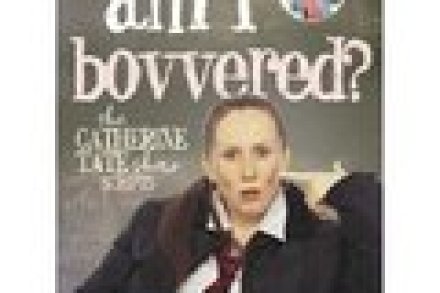
The Catherine Tate Show’s Christmas Day Special managed over 20 uses of the F-word in the first five minutes, which must be something of a record, even by today’s debased standards of modern entertainment. True, the show was broadcast at 10.30pm, safely after the 9pm watershed when more adult material is shown, but this was on BBC1 on Christmas Day at a time when millions of families were likely to be watching together after the rigours of the day. We suspect many parents with youngish families must have grabbed the zapper and embarrassingly switched to something more appropriate. Is the constant repetition of the F-word in the first
Shane McGowan celebrates his 50th birthday today. Who would have thought it? Comfort and joy all round. This must rank as one of the most unlikely anniversaries imaginable. As the great man says himself: “Smoking, drinking, partying – that’s why I’ve stayed alive as long as I have.” That’s the spirit lads. Give it a lash. Happy birthday Shane… And a merry Christmas to all of you out there, wherever you may be.
Oh dear. The New York Times’ Manohla Dargis (who apparently find the idea of being asked to name and write about her favourite movies of the year an intolerable imposition that reminds her of the Judeo-Christian patriarchy that has made her existence so frightfully ghastly) then further indulges herself with this hackneyed spot of hand-wringing: Enthusiastic reviews, intelligent filmmaking, even hot sex are no longer automatically enough to persuade a distributor to jump. The problem is that the art-house audience that supported the French New Wave filmmakers to whom “Reprise” owes an obvious debt can no longer be counted on to fill theater seats. Or maybe it’s overwhelmed. For a
Watched “Atonement”, starring Keira Knightley and James McAvoy, the film version of Ian McEwan’s novel and the latest British costume drama which American critics affect to love (hence talk of Oscars) but to which American audiences are indifferent (in two weeks in the US it’s taken only a paltry $3.5m at the box office). Atonement is fine as these things go, yet another depiction of class-ridden Britain in the 1930s, which encourages global audiences to think we’re still the same out-dated stratified museum in 2007. In general the film depends on high-quality dialogue and lovingly-depicted country-house scenes, which are cheap to shoot. Most of the budget, however, seems

This is the best Christmas song I’ve seen in years. It’s obviously even better if, like me, you went through a teenage phase of listening to nothing but The Doors…
Now that Hollywood has decreed that smoking in movies is as bad – and in fact perhaps worse – than gratuitous sex and violence, it’s not a great surprise that folk are reminiscing about the role smoking has played in the movies. This Slate sideshow doesn’t break much new ground – and, lamentably, declares smoking “deplorable – but it’s worth watching for the super video clips from the Golden Age of Gold Leaf. It’s worth mentioning, however, in rather more detail than the slideshow does just why smoking and the cinema became inextricably linked. Sure, smoking was a more mainstream activity and, sure, clouds of cigarette smoke look kinds cool

It seems bizarre to me that book shopping at this time of year should be about negotiating your way through mountainous piles of ‘Things You Never Knew About…’ or ‘The Book of Absolutely Useless…’ -type miscellanies. Surely Christmas, with its long, lazy afternoons and that strange week of limbo between Boxing Day and New Year’s Eve, is the perfect opportunity to get stuck into those weighty tomes you’d normally only have time to read on a long summer holiday? By the time you’ve shelled out a tenner for some flimsy collation of trivia to go in your beloved’s stocking (absolutely useless, indeed), you may as well have spent the extra
Some years ago I was walking through the closed galleries of the Uffizi with a group of journalists, when we passed the Portinari Altarpiece. In those spaces, free for once of jostling crowds, it was suddenly obvious what a wonderful work of art this mighty triptych was. With paintings, as with people, you often get an instantaneous impression — in this case of force, density, presence. In comparison, the big Botticelli pin-ups looked flimsy. Despite the surrounding competition (which is hot, to say the least), here clearly was one of the greatest pictures in Florence. And it is not a masterpiece by a Florentine, or even an Italian, but a

The fight has gone out of Victorian- bashing as a pastime. The high moral aims and low double standards of so much 19th-century culture, characterised by unsmiling portentousness and once regarded by Evelyn Waugh, Nancy Mitford et al. as a ‘shriek’, pale alongside the emptiness of modern celebrity worship. ‘Victorian’, which once meant ugly, silly or undesirable, has come to suggest the opposite — and so a harmlessly malicious parlour game falls by the wayside. But the massive swell of the 19th century continues to throw up genius oddities. Take Henry George Alexander Holiday, who died 80 years ago this year after a career that embraced notable successes as both
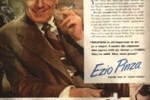
The indulgences of Christmas in the forms of food and drink are fairly well represented in the operatic canon but less socially acceptable indulgences, such as smoking and even drug abuse, don’t feature quite so frequently. Hardly surprising, really, as singing doesn’t seem naturally to combine with snorting a line or the long, luxurious inhalation of nicotine-rich smoke deep into the lungs. Surprisingly, however, back in the days when smoking was considered to be positively beneficial — ‘Craven A: for your throat’s sake’ — a number of opera singers actually advertised for tobacco companies. The fabulously glamorous and velvet-voiced bass Ezio Pinza not only won a legion of adoring fans
At the National Gallery the year starts with a show of Pompeo Batoni’s stylish portraits of 18th-century Grand Tourists in Italy (20 February to 18 May). The painter Alison Watt (born Greenock, 1965) has now completed her two-year stint as the NG’s seventh Associate Artist and will be showing the fruits of her labours in the Sunley Room (13 March to 22 June). Watch out for the endless fascinations of drapery. The summer slot is filled by Radical Light: Italy’s Divisionist Painters 1891–1910 (18 June to 7 September), which traces the development of Italian pointillism into the excesses of Futurism. I’m looking forward to seeing work by Giovanni Segantini, though
Presumably Bernard Haitink took, or was administered, a huge overdose of Valium before he began conducting Parsifal at the Royal Opera last week. What else could explain this fairly experienced Wagnerian’s conducting so featureless an account of Wagner’s last, most subtle and all told perhaps greatest score? Even the opening bars, unaccompanied melody with telling inflections which prefigure what will happen to it later, gave the impression of being a first run-through by players who had been told just to perform the notes — the exact opposite of how it sounded six years ago, when Simon Rattle inflected virtually every note separately. And because there was no emphasis, colouring or