Arts Reviews

The good, bad and ugly in arts and exhbitions

Comfort viewing

Foyle’s War is back on Sundays, sporadically, with Kingdom filling in the gaps on ITV. The BBC has followed Cranford with Lark Rise to Candleford, a series which makes the intervening Sense and Sensibility look harrowing by comparison. The danger to television is not dumbing-down but, on Sunday nights at least, a sort of down-filled duveting-down. Apparently, the night before we go back to work, we need our brains to hibernate. I’m sure that as the real problems of earning a living loom we don’t want dramas about feral children abandoned by junkie single mothers, or vicious crimes committed in the hell that is urban Britain today. We want pleasant,
Endangered species

Among the serially misused words of our time — celebrity, passion, caring, genius — we must surely count ‘plantsman’. Thirty years ago, it was a term given only to exceptionally knowledgeable, enthusiastic and botanically inclined amateur or professional gardeners, as well as to particularly experienced and thoughtful nurserymen. However, in recent years, ‘plantsman’ or ‘plantswoman’ has come to mean anyone who knows the difference between Amaryllis and Hippeastrum, or who puts a plant in the garden where they think it will be happy, rather than consciously associating it in colour and season with others. Plantsmen knew the names, provenances and, where necessary, complex cultural requirements of all their plants. They

Casting a spell

The Age of Enchantment: Beardsley, Dulac and their Contemporaries 1890–1930 Dulwich Picture Gallery, until 17 February The Age of Enchantment: Beardsley, Dulac and their Contemporaries 1890–1930 Dulwich Picture Gallery, until 17 February Taste is strictly divided over the enchanted visions currently on view at Dulwich. It seems that people are rarely indifferent to this kind of imagery; it either delights or revolts. I must admit that I went more in the spirit of inquiry than enthusiasm. I found a densely hung exhibition — it’s the kind of show you really ought to have a lorgnette for — which makes a surprisingly wide appeal, for the work on view is more

Spooked but absorbed

No Country for Old Men 15, Nationwide No Country for Old Men, adapted by Joel and Ethan Coen from Cormac McCarthy’s novel, is not for the squeamish or easily spooked, or at least should not be for the squeamish and easily spooked. I am both — in spades — yet found it almost ecstatically absorbing. This is not to say I liked it. But neither is it to say that I didn’t. It’s not a film that asks to be either liked or disliked. It just is, branding itself on to you like a heated iron. It is set in Texas, in 1980, on the USA–Mexico border where the men

Augustinian truths

Lord Reith must be turning in his grave. Not with shock and horror, but in amazement that there are still moments on his beloved airwaves when you can imagine yourself back to the beginnings of the BBC, to a world without gizmos and celebrity knockouts and a time when broadcasters were confident enough of their material (and respectful enough of their audience) not to feel that ‘entertainment’ must be added to everything to make their programmes palatable, like MSG or the emulsifier soya lecithin. True, the moments are often buried so deep in the schedules that you’re lucky to find them, or still be awake. But this week on The

Data fascism

Life is too secure  Security is a scary thing. I sometimes get the impression that my life, in so far as it is still my life, has been sealed in bubble wrap by major corporations and filed in a vault behind ten metres of steel. It is obvious, for example, that the only people now capable of accessing my bank account details are criminal hacking gangs. No one with any lesser degree of skill could possibly get through the labyrinthine process that my bank has just installed on its internet portal. I put my most valiant efforts into it just now. I applied every bit of patience and brainpower. I

The British are coming?  Hopefully not…

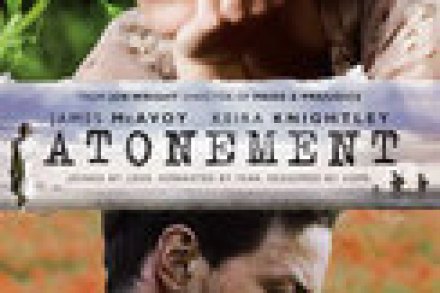
Pete Hoskin At yesterday’s low-key Golden Globes ceremony, the British film ‘Atonement’ was named the Best Dramatic Motion Picture of the year; making it the front-runner for the “Best Picture” Oscar next month. Thankfully – and thanks should go to the Writers’ Guild of America – we were spared acceptance speeches yesterday.  This meant that there were none of the typical British histrionics that accompany any major film awards win (see Colin Welland and his exclamation that “The British are coming!” at the 1981 Academy Awards).  There’s no doubt, though, that Welland’s sentiment will be repeated – as it is almost every year – in the run-up to this year’s

Her dark materials

Mary Wakefield talks to Eileen Atkins about acting as an out-of-body experience. Eileen Atkins opens in The Sea at the Theatre Royal Haymarket on 23 January. The Eileen Atkins experience — the word ‘interview’ doesn’t even begin to describe it — starts for me at about 3.30 on a brilliant, sunny afternoon in December. There I am in her elegant, airy sitting room overlooking the Thames, surrounded by books and paintings, watching swans shimmy by outside. There I am stroking a cat, listening to Dame Eileen, and just becoming dimly aware that this is not going to be a very run-of-the-mill conversation. In fact, it’s more like having a tiny

Next stop, Lear

Much Ado About Nothing Olivier The Masque of the Red Death Battersea Arts Centre The Winter’s Tale Courtyard Theatre Simon Russell Beale is working through the complete works of Shakespeare like a Regency beau touring Italy. It’s mid-winter and he’s alighted in Messina to peruse the role of Benedick. With Russell Beale the question is not how well he’ll interpret a new role but how well the character suits his strengths — his warmth and intelligence, his sly donnish humour. Benedick is a good fit. Not perfect, perhaps. The dash and romantic energy aren’t quite there because Russell Beale is, shall we say, a little more settled in his ways

Rallying point

My resolution this year is to make huge sums of money, buy a vast country estate, surround it with a moat and spend the rest of my life hunting, driving fast cars round my private race track and generally trying to maximise my carbon footprint. At Christmas, I shall invite the poor people on to my land to admire my spectacular Christmas light display which will be much brighter and less carbon neutral than the one at Sandringham or even the famous ‘loights’ in Wollaston, nr Stourbridge. And if my vicar objects on environmental grounds, I shall have him sacked because of course his living will be in my gift,

Addicted to dopamine

How do you stop people taking cocaine? Illegality keeps it at bay a bit. It stops it being quite so freely available, but it makes it sexy, too. I wonder how much its illegal status really affects people’s decision whether to take it or not. If the perils inherent aren’t a deterrent, the risk of punishment is hardly likely to sway the balance. People might be encouraged to start smoking, drinking, snorting and ultimately injecting their eyeballs by others, but other people’s efforts and assertions don’t enter the picture when it comes to stopping. In our vices, we hear no other voices. Obviously cocaine is a con, a bad long-term

Beguiled by a master

Hidden Burne-Jones Leighton House Museum, 12 Holland Park Road, London W14, until 27 January It’s always a pleasure to visit Lord Leighton’s house and imagine oneself in a more spacious era, venturing into the artists’ quarter of Kensington and paying a call on one of the most popular artists of the Victorian period. The remarkable architecture of the house with its famous Arab Hall always deserves another look, though the exhibitions mounted in the upstairs gallery are becoming an increasing draw for the art public. Last year it was Leighton’s drawings, now brilliantly followed up by a show of little-known Burne-Jones drawings from Birmingham Museum and Art Gallery. Edward Burne-Jones

Mercantile madness

How crazy is this! A huge great whopping oil tanker, 250,000 tons of rust-red steel, sails through one of the narrowest, most beautiful and most populated sea straits on the planet. And it’s not the only one. There are 50,000 of them every year. Not quinqueremes these, or even stately galleons. But eyeless giants, lumbering their way through the sea channel that links the silvery Black Sea with the dazzling blue Mediterranean. Bosphorus Battles on Sunday night (Radio Three) took us through these straits (which curve and wind their way through the Turkish capital, Istanbul) as if we were standing on the bridge of one of these maritime monsters, looking

Place your bets

I was given a new take on diplomacy the other day in what you might call the reflective postcoital stage of an interview with a foreign minister from eastern Europe. ‘You know,’ he said, ‘diplomats are really like ladies of easy virtue. Most of our best work is done late at night or at weekends, and we don’t get to choose our partners.’ In racing, too, information does not always come down the conventional route. One of the best tips I ever had came by way of an apology from an owner’s girlfriend who had accidentally poured most of a glass of red wine down my shirt front at Uttoxeter.

Regrets, I’ve had a few…

Most of my regrets are of sins of omission rather than commission; what I didn’t do rather than what I did. (I’m thinking here of acquisitive opportunities rather than moral actions, where the balance of regret should probably be more even and the total certainly greater.) Recently, I’ve been thinking particularly of an XK150 Jaguar. It was a Norfolk car, a fixed-head coupé, in the days when you could pick them up for £2,500. It went faster than I could drive, seemed solid, had reasonable chrome, looked good in British Racing Green and had been well maintained by a retired gentleman whose son was selling it for him. Others were

Fatty but fashionable

January meant marrow-bones in my youth. For most of the year on my housing estate in Chicago, beef featured at best twice a week; after the expense of the holidays it became temporarily an impossible luxury. Beef soup appeared instead, and marrow-bones were the one redeeming treat, the marrow inside the bones creamy-rich; we dug it out with a flat-bladed screwdriver and spread the cooked marrow on salted toast. As my fortunes improved in adult life, I never lost the taste for this treat. I was glad to learn at some point that Queen Victoria also loved this plebeian food, having marrow on toast for tea; no doubt she used

Take another look at Millais

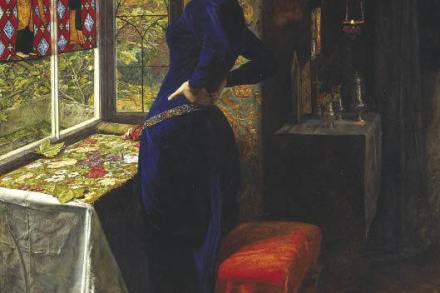
Andrew Lambirth urges those who think they don’t like this artist to go and see this show Last chance to see this large and lavish retrospective of the most famous of the Pre-Raphaelite Brotherhood, Millais (Tate Britain, until 13 January). The Tate confidently asserts that John Everett Millais (1829–96) was the ‘greatest’ of the association which initially consisted of Holman Hunt, Dante Gabriel Rossetti and himself, with a handful of fellow-travellers. Later Burne-Jones and William Morris formed a second-generation PRB, and there were other useful associates like Ford Madox Brown, William Dyce, Arthur Hughes and John Brett. To call Millais the ‘greatest’ is to oversimplify matters. Although Rossetti wasn’t a