Arts Reviews

The good, bad and ugly in arts and exhbitions

Media whoring: gaelic edition

Switch off your radios: I shall be on BBC Radio 4’s PM programme at around 5.45pm talking about, of all things, state-sponsored Gaelic TV. It may not surprise readers that I consider this a perfectly senseless boondoggle. by the standards of government waste it is, for sure, trivial and harmless stuff. To the extent that it perpetuates the nonsense that we should all be speaking Gaelic and have bilingual signs all over Scotland it’s further evidence that the national capacity for self-delusion and fatheaded history endures. You can listen online here.
Legacy of an Eminent Victorian

‘Mr Hallé’s Band’ began giving concerts 150 years ago. Michael Kennedy on the great orchestra On the wet evening of 30 January 1858 in the Free Trade Hall, Manchester, which had been opened only two years previously, the 38-year-old Charles Hallé launched his privately funded series of orchestral concerts. On the same date next week, 150 years later, the orchestra still bearing its founder’s name will celebrate the anniversary with a programme introduced by Dame Janet Baker. In a century and a half it has had only ten chief conductors. The tenth, Mark Elder, will be on the rostrum. Carl Halle, as he was born, with no acute accent, was

Matthew suggests | 26 January 2008

THEATRE I can strongly recommend God of Carnage, the new play by Yasmina Reza, which tracks the descent into madness of a meeting between two couples to discuss an altercation between their respective sons. All starts with impeccable manners, stilted conversation and discussion of recipes. And then, in a sort of Moulinex blend of Abigail’s Party and Lord of the Flies, bedlam breaks out. The cast, led by Ralph Fiennes, is flawless, and, while the philosophical points are well made, it is the belly laughs you remember. CINEMA Plenty to see at the movies right now. For those who like classy ghost films, The Orphanage, directed by Juan Antonio Bayona,

Clemency suggests | 26 January 2008

FILM One of the most remarkable things about Africa is how rare it is to see Africans cry. You meet so many human beings there who are forced to endure the most unthinkable, unconscionable poverty, disease and neglect; and yet invariably they do so with a smile so big and true it breaks your heart. How, you wonder, do people literally grin and bear such horror? Among the many things that makes Paul Taylor’s documentary We Are Together so moving, therefore, is its observation of African grief. Don’t get me wrong, there are laughs galore and plenty to smile about in this uplifting tale of a group of AIDS orphans

Pete suggests

BOOK I’m just coming to the end of The Last Titan: A Life of Theodore Dreiser – Jerome Loving’s critical biography of my favourite writer.  Loving weaves together three narratives – Dreiser’s personal life; his literary development; and the history of early-Twentieth Century America – to create the definitive account of the genius behind Sister Carrie and An American Tragedy.  As the best literary biographies always do, it’s got me once again reaching for its subject’s work. CINEMA There’s a lot of interesting Turkish cinema around at the moment; much of it dealing with that country’s place in the world, and the tug between East and West.  A case in

The pity of war

You were probably expecting me to review Ross Kemp in Afghanistan (Sky One, Monday) this week but I’m a bit off Afghanistan programmes at the moment. Not to the point where I won’t watch them all the time to the exclusion of almost all else. Just to the point where, at the end, I feel ever so slightly, ‘Was that it?’ Don’t get me wrong. I have the most enormous respect for the brave folk who make these programmes — still more for the men doing the fighting. But I’ve yet to see the documentary which properly conveys to people who’ve never done it — e.g., me — what it’s

Dazed and confused

Tara Arts, a troupe devoted to ‘cross-cultural theatre’, are hauling their Tempest around the country. In a minivan by the look of things. The whole production — cast, cossies and props — could easily squeeze into a Bedford Rascal but, as Mark Rylance has already demonstrated, thrift and The Tempest don’t mix well. Rylance bored the Globe to a standstill doing this play with three actors. Tara sport six and it’s still not enough for the sprawling and fantastical storyline. You’ve got two sets of castaways on different bits of an atoll (three, if you include Prospero and Miranda) and a pair of magical sprites buzzing around like lost milk

…while you work

It’s been commonplace ever since the widespread dissemination of sound recording, followed by the rapid growth of broadcasting, to deplore ‘the appalling popularity of music’: its inevitable debasement, when available so easily, into something ordinary rather than special, repeatable rather than unique, cursory rather than concentrated, disposable rather than sacral. A background: ‘music while you work’ — or play, or relax, in factory or canteen or shop or home; which happy days seem now as lost down the river of time as dancing around the maypole since the advent of personal technology, locking equally the crushed rush-hour commuter with the solitary jogger into a private world of inner bliss, whether

Posthumous glory

At the risk of trivialising a tragic death, I have been musing over Heath Ledger’s now-posthumous performance as the Joker (see my earlier post as well as this article detailing the potential fate of Ledger’s incomplete film projects) and the impact that death can have upon the reception of art, literature and entertainment. Here is my thumbnail list of posthumous precedents. There must be many, many others. Which would Coffee Housers add? James Dean, uniquely, received posthumous Oscar nominations for both East of Eden and Giant; Peter Finch’s Oscar win for Network; Clark Gable in The Misfits; Oliver Reed in Gladiator; Bela Lugosi in Plan 9 From Outer Space; Brandon Lee in The

Drained of colour

After the cheerlessness and brutality of No Country for Old Men, I’m not sure a film about a serial killer is just what you want. Sweeney Todd: The Demon Barber of Fleet Street 18, nationwide After the cheerlessness and brutality of No Country for Old Men, I’m not sure a film about a serial killer is just what you want. I may even be up to here with bloody films about bloodless people. Why not a nice film about nice people doing nice things, like crocheting for the poor? How hard can that be? True enough, Sweeney Todd is a musical, but this doesn’t exactly lighten the mood which, if

Generosity of spirit

Rose Hilton: A Selected Retrospective Tate St Ives, until 11 May Rose Hilton was born Rosemary Phipps in the Kentish village of Leigh, near Tonbridge, in 1931. She grew up the dutiful daughter of parents who were strict Plymouth Brethren, but early on she showed distinct signs of artistic talent. Her parents considered that this might equip her as an art teacher, but Rose had higher ambitions: she determined to be a painter. Force of character combined with innate skills took her from Beckenham Art School to the Royal College of Art in London, where she won prizes and was praised by her tutor Carel Weight for her sense of

Powerful trio of stars

Something I didn’t think was possible has happened this last week: I have been strongly moved by a performance of La traviata. That was due very largely, of course, to the way the title role was performed. Anna Netrebko may not have the perfect voice for the part, her vocal technique might be lacking in this or that respect, but she was amazing, and was recognised by the audience to be so. She got a reception befitting a great artist who had just delivered a classic account of a major role. My surprise is the greater because I find the hype about her, much of it cleverly auto-generated, incredibly annoying,

Will the Brits have a date with Oscar?

After its victory at the Golden Globes – and its strong showing in the Bafta nominations – I suspected that the British film Atonement would be a shoo-in for the Best Picture Oscar in February.  Now the Oscar nominations have actually been announced, I’m not too sure.  Not only are the American films No Country for Old Men (recommended by the Spectator on, count ‘em, one – two – three occasions) and There Will Be Blood leading the pack with eight nominations each, but the director of Atonement, Joe Wright, hasn’t been nominated for Best Director.  Academy voters like to link the Best Picture and Best Director in their minds,

Must see TV

Some of the best journalism never appears in print and we had two stunning examples last night.  Ross Kemp’s journey with 1 Royal Anglian as they prepared for and entered Helmand was vivid and compelling – it had me hooked like an episode of 24. It is the first series I have seen that takes the viewer to the frontline of Britain’s most ferocious war since Korea. It was just episode one, but set your Sky Plus for the rest. And if you don’t have Sky, this series is the excuse you need to get it. Next was Channel Four’s Dispatches presented by my counterpart at the Statesman, Martin Bright,

Villains that steal the show

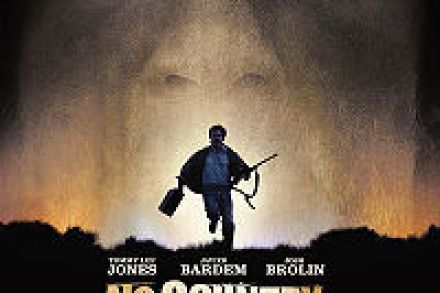
I took Peter’s advice and went to see No Country for Old Men over the weekend. This is indeed the Coen brothers at their absolute best (which is saying something), as well as a welcome return to the bleak terrain of Blood Simple, the film that made their name in 1984. The core of the movie is a trio of fine performances: Josh Brolin as the guy who stumbles into the aftermath of a drugs shoot-out and takes the cash, Tommy Lee Jones as the baffled, weather-beaten sheriff and Javier Bardem as the psychotic hitman and collector, Anton Chigurh. The film is worth seeing for Bardem’s Golden Globe-winning performance alone

Why it’s important

Lloyd Evans believes that Wilde’s comedy is the best play ever written. The Importance of Being Earnest with Penelope Keith is at the Vaudeville Theatre from 22 January. My favourite play is on its way to the West End and I fully expect to be disappointed. It’s not that Peter Gill’s production of The Importance of Being Earnest hasn’t been widely praised. It has. But I prefer to see the play done by amateurs because with the sheen of professionalism stripped away the brilliance of the script becomes all the more evident. The Importance has been called the best comedy ever written. I’d say it’s the best play ever written.

Old hat

La Cage aux Folles Menier Chocolate Factory The British Ambassador’s Belly Dancer Arcola Angry Young Man Trafalgar Studio La Cage aux Folles is a musical based on a classic comedy by Jean Poiret. Terry Johnson’s new version is perfectly agreeable. Nice sets, charming actors and the audience loved it. So what’s wrong? Well, the threadbare storyline for a start: Georges has to persuade his gay partner Albin to absent himself from a dinner party because the guests will find their sexuality shocking. That’s it. Trouble is this dilemma feels at least three decades old and the characters — especially M. Renaud the homophobic conservative politician — seem as quaint and

Dove’s tale

The Adventures of Pinocchio Grand Theatre, Leeds It’s odd how, even if you try to ignore Christmas, it still manages to determine the shape of your end-of-year experiences. Three weeks ago, four days before Christmas Day, Opera North enterprisingly mounted the world première of Jonathan Dove’s 21st opera, Pinocchio. I haven’t seen any opera since, except on TV and DVD, yet my memories of it are alarmingly faint. I have a pretty clear impression of what much of it looked like, but very little of what it sounded like. I’m not being snide at Dove’s expense, just wondering how far what seems like the interminable sequence of fragmented days is