Arts Reviews

The good, bad and ugly in arts and exhbitions

Dying well

Since the demise of Socrates in 399 BC, killed by the hemlock he was forced to drink on sentence from the state for corrupting the minds of Athenian teenagers, the Good Death has been deemed possible. According to Plato, his pupil, Socrates died with his senses intact, surrounded by those he loved and who loved him, and in control until the last moment, his body numbed but not distorted by that toxic drug. It’s a myth, of course. We know, as must Plato have known, that hemlock produces dreadful cramps, vomiting, convulsions; it would not have been possible for Socrates to remain calm, thoughtful, prescient while in such agony. But
Ubiquitous Branson

Television often throws up unpleasant images to surprise you, like finding an earwig in the sugar. The BBC has got the transmission rights for Formula One motor racing, and they were lucky in that the Australian Grand Prix (BBC1, Sunday), which opened the new season, proved a very exciting race, and was won by a Brit. There were lots of crashes, nobody was hurt, and that’s the way we like it. The commentary seemed much the same as ever, but they have created some high-tech titles for the start which are meant to thrill you with the sheer genius of the engineers who make the cars and the carbon-based life

Getting it right

I tested the old Freelander when it first came out, taking it up the M6 into the Shropshire hills and returning with backache. That apart, I thought it a good car in four-door form, as did plenty of others — it became Europe’s best-selling smallish 4×4. But I and they were wrong: a component that would have cost a few pence to improve in manufacture meant that the majority of petrol versions had coolant problems requiring new engines at some stage (one dealer I know replaced 60), while build quality of petrols and diesels alike meant that the trim disintegrated around you. For Land Rover lovers such as me, they

Nick Cohen, George Orwell and Me

I can’t stay silent on the issue of Nick Cohen’s intervention at the Orwell Prize shotlisting event earlier this week. But I can’t really say too much either as Nick, in an act of over-extravagant loyalty, claimed it was a travesty that I had not made it from the longlist to the shortlist. I have already thanked Nick in person for his kind words. I have to say it was an honour to be nominated at all and congratulations to all those that made it to the shortlist (including Peters Hitchens and Oborne). But I was disappointed for my fellow former-New Statesman writers Michela Wrong and Lindsey Hilsum who really did deserve

Power of the pencil

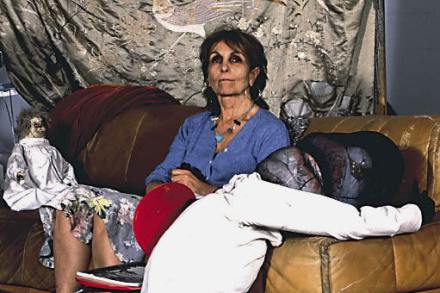
Andrew Lambirth talks to Paula Rego about the new museum dedicated to her and the politics behind her work Paula Rego is an artist working at the height of her powers, internationally celebrated and with a museum dedicated to her about to open in her native Portugal. It’s been a long climb to this pinnacle of success, and Rego has worked exceptionally hard to reach it. Born in Lisbon in 1935, she grew up largely in the care of her grandparents while her father, an electrical engineer, took a job in England with Marconi. His anglophilia was responsible for Rego herself going to London to study art. She attended the

Halfway to heaven

When some 700 people throng the auditorium at Earl’s Court to hear a debate about whether eco houses are ugly, then a frustrated tree-hugger like myself may feel that we are halfway to heaven, not that I plan to share my Elysium with Germaine Greer in ranting mode if I can avoid it. When some 700 people throng the auditorium at Earl’s Court to hear a debate about whether eco houses are ugly, then a frustrated tree-hugger like myself may feel that we are halfway to heaven, not that I plan to share my Elysium with Germaine Greer in ranting mode if I can avoid it. Her views on domestic

In the extreme

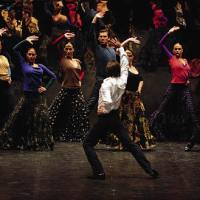
Verdi’s Requiem Royal Opera House Carmen Sadler’s Wells Every time there’s a performance of Verdi’s Requiem the issue of whether it is a liturgical or theatrical work gets solemnly discussed, as if it couldn’t be both. If you take the Creator to be the figure described or invoked in the Bible, then He clearly has a taste for highly dramatic effects. As Auden put it, ‘When God said “Let there be Light” He must have realised that He was being extraordinarily pretentious,’ and the promise that the Day of Judgment will be heralded by trumpets indicates a thoroughly operatic imagination. It’s rather surprising that fewer composers haven’t risen to the

A sum of all parts

Most attractively packaged, these four CDs comprising the new survey of British songwriting are issued by NMC recordings to mark the 20th anniversary of its indispensable activities; poetically evocative photographs of the initial letters, drawn from pubs, floral clocks, blue heritage plaques, transport directions, shops, warehouses, fruit barrows, etc., spell out the salient words, and promise a rich and sparky diversity of contents amply fulfilled when one knuckles down to listen. Vital statistics: the total of 110 items is slightly deceptive because 12 are partial arrangements, by NMC’s presiding begetter Colin Matthews, of a galliard by the eminent Jacobean, Thomas Morley (a 13th presents the entire dance in all its

It’s so unfair

Is it really a six-figure salary? Only, this time last year it wouldn’t have seemed worth it, but now it’s looking almost as attractive as a job in the public sector. I think I might have to go for it. ‘Step up to the plate,’ as I must learn to say, if I’m to stand any chance whatsoever. There’s a place going spare at the moment, too, so it’s not totally unfeasible. I could actually be Sir Alan’s new Apprentice. Then again, no. For a man of such tremendous supposed business acumen and shrewd character judgment, Sir Alan has never been much cop at picking the right candidate. He’s unhealthily

Not four children

Cuts. We’re going to have to get used to them in the next few weeks and months as the vast maw of recession gapes wider and wider and things start disappearing into its black hole. Cuts. We’re going to have to get used to them in the next few weeks and months as the vast maw of recession gapes wider and wider and things start disappearing into its black hole. What goes, or rather what we allow to be decommissioned, devalued or disappeared without a murmur of dissent will tell us a lot about the society we’ve become. Take, for instance, the latest changes to BBC Radio announced at the

Pronouncing the unpronounceable

Has anyone else noticed how frequently and with what merry relish BBC Radio 3 announcers are saying Jiří Bĕlohlávek? (Chief Conductor of the BBC Symphony Orchestra just in case you were wondering.) I think they’re so thrilled to have (pretty much) mastered the pronunciation that they just can’t help themselves.  

The BBC Tries to Catch-Up with its Audience

Apparently the BBC is finally going to show The Wire. Hurrah. Previously it’s only been available on FX in Britain. Well that’s all fine and dandy. But it’s not as though the series was a mystery. It debuted in 2002 and has received rave reviews form critics for at least the last three years. And yet no BBC (or Channel 4) executive thought to buy it before now? Strange. Rum too that the corporation should wait for much of its target audience to have already seen the show before deciding to screen it themselves. Just about anyone who has purchased the DVD box sets (all five series currently lie in

‘I have no idea what’s going on’

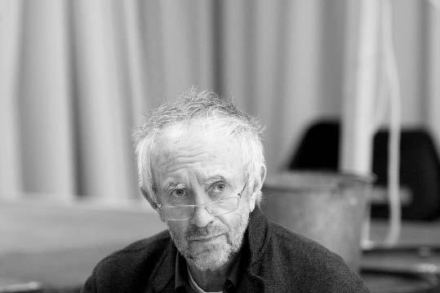
Henrietta Bredin talks to Jonathan Pryce about the difficulties he found with Athol Fugard’s Dimetos It is the end of a long day of rehearsal and Jonathan Pryce is sitting patiently at a scrubbed wooden table strewn with water glasses and roughly carved dishes, behind him a tangle of ropes and pulleys slung from an overhead beam. He’s two-and-a-half weeks into the business of putting together a performance of Dimetos, an infrequently performed play by Athol Fugard, written in 1975. ‘It’s almost like doing a new play really. Sometimes when a play hasn’t had any major revivals you think, well, there must be a reason for that. But I think

Focus on tragedy

Isadora/Dances at a Gathering Royal Opera House Dance scholars have long banged on about Isadora Duncan’s revolutionary artistry and ground-breaking — for her time, that is — thinking, thus overlooking some less overt, yet highly significant aspects of her unique, if larger than life persona. Beyond the depths of her feminist ideas, art philosophy and fervent socialism, lurked a cunningly clever, no-nonsense American woman, who knew how to play the system and get the most out of it. But her tongue-in-cheek ingeniousness has been frequently left out in many of the tributes to her memory, whether they be written, filmed or choreographed — the sole two exceptions, in my view,

No questions asked

Berlin Hanover Express Hampstead Invasion! Soho When TV writers turn to the stage there’s often a suspicion of fly-tipping, of rejected ideas being dumped in the hope that others will tidy them away. Ian Kennedy Martin, creator of The Sweeney, has come up with a cracking theme. Berlin, 1942. Two Irish diplomats grapple with the conflict between their country’s neutrality and the emerging evidence of the holocaust. To compound the dilemma, the beautiful cook at the Irish embassy is a covert Jewess being investigated by the Gestapo. But it all goes wrong in the details. The diplomats are unlovable misfits. O’Kane, played by Owen McDonnell, is a debt-ridden loudmouth who

Efforts rewarded

La fedeltà premiata Royal Academy of Music Jenùfa English National Opera Everyone agrees that Haydn’s operas are a disappointment, given what is now widely regarded as his supreme musical stature, but it’s hard to say just why. In the case of La fedeltà premiata (Fidelity rewarded), which the Royal Academy of Music staged brilliantly — my efforts to persuade soi-disant opera lovers to go to these productions of the music schools are, it seems, a total failure — one reason could be the insanely complicated plot, which I abandoned any attempt to follow. Richard Wigmore, in his Faber Guide to Haydn, quite rightly points out that the finale to Act

Music therapy

My son turned to me in the car the other day, and observed, ‘This is the band you’ve been waiting for, isn’t it, Dad? My son turned to me in the car the other day, and observed, ‘This is the band you’ve been waiting for, isn’t it, Dad?’ Playing on the car’s CD player, at a volume that would have led my wife to accuse me of deliberately trying to deafen our own child had she been present, was Focus Level by a New York group called Endless Boogie. My God, they hit the spot. There’s a lovely story about the disc jockey John Peel having to pull over into

Bring back Benny Hill

Lesbian Vampire Killers 15, Nationwide There really isn’t a lot to say about Lesbian Vampire Killers apart from this: don’t go anywhere near it. Just don’t see it. Do something else instead. Do anything else instead. Catch up with your ironing. In fact, if you don’t mind me saying, last time I came round and saw the size of your pile, I was shocked by how behind you are. So it has to be a better option than this, a horror spoof which, as far as experiences go, is like being smacked round the head with a copy of Nuts magazine, and smacked hard. It’s all endlessly repeated ‘tit’ jokes