Arts Reviews

The good, bad and ugly in arts and exhbitions

Game’s up

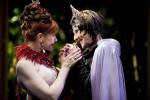
Maggie’s End Shaw Death and the King’s Horseman Olivier Here’s an unexpected treat. An angry left-wing play crammed with excellent jokes. Ed Waugh and Trevor Wood’s lively bad-taste satire starts with Margaret Thatcher’s death. A populist New Labour Prime Minister rashly opts to grant her a state funeral which prompts a furious reaction in Labour’s northern heartlands. Former poll-tax rebel Leon Thomas organises a protest march to London intent on disrupting the ceremony and shaming the government. To complicate matters, Leon’s daughter Rosa is a rising Labour MP entangled with the super-smooth Home Secretary (with the slightly-too-clever name Neil Callaghan). In the opening scene Rosa is discovered tupping Callaghan on

On message

In the Loop 15, Nationwide Love it, love it, love it and for those of you who are a bit slow — I know who you are; don’t think I don’t — I loved this film. It’s great. It’s fast, it’s funny and it’s so on the money about self-interested politicians, clueless aides, dodgy dossiers and altered intelligence that even Alastair Campbell has said, ‘It all rings so true. I salute all involved.’ Actually, he has said no such thing but you know what? Sometimes I’m in the mood for doctoring the evidence, too. (Not often, and never on a Wednesday when I concentrate on spreading unfounded rumours about people

Handel’s business sense

It’s not often that a business correspondent looks to a musician for advice on investing in the stock market, but Radio Four’s Peter Day turned up on Handel Week and gave us an unusual take on the great baroque composer. It’s not often that a business correspondent looks to a musician for advice on investing in the stock market, but Radio Four’s Peter Day turned up on Handel Week and gave us an unusual take on the great baroque composer. Liquid Assets (Sunday night’s feature on Radio Three, produced by Paul Frankl) revealed that Handel was not just an extraordinarily prolific composer, he was also a very canny financial operator,

Time well spent

The Private Life of a Masterpiece (BBC1, Saturday) got an Easter outing about Caravaggio’s ‘The Taking of Christ’. The Private Life of a Masterpiece (BBC1, Saturday) got an Easter outing about Caravaggio’s ‘The Taking of Christ’. It was superb, as this series invariably is. Understated yet informative, packed with unpatronising experts, it fascinates from start to end. Did you know that Caravaggio was a gangster and murderer, who spent the end of his short life on the run? Or that this particular painting was then the most expensive ever commissioned (125 scudi; I have no idea what that might have been against sterling), or that it sold in Scotland for

A load of Balls

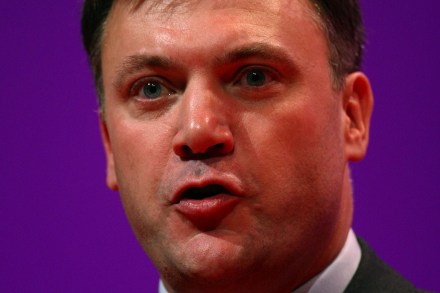
Let’s rewind back to this morning, and Ed Balls’ appearance on the Today progamme.  It was such a classic demonstration of distortion and buck-passing, that we’ve decided to give it a fisk, Coffee House style.  Here’s the transcript, with our thoughts added in italics: James Naughtie: Talking about bad behaviour, there’s been a bit of it going on in government, hasn’t there? Ed Balls: Well, I’ve, um, seen the reports in the Sunday Times on Sunday and I think those emails were vile, horrible, despicable. I think there’s no place in politics for that kind of stuff. I think it’s awful. Fraser Nelson: Balls is shocked, shocked to find it

Growing your own

It is, at present, almost impossible to open a garden magazine, or the gardening pages of a national newspaper, without coming across an article on how we are all now kitchen gardeners and allotmenteers; the theme is that the uncertain economic conditions have turned us back to our gardens, to grow comestibles and thereby ensure that we eat well, now that lack of the readies has reconnected us with our cookers. So far, so unexceptional, even trite. I have written such pieces myself. However, the difficulty for me comes when the writer gets over-excited and starts claiming that we can save enough money to make a difference to our circumstances

Dido’s life on camera

Katie Mitchell explains to Henrietta Bredin how she is creating a parallel film world with Purcell’s opera It is 350 years since Henry Purcell was born and his music is, gloriously, being played and sung all around the country. And there are a lot of different Didos about: Christopher Marlowe’s Dido, Queen of Carthage at the National Theatre; Purcell’s Dido and Aeneas pretty much all day on BBC Radio Three a couple of weekends ago; at the Royal Opera House in a joint venture by the Royal Opera and the Royal Ballet directed and choreographed by Wayne McGregor (see review page 38); and, in another joint venture, by English National

When is it acceptable?

Someone needs to write a history of vibrato. Clearly this should be Roger Norrington: to judge from his words on Radio Three recently he has given the topic much thought and come up with some historically-based conclusions. I suspect he isn’t going to do it, though, because, like me, he is too busy chiselling out a new -ism on the back of his research, by which he hopes to effect yet another revolution in performance practice. But the bare bones of the story are straightforward enough. Vibrato, both in orchestral playing and in singing, became acceptable in classical music-making no earlier than 1920. It had existed before this in more

Power to disturb

Tony Manero 18, Key Cities This is a Chilean film of the kind that is probably only showing at an independent cinema quite far from you until last Thursday but that is life, so get over it. Also, the only Easter alternative seemed to be a big action flick starring Vin Diesel whom I have nothing against personally, but whose performance in The Pacifier I did not admire particularly. (I also felt Arnold Schwarzenegger had rather got in first as the big, tough guy who comically does babysitting in Kindergarten Cop, but that may be just me.) Anyway, I didn’t see Tony Manero at the cinema, because the distributors were

Our island story

‘Radio is a way of binding people together,’ says Lesley Douglas, former Controller of Radio 2 in a Guardian magazine cover-story this week celebrating the richness of British radio. ‘Radio is a way of binding people together,’ says Lesley Douglas, former Controller of Radio 2 in a Guardian magazine cover-story this week celebrating the richness of British radio. It could be the answer to our editor’s quest for what it means to be British, since 90 per cent of us are supposed to listen at some time to a radio station of some kind, whether it be local and illicit or the behemoths created by the BBC. Douglas was writing

No debate

On the posters in the Tube at the moment are these adverts for Argumental, which is the Dave channel’s first self-generated panel show. On the posters in the Tube at the moment are these adverts for Argumental, which is the Dave channel’s first self-generated panel show. I don’t want to knock Dave too much because it’s generally a good thing: the reliable stand-by you end up with if there’s nothing on the terrestrial channels, BBC4, BBC3, Sky One or the Military History channel. It’s got repeats of Top Gear. It has repeats of QI. What’s not to like? Well, Argumental would be my slight problem. Take those poster ads. There’s

Beyond ‘face-painting’

Constable Portraits: The Painter & His Circle National Portrait Gallery until 14 June Sponsored by British Land The portrait was the dominant form in British painting up to the end of the 18th century, principally because this was what patrons wanted. Landscape painting was really the invention of Richard Wilson (1713–82), who inaugurated this particular branch of nature-worship. Constable, with his great gift for naturalness and observation, developed it further than any artist, except Turner. And it is as a landscape painter that we think of Constable, though he also painted about 100 portraits. These have tended to be overshadowed by his nature studies, and the current show at the

Second helpings

I Capuleti e i Montecchi; Dido and Aeneas; Acis and Galatea Royal Opera House There has been a three-week gap between the opening and closing sets of performances of the latest revival of Bellini’s I Capuleti e i Montecchi at the Royal Opera. Smitten by migraine on the first night, I had to leave in the interval. Returning this week for the whole work provided me with an evening of almost unmitigated pleasure, even jouissance. One can quibble with some of the production, and the secondary singers are not great, but overall it makes for as intense an experience of Bellini’s early masterpiece as one could ever expect to see.

Virtual trip to the opera

‘Having every best seat in the house’ is how some describe seeing opera live on screen, and recently we’ve had the opportunity of seeing the nuts and bolts backstage, too. It was a bold initiative of English National Opera and Sky Arts to take the cameras behind the scenes on the first night of Jonathan Miller’s new production of La bohème for Sky Arts 1, while simultaneously broadcasting the opera itself live on Sky Arts 2, and it was quite a challenge for the backstage crew: how do you keep your audience gripped for two and a half hours when all the real action is happening the other side of

Thwarted desire

Dido, Queen of Carthage Cottesloe The Overcoat Lyric Hammersmith Simple plays can be the hardest to get right. James Macdonald has made a dogged assault on the earliest work of Christopher Marlowe. The story is lifted wholesale from Virgil. After Troy’s fall Aeneas arrives in Carthage where Dido promptly falls in love with him. When destiny compels Aeneas to leave for Italy the despairing queen sets fire to herself, and her palace, in a humungous health-and-safety fiasco. Marlowe’s underdeveloped grasp of personality weakens the script. Both major plot-twists — Dido’s infatuation and Aeneas’s departure — are contrived by the gods not by the characters themselves, and this lack of psychological

Marital bliss

Die Feen Châtelet, Paris Ernest Bloch’s Macbeth Bloomsbury Theatre Wagner wrote his first opera Die Feen (The Fairies) when he was 19 and 20. It was never staged or performed at all in his lifetime, and first performed in Munich in 1888, Richard Strauss having conducted the rehearsals. It was a big success, but has only been revived rarely, and the production which I saw at the Châtelet in Paris last week, of which there are five performances, was the first I have seen. It was rapturously received, and rightly so. Wagner thought little of it, gave the score to Ludwig II for Christmas in 1865 — the only score

Clash of cultures | 4 April 2009

Swan Lake American Ballet Theatre, London Coliseum A complex, somewhat troubled history has turned Swan Lake into the most manipulated ballet ever. The lack of strict historical constraints has frequently led ballet directors, repetiteurs and choreographers to feel more or less free to intervene in the text, often twisting its narrative and altering the traditional, though not original, choreography. Take, for instance, Kevin McKenzie’s production for American Ballet Theatre, which strives to make the most of the ballet’s performance tradition while at the same time peppering the work with not so stylistically and dramaturgically appropriate additions. In line with other and historically more famous versions, this one also uses the

A critic bites back

‘All critics are failed writers,’ someone with a New Zealand accent said on Desert Island Discs the other day. ‘All critics are failed writers,’ someone with a New Zealand accent said on Desert Island Discs the other day. Obviously I have completely blanked out who it was, but I do know she was talking out of her fundament. Most of us become critics not just because we need the money (please send all cheques payable to me c/o The Spectator) but because we love the subject of which we write, and obviously because other critics drive us potty. The Pet Shop Boys have a new album out, which I haven’t