Arts Reviews

The good, bad and ugly in arts and exhbitions

Identity crisis | 11 June 2011

Laura Gascoigne on how the Venice Biennale is searching for its place in art history Picture one of the world’s largest private yachts moored at the quayside of the Riva dei Sette Martiri, protected by a metal perimeter fence and a security detail. Now imagine two battered sea freight containers dumped in the shape of a tau cross on the quay just out of spitting distance of the security fencing. One is Roman Abramovich’s 115m superyacht Luna; the other is a Haitian pavilion showing Vodou-inspired sculpture by the Grand Rue Sculptors from the slums of Port-au-Prince. Welcome to the opening of this year’s Venice Biennale (until 27 November), bigger than

It’s a set-up

I’ll say this for DreamWorks: when it latches on to a concept it doesn’t let it go. I’ll say this for DreamWorks: when it latches on to a concept it doesn’t let it go. There have been four Shreks (with a spin-off, Puss in Boots, due in November), it’s preparing a third Madagascar, it has begun work on a sequel to How to Train Your Dragon and now this, Kung Fu Panda 2, and so should any of these films feel like more of the same, it’s probably because they are more of the same. As it happens, I didn’t see the first Kung Fu Panda — God must have

Walking and talking

It’s all in the voice. It’s all in the voice. Whether or not the person speaking is seeking to engage the listener, or just saying what comes into their head without much thought of what they are trying to get across, or of who they are talking to and why they might want to listen. I reckon it’s not easy. Clare Balding has a gift for it, taking us along with her every step of the way as she walks the country for her Ramblings series on Radio 4 (Saturdays). Dominic Arkwright and his guests on Off the Page (Thursday) never got further than the studio mike. They were discussing

Princely war

The Duke at 90 (BBC1) was another engagement in Prince Philip’s ongoing war against the media. The Duke at 90 (BBC1) was another engagement in Prince Philip’s ongoing war against the media. As usual, he won this skirmish. There was a difference between this programme, presented by Fiona Bruce, and the earlier ITV effort with Alan Titchmarsh, who had decided that constant fawning was the way to the Duke’s heart, as he had done last year with the Prince of Wales. Presented with Sir Walter Raleigh’s problem he would not have laid his cloak down for the Queen, but would have placed himself in the puddle, a human duckboard. The

Righteous anger

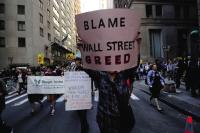
Can a documentary ever be as entertaining as a fictional feature film? And, if it can, does that mean it cannot be a serious contribution to public debate? Inside Job, director Charles Ferguson’s Oscar-winning account of the origins of the US subprime mortgage debacle and the 2008 banking crisis, is a case in point. It is compelling viewing — and as a guide to why the financial world went mad, it is more vivid than any screen drama I’ve seen (though the BBC’s The Last Days of Lehman Brothers felt pretty authentic), and easier to absorb than any of a shelf full of books on the subject. But that doesn’t

Inquire within

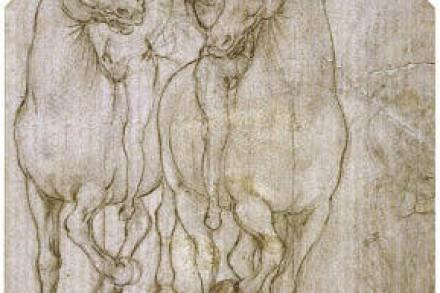
In the Mellon Gallery of the Fitzwilliam is an unashamedly rich and demanding exhibition of Italian drawings, ranging from the 15th to the 20th century. I say ‘demanding’ because you need to look closely and with attention at these works — not simply to decipher what is going on (the narrative component), but to appreciate how it has been achieved (the formal aspect). So much of the stuff that is produced under the name of art today is easy on the eye and mind, with as much aesthetic nourishment as used air. Real art solicits the spectator’s involvement: it’s not a variant on wallpaper, it requires interpretation and response, intellectual

Out of the ordinary | 4 June 2011

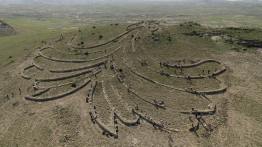
From high in the sky over Cappadocia Susan Moore looks down at part of the largest contemporary land art project in the world There are few artists whose work is best seen by hot-air balloon. There are even fewer whose works can only be photographed in their entirety by satellite. To describe the Australian Andrew Rogers as a land artist on an epic scale seems something of an understatement. Over the past 13 years he has masterminded the construction of 47 monumental structures in 13 countries spanning seven continents and involving some 6,700 people. The more remote a site, the better it suits his purpose. Rogers has a penchant for

A touch of clarse

There aren’t many things on which John Humphrys is undecided, but one of them shows itself nearly every time he presents the Today programme. It’s a trait shared by many broadcasters, and indeed people from all walks of life, and constitutes one of the great social barometers of our time. It’s the inability to decide whether your ‘a’s should be long or short. If your upbringing conditions you to pronounce ‘grass’ to rhyme with ‘ass’ rather than ‘arse’ — if, in short, you’re a non-posh non-Southerner — there is a temptation, on moving to London, to lengthen your ‘a’s in order to fit in. To say ‘clarse’ instead of ‘class’

Call of the wild

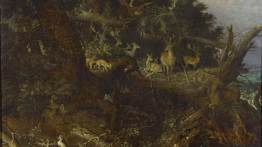
‘Not something I’d want on my wall,’ said an English lady visitor to Antwerp’s Rockox House, standing in front of a painting of wolves attacking cattle. ‘Not something I’d want on my wall,’ said an English lady visitor to Antwerp’s Rockox House, standing in front of a painting of wolves attacking cattle. ‘Nor that,’ said her friend of another painting showing lions feasting on a live gazelle. I didn’t dare tell them that I’d come to Belgium specially to see a whole exhibition of paintings by the artist responsible, Roelandt Savery (1576–1639), in his native Kortrijk. ‘Kortrijk where? Roelandt who?’ you may be asking. If Savery’s name rings a bell,

Royal rewards

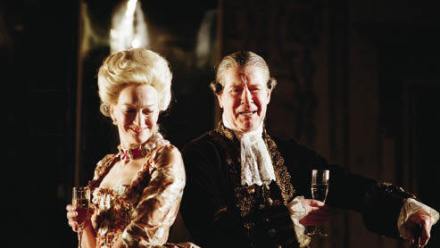
Macbeth may not be Verdi’s greatest opera, in fact it’s hard to imagine anyone’s claiming it is, yet in a performance that is as musically inspired as the one I saw at the Royal Opera last week (the second of the run) it comes across as an inspired work, almost all the way through, and one which can be considered seriously alongside Shakespeare. Macbeth may not be Verdi’s greatest opera, in fact it’s hard to imagine anyone’s claiming it is, yet in a performance that is as musically inspired as the one I saw at the Royal Opera last week (the second of the run) it comes across as an

Golden boy

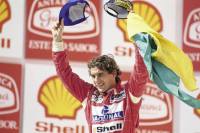
I have zero interest in motor racing and zero interest in cars generally yet this documentary about the Formula 1 driver Ayrton Senna knocked me for six, which I think is a cricketing metaphor but can’t say for sure, as I also have zero interest in cricket. I have zero interest in motor racing and zero interest in cars generally yet this documentary about the Formula 1 driver Ayrton Senna knocked me for six, which I think is a cricketing metaphor but can’t say for sure, as I also have zero interest in cricket. (I quite like ice dancing as a sport but only in the secret hope someone is

Triple thrill

After a few thematically uneven mixed programmes, the Royal Ballet takes its summer leave from the Royal Opera House with a nearly ideal triptych of works. Central to it are stunning examples of 20th-century choreography, which highlight the role that British ballet played in both making and consolidating the Western modern ballet tradition. As such, this triple bill comes across as more connoisseur-oriented than a flashy crowd pleaser. Balletomanes still get their fair share of starry dancing, though, for each work provides the principals with plenty of chances to shine. At the first performance, Lauren Cuthbertson and Sergei Polunin thrilled in Frederick Ashton’s Scènes de Ballet. Polunin negotiated the fascinating

Reliving Lockerbie

‘We will know one day why it happened,’ said the mother of Helga Mosey. ‘We will know one day why it happened,’ said the mother of Helga Mosey. Helga was just 19 when she was killed in the bomb that destroyed PanAm flight 103 as it flew over the Scottish town of Lockerbie on the night of 21 December 1988. Mrs Mosey was being interviewed the day after, doorstepped at her home in the Midlands by several news teams anxious for a story, a reaction, a headline. This week’s Archive on 4 was the first in a series, ‘A Life Less Ordinary’, which is not so much reliving history as

Is he a genius?

You’ll forgive me, I hope, for coming back so soon to the subject of Adam Curtis, the first part of whose All Watched Over by Machines of Loving Grace was so ably dissected by Simon Hoggart last week. You’ll forgive me, I hope, for coming back so soon to the subject of Adam Curtis, the first part of whose All Watched Over by Machines of Loving Grace was so ably dissected by Simon Hoggart last week. Only, no less a personage than Bryan Appleyard of the Sunday Times has estimated Curtis as ‘TV’s greatest documentary maker’ and the BBC obviously agrees. So, really, two Speccie TV reviews in a fortnight

Two Ados

Like most Shakespeare comedies, Much Ado About Nothing is often performed as a garden party fantasy of Merrie England – so it’s a treat to see two major productions both committed to restoring the Mediterranean flavour of this hot-blooded piece, which Shakespeare actually set not in Stratford, but Sicily. 

 At the Globe, Jeremy Herrin strews the stage with oranges and Moorish lattice work. Amidst the almost Pagan street festival, this really is a place where a sun-addled youth might blindly search for a metaphor to describe his unfaithful lover and find it to hand in ‘a rotten orange’. Meanwhile, across the river at Wyndhams theatre, Josie Rourke sets her rival production in

Ditching the dirt

Cleanliness was nowhere near godliness in 17th-century Europe — except in Delft, where God came second. The Wellcome Collection’s examination of humanity’s relationship with dirt begins in Vermeer’s city, where thousands of girls with pearl earrings scrubbed hearths for a living. Delftware, those distinctive blue and white ceramic tiles so common in antique shops, was mass-produced because it was so easy to clean and molysmophobic merchants used it to plaster their interiors. It’s tempting to mock the fashion; but the show immediately moves on to Dickens’ s London – a miasma of grime, dust and disease. The obsessive compulsives of Delft were visionaries. Dirt: the filthy reality of everyday life

Consolations of Constable

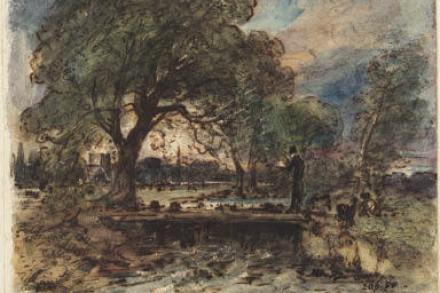
William Cook takes refuge from the modern world at an exhibition of the artist’s paintings of his beloved Salisbury I’d always thought of Constable’s paintings of Salisbury Cathedral as grand, majestic things — but seeing them again in Salisbury, with Richard Constable, the artist’s great-great grandson, you begin to look at these splendid pictures in an entirely different light. Richard has come here, to the Salisbury & South Wiltshire Museum, to attend the opening of an exhibition that celebrates his ancestor’s close relationship with this city, and standing alongside him, in the shadow of Salisbury Cathedral, you realise John Constable wasn’t painting architecture, but the landscape of his private life.