Arts Reviews

The good, bad and ugly in arts and exhbitions

The Pinter conundrum

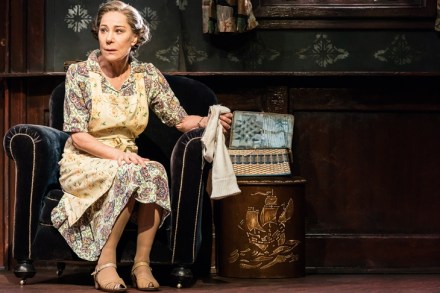
The Birthday Party is among Pinter’s earliest and strangest works. It deconstructs the conventions of a repertory thriller but doesn’t bother to reassemble them. The setting is a derelict seaside town on the south coast. Petey, a thick deckchair attendant, runs a guest-house with his ageing wife, Meg. She’s a zero-IQ cook whose signature dish is a slice of white toast charred in fat. They have one resident, Stanley, a former pianist whom Meg cossets and mothers like a substitute son. Enter two London thugs, Goldberg and McCann, who invite Stanley to a party as a pretext to punish him for unknown misdemeanours. The whisky-soaked celebrations involve a game of
Question time | 25 January 2018

Last year was a bit of a year for Radio 4 anniversaries; maybe most notably, Desert Island Discs celebrated 70 years on air. But oddly enough, so did another show. Round Britain Quiz, which you may remember vaguely from your childhood, or possibly your parents’ childhood, also reached 70 in 2017. There have been one or two breaks, but this abstruse and, let’s face it, unashamedly smart show has survived the slings and arrows of outrageous Radio 4 controllers. Every year we fret and worry, hoping beyond hope that it will be recommissioned. Every year, I’m glad to say, it is. I say ‘we’ because, for the past few years,

Small talk | 25 January 2018

Downsizing is a film with the most brilliant premise. What if, to save the planet, we were all made tiny? What if we only took up a tiny amount of space and flew in tiny planes and produced tiny amounts of rubbish? And what if we could live in the sort of mansions that would cost millions if they were regular-sized? What if, what if, what if, what if… but most crucially: what if this film had run with the premise rather than throwing it away? Could it have avoided becoming just another dumb ‘white saviour’ movie? And this, alas, is the ‘what if’ that must preoccupy us today. This

As time goes by | 25 January 2018

If you were to ask me by the end of the week what I had written about in this column at the beginning I would probably look blank, fumble desperately through a foggy recollection of plays, news items, snatches of interviews and then reply, ‘I’ve no idea.’ This business of forgetting so soon what was once so clear in the mind is, says Francis O’Gorman in this week’s The Essay on Radio 3 (produced by Lisa Needham), very much part of our modern world. Too much information to take in, too little time to process it. The result, too much forgetting. It’s virtually impossible to remember what you once put

Old hat | 25 January 2018

These days, when it comes to people who used to be on the telly, the answer to the classic newspaper question ‘Where are they now?’ tends to be a fairly predictable one: they’re still on the telly — if, that is, you look carefully enough. They’re also quite likely to be travelling abroad with a few of their peers while wearing a large hat. The BBC started the trend — possibly even the genre — with The Real Marigold Hotel. ITV has provided the weirdest example so far, with Gone to Pot, in which the likes of Christopher Biggins and Pat Butcher from EastEnders investigated the legalisation of marijuana in

Body language | 25 January 2018

One of the Royal Opera’s greatest virtues is the care it takes with its revivals, even those that are virtually annuals, such as Jonathan Kent’s Tosca, the unnecessary replacement for Zeffirelli’s classic production. Kent’s version, with elaborate sets by the much-missed Paul Brown, was unveiled in 2006 and now has its ninth revival. It is a sloppy affair — three stars thrown together on the stage and told to get on with it. Since there is plenty of furniture around, and two precipitous flights of stairs, that isn’t as easy as it would be in any other UK production. When movements onstage are as haphazard as they were on the

Sex, lies and conductors

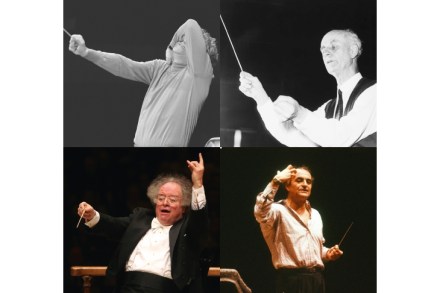
I once knew a great conductor who claimed that he never boarded a plane to a new orchestra without a tube of lube in his pocket. Just in case he got lucky (which he often did). Conductors are migratory birds who fly where their agents point them, hopping from one hotel bed to the next. There is no shortage of bright young things on an orchestra’s staff and besotted fans backstage who are open to a wink and the whisper of a room number. A maestro is never alone for very long. Sex is one of the perks of conducting. Mostly, it’s consensual. My middle-aged maestro would sit up half

A woman of substance | 18 January 2018

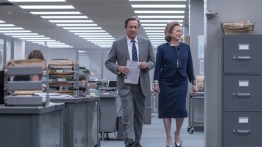
Steven Spielberg’s The Post, which dramatizes the Washington Post’s publication of the Pentagon Papers in 1971, doesn’t exactly push at the frontiers of storytelling. It’s told straight and in a familiar way. Here are the journalists furtively working through top-secret government papers in a smoke-choked room for the public good. (There were no empty pizza boxes in this instance, but there could have been, if you get my drift.) Here’s the government trying to stop them. Here’s the newspaper rolling off the press, and everyone clapping. And so on. But it does star Tom Hanks and Meryl Streep, engaged in a kind of dance as the paper’s editor and proprietor,

Up the revolution

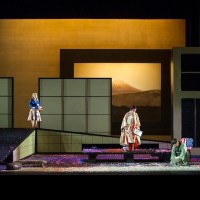
Spoiler alert: the final image of John Fulljames’s production of Monteverdi’s The Return of Ulysses at the Roundhouse is haunting. Ulysses (Roderick Williams) and Penelope (Christine Rice) stand facing each other at last, arms outstretched. But Penelope is on terra firma. Ulysses stands on the revolving walkway that has served as the stage throughout most of the evening. And though Monteverdi’s music has found stillness, the stage continues to revolve, carrying him away from his beloved — boats against the current, borne back ceaselessly into the past. Or something. Like many of this production’s most striking ideas, it’s poetic in the moment, but doesn’t really work once you step back.

The price of success

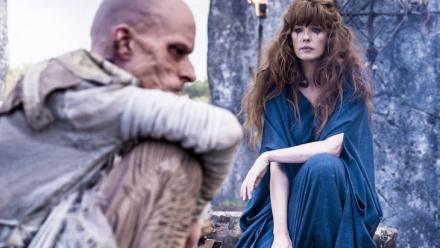
A pattern emerges. A hot American playwright, dripping with prestigious awards, is honoured in London with a transfer of their best-known work. And it turns out to be all right. Not bad. Nothing special. The latest wunderkind to wow London is Amy Herzog (five plays performed, six awards received), whose marital bust-up drama Belleville is set in a glamorously derelict corner of Paris. Abby and Zack, both 28, are newlywed Americans trying to shore up the wreckage of their European gap year. Abby wanted to learn French but has stopped attending classes. Instead, she’s studying yoga although the lessons are regularly cancelled. And her acting career seems to have stalled.

Women’s pay could bankrupt the BBC

I hope you are enjoying the BBC drama series Hard Sun. It is described as pre-apocalyptic science fiction, set in the present day UK. The head of MI5 is a Nigerian woman and everybody else in it lives in a mixed-race family — so, if you are a racist, you might well query that aforementioned description pre-apocalyptic: it’s upon us! The rest of us will simply think it’s ludicrous and bears no relation to the country in which we live, and might become irritated by the BBC forcing this PC social engineering down our throats at every possible opportunity. Although we may already have filled up our beakers of irritation

Prick up your ears

On paper and on air, there’s nothing to suggest that the Radio 4 series Across the Red Line will have sufficient listening power to draw you in so that once you’ve reached home and need to get out of the car you’ll rush straight in to switch on the radio. The billing in Radio Times describes it simply as a 45-minute show in which the journalist Anne McElvoy ‘invites figures on opposing sides of a political issue to listen to each other’. And that’s exactly what it is. A pair of talking heads tossing about a topical football, guided by McElvoy, who has as her sidekick a conflict resolution expert,

Ferrari – heavy, expensive, wasteful, dangerous and addictive

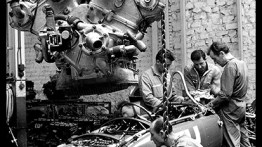
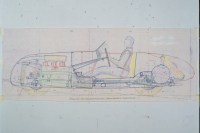
Has a more beautiful machine in all of mankind’s fretful material endeavours ever been made than a ’60 Ferrari 250 Granturismo? Go to the Design Museum and decide. I have driven many Ferraris and the experience is always unique. They are alive, demanding, feral, sometimes even violent or truculent. Addictive, too. Once, in Haverfordwest, I arrived sweating and puffing after seven hours in traffic. I parked the 246 GT at the hotel for a moment but then, unable to ignore the hot, seductive car, I got back in and drove up and down the coast road; up and down, up and down. Just because it was there. Kierkegaard thought that

A tough act to follow

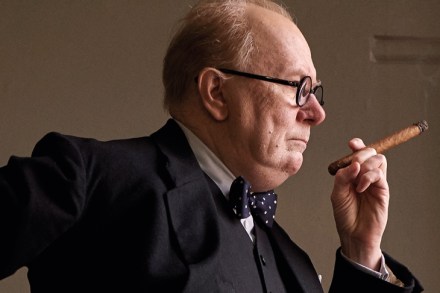
Gary Oldman has joined a long list of actors who have portrayed Winston Churchill — no fewer than 35 of them in movies and 28 on television. He is one of the best three. ‘I knew I didn’t look like him,’ Oldman has said. ‘I thought that with some work I could approximate the voice. The challenge in part was the physicality, because you’re playing someone whose silhouette is so iconic.’ We all have our own mind’s-eye view of what Churchill should look and sound like, and his personality was so strong and sui generis that it is almost impossible for an actor to impose himself on the role. He

Living sculptures

Seventeenth-century Roman art at its fullblown, operatic peak often proves too rich for puritanical northern tastes. And no artist was ever more Baroque than Gian Lorenzo Bernini, the supreme maestro of the idiom. But I love his work, which is why, on a spare afternoon in Rome before Christmas, I strolled over to the Borghese Gallery where the largest array of Bernini sculpture ever assembled is currently on view. Admittedly, the Borghese collection already contains the world’s finest collection of Bernini (1598–1680) and has done so ever since the artist’s lifetime. But on this occasion some 60 loans — including many full-scale marbles as well as paintings and terracotta models

Lost in space | 11 January 2018

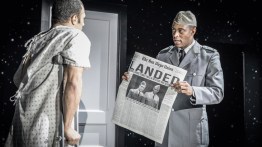
The Twilight Zone, an American TV show from the early 1960s, reinvented the ghost story for the age of space exploration. Director Richard Jones has collaborated with Anne Washburn to turn several TV episodes into a single play. Eight episodes in all. Way too many. The structure is designed to bamboozle us from the start. Some of the storylines have been broken up and are placed episodically throughout the piece, while others are preserved as units and delivered whole. Even the most keen-eyed viewer gets flummoxed by this mystery. Among the storylines that baffled me were: a cop quizzes some stranded bus passengers to find out which is an alien;