Arts Reviews

The good, bad and ugly in arts and exhbitions

‘I was really, really scared’

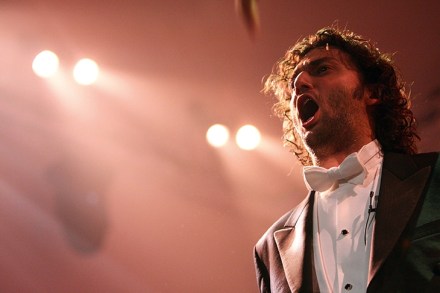
‘Hi, it’s Jonas.’ When the great tenor rings from Vienna, I ask if there are any topics he wants me to avoid, such are his minders’ anxieties. ‘Ask anything,’ laughs Jonas. ‘I’m not shy.’ He is heading in from the airport to see a physio — ‘these concerts, you have to stand there all the time’ — before taking Hugo Wolf’s Italian Songbook on a seven-city Baedeker tour: Vienna, Paris, London, Essen, Luxemburg, Budapest, Barcelona. I wonder if he is aware that Wolf is a hard sell to English audiences. ‘Not just the English,’ he replies. ‘Even in Germany promoters say to me, please don’t do a Wolf-only recital, no
The spying game

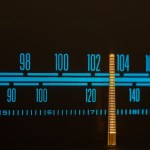
Some of us grew up worrying about reds under the bed, which was perhaps not as foolish as all that if a report on Saturday morning’s Today programme on Radio 4 is to be believed. Amid a cacophony of weird-sounding bleeps and disembodied voices, Gordon Corera, the BBC’s security correspondent (always clear, calm and collected, no matter the brief), told us about the ‘number stations’ that proliferated in the Cold War and are now being brought back to life. Anyone can tune in to them, but only those in the know can understand what they mean, and although the source of the transmissions can be traced it’s impossible to pick

Hare-brained

Shortly after my rave review of McMafia eight weeks ago, I got a long message from an old friend chastising me for being so horribly wrong. Could I not see that the series was boring, convoluted and badly acted? Was I aware of how many better series there had been on Amazon and Netflix recently because, if I wasn’t, she could give me a few recommendations… Several other people wrote to me in a similar vein and I felt terrible. Life is short and TV production is so voluminous these days that now more than ever we need critics to sift the bullion from the dross. Sure, reviews are a

Sea fever

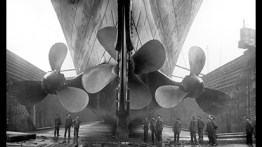
Looking at the sketchbook of William Whitelock Lloyd, a soldier-artist who joined a P&O liner after surviving the Anglo-Zulu War, I’m reminded why I avoid cruises. On board this India-bound ship were: a ‘man who talks a great deal of yachting shop and collapses at the first breeze of wind’, ‘a successful Colonist’, and ‘the victim of mal de mer who lives on smelling salts’. It would be just my luck to be stuck in the cabin between ‘One of our Flirts’, the busty lady with pretty eyes, and what Lloyd affectionately called ‘Our Foghorns (automatic)’ — two bawling babies. By the late 19th century, ocean liners attracted all sorts,

Home is where the art is | 8 February 2018

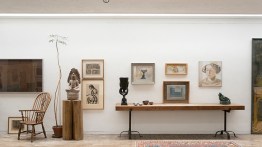
When I first visited Kettle’s Yard, Cambridge, I was shown around by Jim Ede, its founder and creator. This wasn’t an unusual event in the 1970s. I was an undergraduate, and in those days Ede — elderly, elegant and almost translucently ascetic — showed round anyone who rang his doorbell. It was rather as if Henry Clay Frick had given you a tour of his pied-à-terre on Fifth Avenue, or Sir Richard Wallace walked you through his collection. Except, of course, that they wouldn’t have done that — and Kettle’s Yard, as Ede (1895–1990) mused in a conversation with the artist John Goto, isn’t really a collection, ‘it’s a number

State of independence

When the BBC’s Arabic-language network went out on air for the first time 80 years ago, on 3 January 1938, its mission was to provide ‘reliable news’ to a region that was being fed German and Italian ‘propaganda’ via short-wave transmissions from those countries. News is still its main focus, says Bassam Andari, news-gathering editor for the Arabic service, who has been with the corporation since 1994, arriving in London from Lebanon. He grew up listening to the station during the civil war in that country in the 1970s. ‘My mother would switch the radio on to the BBC every morning to find out what was happening in the world,

Changing the bard

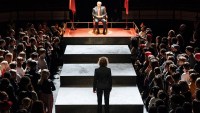
Nicholas Hytner’s new show is a modern-dress Julius Caesar, heavily cut and played in the round. It runs for two hours, no interval. The action opens with the audience grouped around a central stage where a ramshackle rock gig descends into a riot. The play unfolds like an illegal rave at a warehouse. It’s bold, in its way, and some of it works. A couple of the Roman senators are played by actresses and the text has been bodged to suit the cult of gender neutrality. ‘Romans’ is substituted for ‘men’ in Mark Antony’s famous line, ‘so are they all, all honourable men’. This small change is curiously painful to

Accentuate the negative

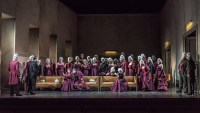
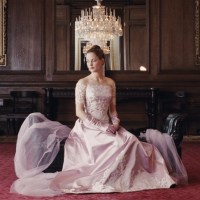
A chaste act of adultery and a silent conversation: these are the encounters at the heart of Un ballo in maschera. On paper Verdi’s opera is a hot-blooded political thriller climaxing in a regicide, but in the watching it’s something entirely other. Just like the buoyant score, whose ‘aura of gaiety’ seems so at odds with the dark subject matter, the drama of Ballo is a sustained act of misdirection. The focus in this unusual piece is not on action and event but on absences, unspokens — the negative and not the photograph is what absorbs Verdi so compellingly here. When the Italian censors, troubled by the on-stage assassination of

Girls on film

To mark the 100th anniversary of women’s suffrage — if a little oddly — Channel 4 on Tuesday brought us a special girls-only edition of The Secret Life of Five-Year-Olds. The cast were a mix of new faces and old hands from previous series: among them Jet who, like a primary-school version of a traditional Hollywood actress, has been playing a five-year-old on the show since 2016. Still, you can see why the producers keep calling — because, by now, Jet has got the tomboy role required of her down pat. ‘It’s hard to make friends with just girls,’ she declared early on, hitting the word ‘girls’ with exactly the

The right stuff | 1 February 2018

Geoff Norcott is lean, talkative, lightly bearded and intense. Britain’s first ‘openly Conservative’ comedian has benefited enormously from the Brexit vote and he’s popular with television producers who need a right-wing voice to balance out the left-leaning bias of most TV output. ‘It’s funny meeting TV types,’ he tells me. ‘They say, “We really want to hear alternative viewpoints.” And I’m thinking, “By alternative you mean majority,”’ Norcott, 41, was raised on a south London estate. ‘Both my parents were quite political. My dad was a trade unionist who got quite high up in the NEC [Labour’s national executive committee] and my mum ran as a Lib Dem councillor. So

Power dressing

Paul Thomas Anderson’s Phantom Thread is a lush psychosexual drama starring Daniel Day-Lewis as a pampered, tyrannical, pernickety 1950s couturier whose life is disrupted when he falls for a waitress who, in the most unexpected way, proves his match. It is a wonderfully fixating film in every respect, and wholly non-formulaic. And it miraculously transforms an addition to a breakfast order — ‘…and sausages’ — into one of the sexiest things ever said. Ultimately, its meaning will be open to interpretation. I saw it as the rather timely story of a man who is finally forced to cut out his misogynist heart and see women as real people, but your

Drivel time

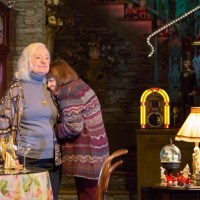
The NT’s new production, John, is by a youngish American playwright, Annie Baker. We Brits tend to assume that ‘john’ is American for ‘toilet’ so perhaps lavatorial treats are in store. The setting is a provincial hotel run by a blithering old dear whose only guests are two grumbling yuppies with marriage problems. The plot of a play usually starts within ten minutes but not here: nothing happens. That’s the point. Instead of a story there’s a minor predicament and this, oddly enough, suits the show’s personalities. The yuppies, Elias and Jenny, are just about memorable enough to be human beings but they haven’t the substance or grit for dramatic

Friends reunited | 1 February 2018

Perhaps you missed the fuss because there has been so little publicity about it. But last week, at Davos, the President of the United States was granted the extraordinary privilege of an audience with Britain’s leading interviewer, media communicator and cultural icon, the David Frost de nos jours Piers Morgan. On Sunday night we finally saw the result and what an unbelievable masterpiece of a scoop it was. We knew this because every few minutes the show’s star kept popping up in voiceover form to tell us. ‘I knew the first international televised interview with President Trump was going to be special. But I hadn’t expected the commander-in-chief to be

Self discovery

It’s a pity Will Self didn’t embark on his bus tour round Britain before the Brexit vote. If he had, we might have all had a better understanding of what’s going on in the shires. In his series of ten short programmes on Radio 4, Great British Bus Journey (produced by Laurence Grissell), Self sets out to emulate Daniel Defoe, William Cobbett and J.B. Priestley by taking the bus not to the big centres of life in the UK but those smaller towns and cities we often rush past on the motorway or have no reason to add to our bucket list. Places like Plymouth, Preston, East Kilbride, Wolverhampton and

Crown jewels | 25 January 2018

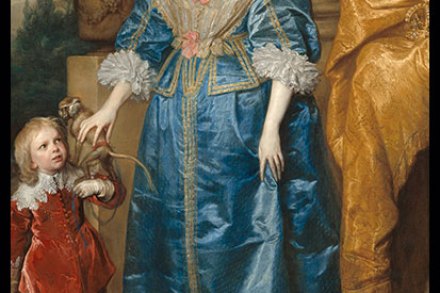
Peter Paul Rubens thought highly of Charles I’s art collection. ‘When it comes to fine pictures by the hands of first-class masters,’ he wrote from London in 1629, ‘I have never seen such a large number in one place.’ In Charles I: King and Collector the Royal Academy has reassembled only a fraction of what the king once owned, yet even so this is a sumptuous feast of an exhibition. Some of what’s on show will be familiar to an assiduous British art-lover, since it comes from the Royal Collection and the National Gallery. But the sheer concentration of visual splendour is overwhelming and the installation spectacular. The Renaissance, like