Arts Reviews

The good, bad and ugly in arts and exhbitions

Thinking outside the box

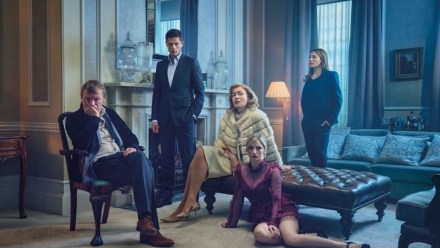
These days a genuinely controversial TV drama series would surely be one with an all-white, male-led cast that examined the problems of a bunch of middle-class people. (Just imagine the Twitter outrage!) But while we await that — possibly for a while yet — we’ve now got two highly promising new shows of the more approved ‘controversial’ kind: where racial issues are tackled in a thoughtful and scrupulously responsible way. Kiri (Channel 4, Wednesday) has the distinct advantage of starring Sarah Lancashire, whose character Miriam proves that TV mavericks needn’t always be doctors, lawyers or cops. They can, it seems, also be social workers. So it was that Miriam was

All the rage | 11 January 2018

Three Billboards Outside Ebbing, Missouri does, indeed, feature three billboards outside Ebbing, Missouri. They have been placed at the roadside on the outskirts of town by Mildred Hayes (Frances McDormand), a middle-aged woman whose teenage daughter had been raped and murdered seven months earlier. The billboards read: ‘Raped While Dying’; ‘And Still No Arrests’; ‘How Come, Chief Willoughby?’ Mildred is grieving, in pain and a ball of fury. But not your regular, everyday ball of fury. She is a ball of fury of the most magnificent, unstoppable kind. If only she could go after every rapist from now on. I’d certainly sleep better in my bed. Written, directed and produced

Sonic youth

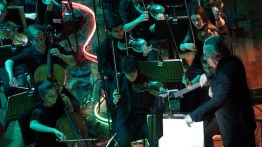
Everyone knows — don’t they? — that the National Youth Orchestra of Great Britain is the UK’s youngest world-class symphony orchestra — an ensemble of musicians aged 18 and under that’s the equal of any professional band (and better than some). But it’s also the largest, and we don’t hear enough about the sheer sonic impact of hearing 157 musicians moving with absolute precision. Even the smallest gesture by an 87-player string section has a sort of heft, a physical weight and depth that you can sense in the air around you. Overwhelming when the whole orchestra is playing at full power, it’s even more tangible in quiet passages, as

Lessons from Rwanda

What an incredible statement we heard on My Perfect Country. ‘I can walk into a boardroom and forget I am a woman,’ pronounced Isabelle Masozera, a PR executive, on the World Service programme, which this week visited Rwanda to find out what is happening there to make it qualify for ‘my perfect country’ status. Her words hit home because of the BBC’s current difficulties over equal pay and opportunities. It appears that the corporation has been less than speedy or judicious in its response to the revelations last year about the substantial differences in earnings between some of its male and female employees. Badly handled, it led to the bizarre

Hitting the high notes

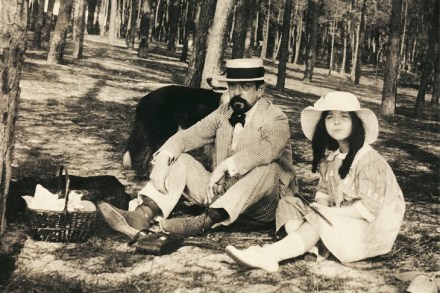
Claude Debussy died on 25 March 1918 to the sound of explosions. Four days earlier, the Kaiser’s army had deployed its long-range Paris Gun, and as Debussy’s cancer entered its final hours, artillery shells were bursting in the streets around his home in Avenue du Bois-de-Boulogne. This quiet modernist — who’d transformed music into an art of almost limitless expressive subtlety — died amid the thunder of mechanised war. The funeral was poorly attended, and as the cortège halted, curious shopkeepers glanced at the wreaths: ‘It seems he was a musician.’ The classical music world is morbidly addicted to anniversaries of major composers. It’s still unclear whether the listening public

Faking history

It’s all about the rhythm. Hamilton is a musical that tells the story of America’s foundation through the medium of rap. It sounds crazy but it works because the show’s arsenal of effects is simply overwhelming. The lyrics drive the narrative, the rap gives energy to the lyrics, and the dancers double the effect by adding a visual complement to the pulsing soundscape. Dramatic lighting, synchronised with the music, provides a final sensory flourish. It’s like being softly slapped across the face with a beautiful velvet glove. The set is a luxuriantly solid affair, like a five-star hotel inspired by Wild West themes. Two wooden staircases soar up towards a

Top of the pods

It’s racing up the UK podcast charts, overtaking (as I write) the established favourites such as No Such Thing as a Fish, Kermode and Mayo’s Film Review and This American Life, and only just behind the reigning number one, My Dad Wrote a Porno (don’t ask; it’s meant to be funny). Briefly, at the height of Brexit fever last month as phase one came to an end and Theresa May rushed to Brussels for a meeting with President Juncker and co., Brexitcast topped the list, scoring the highest number of downloads. It could well make it to the top again. I had a listen, out of curiosity, not expecting to

Stiller instinct

Brad’s Status is a midlife crisis film starring Ben Stiller as a nearly 50-year-old man whose status anxiety is through the roof, poor thing. My heart bleeds and all that. I’ll tell you what Brad’s status should be: face well and truly slapped. The film is written and directed by Mike White (Beatriz at Dinner; Enlightened) and in some quarters it has been renamed Mike’s White Privilege, which is fair — no one else gets a look in — but as it’s intended as a satire of white male privilege you can’t exactly blame it for being white, male and privileged. However, while some moments will resonate (who hasn’t ever

The Lost City of Z is a very long way from a true story — and I should know

We’re closing 2017 by republishing our twelve most-read articles of the year. Here’s No. 3: John Hemming on why Percy Fawcett wasn’t the great explorer of Hollywood myth: The new film The Lost City of Z is being advertised as based on the true story of one of Britain’s greatest explorers. It is about Lt-Col Percy Fawcett. Greatest explorer? Fawcett? He was a surveyor who never discovered anything, a nutter, a racist, and so incompetent that the only expedition he organised was a five-week disaster. Calling him one of our greatest explorers is like calling Eddie the Eagle one of our greatest sportsmen. It is an insult to the huge

Why I am convinced of the supernatural

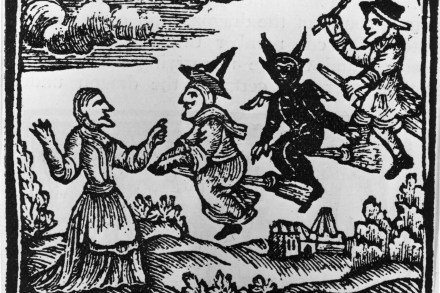
A friend bought a new small terraced house of late Victorian origin in a northern city. She liked it; it had no bad vibes (and houses sometimes do) but she had to do work: knocking down a couple of walls, damp-proofing, rewiring and so on. She was tight on budget so decided to do as much of the work as possible herself. Nothing untoward was seen, heard or sensed… But she had a dog, a Jack Russell terrier. He spent weekdays with her brother and sister-in-law, who lived nearby, and Friday night to Monday morning with her. On the first weekend that she started work, she took Barney along. But

Renaissance man

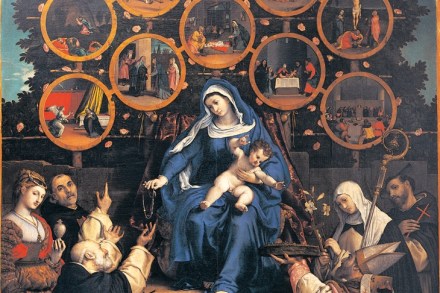
Lorenzo Lotto’s portraits — nervous, intense and enigmatic — are among the most memorable to be painted in 16th-century Italy, but his fellow Venetians didn’t see it that way. In a letter to Lotto of 1548, the poet and satirist Pietro Aretino wrote that he was ‘outclassed in the profession of painting’ by Titian. Now, though, with an exhibition of his portraits in store at the National Gallery next year, it looks as though Lotto’s time may finally have come. On a bright day this autumn my wife and I went on the trail of this most fascinating and idiosyncratic of Renaissance artists. Our goal was Cingoli, in the foothills

Every picture tells a story

I am in Paris for the Rolling Stones’ No Filter concert, in Ronnie Wood’s dressing room minutes before he is due on stage. Walking through the door, I find myself in what looks like a giant crèche, and every size of child and grandchild bouncing around on a thick rug woven in the pattern of Ronnie’s ‘Wild Horses’ painting. Ronnie greets me like a long-lost friend with a massive hug, no sign of pre-concert agitation. Apparently Mick is somewhere round the corner doing a strenuous workout. Keith may or may not be reaching down to touch his knee a couple of times as his warm-up, but here there is no

Men behaving badly | 13 December 2017

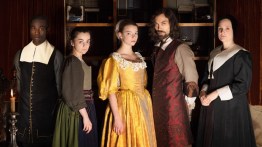
BBC1’s The Miniaturist (26/7 December) is a lavish two-part adaptation of Jessie Burton’s bestseller. It’s also further proof that almost any geographical and historical setting can be conscripted to tell us what’s apparently the only story we’re interested in these days: an alliance of plucky and unfailingly virtuous black people, gay people and women taking on the repressive forces of straight white blokes. The main character, Nella (Anya Taylor-Joy), is ostensibly a young 17th-century Dutchwoman who’s been married off to a rich Amsterdam merchant. On closer inspection, though, she turns out to be a 21st-century feminist who’s somehow been transported back in time to show our benighted forebears the error

In the footsteps of Bach

It was in his organ loft at Arnstadt that I began my acquaintance with Johann Sebastian Bach — with JSB, with the young man, with the writer, the fighter, the lover. After the great walk of his in 1705 that we would follow, and after his return trek in February 1706, he would be caught at it in that organ loft with a ‘mysterious’ woman, who may or may not have been she who became his wife. It is the perfect place for a stolen moment. The church is now white and golden, and wooden, ugly on the outside and elegant as a cream bun on the in. To reach

Second life

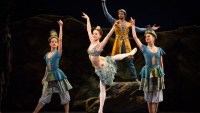
You can pay homage to a ballet classic or you can tear it up and reinvent it. Both approaches were on offer in London a fortnight ago: a revival of Frederick Ashton’s Sylvia, set to Léo Delibes’s 1876 score, and a Swan Lake from Michael Keegan-Dolan that ditches Tchaikovsky, tutus and toe shoes and relocates the story to a dysfunctional community in the Irish midlands. There’s an eerie, gaslit vibe to the Royal Ballet’s Sylvia. Look along the row and you half expect the audience to be styled to match its Second Empire pastiche: epaulets, lorgnettes, rickets. When Ashton made Daphnis et Chloé, his other nymphs’n’shepherds ballet, in 1951, he

Now that’s what I call music

One of the members of the government’s HS2 Growth Taskforce is remembering the first time he went to a gay club. ‘There was a club in Coventry that was only open on a Sunday night, at the Quadrant, and a mate of mine said, “There’s a DJ there who plays some fantastic music that I know you’ve never heard, so why don’t we go down?” It was a gay club, or a queer’s club as it was known then. I loved it. Oh, I loved it. I couldn’t believe that blokes were dancing with each other. The music was awesome.’ A few years later, in the early 1980s, he ‘lived

Burning questions

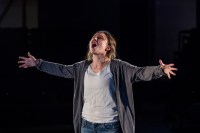
A new play at the Bush with a catchy political title. Parliament Square introduces us to Kat, a young Scots mum, who abandons her baby girl and her devoted husband and commutes to London to kill herself. She doesn’t want to die but shrill voices in her head are urging her to turn her body into a human fireball on College Green, opposite parliament. Her political cause is unclear. Her personal hopes are plainly set out: death and posthumous fame. Everything is ready. Kat douses herself in unleaded petrol (it’s not a carbon-neutral protest), and as the flames engulf her flesh she emits a blood-curdler from her solar plexus. ‘The