Arts Reviews

The good, bad and ugly in arts and exhbitions

Hollywood stars have lost their shine

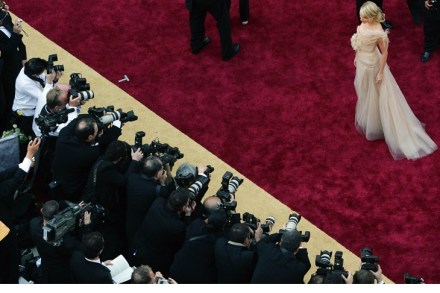
Reading the lip-smacking reports of the latest troubled celebrity relationships  (Jennifer Aniston and Justin Theroux definitely high and dry, Cheryl Cole and Liam Payne allegedly on the rocks) I couldn’t help musing that stars – and more specifically, the place they occupy in our mass psychological landscape – have very much changed since the first mass-market celebrities emerged. The film stars of the fledgling Hollywood truly were worshipped as higher beings; a tribe of Pathan Indians opened fire on a cinema when they were denied entry to a Greta Garbo film while women committed suicide when Valentino died. Their marriages were regarded as heavenly unions; their romantic sunderings as tragedies.
Keeping up with the Joneses

To bleak, boarded-up Margate — and a salt-and-vinegar wind that leaves my face looking like Andy Warhol’s botched 1958 nose-peel — to see Journeys with ‘The Waste Land’ at Turner Contemporary. The exhibition has been organised by a group of local residents, who selected the exhibits, designed the layout, and wrote the exhibition texts. In ‘The Waste Land’, some of it written in the Nayland Rock seafront shelter, Eliot writes: ‘On Margate Sands./ I can connect/ Nothing with nothing.’ The local research group have connected Eliot’s text with everything — some duds, some successes. For example, in ‘The Fire Sermon’, a gossipy, gripping, ungrammatical female voice says: ‘It’s them pills

Hair-raising

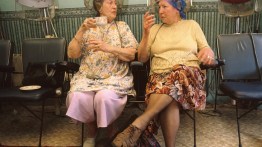
One of the best things about Beehives, Bobs and Blow-dries — yep, an exhibition about hairdressing — is the reaction of visitors. Some are getting on a bit and their pangs of recognition as they pass 1970s straightening tongs or Carmen heated rollers are evident. One woman exclaimed, as she passed a Ronson hairdryer with its shower-cap hood, ‘Ooh, they were good, they were. We’ve only just got rid of my mum’s.’ A hairdresser called Keith from Wakefield observed of the Beatles era that it was a worrying time to begin with: ‘Nothing happened for about two or three months. Nobody came. We thought we’d lost our business. But it

Sound investment

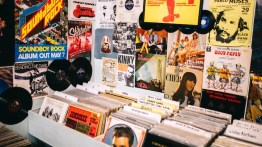
Listen closely, among the shelves of the last remaining music shops, in student dorm rooms and amid the flat whites and reclaimed wood of certain coffee shops, and you’ll hear a sound that many thought long banished. Check out the steadily rising sales figures of the past few years and there’s little doubt: the vinyl record is making a comeback. With it comes the return of another sound, like some po-faced, bearded handmaiden: the whine of the vinyl bore. It is three decades since 12-inch PVC discs were the dominant means of access to music, but for some the format never died and analogue will always offer a purer, more

Heavy-going

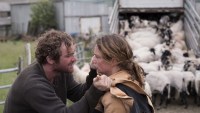
Dark River is the much-anticipated third feature from British writer/director Clio Barnard and it is one of those bleak, rural- England dramas featuring cement-coloured skies, wind, rain, mud, rusted old farm machinery and dead animals — do people who move out from the city know what they are letting themselves in for? — as well as the aftermath of childhood sexual abuse. (Should we pull them aside and have a word?) Apologies for sounding glib about such a heavy subject but this is, ultimately, so heavy-handed about that heavy subject it left me cold. I should point out, however, that other critics are available, and some are saying it is

Losing the plot | 22 February 2018

ITV’s Marcella (Monday) represents another triumphant breakthrough in the portrayal of female cops on television. Of course, thanks to more or less every other crime show around, we already know that women in their forties can be senior police officers. But what Marcella makes even clearer than, say, Vera or No Offence is that so can women in their forties who are entirely unsuited to being senior police officers. For a start, the eponymous heroine suffers from regular mental collapses during which she often turns violent before handily forgetting — and forgiving herself for — anything bad she may have done. She also seems to specialise in cases where she

Lend me your ears | 22 February 2018

Audio description, or AD, as it is fondly called, is coming of age. Once consigned to the utility room of grey voices reading boring cues to inform blind people what was going on on stage or screen, AD is now a dynamic narrative form that is findinga presence in almost all the arts (from opera, theatre and film to art galleries and museums). It is so widespread and well done that many consider it an art form in itself. For the uninitiated, audio description simply provides a listener, through headphones or a TV speaker, with the essential details of the action and events in a film or play during a

Wronged women

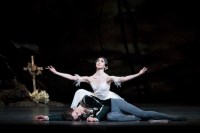
A bumper fortnight for Covent Garden florists thanks to a 20th-anniversary flower shower for the Royal Ballet’s Marianela Nunez and bales of bouquets to mark major debuts by new(ish) principals Francesca Hayward and Yasmine Naghdi. Giselle, the timid village beauty whose ghost returns to forgive her duplicitous lover, was never an obvious vehicle for Nunez’s sunny virtuosity, but she has always had absolute command of the role’s fiendish mix of crisp footwork and melting lines. Naghdi and Hayward both gave polished, intensely felt performances, their innate musicality enhanced by Koen Kessels’s responsive handling of the Adam score. Hayward is marked for misery from the moment she opens the cottage door.

When content-creators fight

None of us is above YouTube, and nothing is beneath it. We have of course all long since submitted to a universal medium whose sole purpose appears to be the promotion of the universal below-average, but this doesn’t mean that there isn’t pleasure to be had from watching content created by so-called ‘content-creators’ whose created content is often pretty much content-free. Indeed,a large part of the obvious appeal of user-generated content is that it is generated by people who are just like you and me and who therefore make stuff that isn’t actually very good. We no longer marvel at skill. What we admire is chutzpah. The most recent example

House rules | 22 February 2018

The Donmar’s new show, The York Realist, dates from 2001. The programme notes tell us that the playwright, Peter Gill, ‘is one of the most important and influential writers and directors of the past 30 years’. Who wrote that? Not Peter Gill, I hope. The play, directed by Robert Hastie, follows a gay affair between a strapping Yorkshire cowherd and a sensitive London artiste. They meet while rehearsing an am-dram production of a mystery play set in a ruined abbey. Gay men will enjoy this charmingly acted production but it’s apt to bore the general audience because the characters are trite, the gay theme feels antiquated and the storyline is

It’s the music, stupid

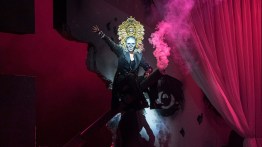
‘Welcome to our hearts again, Iolanthe!’ sings the fairy chorus in Gilbert and Sullivan’s fantasy-satire, and during this exuberant new production by Cal McCrystal you could almost hear the assembled G&S fans sighing in agreement. Iolanthe is our trump card against the sceptics, and not merely because Gilbert’s digs at parliamentary politics are still so startlingly acute. No, we insist, it’s the music, stupid: just listen to it! Sullivan’s score gleefully assimilates Handel, Mendelssohn and Wagner (Tannhäuser, Rheingold; even Tristan und Isolde), and to fly that close to the magic flame of Bayreuth without getting frazzled is something that very few composers have achieved with such freshness and melodic grace.

Seeing the light | 22 February 2018

The impermanence of works of art is a worry for curators though not usually for artists, especially not at the start of their careers. But Anthony McCall was only in his mid-thirties when his creations vanished before his eyes. It was in New York in the early 1970s that McCall came up with the idea of ‘solid light works’, animated projections of simple abstract shapes in which the beams of projected light assumed a physical presence. Not being taken seriously by commercial galleries — ‘It did occur to me that I hadn’t made a terribly wise career decision’ — McCall’s solid light works were initially shown in the sorts of

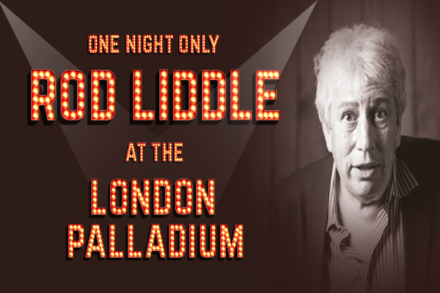
For one night only: Rod Liddle at the London Palladium

If Rod Liddle is one of your guilty (or not so guilty) pleasures and you’ve been toying with the idea of subscribing to The Spectator, then we have the perfect excuse. We do reader events every so often, the most popular of which have been with Rod Liddle. They have both sold out in a flash. The last one, a thousand-seater venue, was filled within four days – we barely had time to put an advert in the magazine. This time, we’ve booked Rod again – but this time in the 2,300-seater London Palladium on Tuesday 15 May at 7pm. It will be the biggest event ever held by The

Close of play | 15 February 2018

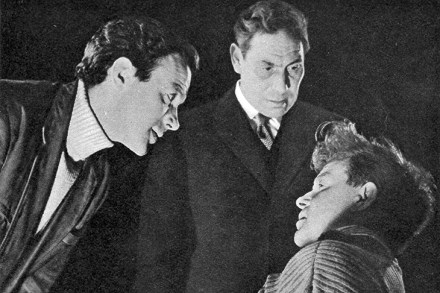
‘Mad, wearying and inconsequential gabble,’ sighed the Financial Times in 1958. ‘One quails in slack-jawed dismay.’ Here’s the FT at the same play last month: ‘The best I have seen on-stage.’ How about the Evening Standard? Then: ‘Like trying to solve a crossword puzzle where every vertical clue is designed to put you off the horizontal.’ Now: ‘Pinter’s cruel dialogue has rarely sounded sharper.’ ‘What all this means only Mr Pinter knows,’ mused the Manchester Guardian. On its return to the West End, the playwright’s biographer Michael Billington, writing in the Guardian, judged that ‘The Birthday Party has lost none of its capacity to intrigue’. Sixty years ago at the

Torture in the stalls

It’s considered the great masterpiece of 20th-century American drama. Oh, come off it. Long Day’s Journey into Night is a waffle-festival that descends into a torture session. Who would choose to spend time with the Tyrone family? Dad is a skinflint millionaire. Mum is a wittering smack addict. They’ve produced two layabout sons. One is a dipsomaniac with a moustache; the other has TB and a cough. These doomed narcissists chase each other around the family mansion in a spiral of vicious, self-regarding gossip. It’s like being trapped in a broken cable-car with four prattling drunks who hate each other. And I’m not convinced they drink that much. A bottle

Relative values

Lady Bird is a semi-autobiographical film written and directed by Greta Gerwig with a plot synopsis that need not detain us as it is basically only this: girl has a mum. (Or: girl has a mum, and sometimes they row and sometimes they don’t.) But thus far it has won near universal critical praise, two Golden Globes and five Oscar nominations, thereby proving there is mileage in girls and their mums, and box office in girls and their mums, and that girls and their mums can be more than mere afterthoughts. In this respect, Lady Bird may, in fact, be quite the rare bird. It’s set in Sacramento, California, in