Arts Reviews

The good, bad and ugly in arts and exhbitions

Bad feminist

Molly’s Game marks the directorial debut of Hollywood’s most celebrated screenwriter, Aaron Sorkin, and is based on his adaptation of the memoir by Molly Bloom. Nope, me neither, but she’s the one-time Olympic skier who, at the age of 26, started a high-stakes poker game for ‘the richest, the most powerful men in the world’ and ended up with the FBI in her face. Poor Molly, we’re meant to think, when the FBI ends up in her face, but I was delighted. Bang her up! This has been posited as the antidote to all those male-driven, big money Wall Street films, with Sorkin even declaring Ms Bloom a ‘feminist icon’.
Oh, what a circus

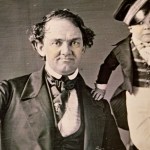
‘There’s a sucker born every minute.’ That was the P.T. Barnum battle cry. It has come to have a ring of contempt, but no one loved a sucker more than Barnum. Entertain them, he said. Thrill them, shock them. Make ’em laugh, make ’em cry. Give ’em the old razzle-dazzle. And if, in the course of the evening, you extract from them a penny, a shilling, a dollar… Well, have you not given them a story to tell their friends tomorrow? His critics called him a scoundrel, a humbug, a con man. To the Times he was ‘the most adventurous and least scrupulous of showmen… an apotheosis of notoriety’. His

Bah, humbug!, Tiny Tim

Here we go again. Partridges in pear trees. Lovely big Christmas turkey. The Queen’s speech. And then, at some point during the Yuletide season, some version or other of Dickens’s ghost story A Christmas Carol. This year’s glut of Scrooge stories includes the Old Vic’s major production starring Rhys Ifans (reviewed by Lloyd Evans in last week’s Spectator) and Michael Rosen’s retelling of the tale, Bah! Humbug! There is a new film, The Man Who Invented Christmas, featuring Christopher Plummer as Scrooge and Dan Stevens, he of Downton Abbey fame, as Mr Dickens himself. It plots the months running up to the publication of A Christmas Carol in Yuletide 1843.

Drama queen | 7 December 2017

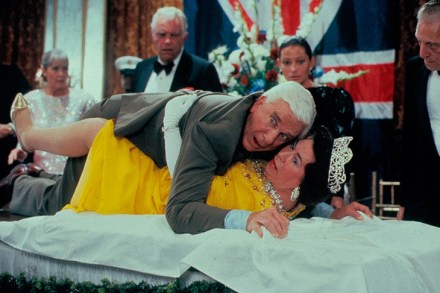
If cinema is propaganda, Elizabeth II can be grateful to it. Film is a conservative art form, and almost nothing has attempted to thwart or mock her. (The Daily Star once printed that Princess Margaret would appear in Crossroads, but Crossroads was not cinema, and it was not true. Instead the award for tabloid lie of the year was named the Princess Margaret Award.) I could not find an art film with the Queen weeping under a table in her nightgown, although she did appear in The Naked Gun: From the Files of Police Squad! (1988), and was mounted by Leslie Nielsen. She also appeared in the disaster film 2012

How’s your father

Menashe is a drama set amid Brooklyn’s ultra-orthodox Hasidic community. It is performed entirely in the Yiddish language. It is peopled exclusively by Hasidic non-actors. (Real-life grocer Menashe Lustig plays the title character.) It is small and specific, admittedly, but it also tells a universal story about a father’s struggle to hold on to the son he loves, and it tells this story tenderly, thoughtfully, beautifully. It may even be my favourite frum film of the year. Thus far. (Still a few weeks to go.) This marks the feature debut of director Joshua Z Weinstein (no relation), who made documentaries previously, and who wrote this with Alex Lipschultz and Musa

Festive feast

Maximum Victoriana at the Old Vic for Matthew Warchus’s A Christmas Carol. Even before we reach our seats we’re accosted by bonneted wenches handing out mince pies. Merchants in top hats roam the aisles proffering satsumas, which they call, with accurate Victorian incorrectness, ‘oranges’. The guts of the theatre have been ripped out for this show. A slender catwalk stretches 40 yards from the rear of the stage to the farthest wall of the auditorium, with the seats gathered around this runway in odd little clumps. The narrow performing area leaves no room for scenery, so Dickens’s London is suggested by dozens of oblong lanterns dangling overhead, like mini-Tardises, all

Women on top | 7 December 2017

Boy came to me the other night in a state of dismay. ‘Dad, I just turned on Match of the Day to watch England vs Kazakhstan and guess what: they never mentioned this, but it’s the women’s game.’ What bothered him was not so much being forced to watch a slower, less athletic, duller version of real football — though obviously that too — as that the BBC was being so utterly disingenuous about it. This policy of pretending there’s absolutely no difference between men’s and women’s international sporting fixtures has, I know, been operational for some time. But for those of us living outside the PC metropolitan bubble —

Don’t go breaking my heart

It’s been heart week on Radio 4, celebrating the anniversary of the first ‘successful’ heart transplant in 1967, which was performed, controversially, by Dr Christiaan Barnard in South Africa on a patient called Louis Washkansky (who survived the operation and lived for 18 days). The heart, that mysterious, almost mystical organ, is freighted with such cultural significance that back then there were some who thought such feats of medical skill were tampering dangerously with our humanity. Change the heart, and the person within would never be the same. Now, though, as Giles Fraser discovered in his series This Old Heart of Mine (produced by Victoria Shepherd), the official definition of

Animal attraction | 30 November 2017

There are times when our national passion for cutting people down to size is a little tiring. I left Brett Morgen’s new documentary about Jane Goodall, the chimpanzee expert, in a rare flush of excited enthusiasm. ‘You’ve got to see it!’ I said to everyone. Most replied along these lines: ‘Goodall, didn’t she turn out to be a fraud?’ Or: ‘Wasn’t it all Leakey’s work she took credit for?’ ‘Yeah, what’s with that?’ says Brett Morgen hunched over his toast in a very hipster Soho hotel. ‘In the Times of London today, in the review, it says Jane can’t hold a candle to David Attenborough. I’m like, he’s a fucking

When things fall apart

The films of Michael Haneke wear a long face. Psychological terror, domestic horror, sick sex, genital self-harm — these are the joyless tags of his considerable oeuvre. Such an auteur is not the obvious sort for sequels: The Piano Teacher 2 or Hidden — Again! aren’t destined for your nearest multiplex. And yet his new film is an intriguing knight’s move away from his last. Amour (2012) was a hot-button portrait of dementia in which an elderly husband watched his wife’s mind drift away as if on an ice floe. Eventually, he smothered her with a pillow. In Happy End, the widower is back, and this time he’s out to

Dancing queen

Everybody’s Talking About Jamie opened at the Sheffield Crucible in February for a standard three-week run. The show is based on a BBC documentary, Jamie: Drag Queen at 16, about a working-class lad who attended his school prom in a scarlet frock. Director Jonathan Butterell saw the potential to create a replica Billy Elliot and he brought in two co-writers to turn the material into a comic musical. Word of mouth was excellent and the show received immediate offers for a West End transfer. The action starts in a Sheffield comp where a class of 16-year-olds are being given career advice by a computer. Blond misfit Jamie is encouraged to

Living dolls

This week on Channel 4, we watched a cheery 58-year-old American engineer called James going on a first date. He was meeting Harmony, an extravagantly shapely blonde who was obliging enough to be wearing a low-cut crop top and tiny shorts, and who greeted him with a charming smile. After a spot of small talk and a dumb-blonde joke, she then alternated between assuring him how great he was and inviting him to masturbate over her. ‘You’re awesome,’ a visibly smitten James declared — apparently not at all bothered that Harmony was a robot. This scene — clearly regarded as a heartwarming one by Harmony’s maker Matt McMullen — provided

Sound of the Gods

At the launch of the Christmas radio schedules last week, James Purnell, director of radio (and much more) at the BBC, stressed repeatedly the need for radio to be ‘reinvented’ for this new digital age. But what did he mean by reinvent? Was he hinting at the need for a new, leaner radio, the sound-only stations running up cheaper bills for the corporation? Or was he envisaging a translation of the existing radio networks into something more than just audio, focusing not so much on what goes on in the studio but on the new digital future, visualised and captured online. ‘Enhanced’ would have been a much less troubling word

Ladies first

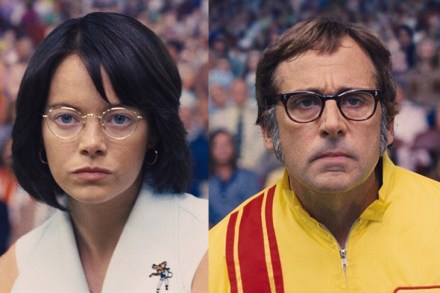
Battle of the Sexes recreates the famed, culture-changing 1973 tennis match between 55-year-old Bobby Riggs, a self-proclaimed chauvinist, and 29-year-old Billie Jean King, the world’s top female player who was out to liberate women and herself. (She was just discovering her true sexuality at that time.) Unless you happen to identify with Bobby — ‘Don’t get me wrong. I love women in the bedroom and in the kitchen, but these days they want to be everywhere!’ — this is certainly a great comeuppance film of the kind that will amply satisfy all your comeuppance needs. No complaints, comeuppance-wise. But it doesn’t run very deep, divides everyone into heroes and villains,

Passion killer

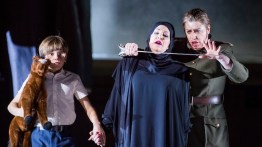
The late arch-Rossinian Philip Gossett regarded Semiramide as a neoclassical work, vaguely and alarmingly suggesting to me a musical equivalent of Canova, a sculptor I detest. Actually, I don’t think the terminology is helpful. Nor is Semiramide monumental in the way that the programme book suggests. There is a notable lack of ensembles and of anything except accompanied recitative and arias. The duets are as rare as in Handel, and come as just as great a relief. The culminating duets in Act Two are as balm to the soul. They even remind one that there is such a thing. Semiramide is called ‘a tragic melodrama’, and derives from a play

Family favourites | 23 November 2017

It’s a weird sensation getting your child back for an extended period when for the previous decade you’ve been packing him off every few weeks back to boarding school. Obviously, it’s quite pleasant, amusing and enlightening to study at close hand and at length this alien thing that you’ve bred. At the same time, though, they don’t half become a discombobulatingly overbearing presence. For example, in the old days I would definitely have reviewed Howards End, even though I can’t stand E.M. Forster or the ghastly pinko Schlegel sisters. But now that the Fawn and I no longer have the house to ourselves, we have to fall in with Boy’s

Net effect | 23 November 2017

The inexplicable popularity of Ivo Van Hove continues. The director’s latest visit to the fairies involves an updated version of Network, a creaky and over-rated news satire from 1976. Van Hove appears to be unconstrained by thrift or self-discipline and he fills the Lyttelton stage with expensive clobber. It’s like a hangar full of half-tested prototypes. Centre, a TV studio featuring three cameras and an anchor man’s desk the size of a lifeboat. Behind it, a controller’s gallery with lots of TV monitors shielded by wobbly glass. Stage-rear, a vast flat-screen telly that relays the action as it happens but with an irritating quarter-second delay. To the right, a kitchen