Arts Reviews

The good, bad and ugly in arts and exhbitions

Seeing stars

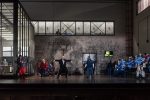
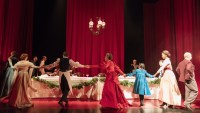
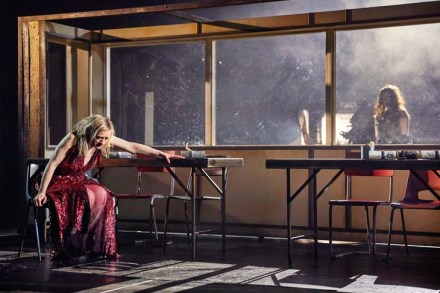
The Best Man by Gore Vidal is set during a fictional American election in 1960. Two gifted candidates seek their party’s nomination. Secretary Russell is a chilly but experienced political hack whose marriage is a sham. Senator Cantwell, a more attractive character, is an impulsive charmer married to a blonde bombshell who adores him. The show feels dated but the acting, the costumes and the set designs capture the period nicely. The plot is perhaps short of pace and density. Each character has an embarrassing secret to hide. Secretary Russell suffered a mental breakdown a few years ago. Senator Cantwell enjoyed a bisexual fling in the army. The action turns
Poet of the century

The first book that Tomas Venclova read in English was Nineteen Eighty-Four. Not a bad start in the language, given his future career. Venclova is less well-known in the West than his late friends Joseph Brodsky and Czesław Miłosz, but he’s something like their Baltic equivalent: a dissident poet of international standing, who spent many of the years of his home country’s Soviet occupation in exile in the US. He describes Nineteen Eighty-Four as ‘a very important book in my life, and the one that taught me the most about the Soviet system’. A passage he says made ‘a very strong impression on me’ comes in an exchange between Winston

What’s in a name

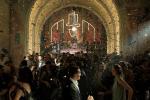
Janacek is the master of the operatic title. Think of the slippery, sleight-of-hand emphasis of Jenufa in its original Czech —Her Stepdaughter — or the elegant misdirection of The Beginning of a Romance. It encourages the suspicion that when Janacek christened his final opera, deliberately truncating the title of Dostoyevsky’s Siberian prison camp-inspired novel Notes From the House of the Dead, there was good reason. It’s a title that opens out a description into an implied question: From the House of the Dead to, where or what exactly? Where can you go, who can you cry out to, once you have crossed over into the underworld and witnessed its horrors?

The beautiful and the damned

Babylon Berlin (Sky Atlantic), the epic German-made Euro noir detective drama set during Weimar, is so addictively brilliant that I’d almost advise you not to start watching it. After the two seasons to date you’ll be left feeling like the morphine-addicted hero Gereon Rath (Volker Bruch) when deprived of his fix. That’s because they haven’t even started making season three yet, so you’ll have an excruciatingly long wait to see what becomes of its cast of immensely captivating characters: Bruno Wolter (Peter Kurth), Rath’s corrupt, lying, whoring but affable sidekick; the treacherous White Russian Countess (Severija Janusauskaite), who dresses as a man for her floor-filling cabaret act; Charlotte Ritter (Liv

Byron in Venice

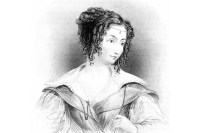
‘I want to see Venice, and the Alps, and Parmesan cheeses.’ So wrote Lord Byron in 1814, some two years before he settled — if that is the word — in the lagoon city. Even after his arrival in the winter of 1816, Venice retained its fantastical allure: he identified with its decay (which he would still find today) and savoured its lack of tourists (which he would not). The city was, he wrote, ‘the greenest island of my imagination’, a place that had soon established itself as his ‘head, or rather my heart, quarters.’ It certainly had his blood pumping: for Byron, Venice became a playground for all manner

Année érotique

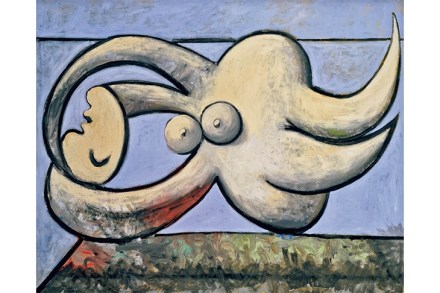
By 1930, Pablo Picasso, nearing 50, was as rich as Croesus. He was the occupant of a flat and studio in rue La Boétie, in the ritzy 8th arrondissement, owner of a country mansion in the north-west, towards Normandy, and was chauffeured around in an adored Hispano-Suiza. He stored the thousands of French francs from the sale of his work in sacks deep inside a Banque de France vault, like a ‘country bumpkin who keeps his savings sewn into his mattress’, someone once said. Married since 1918 to one of Sergei Diaghilev’s ballerinas, Olga Khokhlova, Picasso was coming to dominate the art world in a manner no painter has before

Faulty connections

In the mid-1940s, Frank Auerbach remarked, the arbiters of taste had decided what was going to happen in British art: Graham Sutherland was going to be the leading painter. ‘Then downstage left, picking his nose, Francis Bacon sauntered on. And the whole scene was changed.’ But how did it alter? What happened to figurative painting in London in the decades after Bacon exploded on to the scene? This is a question with which All Too Human at Tate Britain grapples. It is an old problem. When in 1976 R.B. Kitaj proposed that there was an important group of figurative artists at work here, a ‘School of London’, he defined them

Hammer horror

You Were Never Really Here is a fourth feature from Lynne Ramsay (Ratcatcher, Morvern Callar, We Need to Talk About Kevin) and the first thing to say is that it is exceptionally violent. I don’t say this disapprovingly but if your threshold for violence is as low as mine — I incurred a paper cut the other day and passed clean out — it will prove an 89-minute ordeal. Still, it has been described as ‘the Taxi Driver for the 21st century’, if that is of help while you’re bracing yourself for the next hammer blow. Personally, I found it of no help at all. Also, it’s untrue. The film

Fashion victim

By common consent, including Bafta’s, The People v. O.J. Simpson: American Crime Story was one of the best TV dramas of 2016. Produced by Ryan Murphy, it laid out the story in a beautifully clear, largely chronological way that made us appreciate, all over again, just how strange the whole O.J. business was — not least thanks to the wider social forces at work. Now, we’ve got The Assassination of Gianni Versace: American Crime Story (BBC2, Wednesday), also produced by Ryan Murphy and also tackling an event from the 1990s that manages to seem both shockingly particular and neatly revealing of more general trends. At which point, all similarities end,

Save the children

Fanny & Alexander opens like a Chekhov comedy and turns into an Ibsen tragedy. Ingmar Bergman’s movie script, adapted by Stephen Beresford, has been directed for the stage by Max Webster. The children, Fanny and Alexander, belong to the famous Ekdahl acting dynasty who live in Bohemian chaos. Their home is full of jokes and pranks and sophisticated merriment, and the family business is overseen by their grandmother (Penelope Wilton), who runs their theatrical affairs with a benignly imperious eye. Then disaster strikes. The kids’ father dies of a brain haemorrhage while rehearsing the Ghost in Hamlet. Their mother, Emilie, is comforted by the sinister Bishop Edvard who marries her

Ladies first | 8 March 2018

You can’t move for women’s voices on the airwaves at the moment — Julie Walters on Classic FM leading off its new big series on turning points in music. Kate Molleson and Georgia Mann joining Sarah Walker and Fiona Talkington on Radio 3 (which this week also gave a big nod to female composers such as Amy Beach, Florence Price and Sofia Gubaidulina). Emma Barnett spicing up the political interview on Radio Five Live. It feels a bit like tokenism, too much too late. As if it’s going to make up for all those centuries of men in the driving seat of life. But the effect of hearing women’s voices

Notes on a scandal | 1 March 2018

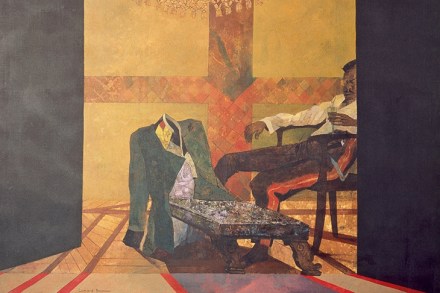
Leonard Rosoman is not a well-known artist these days. Many of us will, however, be subliminally familiar with his mural ‘Upstairs and Downstairs’ in the Grand Café at the Royal Academy, painted in 1986 when the artist was in his early seventies. Two worlds are portrayed with a degree of satire — dressy guests arriving for the private view of the Summer Exhibition and below, in sober grisaille, Royal Academy Schools students engaged on life drawing. ‘Upstairs and Downstairs’s wit and perspectival acuity notwithstanding, its status as a mural makes it easy to overlook, an extended splash of colour behind the Café’s lunch counter. Leonard Rosoman is worth rediscovering. He

In from the cold | 1 March 2018

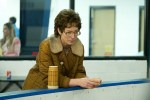
Films about the Winter Olympics don’t grow on conifers. Twenty-five years ago there was Cool Runnings about the Jamaican bobsleigh team. It took many years for Eddie the Eagle to reach the screen. Both were cockle-warming comedies about implausible Olympians who embody the ideal that participation is all. Only last week Elise Christie, the British speed skater who kept tumbling in Pyeongchang (and Sochi), hoped that ‘Reese Witherspoon’ would play her in the movie. In the mean time, the latest Olympiad has flushed out two more biopics on ice. I, Tonya tells of Tonya Harding’s catastrophic career. Like Monica Lewinsky, Harding is a public figure whose epitaph, thanks to a

Tapestry of war

It feels like a long time since the launch of Home Front on Radio 4 back in June 2014, retracing day-by-day events of 100 years ago as Britain went to war. It is a long time. Yet still the violence in Europe rages on while back home the families of the men and boys in trenches carry on as normal, putting on plays at the local theatre, selling toys, running art classes, working the trams. A new season (number 13, with two more to go before the series ends on 9 November) starts up again on Monday. It may be an everyday story, says its editor, Jessica Dromgoole, but it’s

O tempora! O mores!

Most of the history I know and remember comes from my inspirational prep school teacher Mr Bradshaw. History was taught so much better in those days. It was all kings and queens, battles and dates, with no room for any of that nonsense like,‘Imagine you are a suffragette going to protest the oppressive male hegemony at the races. Describe how it feels to be crushed by the king’s horse.’ Nor was there any question that you were participating in some kind of collaborative learning experience. Your ‘master’ taught; you listened and learned — and occasionally made distracting jokes and got bits of chalk chucked at you. That was the deal

Queen of flamenco

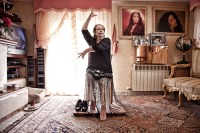
A frail old woman sits alone on a chair on a darkened stage. There are flowers in her hair. She closes her eyes and the small, wrinkled hands begin to clap. The rhythm seems simple at first but her feet take up the beat, deconstructing it, multiplying it, embroidering it into fresh miracles of speed and precision. The packed house holds its breath until the rattling feet gradually dwindle to the gentlest percussive purr then stamp to a halt. A fresh explosion of sound — from the other side of the footlights this time — as Sadler’s Wells rises to its feet to welcome back La Chana (‘the wise one’),