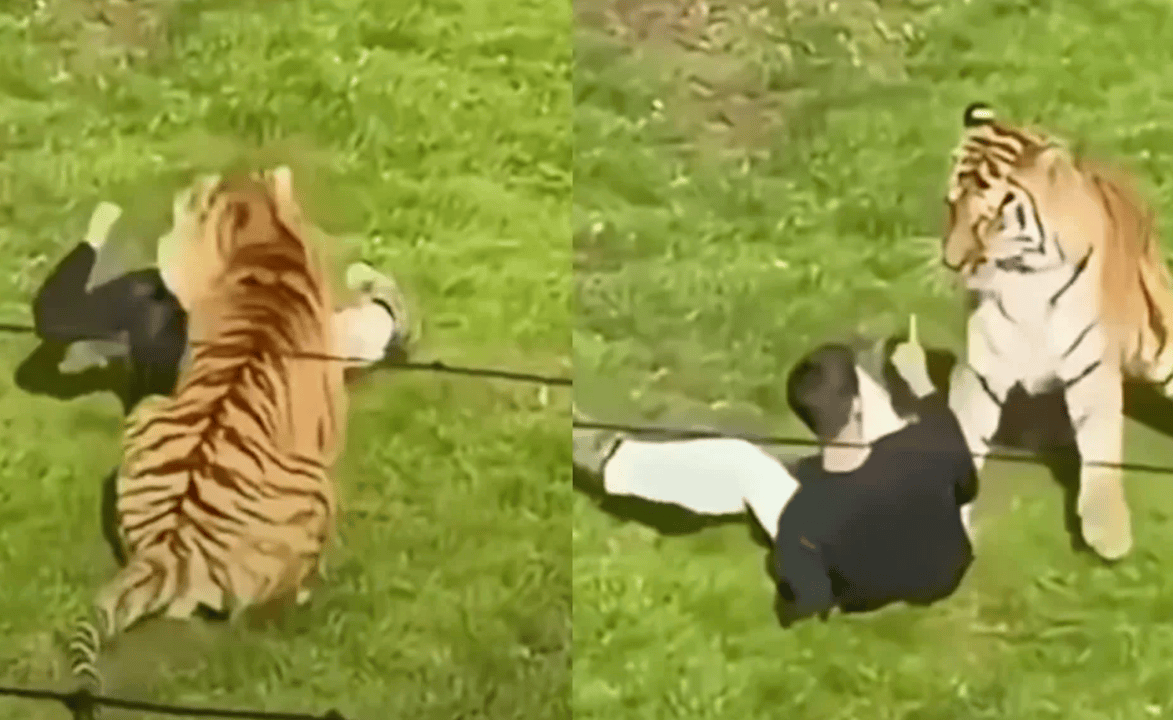
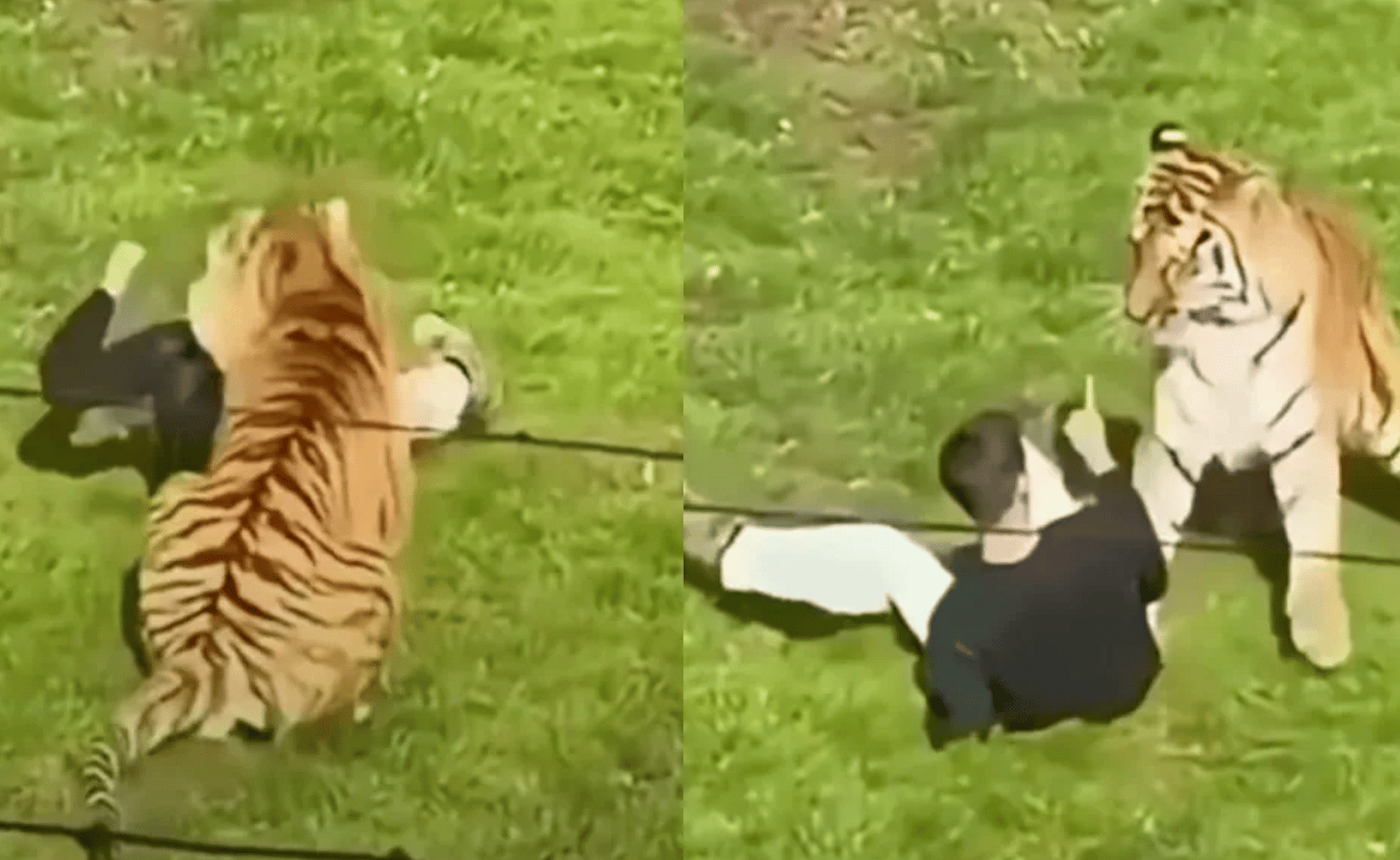
If a predatory animal attacks a harmless human, do we root for the animal or the human? Not everyone holds that answer to be self-evident, as witnessed in the discourse around last weekend’s Yorkshire Wildlife Park tragedy in the United Kingdom.
Details remain scarce about the delusional young man who vaulted into the enclosure with a Siberian tiger and was swiftly mauled to death. Whoever he was, the internet has declared the gene pool well rid of him.
By all accounts, the horrific scene unfolded too fast for park rangers on site to make a life-saving intervention. In the haze of early reports, some people (including myself) mistakenly thought there may have been an opportunity missed to intervene with a real gun.
The savage glee this young man’s death has kindled is worthy of the gladiatorial games
But it soon became clear that, as far as the internet was concerned, all this was beside the point. The beautiful tiger was more valuable than the stupid man, and RIP the X mentions of anyone, like me, who dared to suggest otherwise.
When evolutionary biologist Colin Wright took a poll of reactions to the hypothetical where a clean shot at the tiger was available, results after about 18,000 votes were 47.4 percent for “Shoot tiger. Save person,” 52.6 percent for “Don’t shoot. Person dies.” In my own mentions alone, multiple people suggested a third option: “Shoot person.”
No specific diagnosis has been disclosed for the young man, but the disturbing footage of his final moments is enough to make it clear that he was not functioning normally. His body tics have the classic stilted quality of people on the autism spectrum, as do the witness accounts of him obliviously dancing to music in his headphones. In the available images, he does not try to stand up and run from danger. Instead, he makes hand gestures for “bad” or “naughty,” apparently under the innocent assumption that the tiger will back off. Witnesses have further reported that he was initially on all fours, appearing to make some kind of obeisance to the tiger as he sought its attention. To say that he was out of touch with the reality of his situation is an understatement.

We like to assume that in an enlightened western society such an unfortunate soul would inspire compassion. But the savage glee this young man’s death has kindled, worthy of the gladiatorial games of old, only confirms Louise Perry’s ominous assessment that we are, in fact, “repaganizing.”
A sickly horseshoe effect has emerged here as the misanthropic left link arms with the eugenicist right – or, in the case of Richard Hanania, merged together in the form one inexplicably popular pundit.
Hanania explained that the sort of “below average human” who would jump into a tiger’s cage “is likely a burden on fellow humans in other contexts, and one could even argue that their value is negative.” In a world of 8.3 billion humans and 6,000 tigers, why would a rational man not pick the tiger?
One anon informed me that he finally understood my “messed up anthropocentric views” when he clicked on my bio and saw “Christian” there. In fact, non-Christians like Colin Wright, Sarah Haider and others share my take, and could make a case that there’s nothing distinctly Christian about it. Yet we increasingly live in an age where people can at least reasonably guess one’s Christianity by one’s anthropocentrism, as applied consistently to the unborn, the elderly infirm or the otherwise damaged or “useless” members of society.
As the question of our relative value in the great chain of being has hung over animal rights debates in the past, so it now hovers over the discourse around AI personhood and rights. The fact that Large Language Models can respond to our prompts with a fluent mimicry of human intelligence and usefulness – that is, that they mimic us at our own perceived peak value to society – is presented as evidence that their worth might approach human worth. But this reveals a fatally flawed understanding of where our worth actually lies. It proceeds by the same logic that leads people to rate an attractive, rare or intelligent animal’s life above the life of a “defective” human.
Those who bay for the blood of such humans are confident in their own independence and usefulness to society. But we are all of us one freak accident or devastating illness away from finding ourselves entirely useless, freefalling into a state of complete dependence. What manner of world will be waiting to catch us?




Comments