
The past year has turned out to be the most important of Donald Trump’s political life. It loosened the ties that had constrained his character – and Trump’s character is the key to his political project.
There is no sillier exercise than trying to sum Trump up in ideological terms – calling him a conservative, say, or a fascist. Whatever you think conservatism is, it does not involve using the South Lawn of the White House for mixed-martial-arts fights, as Trump did in June. As for fascism, none of the conditions that made it possible a century ago exist today: there is no rising communist movement, no large pool of recently demobilized soldiers, no military humiliation, no manufacturing sector organized on military lines. Even if there were, fascism is an ideology, and Trump is a man without an ideological bone in his body.
Others sum up Trump as a liar. That sounds like the wrong description for a man who has been, willy-nilly, the most transparent person ever to occupy the White House, less a chief executive than a national analysand, musing aloud about everything from his own popularity to his daughter’s physical attractiveness. But we’re getting close!
Trump is a man without an ideological bone in his body
Understanding Trump properly requires taking seriously his self-description as a dealmaker. To most of us, that’s not saying much. We all “make deals” from time to time – when we buy a car, for instance, or rent an apartment. But for Trump, dealmaking is an identity. “Deals are my art form,” he said in his ghostwritten 1987 autobiography. “Other people paint beautifully or write poetry. I like making deals, preferably big deals. That’s how I get my kicks.” That’s interesting, because a special rule applies when you are dealmaking that applies in no other walk of life except poker: you are allowed to bluff. The salesman tells you that a lady has her eye on the car you seem to want, and she’ll be coming by in 20 minutes to snap it up. You tell him the car smells like it is leaking oil. Neither is true. That’s OK. It’s a game.
It is a game that must be played by presidents sometimes. But not all the time. All presidents in living memory, whatever their ideology, have taken pains to show Americans what they “stand for.” Not Trump! That pins you down! He has a point. Woodrow Wilson revealed too much of what he so desperately wanted at Versailles and got rolled by Georges Clemenceau, then the French prime minister. Clemenceau saw that, in exchange for agreeing to Wilson’s League of Nations, he could get Wilson to accept draconian reparations payments from Germany to France. We may owe Adolf Hitler and World War Two to the pair of them.
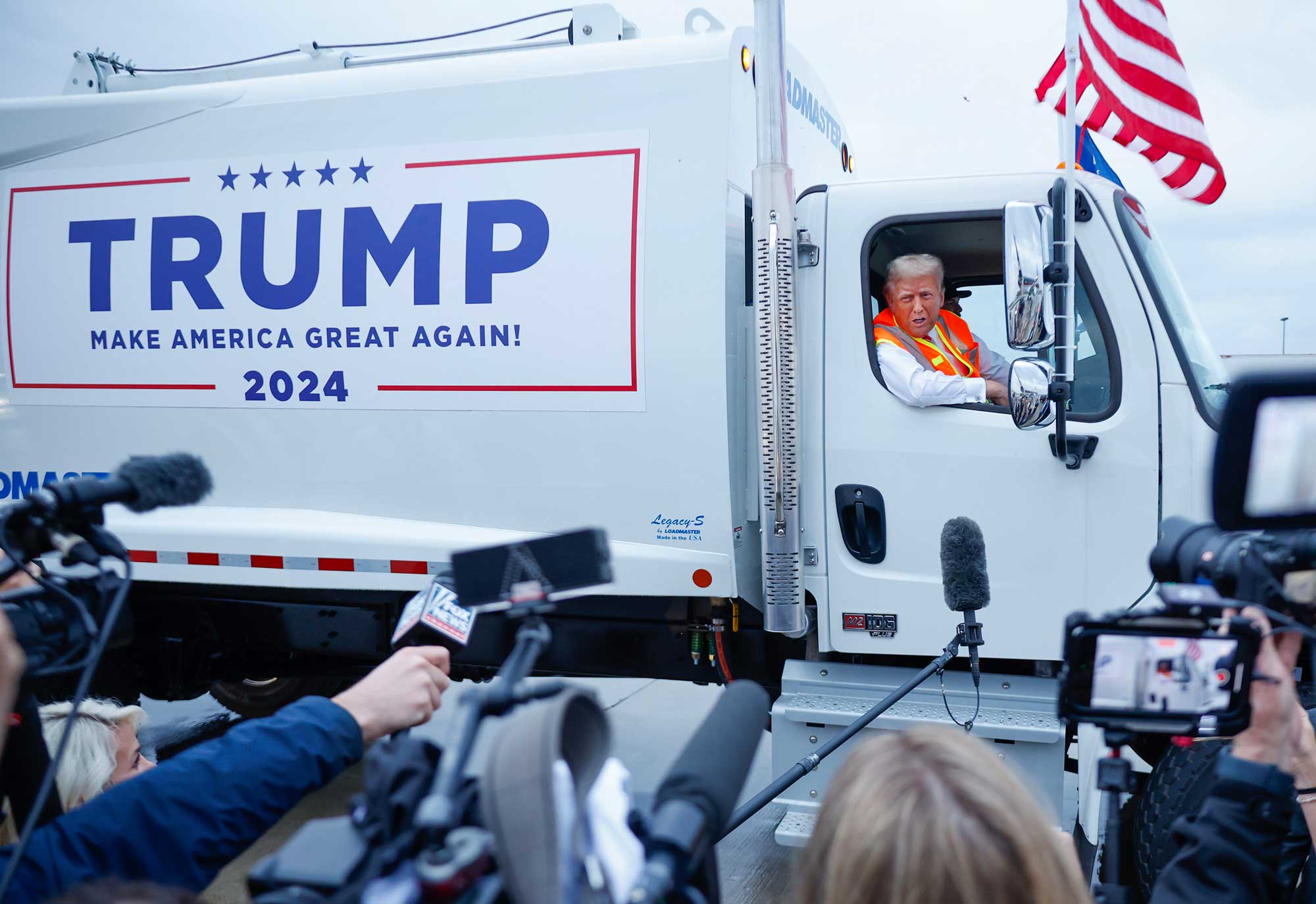
Trump stuns the people he’s dealing with by staging surprises – like tweeting images of himself as Jesus. Trump confuses others by sending contradictory messages – such as his ambassador’s late-September announcement that he wanted to sell arms to China. There is an attempt to maintain a baseline irrationality that comes in handy in the world Trump rose out of. It makes it harder to prove motive, should one’s business dealings drift to the wrong side of the law.
But running a government is different from being a slumlord or a car salesman. In a democracy there is another party that must eventually be brought into the discussion – the voting public, who have a limited tolerance for being misled. In a democracy, the important thing is the deal – not the dealmaker’s “kicks.” And in a democracy, as in business at the highest level, negotiations are meant to draw the negotiating parties into a narrowing channel of clear mutual obligation. Trump can’t do that. He needs wiggle room. His projects must remain vague and inconsequential. That’s why he never did succeed in business at the highest level. He has been most successful where there are powerful unwritten rules that one can turn a profit by reneging on.
The cruel truth is that Trump’s voters found these skills attractive at some level – and they were right to. They found themselves trapped in a permanent regulatory battle with the state in which the rules had been negotiated behind their back: human-rights directives that “required” an open border, no matter what the public voted; definitions of discrimination that required advancing minorities over whites and women over men… these were matters that government lawyers had spent 60 years litigating and on which no individual citizen could ever outwit them, even if the citizen was in the right. By the time Covid and the George Floyd riots were done, government seemed adversarial, not representative. Bargaining with the system was a fool’s errand.
In the four years between the Capitol riot of January 6, 2021 and a second inauguration at which America’s tech and finance barons paid him fealty, Trump fought back calumny and prosecution and snatched victory from the jaws of defeat. For most of last year he governed with stunning efficiency, if frequently questionable judgment, so that by that autumn, his policy victories were significant: a closed border! No Woke! An end to transgenderism! The eventual success of the revolution he had championed since 2015 was coming into view.
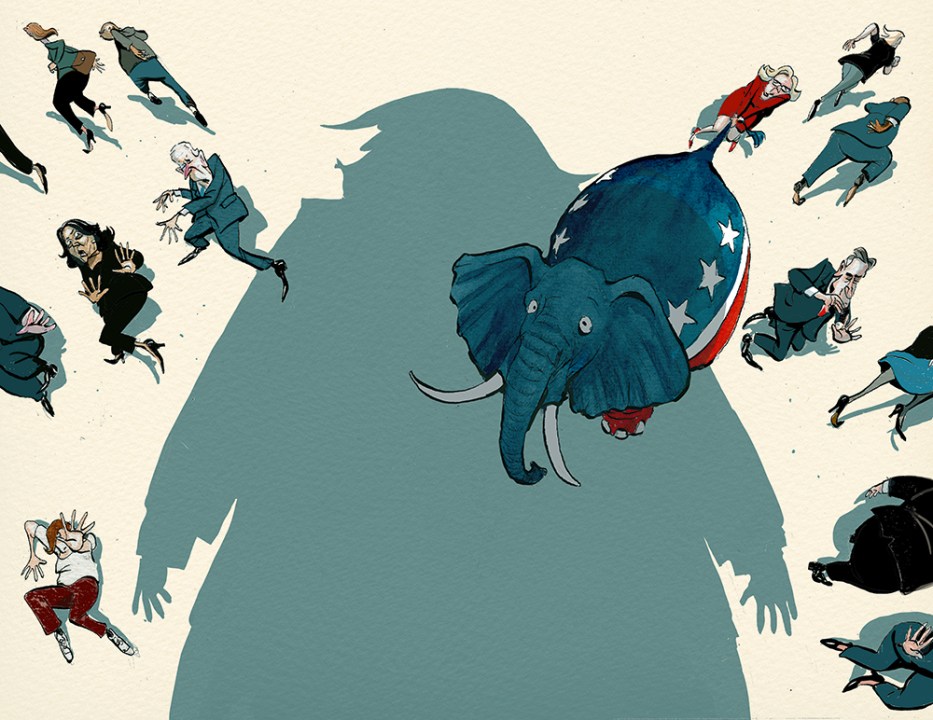
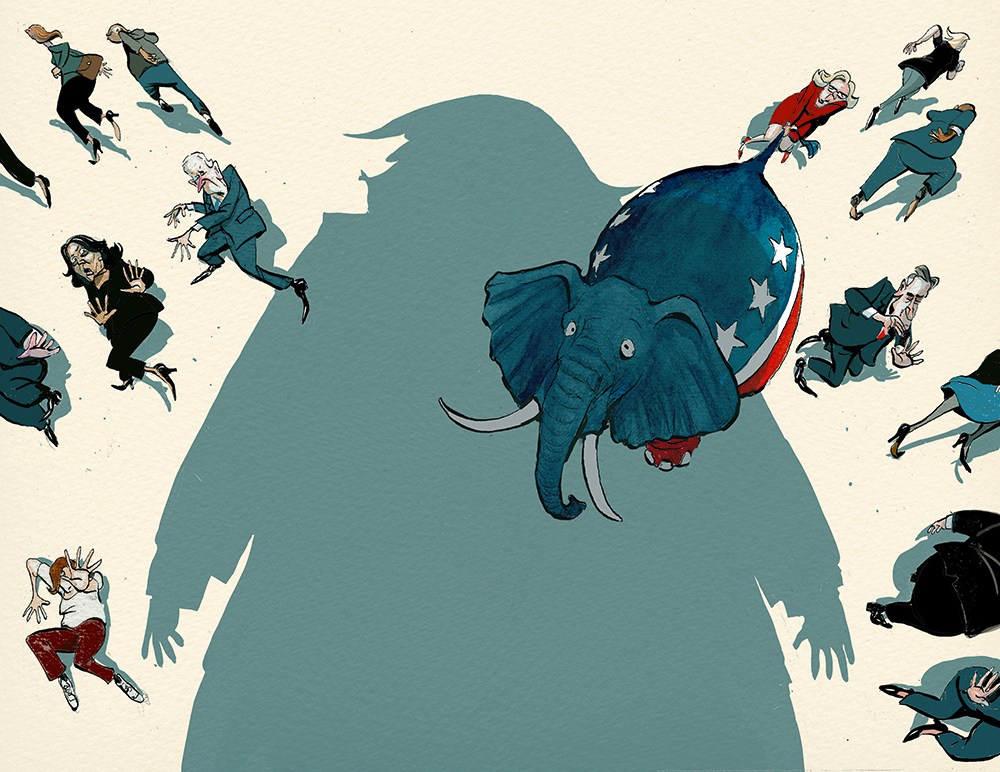
But something happened to addle Trump between the murder of his longtime protégé Charlie Kirk (which left him devastated) and the murder of his longtime nemesis Rob Reiner (which left him exultant). Suckered into attacking Iran on February 28, Trump essentially lost the country, much of his own movement included. He will lose more. The Trumpian project has reached its limits. In contrast to his first term, which was craftily undermined by his Washington adversaries, Trump’s second term has been carelessly destroyed by his own flawed character. Probably it could not have been otherwise. But it is easy to see the outlines of what a successful revolution might have looked like. It will forever shadow the revolution Trump squandered.




Comments