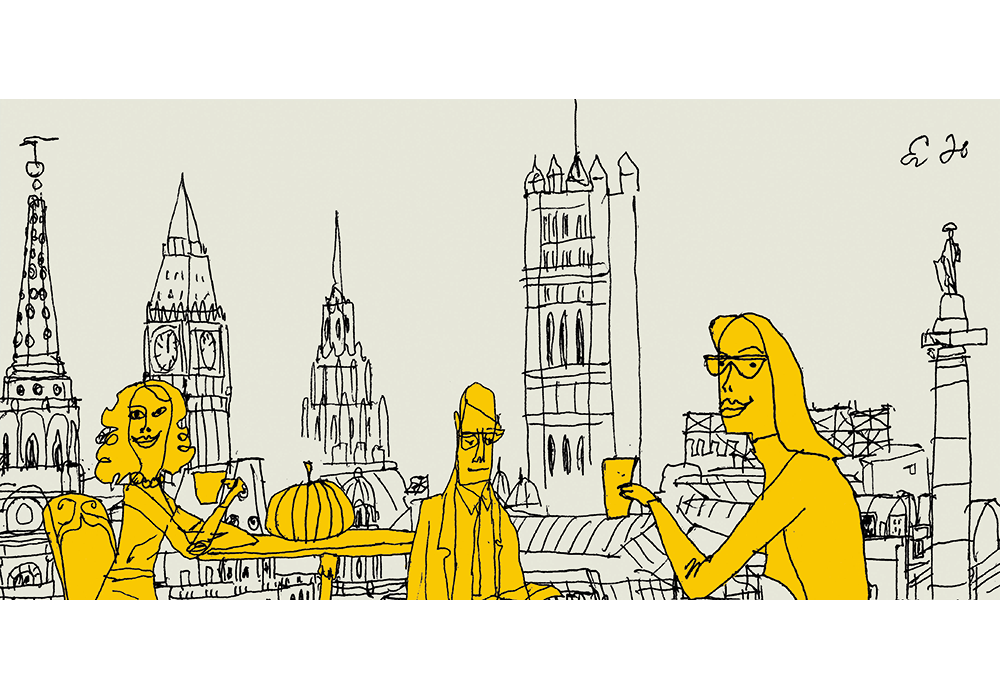


“Excuse me,” I said to the girl in the coffee bar on the Strand. “Do you have anything with pumpkin spice?” The signboard over the espresso machine was noticeably pumpkin free, though autumn was betokened both by the calendar and – come to think of it – the sudden coolness in the air. “I’m on a mission,” I added quickly, to save face.
“Sorry, no,” she said with thinly veiled contempt and added brightly, waving me out the door, “Starbucks is just across the road!”
I slunk out, chastised. But I didn’t go to Starbucks – not yet. Rumor had it the PSL, having turned the North American continent a seasonal orange, was flooding London, and it had fallen to me to find out the truth.
Where I come from, the season of mists and milky pumpkin-ness was ushered in weeks ago
I was determined to find something du terroir, something that would count as authentically English. I resorted to Google and found that pumpkin spice hot chocolate was available nearby at one Caffè Concerto. If not a very British-sounding name, at least it probably wasn’t American.
“It’s a five- to seven-minute wait for a table,” the waiter told me severely when I arrived in the crowded café.
“But could I get takeaway?”
“It’s still a five- to seven-minute wait,” he said, refusing to compromise. “What do you want?” I asked whether he had anything with pumpkin spice.
He grimaced, shaking his head. “It’s more of a winter flavor,” he said, reluctantly. “I don’t think… no, no.”
“You don’t have it?” I pressed, trying to see past him to where the menu hung above the coffee bar.
“No,” he said, in a tone of voice that made me wonder if selling off-season pumpkin spice went against his moral code.

Where I come from, on the left side of the pond (or the right, depending on your point of view), the season of mists and milky pumpkin-ness was ushered in weeks ago. On August 25, a date awaited for months by legions of fans, PSL season opened officially at Starbucks, making the annual spiced latte available once again, but also debuting such horrors as the Iced Pumpkin Cream Matcha and the Pumpkin Spice Frappuccino Blended Beverage. Anthony Bourdain once asked in sheer disbelief: “Is there some vast demographic of pumpkin-crazed people hanging outside of… [the pumpkin outlet], like a methadone clinic, waiting for it to open up so they can get their pumpkin spice?” The answer, Anthony, should have been yes. In North America, that’s exactly what there is.
They say Hildegard von Bingen, the German Benedictine abbess, invented pumpkin spice. But it doesn’t seem right to blame such a holy lady for the tidal bore of lattes, cold brews, soy candles, chunky knits, cute mugs, fuzzy slippers and assorted microfiber blankets clogging up the universe in the name of pumpkin spice. (I bet if you went through the Great Pacific Garbage patch with a fine-tooth comb, at least 40 percent of it would be pumpkin-spice related.)
Indeed, Hildegard never brought pumpkin into the equation. “Take some nutmeg and an equal weight of cinnamon and a bit of cloves and pulverize them,” she wrote in her 12th-century book on medicine, Physica. “Then make small cakes with this and fine whole wheat flour, and water. Eat them often.” The cakes, she promised, would “make your soul joyful” and diminish “all harmful humors.”
Starbucks introduced the pumpkin connotations. And that was all they were – connotations, nothing more. The original pumpkin spice lattes had no pumpkin in them at all. For 12 years they were sold this way, until finally pumpkin was added to the recipe in 2015. The name was just a mind-game anyway, intended to make a gullible audience think of pumpkin pie, fall flavors and coziness. It’s the perfect marketing device: don’t sell a product, sell a feeling, a mood, a season.
But does pumpkin work on British people? Does it make them think of colorful fall leaves, plaid work jackets and retro music playing on speakers in the garage as they put away the flowerpots for another season? Or does it make them think dark thoughts about beets and zucchini, all very well in their own way but not wanted in a dessert?
It’s the perfect marketing device: don’t sell a product, sella feeling, a mood, a season
One suspects the latter. But perhaps, given a few more years, they’ll get on to it. Britain came to terms with tomatoes and potatoes after all, brought back from faraway parts by intrepid explorers. When I stood at the Victoria Monument in front of Buckingham Palace, it was easy to picture colonial emissaries arriving from the Spice Islands with great shipments of pumpkin spice to deliver as tribute.
There are, in fact, pumpkin spice lattes in London, though not ubiquitous as they are in North America (where no self-respecting coffee shop could allow itself to skip the flavoring in the fall.)
The first London PSL I tracked down was at Ole & Steen, and it was really quite nice: much less sweet than the North American version, with a smoky, chocolatey finish. Pumpkin was in the name but, that said, I’d be surprised to learn that the ingredients list had even a nodding acquaintance with the squash.
The same went for the version I found at Pret a Manger. It was sweet and faintly tea-like in flavor, a bit like a London Fog. But try as I might, I couldn’t taste so much as a hint of pumpkin in it.
Finally, I gave in and visited a London Starbucks, to see if the pumpkin spice really was the same on both sides of the Atlantic.
And guess what? It was nothing like our North American pumpkin spice latte. Like the others, it was less sweet and tasted of dark cocoa. Again, it didn’t seem to be marred by the presence of any actual pumpkin. Starbucks isn’t selling a product, after all; it’s selling a mood.
I wandered through a light rain past St. Paul’s Cathedral, sipping on my newly acquired mood and reflecting luxuriously on the life and times of Sir Christopher Wren. It was delightful.





Comments