United kingdom

Class clowns: the triumph of inanity over British academia

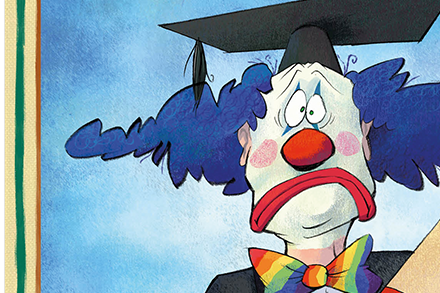
Daniel Defoe observed that plague victims “never perceiv’d that they were infected” until they discovered the “tokens” on their skin. By that point, “nothing could follow but certain Death”. Something similar might be said of Britain’s universities. In recent days, the Jason Arday affair has captured the world’s attention because of its absurdity. But the humiliation of Cambridge is not an early sign of infection. It is just a particularly visible bubo. At one level, Arday’s fall reveals how, even in the most elite universities, DEI (diversity, equity and inclusion) dogma has warped intellectual standards to the point of madness.

academia

What ‘London-style’ pizzerias could learn from America

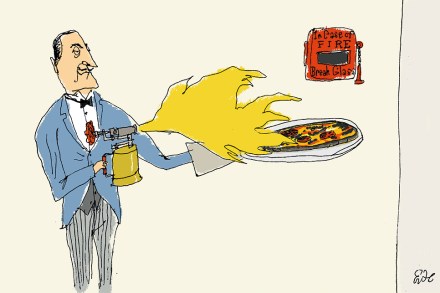
“London-style pizza.” People think there is such a thing. Somewhere over the past three years, the pizza hype in Britain’s capital city has gotten out of control. Our economy is struggling and chefs have turned to the food that literally nobody dislikes. Loads of new places have opened: we’ve had Vincenzo’s, Carmy’s, Breadstall, Gracy’s, Lenny’s, Dough Hands, etc. Can’t you tell they’re all incredibly different? All of them really (although they would quibble) have been putting out the exact same style of pizza. The problem is: what do you call it? It’s hard to describe. Critics say it’s “burnt.” There’s some truth to that.

london-style pizzerias

‘He’s either the Messiah – or the Antichrist’: on the campaign trail with Nigel Farage

“We love you, Nigel!” In Clacton-on-Sea, there is little sign that the Reform leader’s star has waned. Campaigning with Nigel Farage here is a burst of cackles, quips, nicotine and selfies: a march through sun-kissed streets with a cast of canvassers, aides and minders. A child clasping a teddy bear dances around, a Reform rosette pinned to her top; a groaning assistant clutches two dozen poster boards. On the doors in Seawick there is near-universal support, with variations on the theme which Farage has made his campaign slogan: “I’m with Nigel.” In the middle of silly season, Clacton is hosting one of Britain’s most bizarre by-elections.

nigel farage
rod

Rod had one great regret

In 2019, I had to explain to Iain Dale – live on LBC – that Rod Liddle’s suggestion in his Spectator column that elections should be held on Islamic holy days to deter Muslims from voting was not a serious proposal. Neither was his idea that students be drugged by their parents to the same end. It was humor, and they were jokes. When he was in hospital a few weeks ago, I visited Rod with some cake. While he munched away, he expressed a sense of regret that he could have been a great writer. Rod always thought his true calling was writing fiction, rather than journalism, and always wondered if he’d sold his soul by following the money. He was right – he did have the makings of a British Houellebecq.

Why progressives were desperate to believe Jason Arday

The Jason Arday affair has been a great revealer. On the one hand, it is a glorious romp that has brought much-needed mirth to Britain. On the other, the exposure of Professor Arday isn’t really about the guileless Arday himself, but the establishment that elevated him. It has served up a moment of unavoidable clarity in which the nonsense of progressivism stands exposed like the imperial scrotum. Arday himself can hardly be blamed for this scandal. Like Puff the magic dragon, he is notable only for the effect he had on others It is a perfect storm. We have a fantasist in an environment where, for political and social status reasons, everyone takes his claims at face value, or pretends that they do because to express doubt would be to invite unwanted attention.

jason arday

The problem with the Ann Widdecombe suspect’s ‘fair trial’

It’s hard to hold anyone responsible for anything today in British politics. That’s because no sooner have the facts emerged than everybody in Westminster has played another game of musical chairs. If the word “amusing” can be used in the same paragraph as “attempted beheading” allow me one amusing example. In June, a 30-year-old asylum seeker from Sudan allegedly attempted to behead a local man on the streets of Belfast. It was apparently caught on video. Everyone was geared up to make their points. The left was preparing to argue “So you’re saying all asylum seekers are beheaders, are you?” while the right was gearing up to say: “We must hold people accountable.

ann widdecombe

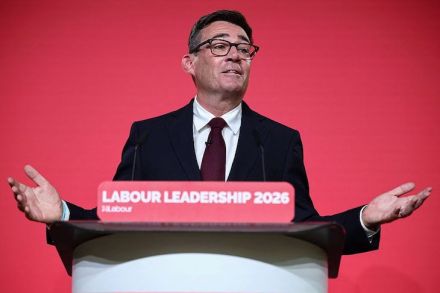
Andy Burnham’s centrist act isn’t fooling anyone

When Ed Miliband and Shabana Mahmood arrived in Downing Street on July 20, the image of political rivals arm in arm symbolized a new government of differing views taking shape. It might have been more awkward. As they neared the door of No. 10 and the waiting television cameras, Miliband turned to Mahmood and asked: “Should we turn around for a photo together?” Mahmood gave the idea short shrift: “We’re not getting married, Ed!” But in a sense, Labour is seeking a new relationship with the British public – and everyone around Andy Burnham is alive to the importance of images, symbols and vibes. As Wes Streeting, the new Defense Secretary, put it in cabinet the next day: “We have a second chance to make a first impression with the voters.

burnham
therapy speak

Therapy speak is turning us into sissies

As one who’s always been keen on putting their hand up and admitting to their faults (a perverse form of boasting, I suspect) I was always suspicious of the medicalization of character flaws which apparently render us helpless in the clammy hands of Fortuna. It was bad enough when friends who’d generally always seemed highly capable jumped on the ADHD bus in later life, suddenly flinching at loud noises when they’d spent a good deal of their lives dancing to ear-splitting techno.

Is Ed Miliband preparing to take on Donald Trump?

Just one day after Ed Miliband was made UK Foreign Secretary we heard in the Telegraph that the White House is upset about the appointment, and even warned against it. Donald Trump is apparently unimpressed by Miliband’s role in blocking North Sea oil drilling. Miliband has also railed against Trump in the past, calling him a “racist, misogynistic self-confessed groper” on the BBC’s World at One in 2016, as an example – but in fairness his predecessor David Lammy called Trump “beneath contempt” before he became foreign secretary. Trump can forgive and forget – so long as his interlocutor is willing to forget their own pride. Miliband could bend the knee, but there is also some appetite to confront Trump.

ed miliband

Andy Burnham’s good vibes just won’t cut it

Andy Burnham became Britain's Prime Minister today – the seventh leader of the country in the last decade. It is a case of all hail the new messiah, who promises to build “a new politics” (the eternal empty vow of every politician when taking power), but this time with a shiny new twist. Burnham, who oozes a desperate desire to be liked, will lead a government focused on good vibes and the fantasy of a mythical Labour paradise lost, rather than anything grounded in the harsh political realities of today. His approach to power boils down to trusting his instincts (those vibes, again), based on the delusion that he has a special connection with ordinary voters.

united kingdom

Could Gibraltar fall to Spain?

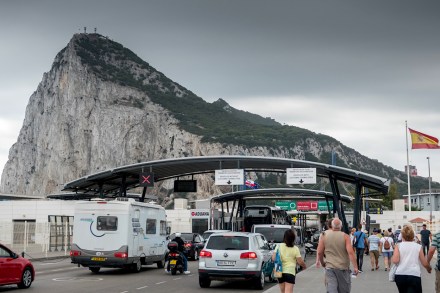
Key parts of the post-Brexit treaty that provides for a fluid border between Gibraltar and Spain will come into provisional effect today. Running to over a thousand pages, the treaty took far longer to negotiate than the entire Brexit Withdrawal Agreement. It has still to be ratified by the House of Commons and the EU parliament. The treaty effectively makes Gibraltar part of the EU’s passport-free Schengen area. Both Spain and Gibraltar were anxious to avoid long waits at the border: the 15,000 Spaniards who cross every day are half of Gibraltar’s work force and they are also an estimated 25 percent of the wage earners in the adjacent region – one of the poorest parts of Spain.

gibraltar

Fact check: Rupert Lowe on Joe Rogan

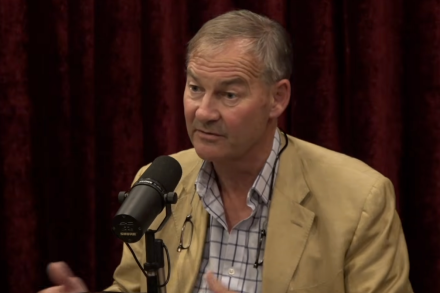
The American right has developed a morbid fascination with Britain over the past two years, particularly after Elon Musk began tweeting about grooming gangs. Some European influencers have found it lucrative to present Britain and parts of the continent as having "fallen," posting videos of crimes by immigrants and appearing on American podcast networks as weary ambassadors from broken countries to warn: "It could happen here." Yesterday The Joe Rogan Experience podcast released a two-hour interview with Rupert Lowe, leader of Britain's Restore party. Was Lowe there merely to create content – or is Restore a serious political party? Some of his statements suggest it’s the former rather than the latter. https://www.youtube.com/watch?

rupert lowe

Andy Burnham is Britain’s Biden

Watching Andy Burnham in Manchester, dressed in his T-shirt and jacket and pronouncing the return of a more old-fashioned, pro-worker left, I had a sense of déjà vu. I had seen this movie before, but with different accents. For the politician Burnham obviously resembles is not British at all – it is Joe Biden. Just like Biden, Andy Burnham’s self-image is based on the idea that those on the left are the tribunes of ordinary working people, not progressive elites. Like Joe Biden, Andy Burnham is a provincial throwback to an earlier time, just from the North West, not the Midwest. Just like Biden, Burnham rails against the "neoliberal" changes of the 1980s, which he blames for the economic problems of today.

andy burnham

Will the ‘anti-Trump playbook’ work in Britain?

Commentators were so busy fulminating against Trump’s FIFA shenanigans yesterday they mostly missed his intervention in the big story now roiling British politics. "They’re Running the 2024 Anti-Trump Playbook on Nigel Farage," the President posted on Truth Social, linking to an article on the National Pulse, an American media site founded by Farage’s old mucker Raheem Kassam. The point, now being repeated by Reform’s talking heads on TV, is clear. "They" – the SW1 elite – are trying to stop Nigel Farage, just as the Washington establishment mounted a ridiculously elaborate lawfare campaign to try to stop Donald Trump.

Britain’s National Health Service believes in fairness – they treat everyone with equal contempt

Edward Gibbon was troubled by a swelling in his lower abdomen. I have the same condition. “Wow. That’s huge,” said my GP as he gazed at the affected area. “Huge?” I said, trying to sound nonchalant. “I wouldn’t know. It’s the only one I’ve ever seen.” My cyst has been expanding steadily for decades and I was told a few years ago that its intentions were peaceful. My new GP was trying to scare me, obviously. I don’t blame him. It’s dull work staring at sick bodies all day and he was trying to amuse himself with a spot of scaremongering. “You’ll need a scan within two weeks,” he added. “Cancerous perhaps?” I asked. He nodded with a sly grin.

national health service
politics

The death of British two-party politics has been greatly exaggerated

Every twist in the winding road of Britain's politics brings a latest thing to say. These wisdoms usually survive a season or two before succumbing to the new thing to say, which often asserts the opposite. This summer we have “Britain is moving into an era of multiparty politics.” Allow me, therefore, to leap ahead with my candidate for its successor: “Reports of the death of two-party politics are greatly exaggerated.” I don’t say our current governing party and principal opposition must always be the two parties in question. Labour may be dying. The Tories may be showing signs of life. In both cases I fervently hope so. But whether or not these remain our two options in elections to come, the tendency will always be for the choice to boil down to two.

andy burnham

Even Andy Burnham doesn’t know what Andy Burnham stands for

The British constitution is an admirably flexible thing, so I would not claim that Andy Burnham’s leadership campaign, and the coverage thereof, is unconstitutional, but it is certainly unseemly. Why did a BBC helicopter follow his train from Manchester to London (which arrived, of course, late) as if he were Lenin heading for the Finland Station? And why was he allowed to preempt his result with a mass selfie with about 200 of his supporting MPs in Westminster Hall? He is merely a new Member of Parliament, until he isn’t. Turning the place into his stage set is a way of intimidating possible challengers. If he is challenged, he will surely still become leader, but the point of a challenge is to force him to say what he means to do.

The Brexit decade: was it worth it?

It may not feel or sound like it but Keir Starmer is a born-again Brexiteer. His achievements in office may be nugatory, his search for a legacy tragicomic, but there are countless actions this government boasts of which simply would not have been possible if we had stayed in the EU. Earlier this year, Labour moved to protect our steel industry with a tariff package possible only because we have an independent trade policy. I was delighted this month when the minister in the Lords made it clear this was a Brexit benefit. Those same Brexit freedoms allowed the Chancellor last month to cut tariffs on more than 100 foodstuffs to ease the cost-of-living crisis.

brexit
burnham

Can Burnham resist the siren call of the left?

Power, when it is gained and lost, is transferred in stages: the actual, the visual and the constitutional. The latter took place on June 23 when the prime minister presumptive sent a letter to Antonia Romeo, the Cabinet Secretary, requesting that she commence access talks with his team. Keir Starmer had already given permission for them to proceed, but the propriety and ethics team in the Cabinet Office had told Romeo she could not initiate proceedings. Andy Burnham had to ask first. To all intents and purposes, he is already the vessel from which power flows. At the same time, it became clear that James Purnell, the former Blairite cabinet minister, will lead the transition team and stay on to become chief of staff in 10 Downing Street.

What Britain taught us

Being in Britain around the Fourth of July is always an odd experience for an American. It was especially awkward to be at the Alliance for Responsible Citizenship in London a week before the 250th anniversary of US independence. ARC is a British organization whose massive annual conference – about 4,000 people this year – is styled as a kind of counter-Davos, an international gathering of center-right types including a heavy representation of Americans. Given the timing, various speeches by gracious British hosts praising their American guests’ homeland – and by Americans themselves praising the principles of their revolution against the British two and a half centuries ago – were to be expected. But that didn’t diminish the cognitive dissonance.