Katherine Dee

Katherine Dee

How we all become numb

These nights, sleep won’t take me. Thirty-one weeks pregnant, I’m too big to ever be comfortable. I toss; I turn; I move to the guest room in the vain hope that having a bed to myself might offer some reprieve from the fact my bones can no longer support my weight. Some time around 3 or 4 a.m., I give up and open TikTok, where the algorithm offers its nightly liturgy of dread. “If you’re seeing this, it’s meant for you,” a woman in her car, voice low, telling me to install a Ring doorbell because somebody could be casing my house. I live in Chicago, and someone just stole my neighbor’s catalytic converter. It’s plausible, I think.

numb assassination

Fighting technology is futile

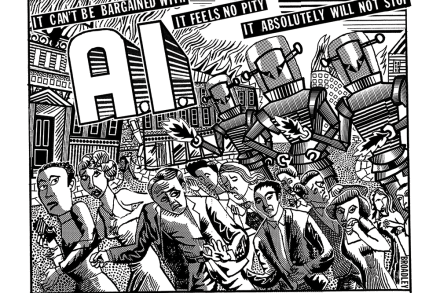
A 20-year-old from Spring, Texas, named Daniel Alejandro Moreno-Gama has been charged with attempted murder after he was accused of throwing a Molotov cocktail at the gate of Sam Altman’s San Francisco home on April 10. He then allegedly walked toward OpenAI’s Mission Bay headquarters and told employees he intended to burn the building down as well. He was reportedly carrying a manifesto – a “three-part series,” according to Fox News – that included a list of other AI executives and investors and their home addresses and documents discussing potential risks that AI poses to humanity, with a section titled: “Some more words on the matter of our impending extinction.

technology

The arrogance of the tech-skeptics

If you’ve been paying attention to social media lately, then you already know the score: smartphones are corrupting our children, we need legal intervention immediately. Roughly half of US states have enacted some form of age-gating for social media or pornographic content. Australia banned under-16s from social media platforms outright, France and Indonesia followed suit and the United Kingdom is now asking people for their papers to read moderately offensive blog posts. You don’t need me to rehash this. The phones have nuked the interior lives of Gen Z, Gen A and the hitherto unborn Generations B and C. Every opinion lands somewhere between “protect the children” and “this is Reefer Madness for iPads.

Why women are walking away from the New Right

Sam Adler-Bell recently published a profile in New York magazine about women who have left, or are quietly leaving, the New Right. Alex Kaschuta, an influential writer and former host of the podcast Subversive, publicly split with the movement after years of genuine intellectual engagement that included interviewing many of its architects, from Curtis Yarvin to Darryl Cooper. Another woman, a mother and former true believer who wrote for right-wing outlets and worked for conservative institutions, requested anonymity because she fears for the physical safety of herself and her children. Both describe a movement that once promised women a place at the table and now openly treats them, in the anonymous source’s words, as “subhuman: subrational, non-agentic, cattle.

new right

Conspiracy culture will never be satisfied

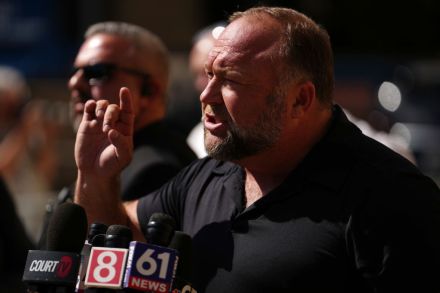
American conspiracy culture is a tradition with a long lineage, though not a simple one. It runs through the John Birch Society and Mae Brussell, through Bill Cooper and Alex Jones, into QAnon and beyond. There are other tributaries – black nationalist suspicion of COINTELPRO, evangelical end-times theology, militia movements, UFO subcultures – but one dominant current exists in every conspiracy: it speaks from below. The conspirators operate as the hidden orchestrators of surface reality. The deep state, the intelligence agencies, the Fed, the media – at worst, Jews – all sit above normal people, controlling their world. The people telling these stories understand themselves as excluded from power.

Nancy Guthrie and the gamification of crime

Nancy Guthrie had been missing for less than 48 hours when the game began. Not the investigation, which was already under way, with FBI agents crawling the Catalina Foothills and more than 30,000 tips flooding in from the public, but the thing building around her disappearance, the thing that one could generously call “journalism” in both its legacy and citizen varieties.

The new power of cryptid belief

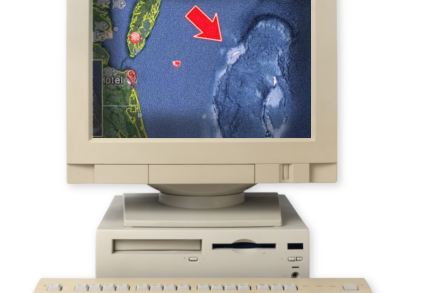
Last month, during the Arctic Blast that still has a few states trapped under ice (greetings from Illinois), someone posted an altered Google Earth screenshot to Facebook. The image displayed a snake-like shape in the Atlantic Ocean, east of Virginia. “The Leviathan is waking up,” the caption read. “This is why they are creating a FAKE snow storm and manipulating the weather so they can freeze it because of the military bases in the area.” The post gained enough traction to land on Know Your Meme, the internet’s best-kept meme encyclopedia. But it wasn’t just a meme, at least in the sense we usually mean. A lot of people earnestly believed that the biblical Leviathan was waking up from beneath the Commonwealth of Virginia.

My father gave me the internet

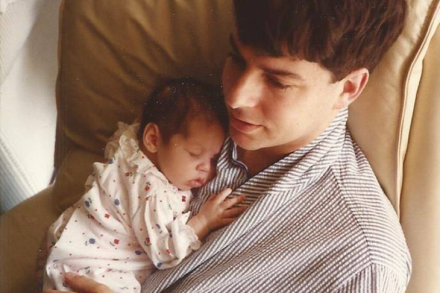
My father went into the kitchen for a cookie, then disappeared into his home office for a phone call. He was arranging a surprise for my mother – hired waitstaff for Christmas Eve dinner, one of the biggest our family would have hosted. Then he died. It took 15 seconds. We found him within minutes. The waitstaff called back 11 times over the next two days. I thought they were debt collectors. Finally, I went into his office, where we had found him, picked up his phone, and yelled, “He’s gone! Stop calling!” That’s how I learned what he’d been doing. They were trying to confirm. And in the corner of my eye, on his bookshelf: Irish Folk and Fairy Tales by W.B. Yeats.

father internet

The terrible logic of looksmaxxing

For years, I’ve had a fantasy of destroying my own life by following every piece of extreme self-improvement advice the internet offers. Not the wholesome stuff. I mean the industrial-strength protocols: starvation diets, rhinoplasty, Invisalign followed by double-jaw surgery, chemical peels that promise an entirely new layer of skin. Whatever surfaces in the algorithmic swamp. The appeal is the same as another, more respectable fantasy: the one where a doctor scans your chart, finds The Problem and hands you a pill. You swallow it and everything clicks. Your suffering had a single, nameable, diagnosable cause. The cure might give you rashes or IBS, but who cares? You finally know what’s wrong, and what’s wrong can be treated. The uncertainty is over.

looksmaxxing

Olivia Nuzzi and the return of ‘celebrity journalism’

There are two competing ideas going around about “the old days” of journalism. In one, journalism was a sober public service, safeguarded by editors and ethics, untainted by the capital-A, capital-E Attention Economy. In the other, it was a racist, sexist boys’ club we managed to leave behind – even if only briefly, for long enough to support Teen Vogue’s politics vertical. (May they rest in peace.) The current pile-on concerning celebrity reporter Olivia Nuzzi, whose ex Ryan Lizza has revealed her affair with Robert F. Kennedy Jr., leans hard on the first fantasy. Once there were newsrooms; now there are “personal brands.” Once we had Walter Cronkite and Edward R. Murrow; now there is a woman in a Lana Del Rey cosplay Mustang with 1990s porn-star brows.

olivia nuzzi

Are we becoming post-literate?

Everybody is suddenly recognizing, almost in unison, that many major of the cultural shifts in recent years were accelerated, if not explicitly caused, by Covid lockdowns. In confinement we went online and when we spent more time in cyberspace than in meatspace, our brains began to change. The most significant shift is that we have turned away from books and reading, and as a result our attention spans are collapsing. The screen is eclipsing the page. In the US, reading for pleasure has crumbled; in Britain, a third of adults no longer read books at all. The “reading revolution” that expanded consciousness in the 18th century is in retreat. But what’s emerging is not illiteracy: it’s post-literacy. We are becoming post-literate.

post-literate

What Islam can teach us about AI

In Islamic cosmology there are three orders of intelligent beings. Angels, made of light, have no choice but obedience. Humans, formed from clay, carry the burden of free will. Between them live the djinn, created from “the smokeless flame of fire.” The djinn are, in many ways, like people, but they categorically are not people – from their constitution to their morality. Like the Good Neighbors of British and Celtic tradition, the djinn exist in parallel to us. They think and decide, marry and worship, and are fallible, just as we are. The Qur’an describes some as believers and others as not: “And among us are Muslims [in submission to Allah], and among us arethe unjust.

islam

Life in Chicago with ICE and the National Guard

Every day, Chicagoans outside the immediate areas where federal forces are deploying pick up fragments of what feels like an unfolding drama. Here’s a representative example: on the app NextDoor, the Chicago subreddit and in neighborhood Facebook groups, we watch cell-phone footage from Logan Square of smoke spreading through an intersection as a federal vehicle pulls away. Eventually, local outlets verify that a masked federal agent dropped canisters outside the Rico Fresh supermarket near Funston Elementary. It appears the air was filled with a chemical irritant, causing people to panic, and the vehicle departed.

national guard

What folklore can teach us about our online lives

Irish folklore spoke of many worlds. There was the world of fields and hearths and then there were the hidden places where the non-material lived: the Sídhe mounds, the sea-realm of Manannán mac Lir, the land of youth called Tír na nÓg and, finally, the land of the dead. These worlds coexisted with ours. A woman might leave butter on the windowsill, lest the fairies sour the churn. A new mother would avoid complimenting her baby – at least, not too loudly – for fear he would be kidnapped by the Good Neighbors and replaced with a changeling. My first real boyfriend’s father blamed every family misfortune on their decision to cut down a hawthorn tree.

folklore

We are all witches now

From our UK edition

Two days before Charlie Kirk was murdered, Claire Guinan, a writer for the US women’s website Jezebel, paid witches online to hex him. When I first read Guinan’s article, my thought was that it was quintessential Jezebel: clickbait that might have interested 19-year-olds in 2011, back when witchcraft still had a frisson of feminist rebellion. She bought curses on the online marketplace Etsy from sellers like ‘Priestess Lilin’. She imagined Kirk’s socks sliding down, his blazers shrinking, his thumb growing too big to tweet. The piece was meant to be funny, a way to channel political rage into something absurd, petty and hopefully entertaining. Forty-eight hours later, Kirk was dead.

Nihilism is destroying young minds

Sandy Hook was supposed to be the tipping point in our national conversation about mass shootings. This wasn’t a shopping mall or movie theater. It wasn’t a high school. We could imagine this happening at a high school. We had seen that before. But we could not imagine anyone shooting six-year-olds. It was so monstrous that it seemed beyond the realm of possibility. Since that day, 13 years ago, the killings have continued and their settings have shifted. Earlier this month, a gunman opened fire at a Turning Point USA event, fatally shooting conservative commentator Charlie Kirk. In the past year or so, 15-year-old Natalie Rupnow killed a teacher and a fellow student in Madison, Wisconsin, before taking her own life. Solomon Henderson opened fire in a Nashville school cafeteria.

young

Robin Westman and the unstoppable tide of ‘slop violence’

On Wednesday, doing my laundry, I decided to turn on the TV for the first time in decades. Breaking news: a school shooting in Minnesota. It’s been years since a story like this made me cry. How could you cry at every mention of gun violence when you live in a place like the Midwest? I have been aware of gun violence in schools since I was a child myself. I remember first hearing about a school shooting when I was six years old. A little boy had shot his sister. I cried and cried and cried – I cried for the child that died, and I cried for the child who’d killed her. It remains one of my most traumatizing memories. The last shooting that made me cry was Sandy Hook. I was at dinner when a friend showed me Adam Lanza’s photo on his phone. Twenty first-graders dead.

robin westman

Phones are drowning out our inner lives

From our UK edition

I’m sitting in a meditation class at a yoga studio in Chicago, neon lights pulsing pink and purple while the instructor talks over a movie soundtrack. I almost can’t believe I’ve paid $30 to be here. When she runs out of scripted wisdom about mindfulness and presence, she starts ad-libbing: ‘And that doesn’t mean you shouldn’t respect yourself…’ I try to tune her out, focus on my breath, but it’s impossible. She demands our attention. I went to six classes before deciding it was a waste of time. Each week, fewer people showed up. By the sixth class, it was just me and this 40-year-old instructor. Isn’t meditation supposed to train attention through silence and stillness?

Natalie Rupnow and the blight of ‘virtual molestation’

This Monday, a fifteen-year-old named Natalie Rupnow murdered Erin M. West, a substitute teacher, and fourteen-year-old Rubi P. Vergara, a fellow student, injuring six others — two critically — at her school in Madison, Wisconsin. Before the police could intervene, Rupnow shot herself. It is not a bold prediction to say that this tragedy will not meaningfully shift our national conversation. These events blur together in the American psyche, like car crashes, their horror dulled by repetition. That Rupnow was female and younger than the median age of school shooters does not disrupt the pattern. It is — to my increasing horror, every time I write an article like this one — another story in our endless churn of violence.

natalie rupnow

Can an AI friend solve the loneliness epidemic?

Avi Schiffmann wants to create what he calls an “Ozempic for loneliness.” He believes Friend — his AI-powered chatbot and forthcoming wearable pendant — can address the loneliness epidemic. “I’m definitely motivated by curiosity more than anything,” he explains, “but also by how controversial the topic is. It’s just so culturally relevant.”  He wants to fill a void people feel they can’t fill elsewhere, and he wants to do it now, not years from now. AI companions are, in his words, a “very effective way” to counter isolation, a salve against the atomization we’ve lamented since the dawn of urbanization. Schiffmann reached out to me after I posted a negative review of Friend’s chatbot on my blog.

friend ai