
America’s war with Iran is in its eighth month and stuck. On September 26, Donald Trump confirmed that he had rejected Tehran’s offer to reopen the Strait of Hormuz in return for lifting the American naval blockade and easing sanctions. He has reportedly told his staff that renewed bombing is likely after the midterm elections on November 3. He is reluctant to resume major combat any sooner.
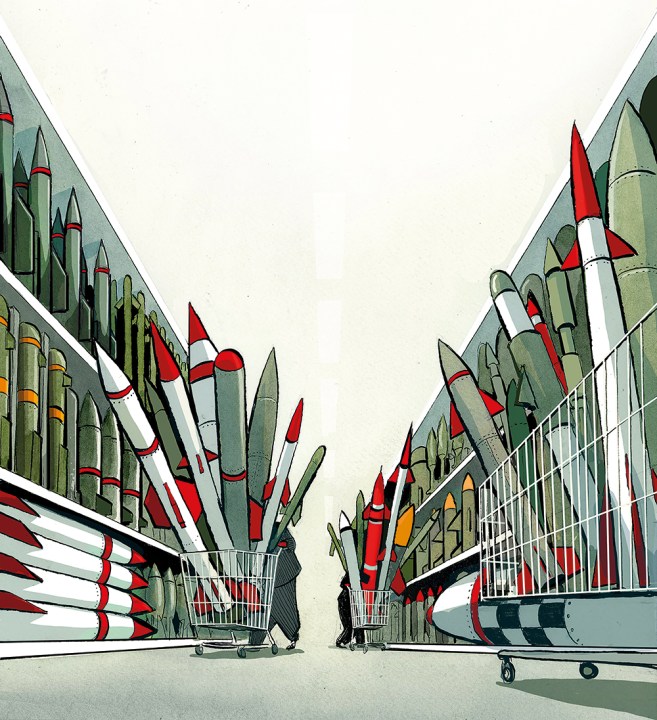
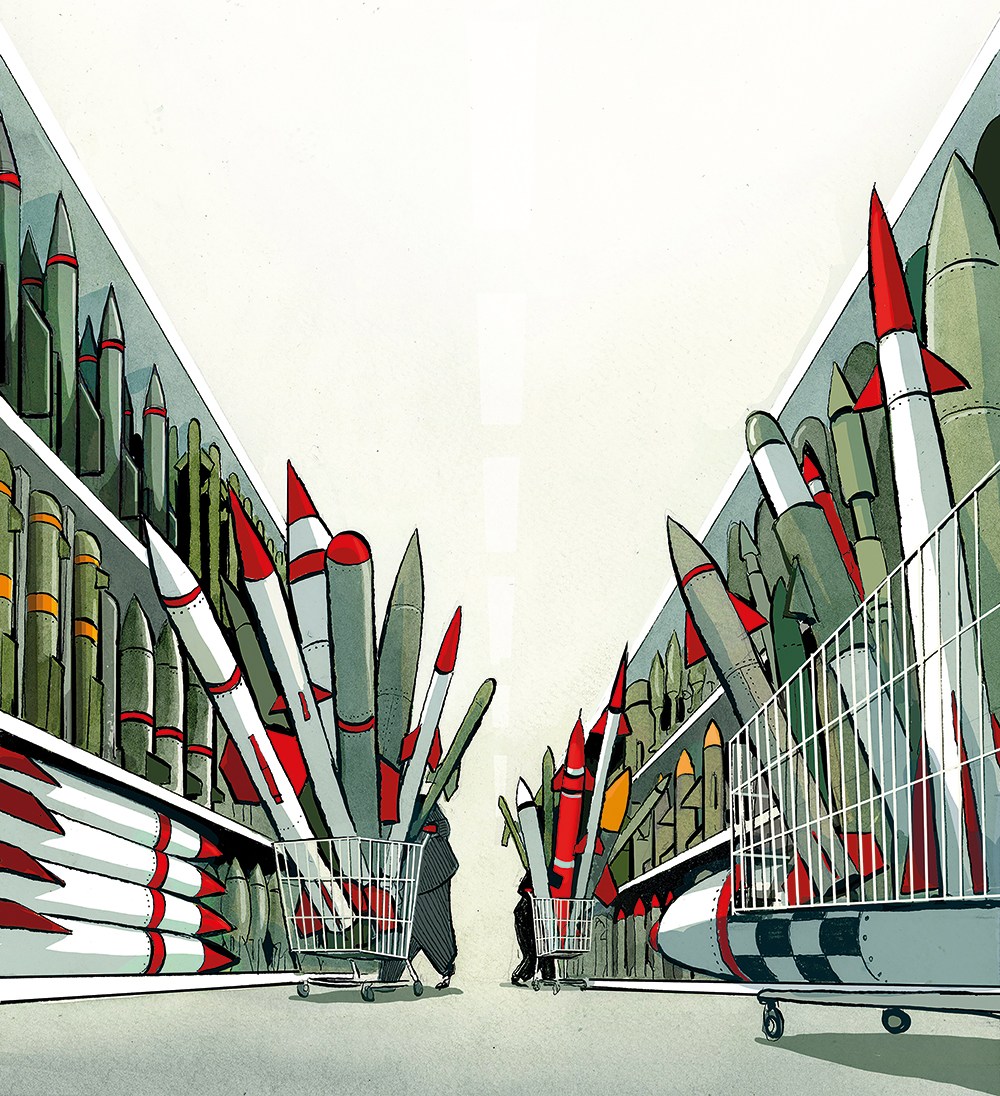
The embarrassing question is whether America actually has enough missiles to bomb Iran. The West spent a generation persuading itself that making clever weapons could compensate for making fewer of them, with even fewer factories and a thinner web of suppliers behind them.
The reality of war is messier and less obliging. America has spent the past 30 years designing missiles that can perfectly find their targets. The real test, however, is whether you can keep replacing them when a war drags on for years.
Take the Tomahawk missile. These are fired from ships or submarine hundreds of miles away from their targets and allow America to hit an enemy’s defenses without risking a pilot or a plane. In the first six weeks of the Iran war, American forces fired more than a thousand of them, about a third of the total stock. Yet over the previous decade, the Pentagon had bought an average of fewer than 90 Tomahawks a year. The Center for Strategic and International Studies think tank estimates that getting back to February’s level could take four years.
Russia ‘produces in three months what the whole of NATO produces in a year’
Then there are the missiles America needs when Iran fires back. THAAD interceptors destroy ballistic missiles by ramming them while they’re in flight. In the first six weeks of the war, CSIS reckons, America fired between 190 and 290 from a prewar stock of about 360.
Each THAAD interceptor needs a solid rocket motor and a booster to get it off the launcher and up to speed. America still makes them at home. The trouble is that the industry has narrowed to two dominant suppliers, L3Harris and Northrop Grumman. In April, Arizona Senator Mark Kelly asked Secretary of Defense Pete Hegseth how long it would take to replace the munitions America had already fired. “Months and years,” Hegseth replied. “Years,” Kelly repeated.
Britain has even less margin. General Sir Richard Barrons, a former head of Joint Forces Command who later co-led the government’s defense review, has told MPs he would be surprised if the country had enough munitions for more than about a week of a major war. NATO is in a similar position. Secretary General Mark Rutte said that Russia “produces in three months what the whole of NATO produces in a year,” although that is quickly changing as Europe rearms.
Munitions and weapons factories did not disappear overnight. In 1993, the Pentagon’s deputy secretary, William J. Perry, gathered the heads of America’s arms-makers at a dinner the industry still calls the Last Supper. He told them the Cold War budgets were gone and about half of them would not survive. That was a conservative estimate by Perry. America’s 50 big defense contractors shrank to just five. The assumption was that time would be on the West’s side. If a war came, factories could be brought back up to speed.

Israel is a case study in precisely the opposite way of thinking. The October 7, 2023 attacks started a war that has lasted years rather than days. Israel did not have to start by finding factories, suppliers or production lines. Its own ammunition plants and missile lines were already up and running.
The country’s elites learned decades ago what we in the West are only discovering now: that domestic arms production is the only reliable way to defend yourself. In the 1960s, Israel’s main arms supplier, France, imposed an embargo as the country braced for war. Britain later abandoned a deal to supply Israel with the new Chieftain battle tank. So Israel developed the Merkava instead. The Merkava has been built and improved in Israel ever since. It now has its engine mounted up front as extra protection, as well as a system designed to knock anti-tank missiles out of the air.
Over time, Israel became more selective about what to make itself, and what to buy. Fighter jets were one dependency it accepted. Israel tried to build its own modern combat aircraft, but the project became too expensive; today, all of its active fighters come from the United States. The areas it kept closer to home were the choke points, the parts whose absence could stop everything else from working. Shells, interceptors and rocket motors fell into that category.
That created another problem: how do you keep those factories running between wars? Israel’s own military was too small to provide enough business, so its arms-makers sold most of their output abroad in peacetime. That was a very different habit from the West’s, where production tended to swell in a crisis and shrink again when the orders dried up.
In 2018, Israel sold its state ammunition-maker to Elbit. However, it kept a separate state-owned company called Tomer, which makes rocket motors. A rocket motor gets an interceptor off its launcher and into the sky. If you have no motor, you have no working missile. Tomer has since nearly doubled its workforce. Tomer’s chief executive called his company “the taxi driver of the missile.”
Israel knows that its industrial base is crucial for the nation’s survival. Two weeks after October 7, I was driving south toward Gaza on Route 232, the road connecting the small communities strung along the southern border. Tanks stood in columns waiting for the ground invasion. Every half hour, an Israeli artillery battery nearby fired into Gaza with a sudden boom.
How do you keep the factories running between wars?
Along the road were cars shot through in the attack. When I got out beside them, I could still smell blood. Volunteers in fluorescent yellow vests from ZAKA, an Israeli search-and-rescue group, told me they were searching the area for human remains.
Be’eri, a small kibbutz barely two and a half miles from Gaza, had become a battlefield on October 7. Hundreds of attackers poured in and for hours residents and a small armed security team fought largely on their own. By the end, 101 civilians had been killed.
I went there to see the wreckage. Instead I found workers being brought back under army escort to keep a factory running. I met Alon Kislev, 71, a worker in a factory that makes credit cards, driving licenses, checkbooks and holographic security documents. One of its customers is listed as the security services. Kislev had managed the print works before retiring, but had returned after October 7. “It’s a huge statement that the factory was working again a week after what happened,” he told me. “They have to work, they have to keep it going. The sun will rise again.” Each morning the workers arrived under army escort and left again before dark. Kislev walked me past bullet marks left by the attack. Barely a week after the massacre, the presses were running again.
As the conflict expanded, so could Israel’s industrial base. In the months after I visited, fighting spread into Lebanon and Iran. The factories that had already shifted to a war footing now had a much bigger war to supply. By June last year, Israeli jets were striking Iran’s nuclear and military sites. This year they returned alongside America.
The production numbers moved with the war. In 2024, Israel’s Defense Ministry placed about $41 billion worth of orders with Israeli companies. Plants added shifts and, by the ministry’s count, Israeli factories could make twice as much ammunition for ground forces as when the war began.
The Iron Dome, Israel’s missile-defense system for incoming rockets, fires interceptors that cost roughly $50,000 apiece. Israel has begun fielding Iron Beam, a laser for shorter-range rockets and drones, so far in a limited fashion. But every target it burns out of the sky is one more expensive interceptor saved for later.
Yet even Israel is running short of key munitions. In March, two weeks into the fighting with Iran, American officials told the news site Semafor that Israel had warned Washington it was “critically low” on the interceptors used to shoot down Iranian ballistic missiles. The Israeli military denied it the next day. Three weeks later, Israel accelerated production of the Arrow interceptor. Arrow is designed to hit long-range ballistic missiles such as those fired from Iran, at extreme altitude and even outside the atmosphere. Israel develops and produces it with the United States.
America is running up against a brutal shortcoming: it can’t replace its missiles fast enough
Israel is a country of barely ten million people and is about the size of New Jersey. It kept crucial production lines alive for decades and still ran short. The United States has 340 million people, military bases around the world and the ability, on paper at least, to launch enormous firepower at Tehran. Yet eight months into the war, America is running up against a brutal shortcoming: it can fire missiles anywhere it wants, but it can’t replace those missiles fast enough.
The Pentagon had at least seen the problem coming. Just before the Iran war, it struck a deal with Lockheed Martin to raise the annual THAAD production from 96 interceptors to 400. In June, the US military signed a contract with Lockheed worth up to $35 billion. The factories have been given seven years to get up to capacity.
Britain is playing the same game of catch-up. It has set aside £11 billion to buy missiles and shells and refill its stockpiles, and has promised to build at least six new factories to make the explosives that go inside them by 2030. So far, the six factories only exist as 13 possible sites. As recently as July, the Ministry of Defence was still paying companies to work out where to put them. Construction is supposed to begin by the end of this year. It is already October.
There is no mystery here. The trick, apparently, is to build the factory before you need the missile. Eight months into the Iran war, Washington is already reluctant to resume major combat partly because it is worried about how many missiles it can afford to fire. The US war machine could learn a lot from Israel and its commitment to keeping the factories running.






Comments