
Everywhere I hear voices complaining about charges being imposed on those who wish to visit our great cathedrals. Everywhere, I reply to them: ‘Stop moaning and pay up!’ In fact, you should give more than you are asked. Who else is going to provide the money to save these astounding, irreplaceable buildings for a future in which they may one day be full of worshippers again? Wouldn’t you spend more on a good meal or a good bottle of wine, or a trip to the cinema?
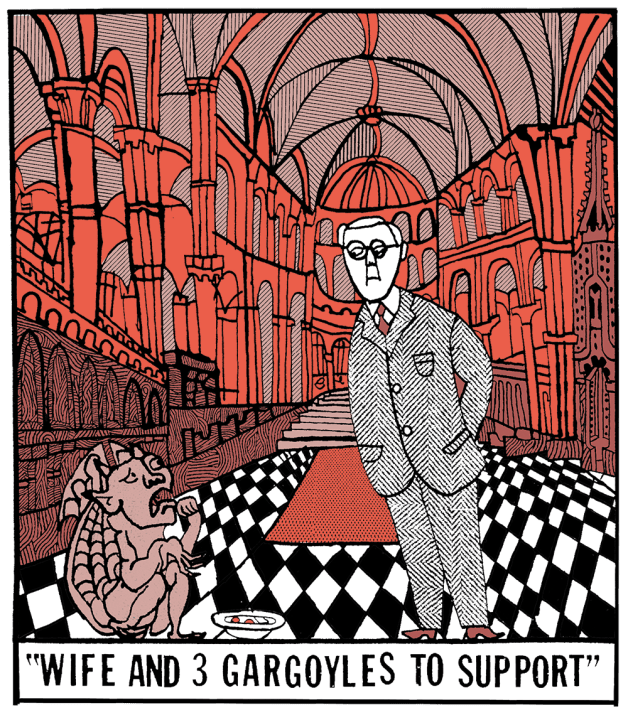
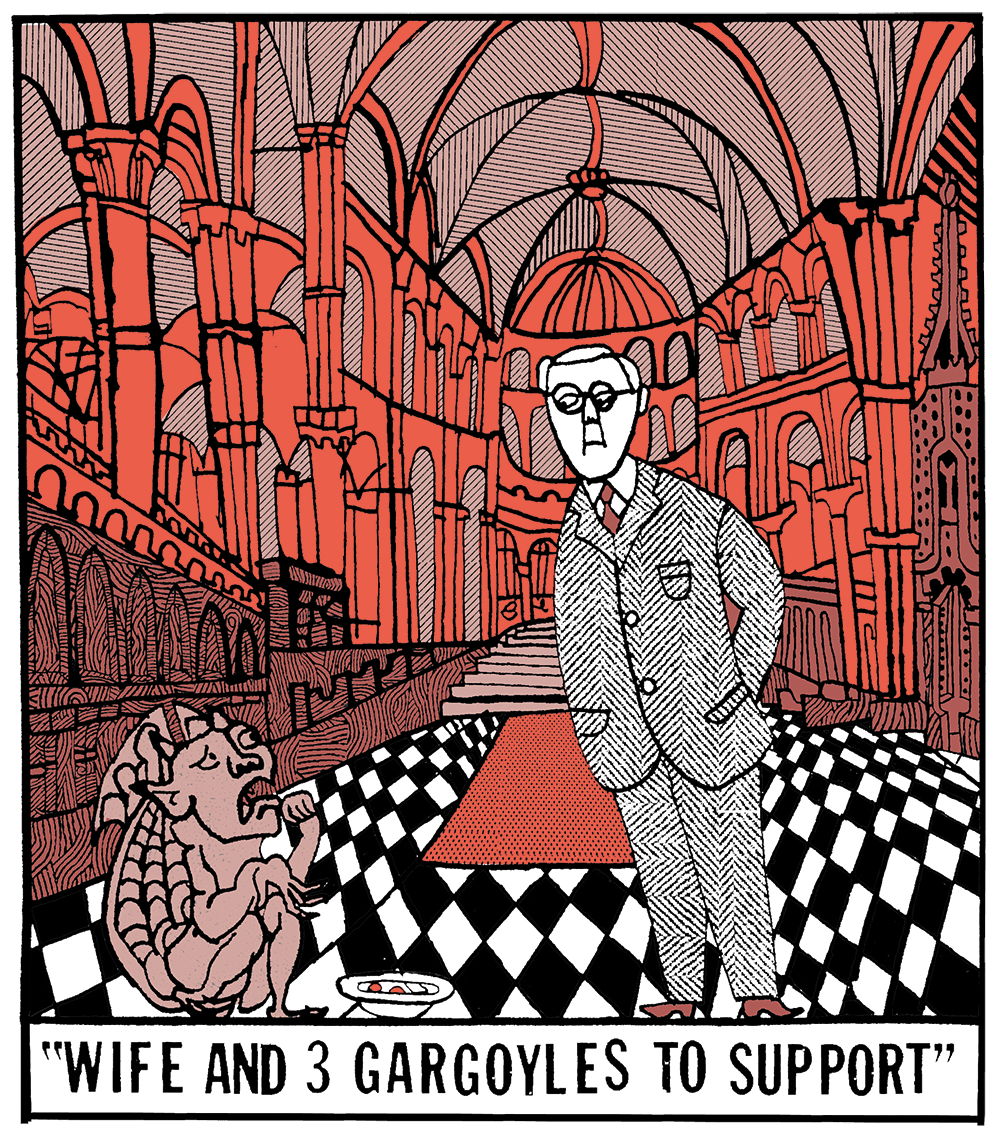
Yes, of course, there should be concessions and exemptions if you are a child or disabled or have no job or are living on a tiny pension. If you have an especial desire to pray in a very large church, then there should be a chapel, near the entrance, where you can do so without charge. But it’s dishonest to pretend piety for a free ticket. You shouldn’t do it. As the great ghost-story writer and lover of cathedrals, M.R. James, might have asked of such people: ‘Do you know what forces you may be toying with, when you lie to get into a church?’ Of course James’s cathedrals contained slobbering demons hiding in the tombs, and sinister carved cats that turn on you and bite you in the middle of the psalm, and strange laughter, high up in the triforium, at dusk. Having attended the cathedral choir school at Chichester, and spent many a late afternoon amid its pillars as the shadows thickened and the noise of the busy world faded away, I wouldn’t be a bit surprised by such things.

But if you want to see an alternative arrangement, slip across to France, which I reluctantly admit, has cathedrals as good as ours – well, as buildings, anyway. But they have been owned and maintained by the secular state (with a few exceptions and anomalies) since 1905, and it shows. I remember hurrying one evening from Chartres station to the cathedral, in the hope of seeing it in the sunset light, before it closed. And I did. The blaze of majesty from the west window is something I shall never forget.
But the place was otherwise asleep. No vergers patrolled, no smiley volunteer ladies offered guidebooks. In any English cathedral of the same size and importance, Evensong would have been just beginning, perhaps the first verses of the Magnificat curling up into the vaults. The combination would have been almost too powerful.
But it did not happen. I have often tried to hunt down Vespers in French cathedrals, and only once succeeded. While the Roman Catholic Church is still free to celebrate its services in these state-owned places, is it possible that the heart has gone out of them now that they are controlled and maintained by a room full of fonctionnaires somewhere in the Ministry for Culture? Doubtless, they will swiftly repair a crumbling crocketed finial, or a blocked gargoyle, once informed of the problem. But it will be an act of efficiency, not one of love and concern.
This is a pity. The cathedral in Strasbourg is one of the greatest buildings in the world, fit to rank alongside our best. At High Mass on Sunday, the procession to the altar is escorted by men in plumed tricorn hats, one of them rhythmically whacking the stone floor with his halberd. Did I imagine the other one carrying a sword? There was a lot of incense. Yet the place seemed far from full. I was there, Protestant as I am, to show gratitude for the great church’s decision to ring its mightiest bell, audible well across the Rhine in Germany, to mark the death of our Queen – one great reverberating stroke for each of her 96 years.
You learn so much from the difference between French cathedrals and ours. Their bells sing a different song, and don’t ring the glorious changes we are used to. Instead they sometimes express another older purpose. I thought James had made up the decayed town of Saint-Bertrand-de-Comminges, in which the story of ‘Canon Alberic’s Scrap-book’ unfolds. But it really exists, and I am determined to go there one day, remote as it is, to see and hear the moment he describes:
Unless you want them to fade away in the unfeeling arms of the state, you should be more than willing to pay
It was time to ring the Angelus. A few pulls at the reluctant rope, and the great bell Bertrande, high in the tower, began to speak, and swung her voice up among the pines and down to the valleys, loud with mountain-streams, calling the dwellers on those lonely hills to remember and repeat the salutation of the angel to her whom he called Blessed among women. With that a profound quiet seemed to fall for the first time that day.
Maybe someone will offer me an interesting volume, when I go. I shan’t buy it, if so, and nor should you.
But we all really ought to marvel more at these buildings. Laon with its carved stone oxen standing in its high white towers is not really any stranger than Lichfield with its three spires and rich red stones, or Wells with its scissor arches and moated palace. Le Puy, with its ferociously grim exterior and its forbidding stairs, stands in the middle of that rather crazy volcanic town (where we fetched up by accident after getting lost on the French railway system, long years ago). But it is in fact no stranger and no fiercer than Durham, if your mind is open.
These places are too good to miss. All sensible people should devote their lives at least partly to seeing all of them. And in Britain, unless you want them to fade away in the unfeeling arms of the state, you should be more than willing to pay. As so often, you don’t know how lucky you are, and will not know what you have got till it has gone.





Comments