If you are like most Americans, you know a bit about the case of Derek Chauvin. You recognize George Floyd’s name, of course, and you know he was a black man who died in the custody of Minneapolis police on May 25, 2020. You probably saw a viral video in which Floyd said “I can’t breathe” over and over again, a plea that became a universal political slogan.
You recall that systemic racism had something to do with Floyd’s death. And you know that Floyd died because Officer Chauvin put his knee on Floyd’s neck for too long. That force, you were told, was “excessive” and “unreasonable.” None of that, it turns out, is true.
At the time, I was serving as assistant United States attorney for the Eastern District of Tennessee. I was half-watching TV after a long day of work, my mind on other things, when I first saw the shaky cell-phone video of Floyd’s arrest on the news. I snapped to attention and my prosecutor’s brain kicked into gear. My first assessment? No reasonable prosecutor would indict this case. Having now read 50,000 pages of documents related to the Chauvin trial, I still believe that to be true. This is not a case that should have ever come to trial, let alone ended in a police officer being imprisoned for 22 and a half years.
Cynical politicians, Machiavellian activists and power-hungry opportunists contrived a narrative
There were multiple holes in the case. For example, Floyd said, “I can’t breathe” eight times before he was placed in the prone restraint. That strongly suggests that Floyd’s breathing difficulties were caused by something other than Chauvin’s knee. Floyd also said, “Ahh, ha, I ate too many drugs,” during the arrest. Another hole in the case was the conclusion of Hennepin County’s chief medical examiner, Dr. Andrew Baker: “The autopsy revealed no physical evidence suggesting that Mr. Floyd died of asphyxiation.”
An even worse problem was Baker’s acknowledgment that the amount of fentanyl in Floyd’s system “would be a fatal level in other circumstances.” Yet another was the narrowing of Floyd’s arteries, which was so great that it was “capable of causing sudden death.” Dr. Baker discovered that Floyd’s lungs were full of fluid, another indicator of possible fentanyl poisoning. And, in fact, the toxicology report concluded that Floyd had poisoned himself with a “lethal dose” of fentanyl. The autopsy also revealed extensive evidence of Floyd’s arteriosclerosis and that his heart was twice the average size. All of these facts were inconsistent with the prosecution’s evolving theory of the case. Indeed, the only belief prosecutors held consistently was that Chauvin was responsible for Floyd’s death.
Dr. Baker himself questioned the prosecution’s case early on in the process. Amy Sweasy – the former lead prosecutor in the Chauvin case and an assistant Hennepin County attorney – later repeated under oath what Dr. Baker said to her shortly after he conducted Floyd’s autopsy in May 2020. “Amy, what happens when the actual evidence doesn’t match up with the public narrative that everyone’s already decided on?” In case his concerns weren’t obvious, Dr. Baker added: “This is the kind of case that ends careers.”
Statements such as these are required to be turned over to the defense. Yet it is not clear, from my research, whether Dr. Baker’s statements were ever given to Chauvin’s defense attorneys. Certainly, these comments were not raised at the trial. They only entered the public domain following an unrelated deposition by Sweasy in August 2023, two years after Chauvin’s conviction.
Why didn’t prosecutors abandon the case? Because they couldn’t. Cynical politicians, Machiavellian activists and power-hungry opportunists had contrived a world-spanning narrative through which this tragic, if relatively routine, arrest was transformed into a crisis of racial reckoning. By ritually sacrificing Chauvin, these bad actors would get that much closer to the reordering of America they so desperately desired.
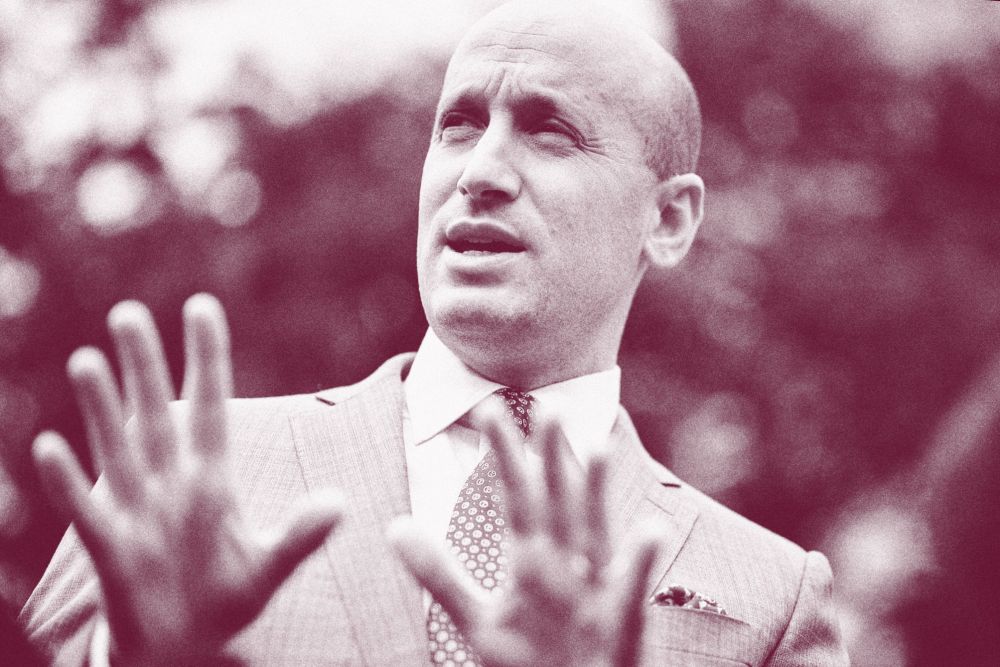
Before sunrise on the day after Floyd’s death, Minneapolis Mayor Jacob Frey convened a press conference. “For the better part of the night, I’ve been trying to find the words to describe what happened,” Mayor Frey said. “And all I can keep coming back to is he should not have died. What we saw was horrible. Completely and utterly messed up.” Frey’s voice cracked while delivering his remarks. “Being black in America should not be a death sentence. For five minutes, we watched as a white officer pressed his knee to the neck of a black man.” Rioting and arson attacks followed.
By 4 p.m. the next day, Governor Tim Walz had agreed to summon the National Guard. Mayor Frey was not done fanning the flames of civil unrest, however. “Why is the man who killed George Floyd not in jail?” he asked reporters. Floyd “would be alive today were he white,” Frey said, adding, “I’m not a prosecutor, but let me be clear: the arresting officer killed someone.” John Harrington, commissioner of the Minnesota Department of Public Safety, added: “We’ll call it a murder; that’s what it looked like to me.”
Yet what actually took place that day was well within the bounds of normal policing. Chauvin and his fellow officers, Tou Thao, J. Kueng and Thomas Lane didn’t use Mace or pepper spray on Floyd. They didn’t fire a Taser, stun gun or other conducted energy device. They didn’t sic a canine on him, or throw him into a wall or tackle him onto the ground. They didn’t deploy collapsible batons. They didn’t punch, kick or elbow Floyd; they didn’t use any striking techniques at all. Nor did they use a chokehold or neck restraint, whatever you might have read.
In fact, by the second week of the trial, the prosecution had abandoned its theory that pressure on Floyd’s carotid artery killed him. That theory suffered from a critical flaw – a flaw that even one moment of unbiased reflection would have revealed: Floyd, like all human beings, had two carotid arteries, while Chauvin possessed but one left knee. Somehow, the prosecution had failed to grasp this simple arithmetic until after the trial had begun.
When stated plainly, the problem with the prosecution’s theory becomes obvious: if one carotid artery is obstructed, the body compensates through a process called “collateral flow” in which the second artery makes up the difference. The brain remains unaffected. Obstructing a single carotid artery does not kill. It won’t even render a person unconscious. Both must be obstructed for unconsciousness to result.
Once this was made clear during the trial, prosecutors adopted the term “positional asphyxia” to describe a medley of nondescript and often conflicting theories. They claimed Chauvin’s right knee on Floyd’s back compressed Floyd’s left lung; Chauvin’s right knee was “rammed in against the left side of the chest” preventing Floyd’s diaphragm from expanding; Chauvin’s left knee narrowed Floyd’s hypopharynx; Officer J. Alexander Kueng pushed Floyd’s left hand “against [Floyd’s] chest”; Floyd’s being held in the prone position was itself inherently dangerous; the street prevented Floyd from expanding his chest; and other variations.
Prosecutors never quite explained which one of these alternate theories killed Floyd. Instead, they were content to let jurors pick and choose. What the prosecution would not allow, however, was any suggestion that something else killed Floyd, or even contributed to his death. They dismissed any and all explanations that included coronary artery disease, hypertension, controlled substances, excited delirium, pulmonary edema or cardiomegaly. These would have invited the conclusion that Chauvin was innocent.
Yet, as we have seen, Chauvin and his fellow officers’ behavior was well within normal policing practices. They didn’t use the maximal restraint technique, also known as the “hobble,” even though Floyd refused to comply with commands and struggled with multiple officers. Most police department use-of-force policies would have authorized many or all of the aforementioned techniques.
The Minneapolis police department’s own policy authorized officers to use Tasers “on subjects who are exhibiting active aggression.” They can even use them on subjects “exhibiting active resistance” if the purpose is “to gain control” and “lesser attempts at control have been or would likely be ineffective.” All of these conditions were clearly met with Floyd, who was not only resisting arrest but also attempted to kick officers. Two days after Floyd died, his brother Philonise remarked: “They could have tased him; they could have maced him. Instead, they put their knee in his neck and just sat on him and then carried on.” But on police use-of-force continuums, Tasers and chemical agents are greater uses of force than mere restraint.
This beat cop needed to be the offering that absolved the United States of its sin
In the face of Floyd’s erratic behavior, immense power, aggression and resistance, officers were calm, controlled and professional. They handcuffed Floyd and held him on the ground while they waited for emergency medical services. Short of letting Floyd go, it’s not clear how officers could have used less force than they did. That, of course, would have been preposterous. Officers had reason to suspect that Floyd had committed a felony (passing counterfeit currency), and he had resisted arrest. Letting him go was not a serious alternative. But that unserious alternative was exactly the position special prosecutor Jerry Blackwell took: “Officers could have written him a ticket and let the court sort it out,” he said in his opening statement at Chauvin’s trial.
If officers were supposed to let Floyd go, then what is the point of having police? In Minneapolis, the answer seemed to be: “There is no point.” It was not a coincidence that “Defund the Police” became a rallying cry following Floyd’s death. It also was not a coincidence that it did so at the behest of Black Visions Collective, a Minneapolis-based nonprofit and “black-led group with deep ties to queer, immigrant and transgender communities.” From Minneapolis, the Defund the Police movement spread across the nation.
Its proponents weren’t speaking figuratively. “Yes, we mean literally abolish the police,” wrote Mariame Kaba in the New York Times. Kaba described herself as an “organizer, educator, archivist, and curator” with “extensive experience working on issues of racial justice, gender justice, transformative/restorative justice and multiple forms of violence.” These crisis-mongers were suddenly everywhere, and they were advocating for the “dismantling” of the police, the patriarchy, the nuclear family – every last plank of so-called “structural racism.”
The prosecution, encouraged by these unscrupulous political actors, misled both the jury and the public into believing that the promise of America would go unfulfilled unless Chauvin was convicted. This beat cop needed to be the offering that absolved the United States of its sin. Chauvin had to be an American scapegoat.
This article is an edited extract from T.J. Harker’s book American Scapegoat, which is published by Passage Press on December 1.




Comments