France

Do France’s student protesters have a point?

On September 21, students at the Lycée Saint-Exupéry in Créteil, south-east of Paris, staged a protest. They had a list of grievances. Classes were overcrowded and there was a shortage of teachers. They were also dismayed at the decaying state of some of the school buildings and the automated university admissions platform they feel deprives them of autonomy. Students filmed the protest and uploaded the footage onto social media. It went viral. Across France, children in other secondary schools joined the protest. They aired the same complaints as their peers in Créteil – and more. Some students described seeing rats in classrooms, others of enduring leaking ceilings and moldy walls. For many, memories of the summer heatwave were still painfully fresh.
Don’t take Britain’s cathedrals for granted

From our UK edition

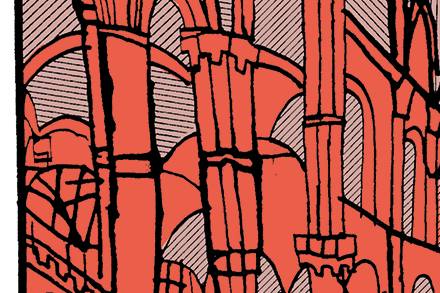
Everywhere I hear voices complaining about charges being imposed on those who wish to visit our great cathedrals. Everywhere, I reply to them: ‘Stop moaning and pay up!’ In fact, you should give more than you are asked. Who else is going to provide the money to save these astounding, irreplaceable buildings for a future in which they may one day be full of worshippers again? Wouldn’t you spend more on a good meal or a good bottle of wine, or a trip to the cinema? https://www.youtube.com/watch?v=2KJJ4FFVjGA Yes, of course, there should be concessions and exemptions if you are a child or disabled or have no job or are living on a tiny pension.

Do France’s pupil protestors have a point?

On 21 September, pupils at the Lycée Saint-Exupéry in Créteil, south-east of Paris, staged a protest. They had a list of grievances. Classes were overcrowded and there was a shortage of teachers. They were also dismayed at the decaying state of some of the school buildings and the automated university admissions platform they feel deprives them of autonomy. Pupils filmed the protest and uploaded the footage onto social media. It went viral. Across France, children in other secondary schools joined the protest. They aired the same complaints as their peers in Créteil – and more. Some pupils described seeing rats in classrooms, others of enduring leaking ceilings and mouldy walls. For many, memories of the summer heatwave were still painfully fresh.
Will France’s school protest movement spread?

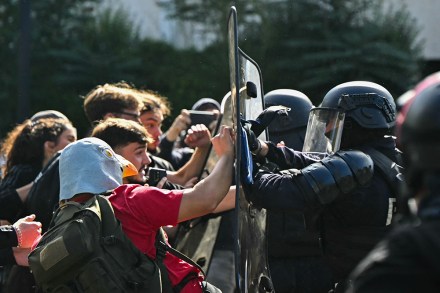
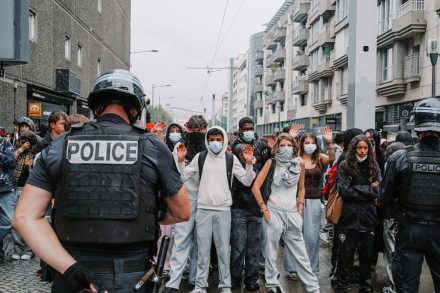
The government of France held a crisis meeting yesterday afternoon as a school protest movement intensified in violence. On Wednesday, 625 people were arrested and 83 gendarmes and police officers were injured as youths protested outside hundreds of schools nationwide. Yesterday, a school in Nantes was severely damaged after being firebombed and a fire engine was destroyed in Marseille. In the city of Reims there were fierce clashes between protesters and police, and only the use of tear gas dispersed the demonstrators. In some cities, such as Rennes, it was reported that university students were protesting alongside the high school pupils. The government claimed yesterday that the movement has been hijacked “by LFI and its far-left proxies.

Will anti-Semitism allegations bring down Jordan Bardella?

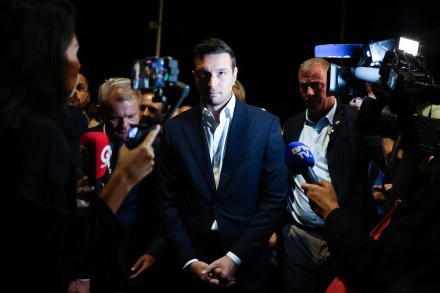
Jordan Bardella has described as “delusional” accusations that he railed against Jews at the start of his political career. The 31-year-old president of the National Rally appeared on television on Monday evening and declared the allegations were part of a left-wing wing plot to “destabilize” his party. Bardella will try and ride out the storm in the belief that most of the electorate will believe him and not the left-wing media In an article published on Monday morning, Mediapart alleged that Bardella had made numerous anti-Semitic remarks when he first joined the National Rally (the National Front as it was at the time). Mediapart claims it has seen dozens of private message sent by Bardella on a social media platform between 2013 and 2015, and several disparaged the Jews.

Rural France is fighting a boar war

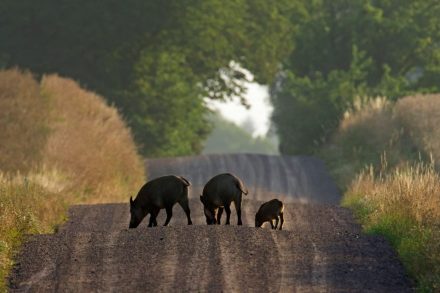
The hunting season began in Burgundy last Sunday. The first couple of weeks are dedicated to the pursuit of small game: pigeons, partridges and hares. Call it the hors d'oeuvre to the main course: the hunting of wild boar, which gets underway in earnest at the start of October. My neighbour, a farmer, hunts, and so does his son and most of their friends. They spent much of Sunday blazing away in the adjacent fields. I felt like I was in the gunfight at the O.K. Corral. Not that I mind. I was a townie in another life but now I’m what the French call a plouc (yokel), and in rural France hunting is sacrosanct. It’s also imperative, specifically the culling of wild boar. Their numbers have exploded in recent years and the damage they do is immense.

My poolside revelations

From our UK edition

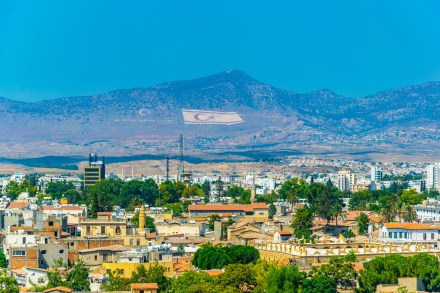
Lying by the rooftop pool of the Hotel Sun in downtown Lefkosa, I felt like a cowboy about to stir from slumber beneath his hat to cause a scene. I had turned into someone in an Elmore Leonard story. My view was a mountain range in full panorama with one hill entirely painted in the red and white flag of the Turkish Republic of Northern Cyprus. The poolside music was country and western. Several times a day it mingled with the call to prayer coming from the minarets along the main drag. In this frontier society where West meets East, I felt like anything was possible. I lay by the pool, watching the scene from under my baseball cap, listening to ‘The Yellow Rose of Texas’ and ‘Don’t It Make My Brown Eyes Blue’, the first song I loved as a child.

The Bayeux Tapestry must never be returned to France

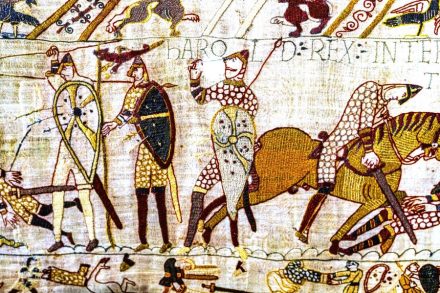
The Norman Conquest is a crime against humanity that remains, over a millennium on, entirely unsettled. The French still refuse to pay reparations for the 1066 genocide. And the rapacious Norman invader class remains firmly at the pinnacle of every aspect of public life in Britain. Indeed, the economist Gregory Clark has shown that, in some ways, the Conquest never truly ended because Norman last names remain overrepresented at Oxbridge some 30 generations on. Some of the nation's most glittering buildings still wear their Norman Caen stone shamelessly; walk past many great ecclesiastical facades and the conspiracy is right there in plain sight, yet no one mentions it. France owes us money and the math is fairly simple So France owes us money and the math is fairly simple.

bayeux

My midnight naked swim

From our UK edition

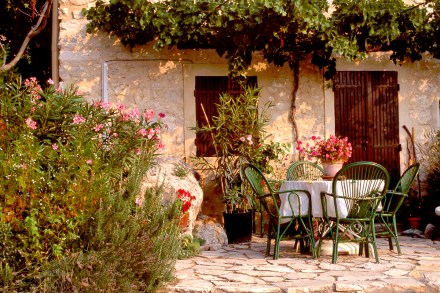
Provence The tiny village of Correns, two villages along, suffered more in the recent fires than we did. Even the green oaks on either side of the narrow road in were burnt to a dusty pale russet brown, like a New England fall but wrong. Sometimes, when I close my eyes, I still see the huge wall of flames and smoke racing down the hill to American Cathy’s house when I helped her escape. Here I could picture a tunnel of flames. No lives were lost – people in vulnerable houses left before the fire took hold – but several homes in the surrounding woods were destroyed.

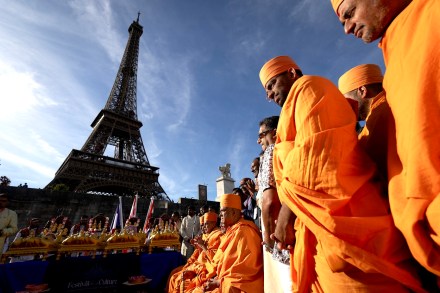
Why were women banned from the Eiffel Tower?

The French are accustomed to rancorous debates about the threat to women’s rights posed by religious orthodoxies – especially Islam, with its restrictive tradition of hijabs, burkas and abayas to cover the female body. Only last week, France’s far-right leader Marine Le Pen, who is far ahead in the polls, declared that she will make illegal Islamic headscarves worn in public. The far left, which panders to the Muslim vote, shot back with a promise to repeal the ban on abayas in French schools. This week, few in France were expecting a scandal over religion and women’s rights that has nothing to do with Islam.

Fraternizing with Les Aligoteurs

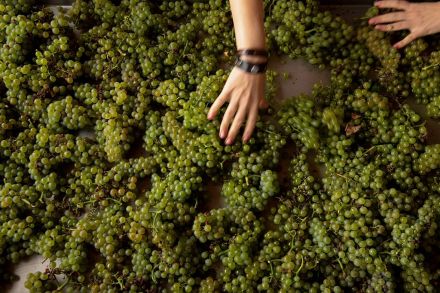
In the last installment of these cheery chronicles, I had occasion to mention aligoté, the second most widely planted white grape in Burgundy. I say “second most,” but it is a distant second. Only about 6 percent of Bourgogne is planted with that ancient grape, a crossing of pinot noir and gouais blanc, a nearly extinct varietal known as the “Casanova of Grapes” because it is a parent of scores of grape varieties. Until fairly recently, aligoté was second in another sense as well. It seldom ripened fully by harvest time and the resulting wine, though taut and full of mineral notes, tended to be a bit astringent. It’s usual fate was as the muscle behind the cocktail kir, the elegance being supplied by crème de cassis. Two things changed that: nature and nurture.

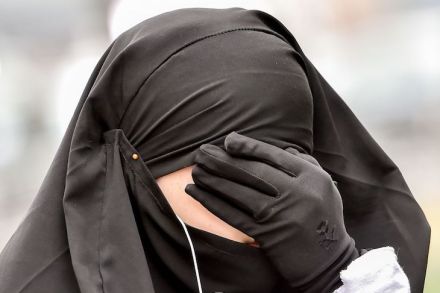
Marine Le Pen’s Muslim headscarf ban is popular, not populist

Marine Le Pen has promised to ban women wearing Muslim headscarves if she becomes president next year. The leader of the National Rally declared on X: “I will submit to the French people, by referendum, a bill to combat Islamist ideologies with numerous powerful measures, including the banning of the Islamist headscarf in public spaces.” Le Pen may be out of step with the rest of the political class but she is speaking for a majority of the people France has led the way among European countries on the issue of conservative Islamic dress. In 2004, for example, a law was passed prohibiting the wearing of conspicuous religious symbols in schools. It applied to Christians, Jews and Muslims, but France was accused of using the bill to persecute Islam.

My dog’s an accident waiting to happen

From our UK edition

‘My apologies again for you nearly losing your leg,’ I said to the young Frenchman as he and his family left. ‘And for making you take your pants down on the driveway.’ The Frenchman laughed nervously. ‘No. No. Thank you for a perfect stay,’ he said, and I think he might have meant it. He was an earnest young Parisian who was diligently trying to enjoy every experience of his travels, no matter how appalling. He and his pretty wife and their adorable two-year-old son had been quietly going around West Cork looking at ‘la nature’ when one day they came back from an outing to the beach earlier than I expected, and Dave the idiot dog was running loose. He hurled himself on the man as he got out of his car.

Why are French kids’ school bags so heavy?

From our UK edition

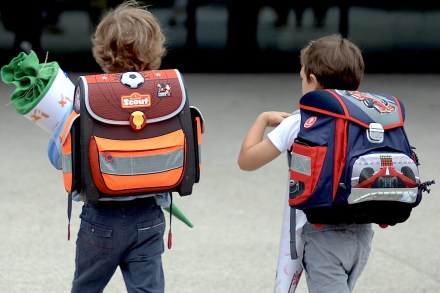
It’s that time of year again in Paris, when the cool breeze and light rain announce the arrival of the back-to-school rush known as the ‘rentrée scolaire’. Every year, I am mildly alarmed at the sight of small schoolchildren carrying the weight of the world on their shoulders. I watch them lurching head-heavy down the pavement, burdened by large backpacks stuffed with textbooks and school supplies. I wonder how on earth their tiny frames can possibly carry such heavy loads. They have no choice. A list of compulsory school supplies (called ‘fournitures scolaires’) is sent to French parents and published as an official decree on a government website.

My cave house’s wonderful history

Provence Looking back on it, apart from this year’s wildfires, the stultifying heat of high summer in Provence isn’t so bad if you accept that the time to exercise is 6 a.m. and work is only possible before midday and from late afternoon onwards. Holidaymakers and the better-off have pools to jump into and air conditioning to enjoy. But during the afternoons the rest of us lie almost naked on the bed under a ceiling fan, shutters closed, while the Rouge Noir varnish on our toenails melts. I’m told that Frenchmen sit in their pants watching the Tour de France.

Will the heatwaves make this year’s French wines better?

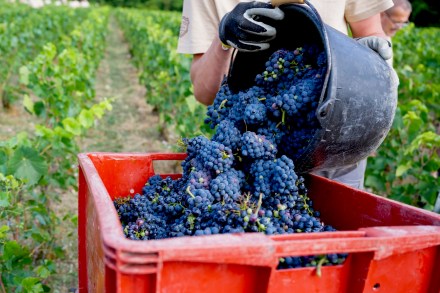
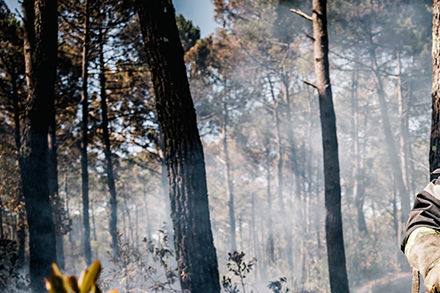
It has been a punishing summer in France. Heatwaves, drought and forest fires have driven away tourists and made life hell for firefighters. The nation’s winemakers have also had an anxious time of it, but there is now cautious optimism that the exceptional weather may work in their favor. Since late May, France has been swept by a succession of heatwaves as well as a series of destructive wildfires. The worst of these was in the Gironde, west of Bordeaux, which lost 42,000 hectares to flames. Swathes of Provence have also been ravaged by fires in recent weeks. As a result of the fires and the heat, France’s Ministry of Agriculture decided to postpone its annual grape harvest forecast from early August to early September. The announcement was welcomed by the industry.

heatwaves

How to do a salade Lyonnaise justice

From our UK edition

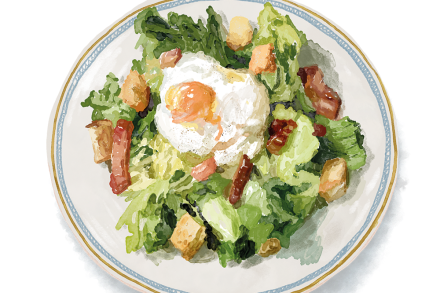
Salade Lyonnaise is often translated as ‘bacon and egg salad’ and I can’t stand it. Not because it’s inaccurate – beyond the salad leaves and the dressing, the only other non-negotiable elements of the dish are, indeed, bacon and eggs. But it feels like it misses the point. To the English ear, bacon and egg salad sounds like a lacklustre version of a full English – two items chucked into a bowl of leaves because we’re trying to cut carbs. It also – and I am aware this is just me – makes me picture the egg scrambled, and the thought of scrambled egg in a salad is horrible. ‘Bacon and egg salad’ doesn’t do the elegant, balanced and punchy salade Lyonnaise justice.

Emmanuel Macron is an embarrassment to France

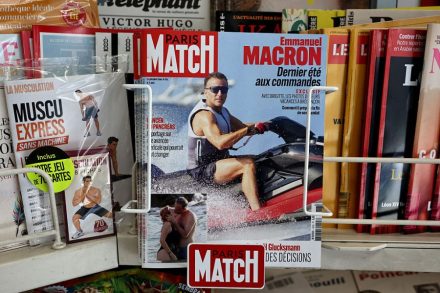
France’s under-15s can carry on using social media after a parliamentary ban was struck down by the Republic’s constitutional council on Friday. The ruling is a humiliating blow for Emmanuel Macron, who had championed the legislation from the beginning. It had won the backing of both parliament and the Senate last month but the Council had other ideas. In rejecting the Bill, France’s highest constitutional authority judged that it “places a disproportionate restriction on freedom of expression and communication.” Macron heard the news as he enjoyed the surf at his seaside retreat on the Riveria, a break that has already provoked the ire of many. Should the President be gallivanting on a jet-ski when so much of the country is ravaged by destructive wildfires?

macron

A toast to the heroic French firefighters

From our UK edition

Provence ‘Imbeciles! I told them! When the fire comes on the hill there, it always goes that way… did they listen? They did not! They fought it from the wrong side. Look at the mess.’ The old man, the last in the village still wearing a beret, was angry with the pompiers. This was two days after the fire which almost engulfed American Cathy’s house. Now the centre of the village was filling with brown smoke from a fire on the eastern side of our closest hill and the Sanctuary of Notre-Dame de Grâce was threatened a second time. In fairness to the pompiers, the last time fire struck there was in 1962. Following the first world war, many parts of rural Provence were depopulated.

Farming today: field fires and food price hikes ahead

From our UK edition

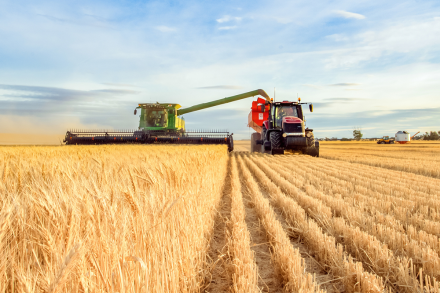
I report from FTSE boardrooms and City bars, but I also spend time – mostly in Yorkshire, currently in France – among farmers who often feel ignored by the rest of the business media. This week, with three-quarters of England officially in drought and produce imports afflicted by fierce heat across Europe, agriculture is for once top of the agenda. So what has this freakish summer really done to our fields? My northern arable correspondent has never seen an earlier harvest, with ‘barley less than average, oilseed rape excellent, wheat OK on heavy clay but very poor on lighter soils. Slight rises in crop prices won’t compensate for yield reductions, we’ve lost the safety net of direct acreage subsidies – and a single spark from a combine or baler can set whole fields alight.