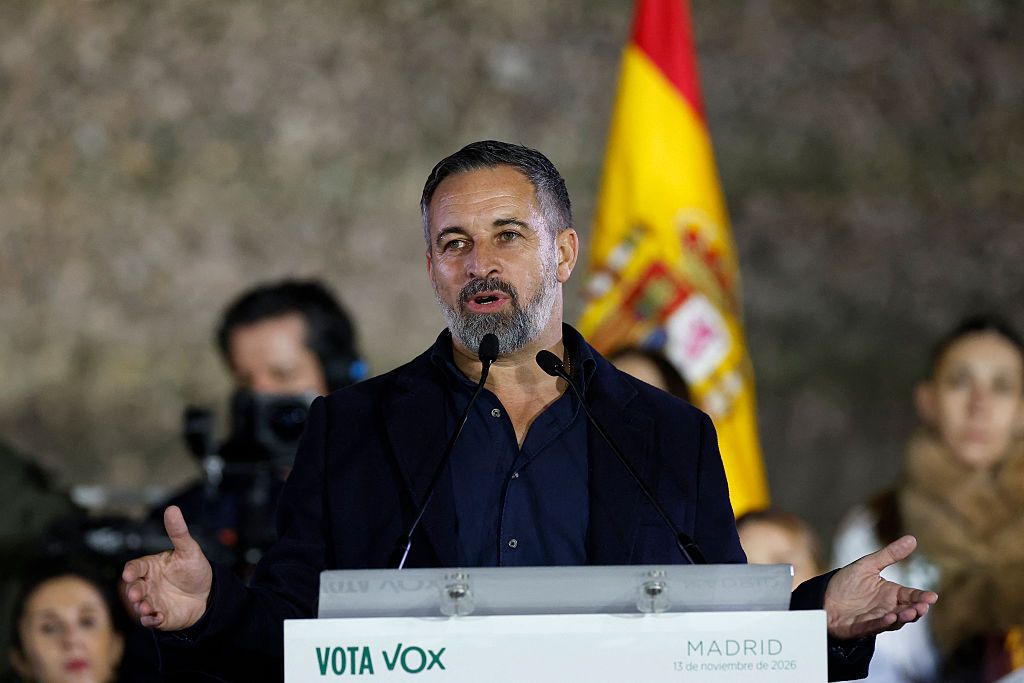
Vox, Spain’s most right-wing parliamentary party, is doing well ahead of the general election next weekend. Some polls suggest it will win as many as 70 seats, more than double its tally in 2023. If, as seems extremely likely, the right wins a majority, the conservative Partido Popular will almost certainly depend on Vox to govern. The two parties already share power in four Spanish regions.
Vox is radical and plain-spoken. Its election manifesto is entitled ‘Es sentido común’ (It’s common sense). On immigration, its slogan is ‘Ni uno más’ (Not one more). Spain, it says, has received five million people in five years and can take no more.
Only around 6 per cent of over-65s support Vox, compared to nearly a quarter of under-45s
It promises to repatriate immigrants living in Spain illegally and to encourage foreigners who contribute little economically or who rely on state subsidies to return home. It would deport foreign criminals, including persistent minor offenders, and people who seek to impose customs that it considers incompatible with Spanish society.
Its policy of prioridad nacional (national priority) would give Spaniards preferential access to public housing, nursery places, school meals and benefits. The minimum-income benefit would be reserved for Spanish nationals. It promises lower taxes, too, and the repeal of gender legislation which, it claims, discriminates against men.
Vox also wants socialist Prime Minister Pedro Sánchez and his ministers prosecuted for treason and for offences against state security over July’s migration crisis in Ceuta, when tens of thousands crossed from Moroccan. It proposes to militarise that border and outlaw parties threatening Spain’s territorial unity – notably Catalan and Basque separatists.
Earlier this month Félix Bolaños, Sánchez’s justice minister, warned that Spain could again have ‘far-right and fascist ministers’. Yet calling Vox fascist is hardly a substitute for examining the policies that appeal to so many Spaniards. Vox defends the constitution, participates actively in the democratic process and can plausibly claim to have enriched Spain’s young democracy by representing people who previously didn’t vote because they felt no party spoke for them. Its proposal to ban separatist parties is certainly controversial, but that deserves examination rather than name-calling.

Vox’s appeal is far from universal. It is weaker in Galicia and the Basque Country, with their strong regional identities, and less popular among older voters. According to the Centre for Sociological Research (CIS), the state pollster, only around 6 per cent of over-65s support Vox, compared to nearly a quarter of under-45s. The gender divide used to be striking too: but recently the number of young women supporting Vox has almost doubled.
Another possible cause of Vox’s growing support is disenchantment with the government’s and the left-leaning media’s relentlessly feminist rhetoric. Sometimes the feminist message sounds less pro-women than anti-men: a newsreader on a ‘progressive’ television channel recently opened a bulletin by asking, ‘What is wrong with you men?’ A recent survey found that almost half of young Spaniards now regard feminism as an instrument of political manipulation.
Economic frustration offers another explanation for Vox’s rise. According to the Spanish Youth Council, Spaniards are, on average, over 30 before they leave their parents’ home. The average monthly rent, €1,176, would swallow 98.7 per cent of the salary of many young people lucky enough to have one: unemployment among under-25s stands at 22.8 per cent. Such figures make uncomfortable reading for a socialist government that boasts of Spain’s economic success.
Vox links the housing shortage, low wages and unemployment to immigration. Hardly a day passes without television reminding everyone of July’s alarming scenes in Ceuta and the unresolved crisis there: three months after the migrant influx, the authorities still cannot agree on how many migrants remain. ‘This socialist government is a total joke,’ one young Vox supporter told me: ‘A country isn’t a country if it doesn’t defend its borders.’
And now attention has turned to El Hierro in the Canaries. More than 9,000 migrants arrived there during the first half of November alone – on an island with just 12,200 residents. ‘The island of El Hierro is experiencing another invasion,’ declared Vox leader Santiago Abascal. He has accused Sánchez and the Canarian government of wanting to ‘distribute the invaders quickly throughout Spain’.
Meanwhile Sánchez’s minority coalition has increasingly resembled a zombie government: in office but barely in control, and unable even to pass a budget. Multiple corruption scandals have added to its difficulties. Earlier this year, former transport minister José Luis Ábalos, for example, received a prison sentence exceeding 24 years. Other senior officials are also under investigation. In July Sánchez’s brother David was disqualified from public office for nine years over irregularities surrounding his appointment to a publicly funded job; he has appealed. Sánchez’s wife, Begoña Gómez, faces trial over alleged influence-peddling and misuse of public funds. She denies wrongdoing.
At the same time, two high-speed rail accidents this year, which killed 114 people, have appalled the nation and undermined confidence in the government’s management of essential services.
It is sometimes said that young Spaniards would never support Vox if they knew more about Franco’s dictatorship. Perhaps. But what they do know about is the last eight years of socialist government. For many, Vox offers something new and different: a party that has never governed Spain nationally and which, they believe, deserves its chance.
Britain, however, should take note. That plain-speaking manifesto also makes clear that Vox is every bit as determined to recover Gibraltar for Spain as it is to keep Ceuta.






Comments