

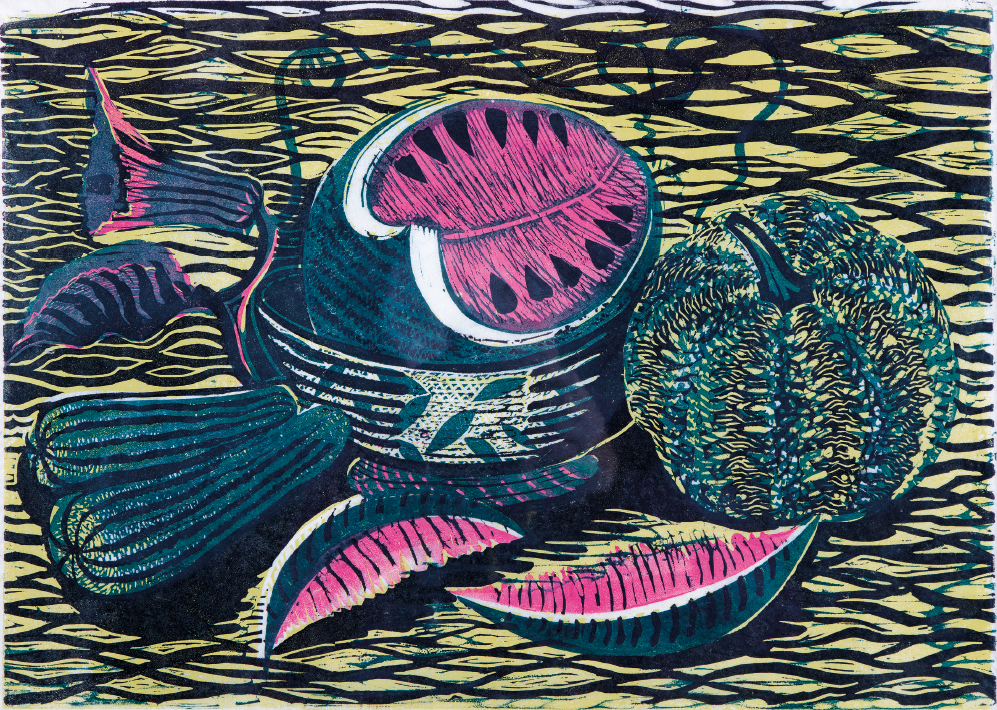
Enid Marx once pondered ‘whether postage stamps are fine or industrial art. In my view the question rests on the quality of a design rather than its purpose. It is generally agreed, for example, that the work of Thomas Bewick is fine art, even when it is merely the engraving of a “trade card”.’ Marx was a textile designer, book illustrator, lino-cutter, wood-engraver, poster illustrator and, yes, postage-stamp designer (‘The calling card of a nation’, as she put it) and in all these things, the quality was unquestionable. Her unique, memorable designs were absorbed, unknowingly, by any number of people.
Her best-known work was the sturdy moquette fabric she designed for seats on London Underground in the 1930s. It was part of the vision of its director Frank Pick that nothing was too good for the passengers on public transport: ‘Where the interests of the public are concerned, no detail is too trivial,’ he observed. O si sic omnes. She also designed fabric for utility furniture after the war, for which she began by asking her daily help what she would like.

Marx was one of a golden generation, what Paul Nash called ‘an outbreak of talent’, at the Royal College of Art in the 1920s. Nash was one of her tutors. He had an enormous effect on Marx and her friends – contemporaries included Eric Ravilious, Edward Bawden, Henry Moore and Barbara Hepworth.
The curation is dire: hectoring, tone-deaf to the nuances of the period, endlessly interested in colonialism
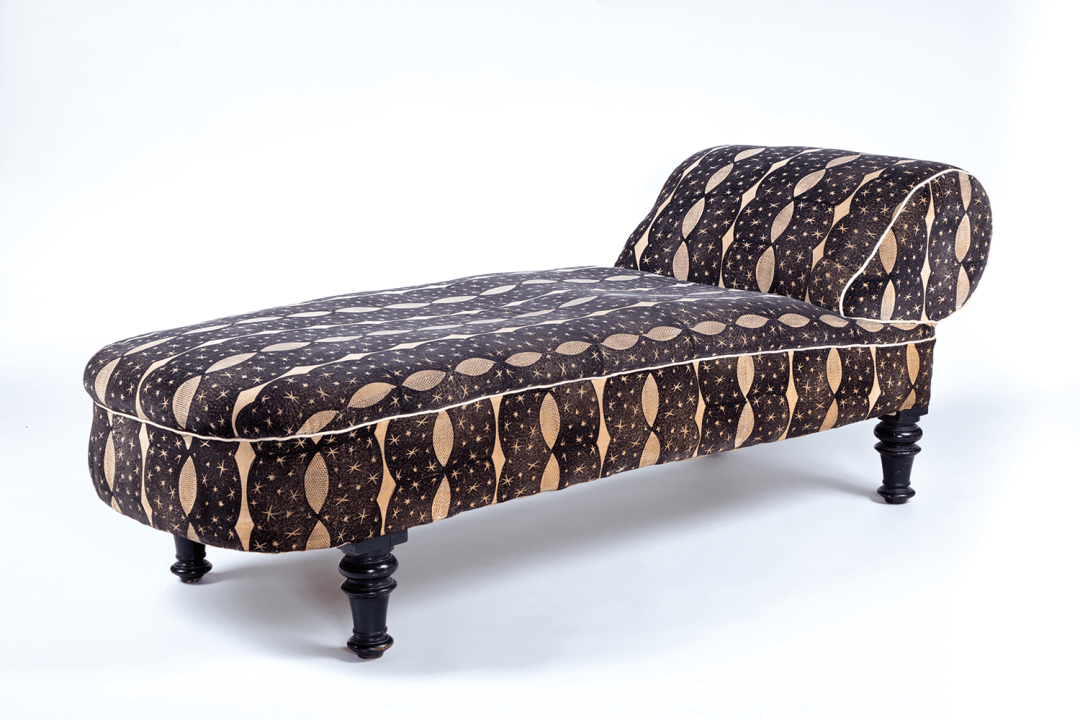
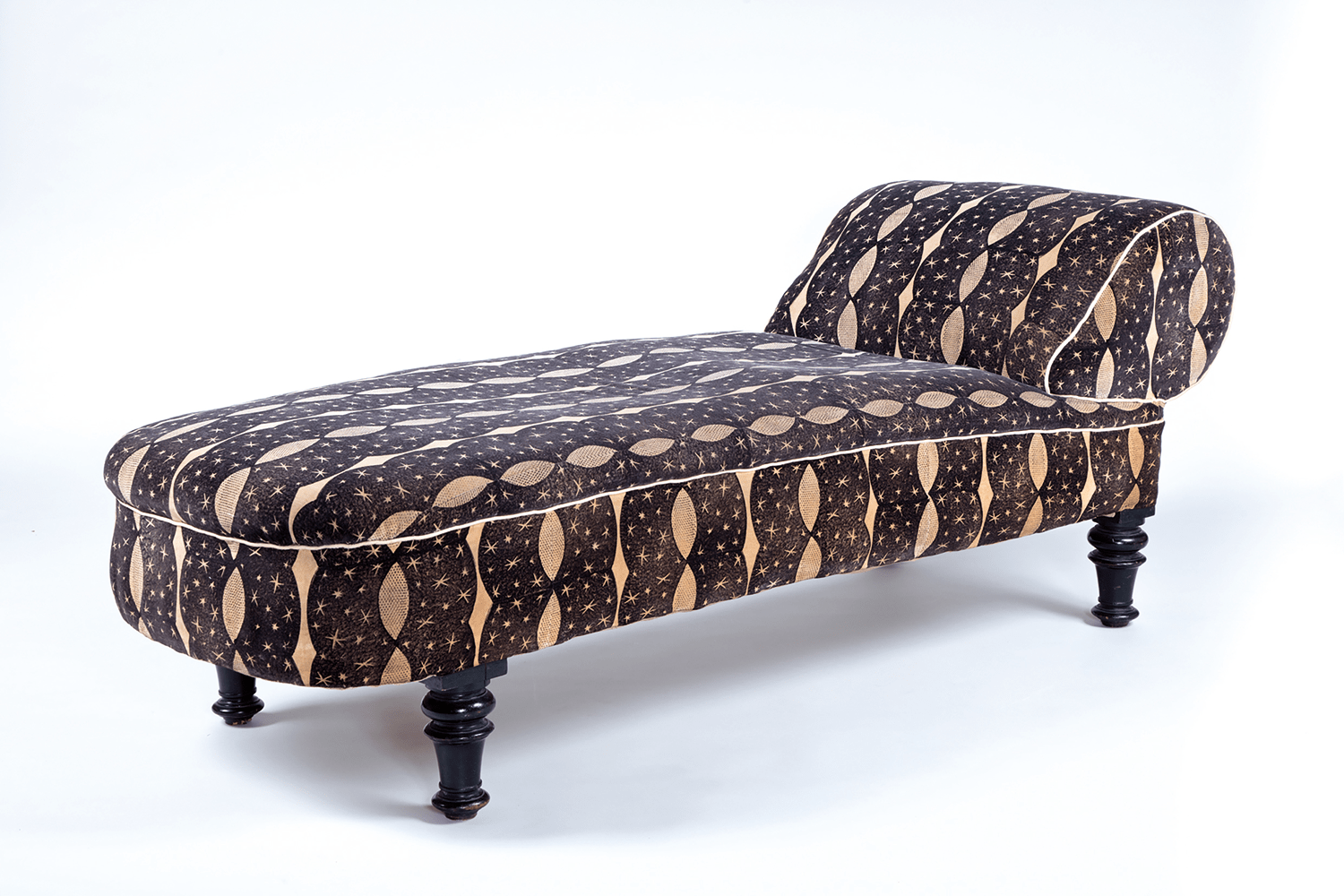
Many visitors to this exhibition will be itching to upholster a chaise-longue in the distinctive black and cream pattern on display here, or run up curtains in her curly ‘Cornucopia’ design. Me, I’m starting a campaign right here, right now, to persuade London Underground to refurbish its trains with the four designs they commissioned from her – the best known of which, ‘Shield’, was on seats for decades. Other visitors will come away humming with new enthusiasm for the English folk art that she and Margaret Lambert, her life companion, championed.
Compton Verney, a stately home- turned-cultural centre in Warwickshire, is a worthy site for the exhibition, for Marx bequeathed it her and Lambert’s collection after her death. It’s an expansive display though some visitors may miss that the exhibition is divided between two spaces – more signage, please. It spans her career from the years at the Royal College of Art to her stamp design and her folk art.
The section given to her work in the war and just after shows a marvellous range of activity, from her engaging books for children – Bulgy the Barrage Balloon was an unlikely hero – her cheerful London Underground posters and the transformative Tube designs, which truculent manufacturers did their best to subvert. She was also a lively illustrator: we see her covers to Lambert’s prescient book about the conflict in the Saar in 1931, their joint book on English folk art and the one she did for Charles Scott Moncrieff’s translation of Proust.
So the artefacts usefully reflect the sheer range of her work. The curation however, under Az Crawford, is dire: hectoring, tone-deaf to the nuances of the period, uninterested in important things (they don’t address one obvious question: whether she was related to Karl, the answer to which is, yes, she was probably a distant cousin) but endlessly interested in cultural appropriation and colonalism. As for the catalogue, I’ve rarely seen such pleasing type and presentation squandered on such shoddy proof-reading and bad prose.
The panels include one on British primitivism: ‘Enid Marx often looked to museum collections for research… including objects that had been acquired through unequal relations or taken from their original communities. We would now understand Marx’s “borrowing” as a form of cultural appropriation’ etc. Just as crass are the observations about sexuality whereby Marx and her mentors, life partners Dorothy Larcher and Phyllis Barron, apparently ‘created textiles and furnishings that blurred rigid gender roles around delicate femininity to explore abstraction and pattern design… [A]bstraction and craft provided ways for queer women to express themselves while navigating the social pressures of the time.’ This appears not to have occurred to Marx herself, who wasn’t, in any case, forthcoming about her sexuality.
My advice to the visitor is to focus instead on the prints, the artefacts, the fabrics. When they come to life – as upholstery, wedding suits, bow ties, posters and books – they sing. Mind you, because Marx preferred natural dyes to synthetic, the colours of some fabric prints can seem drab – lots of brown.
Marx is still with us – Enid, not the other one. In the shop you can buy pieces with her patterns from Cambridge Imprint and tote bags in her star design. That just whets the appetite. I say the campaign to get Marx back on the seats of London Underground starts here.





Comments