
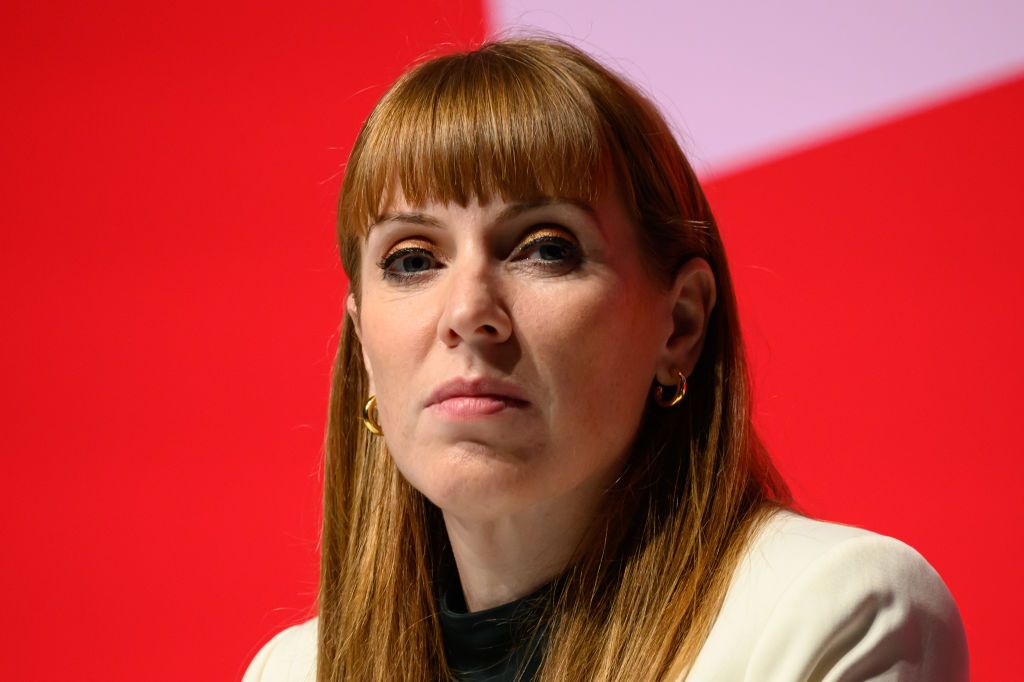
There are few adjectives more abused than ‘Orwellian’. Sometimes, though, there’s nothing for it but to resort to Politics and the English Language to put weaselly political discourse into context. The most egregious example lately is Angela Rayner’s description of postponing the award of citizenship to the migrants of the Boriswave as ‘un-British’. That calls to mind the old boy’s dictum: ‘But if thought corrupts language, language can also corrupt thought’.
The thought here is that it’s un-British to be intolerant about immigration. In this case, to be restrictive about the length of migrants’ path to citizenship, especially if they belong to that category that brings out a wave of sentiment in the public sphere: ‘carers’ and ‘NHS workers’. The particular issue is whether the Home Secretary should apply more stringent regulations retrospectively, so as to oblige would-be citizens from the Boriswave – when over a million people a year were admitted to the country – to wait ten years before getting that status. Between 2021 and 2024, more than four million people arrived in Britain: of them, the only group Britain actually had obligations towards, I would say, were those from Hong Kong.
And today we have another entrant to the mendacious language category, though not in the Ange league: Rachael Maskell has declared that the Home Secretary would be quite wrong to extend the Boriwave migrants’ five-year pathway to citizenship. This, she says, is because these are people who have ‘given up their lives to serve our country’. Really? Truly? My own take is that the migrants took a perfectly rational decision that they and their families would be very much better off in Britain than at home; altruism didn’t come into it. As for her contention that they could have gone absolutely anywhere to work, including Australia, that’s premised on the notion that they were all highly skilled workers; actually, taken as a whole, the reverse is the case.
But in the case of Angie Rayner, the language that corrupts the thought is of course the notion that if it is ‘un-British’ to restrict the award of citizenship to millions of recent arrivals, and that it is British to be absolutely fine with the prospect that millions of people should have their right to work here translated into the privilege to remain here always, to vote, to obtain benefits and the rest of it.
That’s simply a false reading of history. Before the Tories took over in 2010 or, arguably, Tony Blair’s administration in 1997 (when a quarter of a million migrants a year seemed prodigious) no mainstream British politician would have been comfortable with the advent of millions of people into the permanent body politic as a result of a short-term need for more carers and NHS workers. And of course much of the Boriswave was made up of those people’s dependants; ie, most weren’t actually working.
And talking of political language, the most striking aspect of Enoch Powell’s Rivers of Blood speech, after the divisive, hair-raising and inflammatory rhetoric, was his warning that if Brits weren’t careful, by the year 2000 up to seven million people – or one in ten of the population – would be of immigrant descent. It turns out that Enoch, whatever his sins, drastically underestimated the trajectory; by 2050, on some estimates, the white British population of the country could be in a minority, and granting citizenship to the Boriswave would hasten that outcome, which you may or may not think problematic.
The real problem is that Britain doesn’t have a concept of the gastarbeiter or guest worker; people who come here to work without dependents and for a restricted period. The only area where this is the case is in agriculture where you can import seasonal workers. But the idea that coming here to work should automatically confer citizenship, whether in five years or ten, isn’t in the least ‘British’; unless Britishness is a synonym for short-term thinking. Like I say, it’s Orwellian; thought and language mutually corrupting.






Comments