Melanie McDonagh

Melanie McDonagh

Melanie McDonagh is an Irish journalist working in London.

Should Chris Coghlan be denied Holy Communion?

From our UK edition

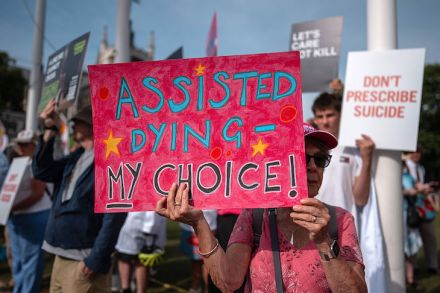
It is not, it’s fair to say, a universal view among Catholic priests that MPs who vote the wrong way on assisted dying and the decriminalisation of abortion up to birth should be punished by excluding them from communion. But so it has turned out with Chris Coghlan, the Lib Dem MP for Dorking and Horley. He voted for assisted suicide and didn’t vote at all on the Antoniazzi amendment allowing women to abort up to birth. Now he’s complaining that his parish priest is intent on denying him communion at mass. Or as he put it on X: My Catholic Priest publicly announced at every mass he was denying me Holy Communion following the assisted dying vote. Children who are friends of my children were there. This followed a direct threat in writing to do this four days before the vote.

Diane Abbott’s masterful Assisted Dying speech will come back to haunt us

From our UK edition

If yours is a sentimental bent, you’ll have been terrifically moved by the spectacle of Jess Phillips MP giving Kim Leadbeater a big hug after the Assisted Dying Bill was passed. Ms Leadbeater has a tendency to look agonised at the best of times. When MPs paid tribute to her in the course of the debate for her compassion, she looked as if she was on the verge of bursting into tears. Now, it’ll be tears of joy – at least for her.

MPs have opened the door to infanticide

From our UK edition

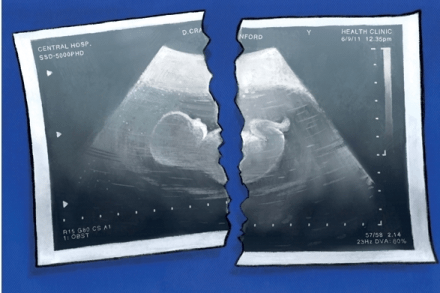
Well, it’s hello to prenatal infanticide now that Tonia Antoniazzi’s amendment to the Crime and Policing Bill has passed the Commons after all of two hours’ debate with 379 MPs voting in favour. Can we get our heads round what that means? Nothing a woman does in relation to her own pregnancy can make her liable to prosecution. At the same age of gestation when premature babies are admitted to neonatal wards with a very good chance of survival, less fortunate foetuses can be killed with impunity by their own mothers. So anyone like Carla Foster, who aborted her baby Lily at 32 weeks’ gestation, will now get off free. There are, in other words, no sanctions for those who kill a foetus at any time right up to birth, so long as it’s your own foetus you’re killing.

Why isn’t the BBC telling us what caused the Ballymena riots?

From our UK edition

Does anyone know what’s actually happening in Ballymena, in Northern Ireland? If you’ve just been following the news on the BBC, it’s actually quite hard to work out what has led to the violence which has injured at least 32 police officers. The initial news bulletins told us that there rioting youths were protesting about a sexual attack on a girl and that two teenage boys were in custody facing charges. My first thought – reverting to the Troubles – was that there was a sectarian element to the whole thing. But we also learned that the police condemned the riots as racist thuggery; so, not sectarianism, it seems, but something to do with race. A few further details came to light yesterday. We found out that the rioters were still rioting.

Olenka Hamilton, Melanie McDonagh, Hannah Moore, James Delingpole and William Atkinson

From our UK edition

31 min listen

On this week’s Spectator Out Loud: Olenka Hamilton ponders whether Poland’s revival is a mirage (1:24); Melanie McDonagh asks who killed the postal service (9:52); Hannah Moore argues that family cars aren’t built for families any more (14:35); James Delingpole reviews Careme from Apple TV and Chef’s Table from Netflix (21:15); and, William Atkinson provides his notes on Thomas the Tank Engine (26:48).  Presented by Patrick Gibbons. Produced by Oscar Edmondson and Patrick Gibbons.

Pope Leo probably isn’t that liberal

From our UK edition

Frankly, most people knew little about Robert Prevost before his election as pope, so there's been a scramble to unpick Leo XIV's past record to judge where he might take the papacy. ‘The promotion of gender ideology is confusing, because it seeks to create genders that don’t exist,’ he told journalists We know already that he's not terribly keen on the US President's repatriation of illegal migrants, nor on J.D. Vance's particular take on social issues. And he's got the whole Francis programme on putting the poor centre stage. There are other Francis touches; when he did visitations to Augustinian communities as head of the order, he'd help with the washing up after dinner. He seems, in fact, a genuinely humble sort.

Does Leo see himself as an American Pope?

From our UK edition

In theory, we’ve got the first American Pope, Robert Prevost. Born and raised in Chicago, university educated in Philadelphia. Parents French/Italian and Spanish – hence his command of four languages. Did Leo XIV so much as mention the US during his first speech from the balcony? He did not. Maybe conscious that being an American cuts less ice in the church than being Latin American, he mentioned the Peruvian pilgrims in St Peter’s Square and the Peruvian church (where he ministered as a bishop) during his address, and spoke to them in Spanish. But zilch about his country of origin, nada in the English language. It would have been fascinating to hear American-inflected English from that balcony. But we didn’t. This is significant.

Who stamped out the postal service?

From our UK edition

Tried to send a parcel lately? Or a letter? If it involves a trip to a post office, all I can say is, give it time. A fortnight ago, I was posting a book to a friend and took it to the nearest post office – the central, City of London one. It’s housed in a convenience store: handy if you want a samosa but lacking dignity, somehow. All the electronic terminals were out of action, four or five of them. The queue was patient but prohibitively long. Thinking bad thoughts about privatisation, I made my way to the post office in Kensington Church Street, which is a proper outfit; that was closed. I tried the Kensington High Street branch, but its machines were out of action too. I gave up.

The two young women who blazed a trail for modernism in Ireland

From our UK edition

In 1921, the sternly abstract cubist Albert Gleizes opened the door of his Parisian apartment to two young women in their twenties, the Irish artists Evie Hone and Mainie Jellett. They explained that they wanted him to teach them his method of ‘extreme cubism’. He wasn’t sure that he had a method, nor whether it was teachable. They were inexorable. Their gentle voices and their tenacity, he wrote later, terrified him, and he capitulated. They had accepted his pronouncements on ‘painting without subject’; now they wanted to know how. They were to be trailblazers for modernism in the newly independent Ireland, Jellett as a painter and Evie as both painter and artist in stained glass – the striking east window in Eton College is her work.

Trans men using women’s toilets isn’t always a problem

From our UK edition

The Equalities and Human Rights Commission's clarification of the Supreme Court ruling on what is a woman is not as clear as it looks. It says that trans people may not use single-sex spaces – notably lavatories – but must not be left without spaces to use. So, the hunt is on in hospitals, restaurants, sports arenas for space that can be turned into gender neutral lavatories. Perhaps disabled loos can be turned into gender neutral ones, on the basis they're intended for one person, so long as wheelchair users can jump the queue. I don't think any of us have a problem with individual lockable lavatories; it's the ones with shared sink space and mirrors that seem problematic, and obviously those horrible changing areas without cubicles are another matter.

The Pope’s funeral was symbolic of the man

From our UK edition

The funeral of Pope Francis is perhaps his last chance to set his mark on the papacy. The ever so slightly pared down ceremony today is symbolic of the man, as were so many of his other ways of being pope. It will be difficult for Francis’s successor to return to the more ornate habits of his predecessor Pope Benedict XVI, let alone the monarchical ways of earlier popes. In some ways this is a shame – those traditions weren’t about the individual, but about the office, though they may jar with modern sensibilities. The function of the pope is not to be liked as widely as possible One of the problems about Francis, in fact, was the extent to which he was successful as a personality pope.

Pope Francis had his priorities right

From our UK edition

After Pope Francis emerged from the Gemelli hospital in Rome last month, a reflection attributed to him a few years ago returned to circulation. It was on ‘hospital’. Some of it was the usual, about how it’s where like meets unlike (‘In intensive care you see a Jew taking care of a racist’ etc). Some seems like standard homely Francis: ‘This life will pass quickly, so do not waste it fighting with people… Do not worry too much about keeping the house spotless.’ And it ended: ‘Love more, forgive more, embrace more… And leave the rest in the hands of the Creator.’ That was the disconcerting thing about Francis. Everything eventually boiled down to the love of God. It’s why even sound criticism of him somehow misses the mark.

How Pope Francis kept the faith

From our UK edition

As timing goes, a pope simply can’t do better than to die just after Easter Sunday. The moral of the thing hardly needs saying. Francis died in Christ and will share His Resurrection. In fact, that’s exactly what several bishops have been observing today. But Francis also had his Good Friday. He was desperately ill in the Gemelli hospital in February, being very close to death in particular on 28 February. But he pulled through with all the drugs and therapies possible, and went triumphantly on. For that’s what he did. That popemobile trip round St Peter’s Square yesterday, the meeting with J.D.

Is it time for Christians to unite over Easter?

From our UK edition

So, you thought the date of Easter, which rambles irritatingly round the spring calendar, was settled by the Synod of Whitby, no? That gathering in 664 AD, which established that Northumbria would celebrate Easter in the Roman calendar, used to be one of the events that Every Schoolboy Knows, though probably not now. There were two rival ways of computing Easter, the Celtic and the Roman, and the problem was that King Oswald belonged to the Irish/Iona tradition, and his wife, Eanflaed, kept the Roman calendar. One bit of the court would be in Lent and fasting, vegan-style, and abstaining from sex and fighting, while the other was celebrating Easter, gorging on Paschal lamb and presumably up for conjugal relations and brawling.

Where the King went wrong on Maundy Thursday

From our UK edition

It is an unfortunate truth that the picturesque Maundy Thursday service celebrated today in Durham, in which the King distributes Maundy money to deserving individuals, is a watered down version of the original. It started out in abbeys and churches when clerics would wash each others’ feet in imitation of Christ washing the feet of the Apostles before the Last Supper. Bad King John adopted the tradition in 1210 by washing the feet of poor men and it was maintained by monarchs until about the Glorious Revolution of 1688 – James II was the last to do it properly – until it was finally replaced with the hygienic but not very moving ceremony of distributing money by George II.

Why shouldn’t Livia Tossici-Bolt try to prevent abortions?

From our UK edition

How do you breach an abortion buffer zone protection order? Why, by being within 150 metres of any part of a building where abortions are carried out. You’re not allowed to cause harassment, alarm or distress to anyone going to them, nor obstruct them from the site. Neither are you allowed to ‘influence’ anyone having or providing an abortion. And there’s the thing.

Children’s books are too depressing

From our UK edition

The Carnegies are a long-running award for children’s writing and illustration, established by the Library Association in honour of Scottish philanthropist Andrew Carnegie and first awarded in 1936 to Arthur Ransome’s Pigeon Post. This year’s shortlist of 16 for fiction and illustration, chosen by a dozen librarians, is out now and billed thus: ‘Marginalised Male Perspectives Explored with Empathy and Hope’. So, boys are the new girls as the left-behinds of our day and white boys in particular are the group most obviously marginalised.

Which Saint Patrick are we celebrating?

From our UK edition

Time was, you knew where you were with the patron saint of Ireland whose feast is 17 March. He was a Briton and he tells us in his Confessions that, when he was a teenager, he was captured by Irish slave traders and taken to Ireland, where he herded sheep. He turned to God and was told that he would escape; he duly got a passage back home. But in a dream, he heard the Irish calling out to him to come back to Ireland and walk again among them, and he knew his mission was to bring them the gospel. So he had himself consecrated bishop, returned to Ireland in AD 432 and converted the Irish in short order, with many miracles.

Why should cohabitees get the benefits of marriage?

From our UK edition

One way or another in life, we end up making choices, even if we think we’re choosing not to choose. The choice not to marry, to live with someone instead, is one example. Passing on the public commitment and going for sex plus domesticity is a choice, one in which, I imagine, the absence of commitment is part of the appeal. You don’t fancy the for-better-or-worse stuff, the Waterford glass wedding presents, the joint pension provision? Well, that’s just dandy, but complaining that you don’t have the perks of matrimony when your open-ended arrangement breaks up does seem to be trying to have it both ways. And having it both ways is precisely what the government seems to want to encourage.  It’s launching a consultation on giving greater rights to cohabitees.

Are you Ramadan-ready?

From our UK edition

‘Are you Ramadan-ready?’ That was the poster in Sainsbury’s advertising its delicious range of fast-breaking foods (rice was one). And the striking thing about it was… the ‘you’. That ‘you’ means the normal customer, the default Sainsbury’s shopper. Same with the email I got from the swanky Belgravia hair salon I used to visit: Here, we understand that Ramadan is a time of reflection, renewal and spiritual focus – and we also know how important it is to take a moment for yourself amid the busy days of fasting and prayer. That’s why we are delighted to announce that our salon will be open late during Ramadan, offering evening appointments so you can indulge in a little luxurious self-care after Iftar [the fast-breaking meal after sundown].