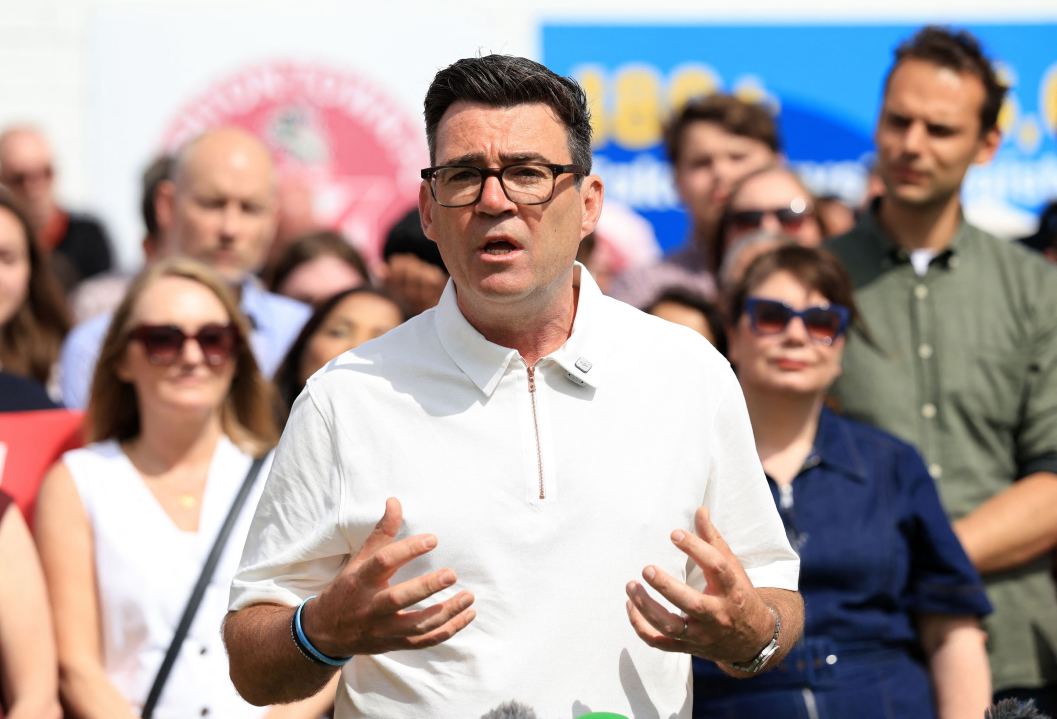
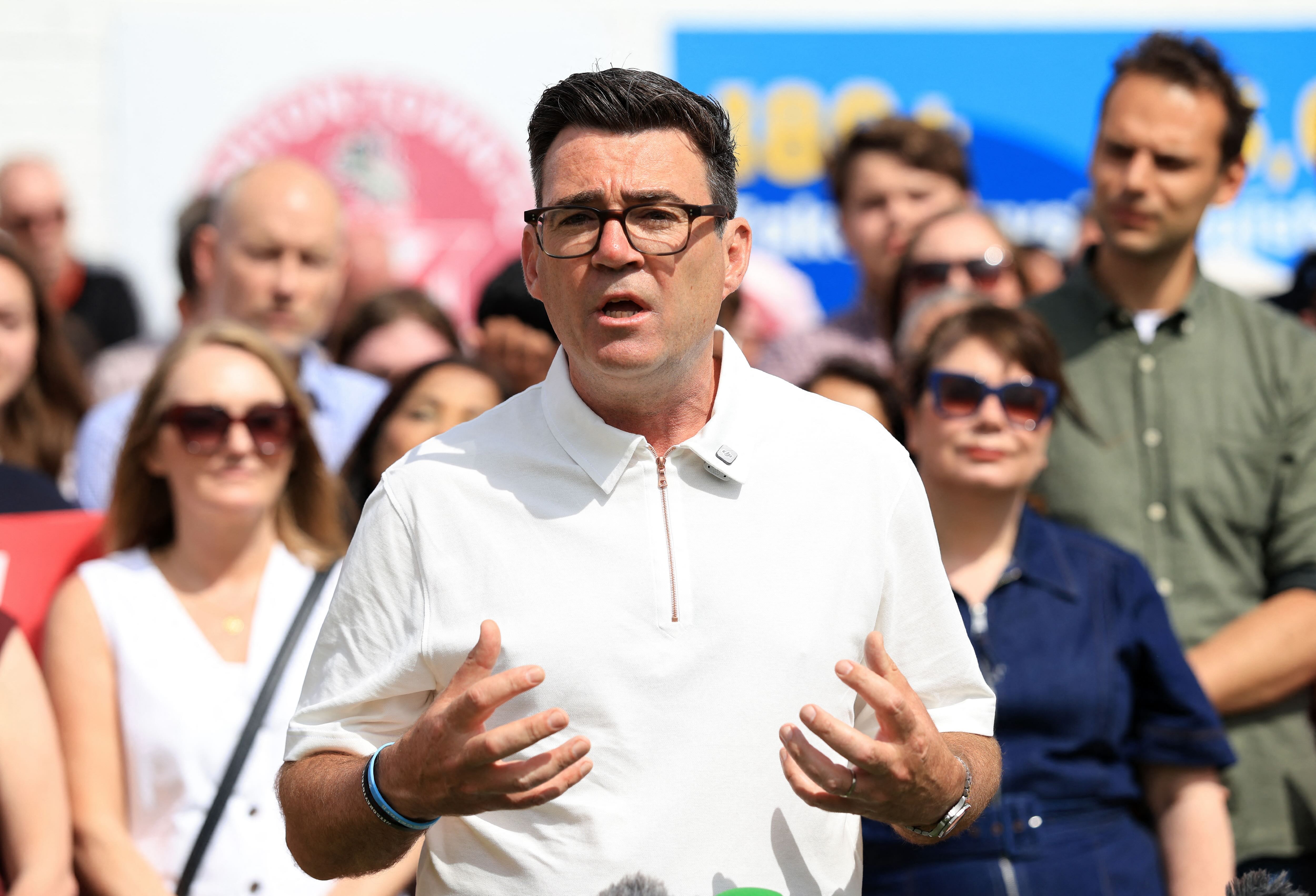
‘Catholic by upbringing but not particularly religious’ is how Andy Burnham described his religion to the Huffington Post in 2015. He will be, if he wins the leadership ballot, the first cradle Catholic PM.
At the annual summer party for the Catholic weekly, The Tablet, its editor, Brendan Walsh, observed that Burnham still goes to mass ‘occasionally’ but that’s about as far as anyone goes to suggest he is actually practicing. His much-quoted observation from a Guardian interview in 2009, that ‘Three things are important in my life, apart from family. Everton FC, the Labour Party and the Catholic church – in that order’ is historic. Now, as in an interview with The Times’ Patrick Maguire, that observation is prefaced by: ‘I used to say…’
So you’ll excuse me if I decline to feel even a batsqueak of excitement at the prospect of a lapsed Catholic becoming PM. In theory, Boris Johnson was the first Catholic PM, having been baptised in the faith by his Catholic mother; but even after his third marriage was solemnised in Westminster cathedral (correctly, according to Canon Law) no one ever confused him with a practising Catholic.
Burnham is different. His mother Eileen raised him in the faith. He’s an ex-altar boy, and his mother told the Mirror in 2015, ‘You should have seen the fights he and his brothers had on Sundays. They were all altar boys but Andy had to be the one at the front holding the Communion plate.’ So, not just cultural Catholicism, but emphatically part of a Catholic culture. In his interview with the Huffington Post, he observed that ‘if I think of the church of my youth, and the priests that I knew, the feeling and overriding mood was quite forgiving really, quite humane, humorous, irreverent, even the priests.’
He grew up near Warrington in Cheshire, and back then, the association between the faith and the Labour party was visceral; he’s spoken in the past about the reflexive Labour sympathies of the teachers at his Catholic school. In 2012, when he was Shadow Health Secretary, he observed that ‘I’ve always said — and some people won’t like this that what I used to have to read in the catechism, the enfranchisement of it on Earth was the Labour Party.’
Well, that’s how it was in the 1980s. Burnham could say later that ‘There was, and still is, a direct read-across between what I was learning at school and church and Labour values.’ And so there was. In that culture, there was a visceral distaste among Catholic clergy for Thatcherite values and politics. In that sense, Burnham had an integrated background, where the religion fed into the politics, and the politics found expression in the Labour party.
He, like Robert Kenyon, the Reform candidate in Makerfield, sent his children to St Edmund Arrowsmith, though unlike Kenyon, Burnham didn’t get pasted by Fiona Bruce for critical observations about abortion. As Cosmopolitan magazine approvingly observed in its assessment of Burnham and women’s issues, ‘Burnham is pro greater reproductive rights for women. He consistently voted against restrictive amendments during major debates on the Human Fertilisation and Embryology Bill in 2008, rejecting lower time limits for terminations’. So when you get, as you do, abortions at 24 weeks, an age at which some wanted babies survive in incubators, Burnham can take his share of responsibility. It may be principle; it may also be that the contemporary Labour party has no space, none, for dissent on the abortion issue and no politician on the make can afford to fall foul of the orthodoxy.
His drift away from Catholicism came, he said in that Huffington Post interview, during the pontificate of Benedict XVI. ‘And it seemed at some point with the change of Popes to click into a more judgemental mode and became much more obsessed with sexuality and issues related to sexual behaviour. And in that period, I drifted more and more away and Ratzinger [Pope Benedict XVI] said he wanted a “smaller, purer” church, which I found quite terrifying actually.’
All of which suggests that Burnham couldn’t be bothered to read Benedict’s actual encyclicals. If he can spare the time, he could find a lot on social justice in what is, I think, one of Benedict’s finest, Caritas in Veritate. In the crucial section 25 he writes: ‘I would like to remind everyone, especially governments engaged in boosting the world’s economic and social assets, that the primary capital to be safeguarded and valued is man, the human person in his or her integrity’.
How do you square all that with an obsession with sex? Can’t see it myself. There’s quite a lot in Benedict’s address to parliamentarians in Westminster Hall which you’d think would appeal to a thoughtful Christian politician, but again, Burnham didn’t notice.
On the other hand, he approved of Pope Francis who, he said, ‘spoke for equality and compassion and for humanity, in a world where we see political leaders target minorities and marginalise people’. He visited Francis at the Vatican in 2023 and presented him with a Manchester United football shirt. The Pope, he observed, liked his initiative to end rough sleeping in Manchester.
I can’t say I care for the concept of cultural Catholicism or indeed cultural Christianity, which is probably all Andy Burnham’s religion amounts to nowadays
On the neuralgic but non-religious issue of assisted suicide – let’s drop the cant about assisted dying, shall we? – he says he’s not against it in principle, but wants to make sure that adequate palliative and hospice care is available first. It’s a usefully pragmatic position, though it’s undoubtedly true that hospice provision is patchy and erratic. But if his groundedness in the principles of social justice count for anything, he should be concerned at the prospect that people who feel themselves to be a burden on their families and on society may feel obliged to hasten their deaths. For the most effective critique of that, see the contribution in the last Commons debate by the notable non-Catholic, Diane Abbott. In fact, if a Burnham administration makes parliamentary time available for the successor bill, identical in every respect to Kim Leadbeater’s, it’ll show he’s gone to the dark side.
I can’t say I care for the concept of cultural Catholicism or indeed cultural Christianity, which is probably all Andy Burnham’s religion amounts to nowadays, though the prospect of an Andy Burnham premiership gets some Catholic priests very excited. Catherine Pepinster, who was editor of The Tablet when Burnham gave it an interview in 2010, recalled him saying, ‘The Church has helped to shape me – it’s made me who I am’ but also quoted him saying that he isn’t sure if God exists (though he made the oath when returning to parliament with real vigour).
It’s living faith that matters. Burnham’s children’s school is named after St Edmund Arrowsmith who was hanged, drawn and quartered in 1628 in Lancaster as a priest. ‘I die a constant Roman Catholic and for Christ’s sake’, he said. Lancastrian Catholicism, which is what Burnham grew up with, is rich in that martyrs’ tradition. By comparison with that heroic faith, ‘Catholic by upbringing but not particularly religious’ doesn’t really cut it.




Comments