

A few weeks ago, an Irish Times columnist, Fintan O’Toole, wrote about receiving a copy of a 1930s book of etiquette issued by the Christian Brothers – a religious teaching order once notorious for the liberal use of the strap – called Christian Politeness and Counsels for Youth. He had fun mocking the strictures intended for the benefit of working-class Catholic boys. Indeed, he added his own: ‘Boys subject to physical or sexual abuse by Christian Brothers should remain silent on the subject and avoid at all costs giving scandal.’ Ha ha.
Well, when I looked at it, I found myself rooting for the Brothers and their insistence that when in repose the mouth should not remain partly open, that you should masticate with the mouth closed and that politeness should be observed even when a person dines alone.

It’s easy to dismiss etiquette guides as fussy, old-fashioned or desperate. But they are mocked by those who don’t need them. For those of us who made our way into circles we weren’t born to, they are the enablers of social mobility. They are indispensable, even if they add to your angst. I went from Ireland as a teenager to an interview at a public school where I hoped to get a scholarship to do A-levels. There would be lunch, and I read in my etiquette guide that I should eat pudding with a fork and spoon. On the one hand, this gave me sleepless nights about how to deploy them; on the other, it opened up the possibility of mixing with the fork-and-spoon classes.
The question matters much less now, but back then, it helped me feel less like Eliza Doolittle in her flower-seller days. If you’ve been brought up to navigate cutlery (from the outside in) at home, you will say these things don’t matter. But if your family don’t eat apples and pears with a knife and fork, or asparagus without them, and, if greeted with ‘How do you do?’, say ‘Very well, thank you’ (the correct response is another ‘How do you do?’), it’s handy to know what others do.
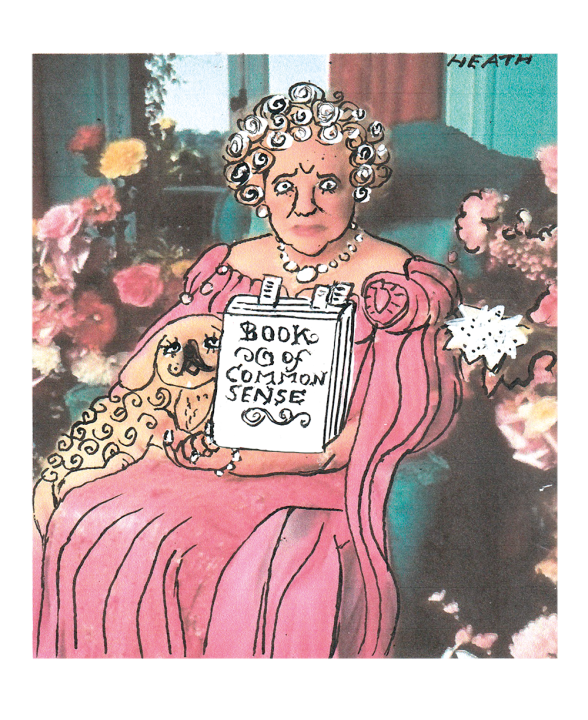
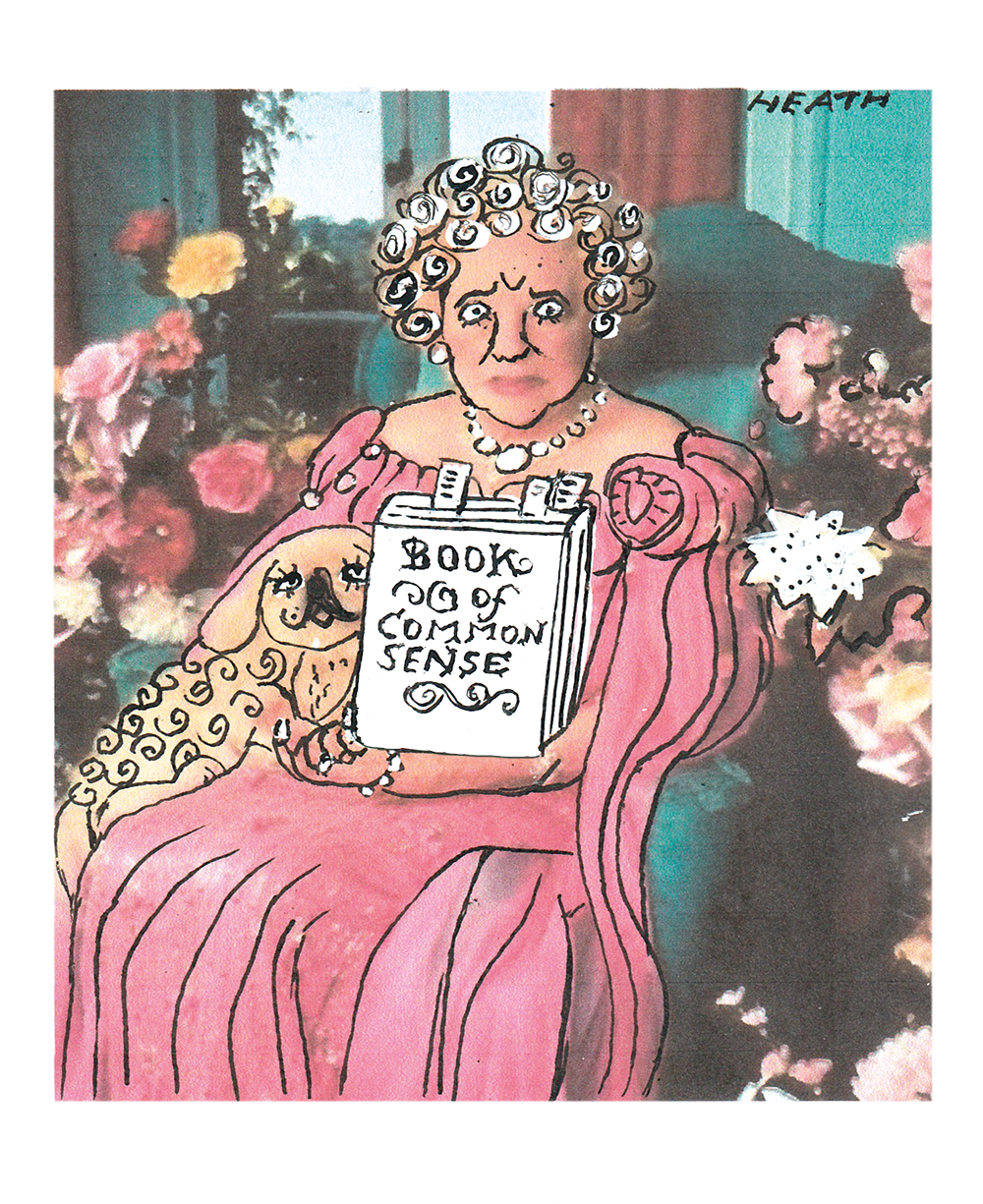
Today, the socially insecure don’t have to buy a book because, like everything else, the business is managed by AI, as represented by a lady bot on Instagram called Eleanor. Etiquette with Eleanor is the modern version of Eleanor Roosevelt’s Book of Common Sense Etiquette. That was one of many to hold that decorum is not about adherence to formal rules but about approaching all social situations with consideration for others. (All are then very bossy about specifics.) The AI Eleanor is a Brit because AI knows that manners are best taught by a mature blonde lady with an English accent who will tell you that British people never start off a conversation by asking ‘What do you do?’, presumably preferring the late Queen’s formula: ‘Have you come far?’ Eleanor is insanely annoying.
There have been guides to correct form for centuries. The Christian Brothers’ one was modelled, in its way, on the 18th-century Rules of Christian Decorum and Civility by Jean Baptist de La Salle, the great Catholic educator. He wanted to give civility a Christian character, but his insistence that manners are inspired by love of God and neighbour did not stop him being very prescriptive about, say, boisterous laughter. ‘It is contrary to decorum for you to laugh at and make fun of some misfortune or accident that may have happened to someone… charity and propriety require that you should regret what causes suffering to others.’ You should see what I do. But this was a guide for the working classes and the first part, about the care and cleanliness of the body, was written for people who didn’t much wash.
If you’ve been brought up to navigate cutlery (from the outside in) at home, you will say these things don’t matter
The Christian Brothers’ Christian Politeness was similarly keen on modesty and cleanliness, especially in respect of the neck and ears, but dwelt on the big picture: ‘Cruel words break no bones, make no bruises but may break hearts and lacerate feelings.’ The authors were also stern about not cutting bread rolls with a knife, rather than breaking them with the fingers. But this was, remember, advice for poor boys who could be humiliated by their mistakes.
My favourite of the genre was Barbara Cartland’s Etiquette Handbook (1962). Her views on relations between the sexes are a little retro, but on manners, she too emphasises that it’s the spirit of the thing that counts. Her example, with which we all no doubt identified, is Lady Louis Mountbatten who, when asked if she would curtsey to Wallis Simpson, declared that: ‘As Dickie and I are very fond of the Duke and it will give him great pleasure if his wife receives the same courtesy as we give him, I will most certainly curtsey to the Duchess.’ But having established this generous principle, Cartland is terrifically insistent that you must never refer to ‘writing paper’ as ‘notepaper’.
Sneer if you will at these guides, but I entered adult life knowing that paper napkins should only be used at children’s parties. Look where it’s got me.






Comments