Melanie McDonagh

Melanie McDonagh

Melanie McDonagh is an Irish journalist working in London.

Hot cross buns are for Easter, not for life

From our UK edition

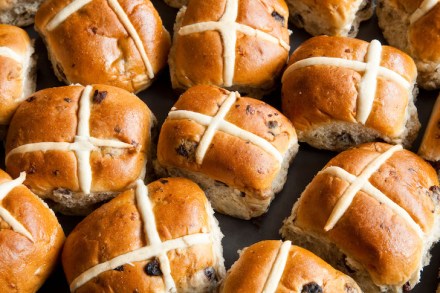
More proof that we’ve completely lost it when it comes to the cycle of the year. It’s not just that right in the middle of the twelve days of Christmas, Marks & Spencer started to sell Easter eggs; Waitrose has reported that hot cross buns are turning into a year-round staple. Not just for Good Friday, then. Leyla Page, Waitrose's seasonal bakery buyer, calls it a 'winter staple' – sales, apparently, are up 39 per cent on last year – and asks, 'Is it even winter if you haven’t reached for a hot cross bun?' Hot cross buns are cross because they’re for Good Friday, the day the Lord died on the cross Well, yes. Hot cross buns are cross because they’re for Good Friday, the day the Lord died on the cross.

Banning trail hunting is part of Labour’s endless culture war

From our UK edition

If you actually wanted to create a law that would genuinely transform animal welfare in the UK, the sane approach would be to follow the example of the organisation Compassion in World Farming. They call for farming practices that ‘enable animals to engage in their natural behaviours as identified by scientific research’ (not that we need much scientific research to know what makes chickens and pigs happy). We would then have to pay and protect farmers to provide that kind of husbandry. It would be a very big, very expensive ask. The provisions in the current animal welfare bill banning colony cages for hens and farrowing pens fall way short of that. Besides, the government has other priorities. It has been reported this weekend that Labour is all set to ban trail hunting.

Christmas I: James Heale, Gyles Brandreth, Avi Loeb, Melanie McDonagh, Mary Wakefield, Richard Bratby & Rupert Hawksley

From our UK edition

45 min listen

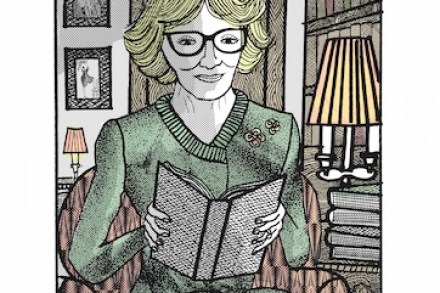
On this week’s special Christmas edition of Spectator Out Loud – part one: James Heale wonders if Keir Starmer will really have a happy new year; Gyles Brandreth discusses Her Majesty The Queen’s love of reading, and reveals which books Her Majesty has personally recommended to give this Christmas; Avi Loeb explains why a comet could be a spaceship; Melanie McDonagh compares Protestant and Catholic ghosts; Mary Wakefield explains what England’s old folk songs can teach us; Richard Bratby says there is joy to be found in composers’ graves; and, Rupert Hawksley provides his notes on washing up. Produced and presented by Patrick Gibbons.

What humans can learn from mice about monogamy

From our UK edition

Time was, we took lessons from brute creation. Medieval bestiaries, books of beasts, weren’t simply descriptions of animals; these compendiums of their home lives and habits, mostly derived from a text called the Physiologus of the second century, were for the edification of the reader. The upshot of the research is that we are roughly two third monogamous, which puts us way ahead of dolphins and chimps 'But ask now the beasts, and they shall teach thee, and the fowls of the air and they shall tell thee', said the book of Job. The lion, being brave and kingly, represented Christ. Some animals had bad characteristics to avoid, like the duplicity of the fox.

What makes a ghost Catholic or Protestant?

From our UK edition

W.H. Auden, in his essay on detective fiction, ‘The Guilty Vicarage’, asked: ‘Is it an accident that the detective story has flourished most in predominantly Protestant countries?’ He was thinking about confession and how this changes things. In Auden’s view, murder is an offence against God and society and when it happens it shows that some member of society is no longer in a state of grace. But confession gives a transgressor a means of returning to a state of grace, so the moral order can be restored without recourse to a policeman. You wonder: do ghost stories too flourish most in a Protestant (or formerly Protestant) society?

Down with exclamation points!

Punctuation is a gendered thing. I’ve been trying to stop myself overusing exclamation points and it’s been difficult. Exclamation points are girly because they’re a way of taking the sting out of what you say; they make any pronouncement seem more tentative, less serious. They’re the equivalent of a disarming smile, a marker that says: “No offense!” You add them to the end of a sentence to prevent anyone thinking you’re being bossy or critical. They’re an economical form of non-confrontation. Women use them far more than men. Almost 20 years ago, a study in the Journal of Computer-Mediated Communication found that women used nearly three-quarters of the exclamation marks in electronic messages, but it identified the tic as “markers of friendly interaction.

Punctuation

The genius of William Nicholson

From our UK edition

Even if you think you don’t know William Nicholson, it’s a fair bet that you’ve come across his work. If you’ve read those excellent children’s books, The Velveteen Rabbit or Clever Bill, you’ll have taken in his drawings – never wholly sentimental, even the rabbit – into your mental world. And if you’ve seen his woodcuts (they’re everywhere) – say, of Queen Victoria looking stout and dour – you’ll have noticed their economy, their clever use of space and their humour. This exhibition has the familiar elements of his work, but also the grander stuff: the still lifes, the landscapes, the portraits. Then there are the unexpected aspects – who knew he designed costumes for the stage production of J.M. Barrie’s Peter Pan?

Witches, dragons and the Terrible Deev: a choice of this year’s children’s books

From our UK edition

Now here’s a combination you never thought you’d see, not least because one of them is dead: Maurice Sendak and Stephen King. But there they are in Hansel and Gretel (Hodder Children’s, £20). Who knew that Sendak had illustrated Grimm, or that Mr Horror wrote fairy tales? It turns out that Sendak created sets for the Humperdinck opera, and King writes to these illustrations, which loom large and dramatic. King says that he has always been attracted both to fairy tales and to Sendak, and that one image especially that spoke to him was the infamous candy house becoming a terrible face. I thought: this is what the house really looks like, a devil sick with sin, and it only shows that face when the kids turn their backs...

Would you pay £65 for toothpaste?

From our UK edition

Time was, you didn’t look forward to going to the dentist. Even for routine stuff, your highest aspiration would be to get it over as quickly as possible with as little unpleasantness as possible. Most of the procedures seem pretty mechanical, including having the most sensitive bits of your teeth scraped with a metal thing. That was what I thought before I encountered Anti-Ageing Dentistry at the Nejati clinic in Belgravia, where the founder – it seems wrong to call Brandon Nejati a mere dentist – talks about ‘pampering’. This is where a really expensive luxury spa meets dentistry and it’s the most obvious example of how oral care is changing.

BBC in crisis, the Wes Streeting plot & why ‘flakes’ are the worst

From our UK edition

36 min listen

Can the BBC be fixed? After revelations of bias from a leaked dossier, subsequent resignations and threats of legal action from the US President, the future of the corporation is the subject of this week’s cover piece. Host William Moore is joined by The Spectator’s commissioning editor, Lara Brown, arts editor, Igor Toronyi-Lalic, and regular contributor, Melanie McDonagh. They also discuss the drama of this week’s Westminster coup plot, and Melanie’s new book about why Catholicism attracted unlikely converts throughout the twentieth century. Plus: what’s the most bizarre excuse a friend has used to back out of a social engagement?

A treasure chest of myths: The Poisoned King, by Katherine Rundell, reviewed

From our UK edition

You wait ages for an intelligent, literate children’s book, then two come along at once. There’s Philip Pullman’s The Rose Field and Katherine Rundell’s The Poisoned King. Of the two, Rundell’s is easier on the wrist: 336 pages to Pullman’s 621. She is an accomplished writer, the author of a study of John Donne. A scholarly background is all to the good here, for she has a treasure chest of myths and stories to rummage in. Her Impossible Creatures series (of which The Poisoned King is the second) is based on an archipelago, Glimouria, which holds the endangered creatures of mythology. A map of the islands, in Tomislav Tomic’s illustration, is faintly reminiscent of Pauline Baynes.

Catherine Connolly’s victory was no landslide

From our UK edition

Query: what kind of electoral landslide is it when most of the electorate doesn’t turn up? Not quite a landslide, I’d say – more the shifting of shingle. To put it another way, in the Irish presidential election, fewer than half of voters turned out (45.8 per cent). Three in four electors did not vote for Catherine Connolly, the United Left candidate. There wasn’t much of a turnout in the previous election, of course, but that was because the sitting president, Michael D. Higgins, was such a shoo-in. This time, the stay-at-homes, at 55 per cent of voters, were way ahead of those who could be bothered.

The issues that will haunt the new Archbishop of Canterbury

From our UK edition

We have it on the best authority that the meek shall inherit the earth and in the meantime in the case of Sarah Mullally, Bishop of London, it’s the See of Canterbury. She is a modest, very nice woman. I like her. I’ve met her a few times and she was always pleasant, decent and unassuming. On one occasion, she told me about being patronised on account of her dyslexia, which makes it tricky for her to negotiate sermon texts. She gave the impression that she’s used to being rather looked down on, though the men who do so may now take a different approach. She’s not an intellectual and wouldn’t pretend to be. She is, as she said in her acceptance speech, a listener; the trouble may come if she goes into a different mode, acting on decisive issues.

There’s something vulgar about Freemasons

From our UK edition

Goodness, isn’t there something a bit hoary about the notion that members of the Metropolitan Police may have to declare if they’re Freemasons? The idea has come up recently in the context of discussion on ‘declarable associations’ – those organisations you’re obliged to admit to belonging to if you’re a London copper.

Why I like Pope Leo

From our UK edition

The Pope has given his first interview, with the news agency, Crux, and the nice thing about it is there are no surprises. Pope revolted at obscene wealth and the growing gap between rich and poor? Jesus Christ wasn’t keen on the rich either.  Or, as Leo put it when he was asked about growing polarisation in society: ‘One [factor] which I think is very significant is the continuously wider gap between the income levels of the working class and the money that the wealthiest receive… Yesterday, the news that Elon Musk is going to be the first trillionaire in the world. What does that mean and what’s that about? If that is the only thing that has value anymore, then we’re in big trouble.

In Our Time won’t be the same without Melvyn Bragg

From our UK edition

The education system may produce ignoramuses (my daughter finished school in June, never having been taught a thing about Napoleon, the French Revolution, Julius Caesar, the Industrial Revolution, or any basic geography), but there was solace out there for the unlearned and undereducated: they could always listen to In Our Time, Melvyn Bragg’s radio exploration of fabulously random assorted subjects with three (formerly two) specialists in the field. Bragg has announced today he is stepping down from the show, which he has hosted since it was created in 1998.

Down with exclamation marks!

From our UK edition

Punctuation is a gendered thing. I’ve been trying to stop myself overusing exclamation marks and it’s been difficult. Exclamation marks are girly because they’re a way of taking the sting out of what you say; they make any pronouncement seem more tentative, less serious. They’re the equivalent of a disarming smile, the marker that says: ‘No offence!’ You add them at the end of a sentence to prevent anyone thinking that you’re being bossy or critical. They’re an economical form of non-confrontation. Women use them far more than men. Almost 20 years ago, a study in Journal of Computer-Mediated Communication found that women used nearly three-quarters of the exclamation marks in electronic messages, but it identified the tic as ‘markers of friendly interaction’.

The masterpieces of Sussex’s radical Christian commune

From our UK edition

Ditchling in East Sussex is a small, picturesque village with all the trappings: medieval church, half-timbered house, tea shops, a common, intrusive new housing developments down the road, a good walk from the nearest train station and the Downs on its doorstep. But the resonance of the place owes much to the remarkable artistic activity that has bloomed since Eric Gill moved his family there in 1907. It was part craft commune, part lay monastery, a living experiment in distributism, the radical Christian political philosophy that held that land should be distributed as widely as possible. It was an attempt to resurrect the medieval guild.

The subversive genius of Tom Lehrer

From our UK edition

The greatest living American until this week has died at the age of 97. I refer to Tom Lehrer, the finest satirist of the 20th century. He’s the one who observed that satire became obsolete when Henry Kissinger was awarded the Nobel Peace Prize. He was the genius who put the entire periodic table of the elements to the tune of ‘I Am the Very Model of A Modern Major-General’ (Gilbert and Sullivan was his childhood obsession). He was a mathematician who could be as funny about maths and science as about poisoning pigeons in the park (yes he did) or contemporary pieties (‘National Brotherhood Week’).

We should be outraged by Lily Allen’s ‘four or five’ abortions

From our UK edition

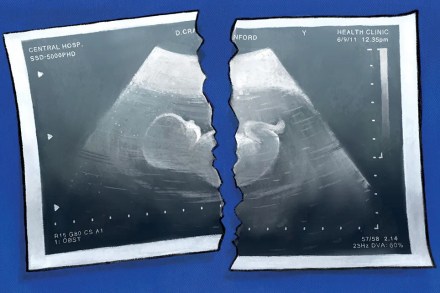
If we want to understand why thousands of women a year in England and Wales have an abortion – 251,377 in 2022, so probably way more now – we could do worse than consider the musings of the singer Lily Allen on the subject. In a podcast chat with her friend Miquita, this took a musical turn. She began singing to the tune of Frank Sinatra’s ‘My Way’: ‘Abortions I've had a few... but then again... I can't remember exactly how many'. Giggling, she continued: ‘I can't remember. I think maybe like, I want to say four or five.’   https://youtu.be/8i7v7lpYFN8?