Jim Lawley

Jim Lawley is a former university lecturer who has lived and worked in Spain for 40 years.

Spain’s Pedro Sanchez won’t limp on for long

From our UK edition

Ahead of next week’s Nato summit in The Hague, Spain’s socialist prime minister has refused to increase his country’s defence spending to 5 per cent of GDP. Pedro Sánchez says that the increase, championed by President Trump and backed by Nato Secretary General Mark Rutte, is ‘unreasonable’. His refusal has disrupted preparations for the summit at which all the allies were to be asked to commit to the 5 per cent target. Spain, currently the lowest spender on defence in Nato, recently pledged to increase from 1.3 to 2 per cent of GDP. To increase to 5 per cent would cost a further €80 billion (£68 billion) a year, Sánchez said in a forthright letter sent to Rutte on Thursday.

The post-Brexit Gibraltar deal is going down badly in Spain

From our UK edition

Conservative and Reform politicians have denounced this week’s post-Brexit Gibraltar deal as a betrayal. ‘Gibraltar is British, and given Labour’s record of surrendering our territory and paying for the privilege, we will be reviewing carefully all the details of any agreement that is reached,’ Dame Priti Patel, the shadow foreign secretary, said. Meanwhile, describing Labour as ‘the worst negotiators in history’, Nigel Farage called the agreement ‘yet another surrender’. Vox declared that ‘Gibraltar is a territory illegally colonised by the UK’ But Spain’s right-wing parties have, if possible, been even more damning.

Will Gibraltar get in the way of Starmer’s EU reset?

From our UK edition

For years, the UK, Spain, Gibraltar and the European Union have been negotiating, on and off, to resolve the complex issue of Gibraltar’s post-Brexit land border with Spain. Now, ahead of next week’s meeting in London when Keir Starmer welcomes EU leaders to discuss a ‘reset’ in UK-EU relations, Spain’s Foreign Minister, José Manuel Albares, has brought ‘the Gibraltar issue’ firmly back into the spotlight.  Referring to the planned reset, which covers a wide range of issues including defence and security, fishing and British exports, Albares told the BBC’s Newsnight programme, 'There are many, many things we need to talk [about], Gibraltar included.

What caused Spain’s blackout?

From our UK edition

By six o’clock this morning, electricity had been restored to 99 per cent of Spain. Restoring people's sense of security and a full return to normality, however, will take much longer. Portugal has been similarly affected as, briefly, were parts of southern France. The sudden outage occurred at 12.33 p.m. yesterday, leaving Madrid without electricity for hours. Where I am in Ávila, seventy miles from the capital, the lights didn’t come on again until 1.30 in the morning. Spain's prime minister Pedro Sánchez said that an investigation was being carried out into the ‘sudden’ loss of electricity generation. ‘It has never happened before,’ he said yesterday evening. ‘All state resources have been mobilised from minute one.

Spain’s defence spending boost pleases nobody

From our UK edition

Just a week after US Treasury Secretary Scott Bessent told Spain to spend more on defence, the country’s socialist prime minister, has unveiled a massive defence development initiative costing over ten billion euros (£8.5 billion). This new plan raises Spain’s defence budget from a mere 1.4 per cent of its GDP, the lowest amongst Nato’s 32 members, to Nato’s current target of two per cent. When announcing the measure, prime minister Pedro Sánchez notably refrained from mentioning Bessent’s directive or US president Donald Trump’s pointed observation that ‘Spain is very low’ in defence spending. He did, however, frame the decision as a necessary response to new global realities: ‘We are facing a change of era that obliges us to take the reins of our own destiny.

Why Spain is cosying up to China

From our UK edition

‘You’ll be cutting your own throat,’ US Treasury Secretary Scott Bessent warned countries thinking of aligning with China. The remarks were made just before Spain’s prime minister, socialist Pedro Sánchez, arrived in Beijing on Thursday with a delegation of ministers, seeking to boost trade, attract investment, and to position Spain as the EU’s chief interlocutor with China. Bessent’s threat came as no surprise. President Trump had just lifted global tariffs above 10 per cent for 90 days for everyone except China, which instead now faces a staggering 145 per cent rate. Bessent’s message couldn’t have been clearer: any friend of our enemy is an enemy. To an extent the hostility is mutual: anti-American sentiment runs deep in Spain.

How Spain is trying to dodge spending more on defence

From our UK edition

Spain's defence spending, at a mere 1.28 per cent of its GDP, lags behind all other Nato members. While most European Union countries have already reached the target of 2 per cent that was agreed back in 2014, at the present rate of progress Spain won’t get there until 2029. Such a leisurely approach is no longer tenable. President Trump has proposed 5 per cent as the appropriate benchmark for defence expenditure, Ursula von der Leyen, President of the EU Commission, is demanding urgent rearmament in Europe and Nato is expected to raise the target to well above 3 per cent at its summit in June.

Luis Rubiales and Spain’s war on machismo

From our UK edition

Luis Rubiales kissed player Jenni Hermoso on the lips during the medal ceremony after Spain won the Women’s World Cup in August 2023. Rubiales, at the time president of the Royal Spanish Football Federation, said the kiss was consensual but Hermoso said it wasn’t and filed a criminal complaint. Rubiales has now been found guilty of sexual assault and fined €10,800 (£8,945). He was also ordered to pay a portion of the costs and compensation of €3,000 (£2,484) to Hermoso. Rubiales has ten days to appeal the sentence. He and three ex-colleagues were acquitted on a separate charge of attempting to coerce Hermoso into changing her story.

What Luis Rubiales’s trial will reveal

From our UK edition

The trial of Luis Rubiales, former president of the Royal Spanish Football Federation, starts in Madrid on Monday. After Spain won the women’s World Cup in August 2023, Rubiales kissed player Jenni Hermoso during the medal ceremony. She says that the kiss was not consensual. Rubiales maintains that it was and, along with three of his colleagues, is alleged to have brought pressure to bear on Hermoso to change her story. If found guilty, Rubiales faces two and a half years in prison for sexual assault and coercion. His colleagues, accused only of coercion, could be sentenced to 18 months each.

Spain’s expat tax won’t last long

From our UK edition

‘There are only two families in the world, as a grandmother of mine used to say: the haves and the have-nots.’ Sancho Panza’s line in Cervantes’ famous novel was echoed by socialist Prime Minister Pedro Sánchez on Monday when he worried that Spanish society was rapidly dividing into two classes: ‘Those who inherit properties from their parents and those who have to spend their lives working to pay the rent.’ Spain certainly has a severe housing crisis. Although the fertility rate of 1.3 children per woman is far below the 2.1 needed to maintain population, mass immigration means that every year the country needs to find homes for over half a million more people. But not even half of the estimated 250,000 new dwellings that are needed are being built.

The solution to Spain’s problems

From our UK edition

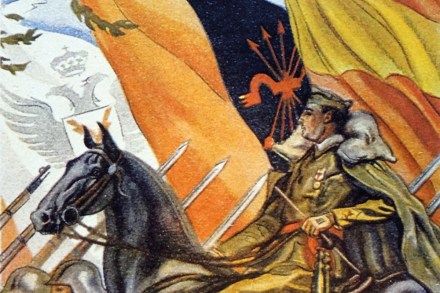
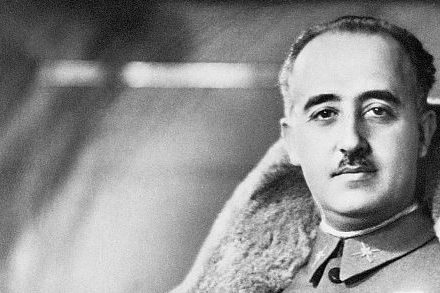
It’s not often that a country can solve a serious, endemic problem quickly, easily and at no expense at all. But Spain can. The problem is some of the country’s left-wing politicians’ harmful ignorance of Spain’s 20th century history – and in particular about what actually happened during the Second Republic (1931-1936) and the resulting civil war (1936-1939). Not knowing the history, they constantly frame 21st century Spanish politics as a continuation of that war. Their misunderstandings and misrepresentations are holding Spain back. Unfortunately, many on the left fondly imagine that they are the proud heirs of noble republicans who fought for democracy against General Franco’s fascist forces.

Spain won’t forgive and forget over Valencia’s deadly floods

From our UK edition

The head of the Valencia regional government has just attempted an impossible task – justifying his administration’s conduct before, during and after the flash floods that killed over 220 people in the Spanish region last month.  Since the catastrophe on 29 October, relentless, richly deserved criticism has been heaped on Carlos Mazón’s right-wing Partido Popular administration, which last year scrapped a special response force for natural disasters. On the day of the floods, instead of monitoring the situation, Mazón enjoyed a leisurely restaurant lunch lasting until six in the evening and then took over an hour to reach the emergency command centre.

Trump’s triumph has infuriated the Spanish left

From our UK edition

'Everybody’s lost but me,' mutters a teenage Indiana Jones emerging from a cave in the middle of the desert to find that the boy scouts with whom he arrived have now disappeared without trace. Spain’s left-wing prime minister might be excused for thinking much the same. Relentlessly upbeat about the benefits of immigration, Pedro Sánchez now finds himself more or less alone in the European Union. And just when he was hoping that fellow progressive Kamala Harris would win the US election, he finds instead that he’s going to have to contend with Donald Trump.  'We will work on our strategic bilateral relations and a strong transatlantic partnership,' Sánchez said, presumably between gritted teeth, in his message of congratulation.

Heads will roll after Spain’s flooding catastrophe

From our UK edition

Spain’s King and Queen were pelted with mud yesterday when they visited Paiporta, epicentre of the flood disaster zone in the Valencia region. Over two hundred people have died in the flooding, dozens of them in Paiporta; more are thought to be trapped and, by this time, surely dead in underground garages and car parks. Local people are furious that the authorities were slow to issue flood warnings when the rains came last Tuesday and then very poor at coordinating what has turned out to be a seriously under-resourced relief effort. Locals seized the opportunity to vent their feelings of abandonment and desperation, chanting ‘Murderers’ and hurling slurry at the group Many people are still without electricity, gas and water. Streets remain blocked by huge piles of cars.

Why Spaniards keep being killed by bulls

From our UK edition

A 57-year-old man was gored and killed during the bull running through the streets of Vall d’Uixo (population 31,000) in Spain last weekend. It was the third goring in three days in the town. In 2023 a total of eight people were killed by bulls in Spain during such events; the year before 23 died.  In 2023 more than a thousand people in the Valencia region required medical treatment after being trampled or gored While in a formal bullfight it is the matador (literally ‘killer’) who almost invariably emerges victorious, in the streets the aggressive, astonishingly fast, half-ton bull sweeps all before it.

Mexico wants Spain to apologise for conquering the Aztecs

From our UK edition

When Claudia Sheinbaum becomes Mexico’s first female president later today, Felipe VI, the King of Spain, will not be present. He has, very pointedly, not been invited to the swearing-in ceremony because he hasn’t apologised for Spain’s invasion and conquest of the Aztec empire 500 years ago.  Spaniards are alert to the ‘emotional fraudulence’ of professing guilt for something that happened 20 generations ago This diplomatic stand-off began in 2019 when Andrés Manuel López Obrador, then president of Mexico, wrote to King Felipe inviting him to express his regret.

How can we trust the National Trust?

From our UK edition

A few weeks ago I felt it was my civic duty to draw attention to the many grammatical mistakes and spelling errors in the National Trust’s pronouncements. The abundance of howlers seemed to constitute something of an educational hazard: ‘How many impressionable schoolchildren will assume that the phrase “It’s [sic] location is unknown”, published by such an august body, must be correct?’ It’s hard to envisage the National Trust managing to reduce ‘unequal access to nature, beauty and history’ if it can’t correct elementary mistakes Since such mistakes can be corrected easily, at no cost and almost immediately, it seemed reasonable to think that they’d soon be gone.

Is anti-tourism becoming Spain’s Brexit?

From our UK edition

Believing that membership of the European Union was undeniably beneficial for the UK economy, many Remainers struggled to understand why the majority had voted against it. One hypothesis was that ‘Leavers’ felt they’d missed out on the benefits – that perhaps people who thought the wealth hadn’t been spread around fairly had voted for Brexit in order to teach the greedy elite a lesson. Here in Spain, it’s tourism that, to the authorities’ surprise, has suddenly proved unpopular. It’s easy to see why they considered tourism to be undeniably beneficial. After all, it accounts for about 13 per cent of GNP and a quarter of the new jobs created in the country last year.

How does Spain solve a problem like Carles Puigdemont?

From our UK edition

Last week saw dramatic events in Catalonia as Carles Puigdemont, wanted for almost seven years by Spanish justice for spearheading the region’s illegal declaration of independence in 2017, reappeared in the centre of Barcelona and delivered a rousing speech to some 3,500 of his adoring supporters. Then, just as suddenly, he disappeared – to the massive embarrassment of the several hundred policemen who were standing close by waiting to arrest him (though two of them, it seems, may have connived in the escape).    Puigdemont says that he’s now back in Waterloo, south of Brussels, where he’s made his home since 2017: the Belgian authorities refuse to extradite him to Spain.

Catalan separatist leader Carles Puigdemont escapes arrest – again

From our UK edition

There was something fitting about the name of the thoroughfare in which Carles Puigdemont was welcomed back to Barcelona on Thursday. Cheering supporters lined el Passeig de Lluis Companys as the former president of Catalonia arrived back in the city after almost seven years of self-imposed exile. In 1939, seeing that General Franco’s troops were about to enter Barcelona, Companys, another former president of Catalonia, fled to France. Captured near Nantes by the Gestapo, he was returned to Spain where he endured five weeks of torture. A court martial lasting less than an hour then sentenced him to death. Refusing to wear a blindfold, Companys stood barefoot before the firing squad so that he could die touching the soil of his beloved homeland. ‘Per Catalunya!’ (‘For Catalonia!