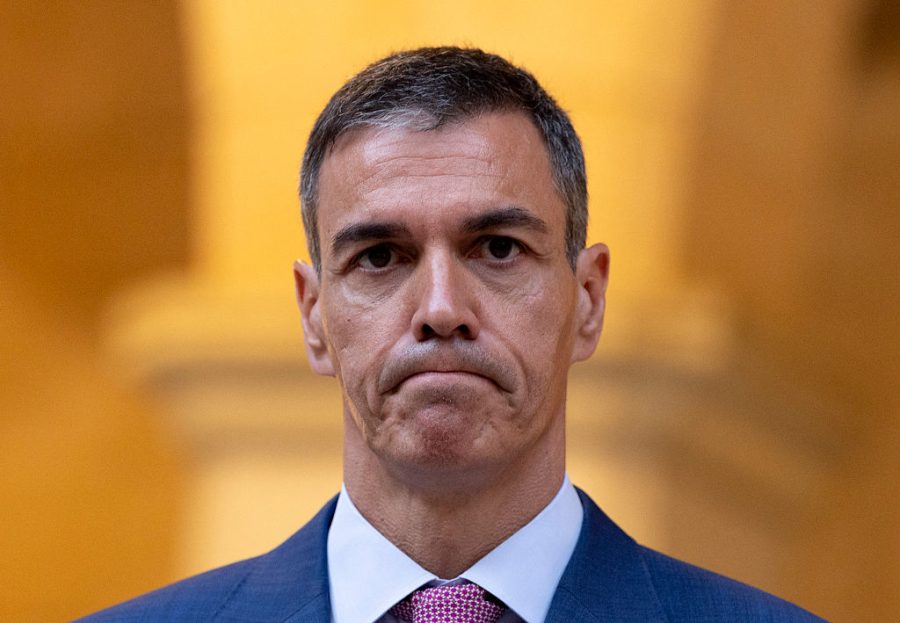
With Spain still reeling from the extraordinary scenes in Ceuta, the country’s Socialist Prime Minister Pedro Sánchez has decamped to La Mareta, the government’s palatial retreat on Lanzarote. Before beginning his holiday, he made a brief visit to the exclave, where, according to Madrid, some 72,000 migrants crossed from Morocco and the local authorities say 88 bodies were recovered.
Nearly a week later, Ceuta’s government says 3,000 to 5,000 migrants remain; Madrid puts the figure at 2,500. Around 400 are still living on El Trampolín beach, sheltering under blankets and makeshift structures. Food and water are now being distributed, but provision has been patchy: some say they went up to five days without food. Sanitation remains rudimentary. The Interior Ministry has confirmed that two people suffered minor knife wounds in separate incidents; one arrest has been made.
Critics in Spain and elsewhere in Europe have blamed the disaster on the “pull effect” of Sánchez’s recent mass amnesty for illegal immigrants. The regularization was initially presented as benefiting roughly half a million people. But nearly 1.2 million have applied.
Clinging to power has become another of Sánchez’s moral duties
While much of Europe is trying to tighten its borders, Spain’s amnesty has rewarded those who arrived and remained without legal status. On migration, Sánchez has put himself sharply at odds with many European governments. After the Ceuta surge, 22 member states demanded stronger protection of Europe’s external borders. Italy went furthest, imposing selective checks for a month on non-EU nationals arriving from Spain.
Sánchez was unmoved. He accused some EU governments of responding out of “prejudice, fake news, ignorance or political interest”. On immigration, he believes he occupies the moral high ground. In a New York Times article in February, he invoked the experience of those who had emigrated from Franco’s Spain: “It is our duty to become the welcoming and tolerant society that our own relatives would have hoped to find on the other side of our borders,” he wrote.

That sounds noble, but it is not an immigration policy. Sánchez’s practical case rests on economics: migrants have helped drive job creation, plug labor shortages and offset the effects of an aging population. The problem is that he often treats those who question the costs as “far right” reactionaries.
Yet those costs are real. A stark socioeconomic gap persists between Spanish and foreign nationals. Spain’s early school-leaving rate is 30.8 percent among young foreign nationals – more than three times the 9.8 percent rate among Spaniards. Foreign nationals are also far more likely to experience poverty or live in overcrowded housing. That is not successful integration.
The government implemented the regularization by ordinary royal decree, amending the immigration regulations and allowing a policy of enormous significance to take effect without parliament ever voting on it. Once Sánchez has declared a policy morally right, it seems, opponents cease to be people worth listening to and become obstacles to be circumvented. Why risk debate or defeat when he has already decided that his own side is enlightened and the other side is driven by ignorance and prejudice?
The same moral certainty shapes his response to the corruption scandals consuming his government and the Socialist party. José Luis Ábalos, his former transport minister and one-time right-hand man, and Koldo García, Ábalos’s aide, have been convicted of taking kickbacks on public contracts. His brother David has been convicted of misconduct over a public appointment and banned from public office for nine years; he is appealing. His wife, Begoña Gómez, is due to stand trial on charges of influence peddling and embezzlement, which she denies. To many, a government elected on a promise of “democratic regeneration” now looks rotten at the core.
Yet Sánchez stubbornly resists an early election. You can see why: current polls suggest that one would probably produce a government led by the conservative Partido Popular and dependent on Vox, further to its right. Spain’s Socialists regard themselves as heirs to the Republicans who fought Franco, placing their opponents, by implication, on history’s dark side. Keeping the right out of office becomes a higher cause; clinging to power, another of Sánchez’s moral duties.
That same conceit extends beyond Spain. Sánchez relishes taunting Donald Trump – “Green, baby, green” – and casts himself as a leader of the international resistance to a far-right menace that, in his telling, stretches from Trump and Meloni to Vox and the Spanish right.
As he began his Lanzarote holiday, Sánchez released a carefully curated 31-track summer playlist. The timing was perfectly tone-deaf. Ceuta was still overwhelmed, European governments had spent days denouncing his migration policy and his administration was mired in scandal – but the Prime Minister thought it a good moment to tell Spain what he was listening to. Among his selections was “Desordenarlo todo” – “Mess Everything Up.”





Comments